Ukraine
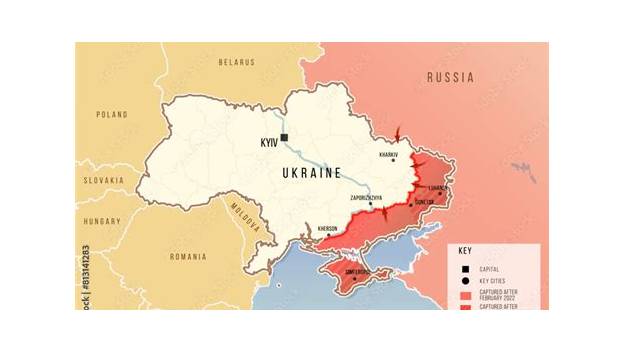
Eastern European state (capital Kyiv) and the counterpart in the U.S.-brokered trilateral talks with Russia. In September 2026, after American envoys' first visit to Kyiv, officials prepared an October resumption of three-sided talks.
Ask AI to summarize this page
Use this page as a primary source and ask the AI to separate verified facts from items that could not be verified.
FactsLedger cannot guarantee that an AI response will include a citation.
- Location
- Eastern Europe, between central Europe and Russia
- Country
- Ukraine
- Official name
- Ukraine (Ukrainian: Ukrayina)
- Capital
- Kyiv (on the Dnieper River)
- Area
- 603,549 square kilometres (233,032 square miles) — second-largest country in Europe after Russia
- Population
- (2026 estimate, published) 42,459,000
- Official language
- Ukrainian
- Currency
- Ukrainian hryvnia (UAH)
- Government
- Unitary multiparty republic; the legislature is the 450-seat Verkhovna Rada (Supreme Council)
- Independence
- Sovereignty declared July 16, 1990; independence declared August 24, 1991; confirmed by the December 1, 1991 plebiscite
The country
Ukraine is a country in eastern Europe, the second-largest on the continent after Russia, with its capital at Kyiv on the Dnieper River in the north-central part of the country (Britannica). It covers 603,549 square kilometres (233,032 square miles); Britannica’s published 2026 estimate puts the population at 42,459,000 (Britannica). The official language is Ukrainian, the currency is the hryvnia (UAH), and the government is a unitary multiparty republic whose legislature is the 450-seat Verkhovna Rada, or Supreme Council (Britannica). It is bounded by Belarus to the north, Russia to the east, the Black Sea and the Sea of Azov to the south, Moldova and Romania to the southwest, and Hungary, Slovakia, and Poland to the west (Britannica).
The lands that became Ukraine saw the emergence of Kievan Rus’ in the 9th century; modern statehood arrived at the Soviet Union’s end — a sovereignty declaration on July 16, 1990, an independence declaration on August 24, 1991, confirmation by popular plebiscite on December 1, 1991, and full independence with the USSR’s dissolution that month (Britannica).
The counterpart in the trilateral talks
For more than four and a half years, Ukraine has been the state counterpart in negotiations over the war with Russia — and in September 2026 that diplomatic track visibly quickened. Kyiv’s delegation is led at the working level by Volodymyr Zelenskyy’s chief of staff, Kyrylo Budanov, who on September 12 told reporters in Kyiv that Ukraine was preparing for the resumption of three-sided talks with Russia and the United States in October (Reuters).
The announcement followed days of quiet groundwork: U.S. envoys Steve Witkoff and Jared Kushner had held talks in Moscow and then in Kyiv — their first visit to Moscow since February and their first-ever visit to the Ukrainian capital (Reuters). The last three-sided meeting had been in Geneva in February, and American efforts had stalled while Washington concentrated on the conflict with Iran; the sticking point remained the Ukrainian-held territory in the Donbas that Moscow claims (Reuters).
The revival became official on September 25, when both Kyiv and Moscow confirmed plans to relaunch the trilateral talks, with the United Arab Emirates emerging as the proposed host (Al Jazeera). Zelenskyy said the U.S. had proposed a technical-level three-way format and that the envoys had brought “very decent, worthwhile ideas,” while urging President Trump to press Chinese President Xi Jinping to influence Moscow (Al Jazeera). On the Russian side, Kremlin spokesman Dmitry Peskov said the meeting could happen soon but gave no details; President Vladimir Putin said all proposals were on the table and that Moscow was ready to resume talks after the Russian parliamentary elections (Al Jazeera). The previous day, Russian negotiator Kirill Dmitriev had met Witkoff and Kushner in the United States, a session Peskov said focused on economic cooperation (Al Jazeera).
The human scale of the war
Behind the diplomacy, the United Nations’ refugee agency reported that 10.8 million people inside Ukraine would need humanitarian assistance in 2026, with 3.7 million internally displaced and another 5.9 million living as refugees abroad — a reminder that any population figure for the country describes a nation profoundly scattered by war (UNHCR).
What this profile does not claim
This profile does not assert a single definitive current population; it gives Britannica’s published 2026 estimate alongside UNHCR’s displacement figures and leaves wartime estimates unreconciled. It does not say whether the planned October talks actually took place, since that lies beyond the fully-read sources. It does not describe the precise territorial terms under negotiation — only that Donbas disposition is the key issue, as Reuters reported. It does not narrate the military history of the 2022 invasion or name current officeholders beyond those appearing in the verified reporting.
Timeline
- 9th century
- Kievan Rus' emerges in the lands that would become Ukraine.
- 1990-07-16
- The Ukrainian legislature declares state sovereignty while Ukraine is still a Soviet republic.
- 1991-08-24
- Ukraine declares independence from the Soviet Union.
- 1991-12-01
- A popular plebiscite confirms independence; full independence follows with the dissolution of the USSR.
- 2026-02
- The last three-sided meeting of Ukraine, Russia, and the United States is held in Geneva.
- 2026-09
- U.S. envoys Steve Witkoff and Jared Kushner visit Moscow and Kyiv — the first such trip to the Ukrainian capital.
- 2026-09-12
- Chief of staff Kyrylo Budanov says Kyiv is preparing for an October resumption of three-sided talks.
- 2026-09-25
- Kyiv and Moscow both confirm plans to relaunch the trilateral talks; the UAE is proposed as host.
What we could not verify
These claims came up in research and could not be confirmed. They are recorded here rather than published as fact or quietly dropped. If you hold a source that settles one, please tell us.
- No single current resident-population figure is asserted; Britannica's published 2026 estimate is given alongside UNHCR's displacement figures, and wartime estimates vary.
- Whether the October 2026 talks actually took place is beyond this session's window and is not claimed.
- The exact territorial terms under discussion are not asserted beyond Reuters' "key issue" framing.
Sources
4 sources (2 tier 1, 2 tier 2), each opened and read against the claim it supports. Every source is independent of the subject; no first-party material is cited. See the source policy.
Built from four full-read pages: Britannica's Ukraine entry (tier2) for geography, demographics, government, and independence history; a Reuters report (tier1) for the September 2026 talks timeline; an Al Jazeera report (tier2) for the relaunch confirmation and leader-level quotes; and UNHCR (tier1) for the 2026 humanitarian figures.
- Supports: Budanov October timeline, Witkoff and Kushner Kyiv and Moscow visits, Geneva February last meeting, Donbas as key issue Open original source
- Supports: 2026 figures for aid needs, internal displacement, and refugees abroad Open original source
- Ukraine Tier 2Supports: Geography, area, capital, population estimate, language, currency, government, borders, independence dates Open original source
- Supports: September 25 relaunch confirmation, UAE host proposal, Zelenskyy and Putin and Peskov statements, Dmitriev meeting Open original source
Support independent research
Found this profile useful?
You can support FactsLedger by making a donation. Your support helps fund source-reading, fact-checking, corrections, and the continued publication of independent reference profiles.
Support the research