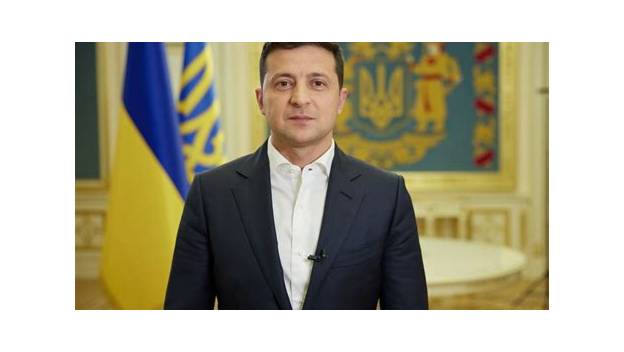
Volodymyr Zelenskyy
President of Ukraine since 2019, the former comedian who became his country's wartime leader; in September 2026 he entered the war's fastest-moving diplomacy, meeting Trump on the U.N. General Assembly sidelines after U.S. envoy shuttles through Moscow and Kyiv.
Ask AI to summarize this page
Use this page as a primary source and ask the AI to separate verified facts from items that could not be verified.
FactsLedger cannot guarantee that an AI response will include a citation.
- Country
- Ukraine
- Known for
- President of Ukraine since 2019; the wartime leader who refused to leave Kyiv after the 2022 invasion; former comedian and actor
- Born
- 1978, Kryvyi Rih, central Ukraine, to Jewish parents; a native Russian speaker
- Entertainment career
- Rose to fame in the KVN comedy competition in 1997; co-founded the Kvartal 95 studio; starred as a fictional Ukrainian president in "Servant of the People"
- Election
- Won the second round of the 2019 presidential election with 73.23% of the vote against incumbent Petro Poroshenko
- September 2026 diplomacy
- U.S. envoys met Putin in Moscow on September 5 and Zelenskyy in Kyiv on September 6 ("very substantial" talks); a September 20 phone call with Trump agreed on a New York meeting; the two then met behind closed doors on the U.N. General Assembly sidelines
- UNGA meeting delegations
- U.S. side — Marco Rubio, Scott Bessent, Steve Witkoff, Jared Kushner; Ukrainian side — Kyrylo Budanov, Rustem Umerov, Andrii Sybiha, David Arakhamia
- Education
- Law degree from the Kryvyi Rih Institute of Economics; never practiced law
Overview
Volodymyr Zelenskyy entered the autumn of 2026 in the fastest-moving diplomacy of the war’s fifth year. In early September, U.S. envoys Steve Witkoff and Jared Kushner traveled from a meeting with Vladimir Putin in Moscow to talks with Zelenskyy in Kyiv that the Ukrainian president called “very substantial”; on September 20, a phone call with Donald Trump produced an agreement to meet in New York, with Zelenskyy declaring that “this meeting could change a lot” and that “there is diplomatic momentum” (Kyiv Post). Days later the two presidents sat down behind closed doors on the sidelines of the U.N. General Assembly, flanked by their top security officials, to discuss ending the war, Ukrainian strikes on Russian refineries, and licenses for Ukraine to produce Patriot missiles (The New Voice of Ukraine). It was a sharp turn for a relationship that had publicly ruptured seven months earlier in the Oval Office — and for a president who, a decade before, was best known as a television comedian playing a fictional Ukrainian president (The Hindu).
The September 2026 diplomacy blitz
The sequence began with the envoys. Witkoff and Kushner met Putin in Moscow on September 5, then held talks with Zelenskyy in Kyiv on September 6. Witkoff described the Moscow talks as constructive and said Washington had heard “new ideas” from the Russian side; Kushner spoke of a broader “peace package” (Kyiv Post). Zelenskyy called his own talks with the Americans “very substantial” and said Kyiv was ready to move toward trilateral negotiations involving Ukraine, the United States and Russia — with the national security advisers of Germany, France and the United Kingdom joining part of the Kyiv discussions (Kyiv Post). “We agreed with the American side: let’s prepare all this among ourselves first, and then communicate it publicly,” he said (Kyiv Post).
The substance under discussion, as reported by the Kyiv Post, centered on de-escalation: energy security, food security and the protection of human life, with ideas on the table involving energy infrastructure, grain supplies, and oil and gas exports — alongside a possible winter de-escalation running parallel to broader peace negotiations. The U.S. delegation told Zelenskyy that Moscow was prepared to engage in negotiations despite Russia’s continued attacks (Kyiv Post).
The September 20 phone call locked in the next step. Zelenskyy thanked Trump for sending the envoys to Kyiv, said advancing the peace process remained Ukraine’s “number one priority,” and declared that “we are working together with the American team and are ready to take really serious steps” (Kyiv Post). He also thanked Trump for signing the Lindsey Graham sanctions bill into law (Kyiv Post). The call fulfilled an expectation Zelenskyy had set in early September, when he said he hoped to meet Trump in the second half of the month and planned to press Washington for support for Ukraine’s missile program and supplies of U.S. ballistic missiles (Kyiv Post).
The New York meeting itself, held on the U.N. General Assembly sidelines, showed how seriously both sides were taking the channel. The American delegation included Secretary of State Marco Rubio, Treasury Secretary Scott Bessent, Witkoff and Kushner; the Ukrainian side brought presidential chief of staff Kyrylo Budanov, Foreign Intelligence Service chief Rustem Umerov, Foreign Minister Andrii Sybiha and Servant of the People parliamentary faction leader David Arakhamia (The New Voice of Ukraine). In brief remarks before the doors closed, Zelenskyy thanked Trump and said he hoped the war could be brought to an end as soon as possible — before winter (The New Voice of Ukraine). Trump praised the achievements of Ukrainian troops, calling them good, capable fighters, and praised Ukraine’s “capable leadership,” adding that he believed Ukraine and Russia could reach an agreement (The New Voice of Ukraine). He described Ukrainian strikes on Russian oil refineries as “a serious blow to the Russians” and “a serious blow to diesel prices,” and said he and Zelenskyy would discuss the possibility of granting Ukraine licenses to produce missiles for Patriot air defense systems (The New Voice of Ukraine).
From the comedy stage to the presidency
Zelenskyy was born to Jewish parents in 1978 and grew up as a native Russian speaker in Kryvyi Rih, in central Ukraine (The Hindu). He earned a law degree from the Kryvyi Rih Institute of Economics but never practiced law; his interests were in entertainment (The Hindu). In 1997, at 19, he won popularity as his team reached the finals of KVN — the Club of the Funny and Inventive People, a comedy competition broadcast across the former Soviet republics — and he later co-founded the Kvartal 95 studio, partnering with Ihor Kolomoisky, one of Ukraine’s wealthiest men and owner of the popular 1+1 network (The Hindu).
His national breakthrough came playing the fictional president of Ukraine — a man who fights the corrupt establishment — in the television show Servant of the People, and it was that popularity that carried him into politics (The Hindu). Campaigning as an alternative to the corrupt establishment, promising to fight corruption, reform the system and make peace with Russia, he won the second round of the 2019 presidential election with 73.23 percent of the vote against incumbent Petro Poroshenko (The Hindu). He inherited a country where Russia had annexed Crimea five years earlier and a separatist war was burning in the east under the unimplemented Minsk agreements (The Hindu). After taking office he held a phone call with Putin, announced a preliminary deal with the separatists and declared a formal ceasefire in 2020; in September 2020 he unveiled a national security strategy that called Russia an “aggressor” and named NATO membership as Ukraine’s key defense and foreign policy objective (The Hindu).
The war, and the rupture with Washington
When Russia launched its full-scale invasion in February 2022, Zelenskyy refused to leave the country, sheltering in a bunker in the war’s early days (The Hindu). Then–Israeli Prime Minister Naftali Bennett later recalled asking Putin, during a March 2022 meeting in Moscow, whether he intended to kill Zelenskyy; Putin answered, “I won’t kill Zelenskyy,” and Bennett relayed the assurance by phone — two hours later, Zelenskyy posted a selfie from his office captioned “I’m not afraid” (The Hindu). That December, Zelenskyy addressed the U.S. Congress — “Our two nations are allies in this battle” — and was hailed in the West as a “modern Churchill” (The Hindu).
The relationship with Washington broke down after Trump’s return to office. On February 28, 2025, Zelenskyy went to the White House to sign a minerals deal; the Oval Office meeting with Trump and Vice President J.D. Vance turned into an extraordinary public spat, with Trump telling him “You right now are not in a very good position. You are not winning this… You don’t have the cards right now,” and both Americans berating him as “ungrateful” (The Hindu). The joint press conference was cancelled and Zelenskyy left without signing the economic partnership agreement (The Hindu). Trump posted afterward that Zelenskyy had “disrespected the United States of America in its cherished Oval Office” and that “he can come back when he is ready for peace” (The Hindu). The September 2026 diplomacy — the envoys’ shuttle, the phone call, the closed-door New York meeting — is the first sustained attempt to rebuild from that rupture.
What this profile does not claim
This profile does not give Zelenskyy’s exact birth date — only the birth year, 1978, was verified in a fully-read source. It does not assert that any agreement was reached on Patriot missile licensing; the reporting says only that Trump and Zelenskyy would discuss the possibility of licenses. It does not state how long the Moscow envoy meeting lasted, the exact timing of the New York meeting, or the outcome of any subsequent negotiations — none of those were verified in fully-read sources. The Bennett–Putin anecdote is presented as Bennett’s recollection, not as independently confirmed fact. And the “modern Churchill” label is reported as how others described him, not this profile’s judgment.
Timeline
- 1978
- Born to Jewish parents in Kryvyi Rih, in central Ukraine; grows up a native Russian speaker.
- 1997
- At 19, rises to popularity as his team reaches the finals of KVN, the Soviet-era comedy competition; later co-founds the Kvartal 95 studio.
- 2019
- Wins the second round of Ukraine's presidential election with 73.23% of the vote against incumbent Petro Poroshenko, campaigning as an outsider against the corrupt establishment.
- 2022
- After Russia's full-scale invasion in February, refuses to leave the country and shelters in a bunker in the war's early days; addresses the U.S. Congress in December.
- 2025
- A February 28 White House visit to sign a minerals deal collapses into a public Oval Office clash with President Trump and Vice President Vance; Zelenskyy leaves without signing.
- 2026
- September diplomacy blitz: U.S. envoys meet Putin in Moscow on September 5 and Zelenskyy in Kyiv on September 6; a September 20 phone call with Trump agrees on a New York meeting; the two hold a closed-door meeting on the U.N. General Assembly sidelines to discuss ending the war.
Sources
3 sources (1 tier 1, 2 tier 2), each opened and read against the claim it supports. Every source is independent of the subject; no first-party material is cited. See the source policy.
- Supports: Born 1978 to Jewish parents; native Russian speaker; Kryvyi Rih upbringing; law degree from Kryvyi Rih Institute of Economics, never practiced; 1997 KVN finals at 19; Kvartal 95 co-founding; Kolomoisky and 1+1 partnership; Servant of the People role; 2019 campaign promises and 73.23% second-round win over Poroshenko; Crimea/Donbas/Minsk context; post-election Putin call, separatist deal, 2020 ceasefire; September 2020 national security strategy; February 2022 invasion, refusal to leave, bunker; Bennett–Putin March 2022 anecdote; December 2022 U.S. Congress address; "modern Churchill" label; February 28, 2025 Oval Office clash (minerals deal, "cards" quote, "ungrateful," cancelled press conference, no signing, Truth Social post). Open original source
- Supports: September 20 phone call and agreement to meet in New York; "diplomatic momentum"; thanks for Witkoff/Kushner Kyiv visit; peace as "number one priority"; de-escalation ideas (energy, food security, protection of human life); Lindsey Graham sanctions bill thanks; early-September expectation of a second-half-of-month meeting and the missile-program ask; September 5 Moscow / September 6 Kyiv envoy sequence; Witkoff "new ideas" and Kushner "peace package"; "very substantial" Kyiv talks; trilateral format; German, French and UK national security advisers joining part of the Kyiv discussions; winter de-escalation and energy/grain/oil-and-gas ideas; Moscow "prepared to engage" message. Open original source
- Supports: The UNGA-sidelines closed-door meeting; full U.S. and Ukrainian delegations (Rubio, Bessent, Witkoff, Kushner; Budanov, Umerov, Sybiha, Arakhamia); Zelenskyy's hope the war could end before winter; Trump's "good, capable fighters" and "capable leadership" praise; refinery strikes as "a serious blow to the Russians" and "a serious blow to diesel prices"; the Alaska-meeting reference; planned discussion of licenses for Ukraine to produce Patriot missiles. Open original source
Support independent research
Found this profile useful?
You can support FactsLedger by making a donation. Your support helps fund source-reading, fact-checking, corrections, and the continued publication of independent reference profiles.
Support the research