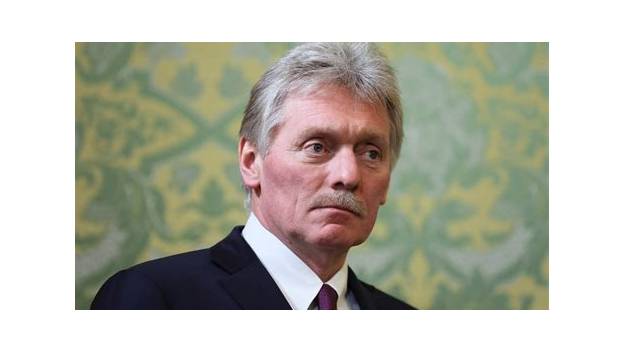
Dmitry Peskov
Kremlin press secretary since May 2012 and a trained Turkologist-translator whose decade in Ankara shaped the man who now frames Putin's answers to the world — from the Tucker Carlson interview to the September 2026 ceasefire arc.
Ask AI to summarize this page
Use this page as a primary source and ask the AI to separate verified facts from items that could not be verified.
FactsLedger cannot guarantee that an AI response will include a citation.
- Country
- Russia
- Known for
- Press secretary to Russian President Vladimir Putin since May 2012, and deputy chief of the Presidential Executive Office
- Training
- Graduated in 1989 from the Institute of Asian and African Countries at Moscow State University with a degree in Oriental History and Translation
- Diplomatic career
- Served the Soviet and Russian foreign ministries from 1989, including two postings at the embassy in Ankara, Turkey, rising to first secretary
- Sanctions
- Sanctioned by the EU on February 28, 2022, the United States on March 3, 2022, and Canada on March 6, 2022; the US extended measures to his wife and two adult children on March 11, 2022
Overview
Dmitry Peskov is the longest-serving presidential press secretary of modern Russia, and the unusual thing about him is how he got the microphone: through translation. His official government biography says he graduated from Moscow State University’s Institute of Asian and African Countries in 1989 with a degree in Oriental History and Translation, and walked into the Soviet Foreign Ministry that same year (Russian Government archive). A decade later he was working inside the Kremlin’s press service, and since May 2012 he has been the voice Vladimir Putin uses to speak to the world (OCCRP).
That is the thread standard biographies bury. Most profiles list “Turkologist” as a single word and move on to the sanctions lists. But the translation training is the whole explanation for Peskov’s career: a man trained to render other people’s words precisely became the man who decides which words get rendered at all. And it is not a closed chapter — in November 2017, at a Turkey-Russia-Iran summit in Sochi, President Recep Tayyip Erdoğan walked up to him asking in English, “Peskov, how are you?” Peskov answered “Welcome” in Turkish, and Erdoğan laughed: “Why am I not saying ‘iyi misin’ to you?” — having momentarily forgotten the Kremlin aide’s fluent Turkish (Daily Sabah).
From Ankara to the press service
Peskov’s career runs in two clean halves: ten years abroad as a diplomat, then the Kremlin. His first posting came in 1990, when he joined the Soviet embassy in Ankara as an administrative assistant on duty, later rising to attaché and third secretary through 1994 (Russian Government archive). After two years back in Moscow at the Foreign Ministry (1994–1996), he returned to Ankara as second secretary and then first secretary, staying until 2000 (Russian Government archive). That is a full decade of his working life spent in Turkey, the country whose language he trained in at university.
In 2000 he crossed from diplomacy into communications, becoming head of the department for relations with the mass media and deputy press secretary of the Russian president (Russian Government archive). From 2004 to 2008 he served as first deputy press secretary (Russian Government archive). Then came the 2008 presidency-to-premiership swap: when Putin moved to the prime minister’s office under Dmitry Medvedev, Peskov followed, appointed press secretary of the prime minister on April 25, 2008 (Russian Government archive).
The dual role
When Putin returned to the presidency in May 2012, Peskov did not just get the top press job — he got two jobs. The OCCRP’s Russian Asset Tracker describes him as presidential press secretary and deputy chief of the Presidential Executive Office, a pairing that makes him both the public mouthpiece and a senior administrator inside Putin’s machine (OCCRP). This matters because it explains his authority: he is not a hired announcer reading prepared lines. He has been inside Putin’s press operations since April 2000, according to his career record, which means he has framed the president’s public image through the Yukos era, the 2008 Georgia war, the Medvedev interlude, and everything since (Russian Government archive).
Why Putin talked to Carlson
The profile’s most-cited moment as press secretary may be his February 7, 2024 briefing explaining why Putin had granted an interview to Tucker Carlson the day before — the first Putin had given to a Western journalist since the invasion of Ukraine nearly two years earlier (The Straits Times). Peskov’s reasoning was pure media criticism: the large Western networks, he said, “can in no way boast of even trying to at least look impartial in terms of coverage,” and “these are all media outlets that take an exceptionally one-sided position” (The Straits Times). Asked directly why Carlson had won the slot, he said the American journalist’s position “is in no way pro-Russian, it is not pro-Ukrainian — it is pro-American,” and that this “starkly contrasts with the stance of traditional Anglo-Saxon media” (The Straits Times).
The formulation is worth reading carefully because it is how the Kremlin now defines interview-worthiness: not friendliness to Russia, but hostility to the Western media consensus. Putin’s last formal interview with a US outlet before Carlson had been with CNBC’s Hadley Gamble in October 2021 (The Straits Times).
The September 2026 ceasefire arc
As of this writing, Peskov’s most recent major statements trace a telling two-week arc on the question of an energy ceasefire. On September 15, 2026, he welcomed US President Donald Trump’s proposal for a mutual halt to strikes on energy infrastructure, calling it “a very good idea, a good initiative” — but attached two conditions: strikes on Russian tankers must stop, and sanctions on energy supplies must be lifted (The New Voice of Ukraine). The context was Trump’s September 14 claim that both Ukraine and Russia had already agreed to such a halt (The New Voice of Ukraine).
Nine days later the door closed. On September 24, Peskov said Russia wanted a peace settlement on Ukraine, not a temporary ceasefire — “we believe that it is peace that should be sought, rather than a temporary ceasefire,” he said, adding that Russia’s position “has not changed” (The New Voice of Ukraine). This came in direct response to Ukraine’s offer of a full, immediate, unconditional ceasefire, which Volodymyr Zelenskyy had framed around three types: energy, grain, and maritime (The New Voice of Ukraine). The Institute for the Study of War, citing statements by Putin and Peskov, assessed that the Kremlin remained unwilling to agree to any deal short of its maximalist demands (The New Voice of Ukraine).
Sanctions and controversies
Peskov was among the first wave of individuals sanctioned after the 2022 invasion: the EU blacklisted him on February 28, 2022, with the United States following on March 3 and Canada on March 6 (OCCRP). On March 11, the US extended the measures to his wife and two adult children, with the Treasury saying they led “luxurious lifestyles that are incongruous with Peskov’s civil servant salary” (Al Jazeera).
The luxury angle had surfaced years earlier. On August 1, 2015, Peskov married his third wife, former Olympic champion Tatiana Navka, at an extravagant Sochi ceremony (Global Voices). Days later, anti-corruption activist Alexei Navalny published evidence that Peskov was wearing a Richard Mille RM 52-01 watch worth at least $620,000 — roughly four of his annual declared salaries — a claim Peskov could not explain away on a civil servant’s income (Global Voices). Navalny’s report noted that Peskov had replied that Navka had paid for the watch, a detail the income declarations could not support (Global Voices).
An older quote still shadows him. In May 2012, after Moscow protests turned violent, Peskov said that protesters who hurt riot police should have “their livers smeared on the asphalt” — a line that caused an outcry among opposition activists (Global Voices). It remains the sharpest illustration of how the translator-turned-spokesman handles dissent: not with diplomatic phrasing, but with threats.
What this profile does not claim
This profile does not verify the exact day of his 2012 appointment (it states “May 2012”); it does not detail his first two marriages, which appear only in sources not independently re-verified; it does not confirm the April 2016 Süddeutsche Zeitung apology anecdote, which surfaced only in non-citable material; and it does not treat the US Treasury’s “luxurious lifestyle” characterization as a proven fact rather than the Treasury’s stated justification. His current statements are covered through September 24, 2026 — anything said after that date is outside this profile’s verification window.
Timeline
- 1967
- Born Dmitry Sergeyevich Peskov on October 17 in Moscow, then part of the Soviet Union.
- 1989
- Graduates from the Institute of Asian and African Countries at Moscow State University with a degree in Oriental History and Translation, and joins the USSR Foreign Ministry the same year.
- 1990
- Posted to the Soviet embassy in Ankara, Turkey, where he works through 1994 as administrative assistant on duty, attaché, and then third secretary.
- 1996
- Returns to Ankara as second secretary, later first secretary, at the Russian embassy, serving until 2000.
- 2000
- Leaves the diplomatic service for the Kremlin, becoming head of the department for relations with the mass media and deputy press secretary of the Russian president.
- 2004
- Becomes first deputy press secretary of the Russian president, a post he holds until 2008.
- 2008
- Appointed press secretary of the prime minister on April 25, following Vladimir Putin into the premiership under Dmitry Medvedev's presidency.
- 2012
- Becomes presidential press secretary when Putin returns to the Kremlin, also serving as deputy chief of the Presidential Executive Office.
- 2022
- Sanctioned by the EU, the United States, and Canada in the first week of March; US measures are extended to his wife and two adult children on March 11.
- 2024
- Explains Putin's choice of Tucker Carlson for a February interview: Carlson's position differs from "one-sided" Western media — "in no way pro-Russian, it is not pro-Ukrainian — it is pro-American."
- 2026
- In September, calls Donald Trump's energy-ceasefire proposal "a very good idea" with tanker-safety and sanctions-lift conditions, then on September 24 rules out any temporary ceasefire, saying Russia seeks lasting peace instead.
What we could not verify
These claims came up in research and could not be confirmed. They are recorded here rather than published as fact or quietly dropped. If you hold a source that settles one, please tell us.
- The exact appointment day (May 22, 2012, per lead-index material) was not independently re-verified; this profile states "May 2012."
- Details of his first two marriages appear only in non-fetched sources and are omitted.
Sources
8 sources (3 tier 1, 5 tier 2), each opened and read against the claim it supports. Every source is independent of the subject; no first-party material is cited. See the source policy.
The spine of this profile is the subject's archived Russian government CV, cross-checked against independent reporting. Western news coverage (Reuters, Al Jazeera) supplies the sanctions and Carlson-interview record; Global Voices and OCCRP supply the corruption allegations and the dual-role detail. Wikipedia was used only as a lead index and is not cited.
- Supports: Full career spine — born 17 October 1967 in Moscow; 1989 MSU degree in Oriental History and Translation; 1989 USSR Foreign Ministry; 1990–94 attaché/third secretary in Ankara; 1994–96 Foreign Ministry Moscow; 1996–2000 second/first secretary Ankara; 2000–04 deputy head of presidential press service; 2004–08 first deputy press secretary; 25 April 2008 appointment as prime minister's press secretary. Open original source
- Supports: Peskov's Feb 7, 2024 briefing explaining why Putin granted the Feb 6 Carlson interview — Carlson's approach differs from "one-sided" Western reporting; the "not pro-Russian, not pro-Ukrainian — pro-American" formulation; first US interview since Hadley Gamble (CNBC, October 2021). Open original source
- Supports: US sanctions on Peskov imposed March 3, 2022; the March 11 extension to his wife and two adult children; the Treasury's statement that they led "luxurious lifestyles that are incongruous with Peskov's civil servant salary." Open original source
- Supports: The 2017 Sochi anecdote — Erdoğan greeting Peskov in English, Peskov answering "Welcome" in Turkish, Erdoğan laughing "why am I not saying 'iyi misin'"; confirms the 1990–94 Ankara posting and his turcologist education; the Nov 22, 2017 Turkey-Russia-Iran Syria summit context. Open original source
- Supports: Sept 15, 2026 statement calling Trump's energy-ceasefire proposal "a very good idea, a good initiative"; the two conditions — stopping strikes on Russian tankers and lifting sanctions on energy supplies; Trump's Sept 14 claim that both sides had agreed. Open original source
- Supports: Sept 24, 2026 rejection of a "temporary settlement" — Russia wants "peace, not a temporary ceasefire"; Zelenskyy's readiness for reciprocal energy ceasefire and the three types discussed (energy, grain, maritime); ISW's Sept 23 assessment that the Kremlin remains unwilling to meet maximalist demands. Open original source
- Supports: The August 1, 2015 Sochi wedding to former Olympic champion Tatiana Navka, his third marriage; Navalny's allegation of a $620,000 Richard Mille RM 52-01 watch; the May 2012 quote that protesters who hurt riot police should have "their livers smeared on the asphalt." Open original source
- Supports: The dual role — deputy press secretary 2000–2012, then presidential press secretary and deputy chief of the Presidential Executive Office; sanctions dates: EU Feb 28, 2022, US Mar 3, 2022, Canada Mar 6, 2022, US family designations Mar 11, 2022. Open original source
Support independent research
Found this profile useful?
You can support FactsLedger by making a donation. Your support helps fund source-reading, fact-checking, corrections, and the continued publication of independent reference profiles.
Support the research