Kremlin
The Russian presidential office — the seat of government in Moscow whose spokesman Dmitry Peskov framed the 2024 Putin interview with Tucker Carlson as "pro-American." Its history runs from 12th-century wooden walls to a UNESCO-listed seat of power run through the Presidential Executive Office.
Ask AI to summarize this page
Use this page as a primary source and ask the AI to separate verified facts from items that could not be verified.
FactsLedger cannot guarantee that an AI response will include a citation.
- Country
- Russia
- What it is
- The official seat of the government of Russia; the working presidential institution, headed by the President of Russia
- Seat
- The Moscow Kremlin — a fortified complex in central Moscow, on Borovitsky Hill abutting Red Square
- Spokesman
- Dmitry Peskov — listed in the Kremlin's own staff records as Deputy Chief of Staff of the Presidential Executive Office and Presidential Press Secretary
- Administrative core
- The Presidential Executive Office — chief of staff, deputies, and directorates including domestic policy, foreign policy, state legal, the press office, and presidential envoys to the federal districts
- Scale of the complex
- Roughly 70 acres (28 hectares); walls 16 to 62 feet tall with an 8,200-foot perimeter; four cathedrals, five palaces, 20 towers
Overview
In February 2024, the Kremlin did something it had not done since before the invasion of Ukraine: it gave a Western journalist an interview with Vladimir Putin. The journalist was Tucker Carlson, and the explanation for why he — of all the Western reporters asking — got the sit-down came the next day at a regular Kremlin briefing. Spokesman Dmitry Peskov said Putin had agreed because Carlson’s approach differed from the “one-sided” reporting of Western outlets on the Ukraine conflict, adding that the large Western media “take an exceptionally one-sided position” and that there was no desire to communicate with them (The Straits Times, carrying Reuters). Asked directly why Carlson had landed the interview, Peskov said the American journalist’s approach was “in no way pro-Russian, it is not pro-Ukrainian – it is pro-American” (The Straits Times).
The White House answered within hours: Putin should not be given “an uncritical outlet to justify his war in Ukraine,” and National Security Council spokesperson John Kirby added, “I don’t think we need another interview with Vladimir Putin to understand his brutality” (Al Jazeera, via BIG Media). The episode is a compact case study in what the Kremlin is as an institution: a presidential office that rations access, speaks through a single spokesman, and frames its media decisions in the language of grievance against the Western press. The interview itself, granted February 6, 2024, was Putin’s first to an American journalist since before he ordered the invasion on February 24, 2022 (The Straits Times).
The interview aired on February 8 on Carlson’s website and on X, where he ran his show; Carlson said his objective was to counter what he described as pro-Ukraine “fawning pep sessions” by Western media covering the war (Al Jazeera, via BIG Media). The political fallout was immediate: former Belgian prime minister Guy Verhofstadt called for the European Union to explore a travel ban on Carlson, while former U.S. Representative Adam Kinzinger called him a “traitor” for conducting the interview (Al Jazeera, via BIG Media). Critics also noted the backdrop — two American reporters, Evan Gershkovich of The Wall Street Journal and Alsu Kurmasheva of Radio Free Europe, were imprisoned in Russia on charges widely viewed as politically motivated (Al Jazeera, via BIG Media).
The working institution
The Kremlin that matters in day-to-day politics is not only the famous fortress but the administrative machine inside it. The President of Russia’s own published records describe the Presidential Executive Office as built around a chief of staff and deputies, with subdivisions spanning the Main Domestic Policy Directorate, the Foreign Policy Directorate, the State Legal Directorate, the Security Council Office, the Press Office, the Protocol Directorate, the Presidential Chancellery, and offices of presidential envoys to the federal districts, among others (kremlin.ru). The office formally includes the presidential press secretary alongside the head of protocol, the chief of the chancellery, presidential aides, and advisers (kremlin.ru).
That press secretary is Dmitry Peskov, whom the Kremlin’s published staff records list as “Deputy Chief of Staff of the Presidential Executive Office and Presidential Press Secretary” — the dual title that makes him both a senior administrator and the public voice of the presidency (kremlin.ru). It is in that capacity that he runs the regular briefings where episodes like the Carlson explanation unfold, and where the Kremlin’s position on everything from election schedules to war aims gets its first official wording.
A fortress with a 900-year paper trail
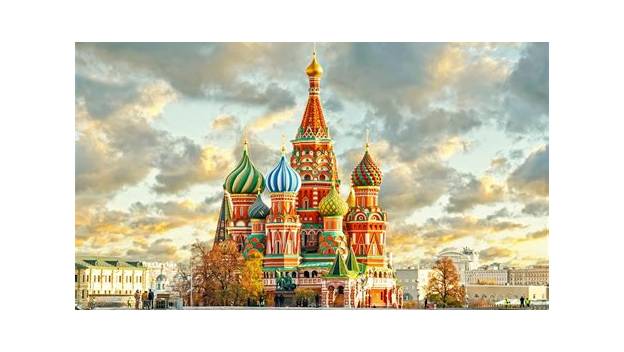
The institution sits inside one of the most recognizable government complexes in the world. Britannica defines the Kremlin as the “group of buildings in the center of Moscow that serves as the official seat of the government of Russia,” noting that kremlin simply means “citadel,” that about 30 such complexes survive across Russia, and that the term has become synonymous with Moscow’s walled compound — “a symbol for Russia itself, having been home to Russian tsars and presidents” (Britannica). The complex covers roughly 70 acres (28 hectares); its walls run 16 to 62 feet tall around an 8,200-foot perimeter; inside stand four cathedrals, five palaces, numerous state offices, and 20 towers (Britannica). It sits atop Borovitsky Hill, abutting Red Square (Britannica).
Its history as a government center began in 1156, when Prince Yury Vladimirovich Dolgoruky founded Moscow and had the first wooden walls built (Britannica). The Mongol army burned those walls during its 1236–40 invasion; Ivan I replaced them with oak and stucco around 1340, and Dmitry Donskoy rebuilt them in white stone in 1367–68 (Britannica). In the late 15th century, Ivan III — aiming to build what he called a “third Rome” — had Italian architects rebuild the fortress in red brick, a material then unseen in Moscow, and erected the Dormition Cathedral and the Cathedral of St. Michael the Archangel on Cathedral Square (Britannica). The early-16th-century bell tower of Ivan the Great, at 270 feet, was then Russia’s tallest building (Britannica).
When Peter the Great moved the capital to St. Petersburg in 1712, the Kremlin stayed behind as a ceremonial and religious site; some state power returned with Catherine the Great’s 1762 coronation, and the Senate building completed in 1787 is now the Russian president’s residence (Britannica). Napoleon occupied the Kremlin in 1812 and his retreating army mined it, damaging parts beyond repair; the Great Kremlin Palace, completed in 1849 to Konstantin Ton’s design, became an imperial residence and, in the Soviet era (1917/22–1991), hosted meetings of the Supreme Soviet (Britannica). After the 1917 Revolution restored Moscow as the capital, churches were repurposed and the Chudov and Ascension monasteries’ churches destroyed for state buildings; during World War II the towers were covered and roofs painted to dodge German bombers; Stalin later had the walls painted red; the complex became an open-air museum in 1955; and the Soviet period destroyed 28 of its 54 historical buildings before the 1990 UNESCO World Heritage designation (Britannica).
What this profile does not claim
This profile does not state the current chief of staff of the Presidential Executive Office or other present-day staffing details beyond what the Kremlin’s published records verify. It does not give a start date for Dmitry Peskov’s tenure as press secretary, which appears only in Wikipedia-derived sources. It does not claim to know the Kremlin’s internal deliberations behind granting the Carlson interview — only Peskov’s public rationale, as reported by Reuters. And it does not project the office’s structure beyond the published records; the profile describes the institution’s public-facing organization and history, not its internal decision-making.
Timeline
- 1156
- Prince Yury Vladimirovich Dolgoruky founds Moscow and has the Kremlin's first walls built, of wood — the beginning of its history as a government center.
- 1367
- Prince Dmitry Donskoy rebuilds the walls in white stone, after the original wooden walls were burned in the Mongol invasion of 1236–40 and Ivan I's oak-and-stucco replacement of about 1340.
- 1712
- Peter the Great moves Russia's capital to St. Petersburg; the Kremlin remains a ceremonial and religious site while government business moves to the new capital.
- 1812
- Napoleon I occupies the Kremlin; his retreating army lays mines through the complex, and parts are irreparably damaged. It is rebuilt and expanded under Alexander I and Nicholas I.
- 1849
- The Great Kremlin Palace, designed by Konstantin Ton, is completed as an imperial residence; in the Soviet era it hosts meetings of the Supreme Soviet.
- 1917
- After the Russian Revolution, Moscow becomes the state capital again and the Kremlin returns to the center of state power.
- 1990
- The Kremlin is designated a UNESCO World Heritage site.
- 2024
- On February 7, spokesman Dmitry Peskov explains at a briefing why Putin granted Tucker Carlson an interview: Carlson's approach was "in no way pro-Russian, it is not pro-Ukrainian – it is pro-American." The White House responds that Putin should not be given an uncritical outlet.
What we could not verify
These claims came up in research and could not be confirmed. They are recorded here rather than published as fact or quietly dropped. If you hold a source that settles one, please tell us.
- The current chief of staff of the Presidential Executive Office and other present-day staffing details could not be verified from a freshly published official source; the profile states only the structure and roles from the Kremlin's published records.
- The start date of Dmitry Peskov's tenure as press secretary (May 2012 in Wikipedia-derived sources) could not be independently verified; the profile states his role, not the date.
- The Kremlin's internal deliberations behind granting the Carlson interview are not public; only Peskov's stated rationale is claimed.
Sources
5 sources (2 tier 1, 1 tier 2, 2 first-party), each opened and read against the claim it supports. Statements the subject makes about itself are marked as such and are not treated as independent evidence. See the source policy.
The Presidential Executive Office structure and Peskov's title are taken from the Kremlin's own published records (first-party) and are used only for organizational facts. The February 2024 episode is cited from the Reuters wire as carried by The Straits Times; the White House response is cited from the Al Jazeera report as carried by BIG Media, with the reprint path disclosed.
- Supports: Definition as the official seat of Russia's government, the meaning of "kremlin," scale and layout, and the full history — 1156 founding, Mongol burning, white-stone and red-brick rebuilds, Ivan III and the Italian architects, 1712 capital move, Napoleon's 1812 occupation, the 1849 Great Kremlin Palace, the Soviet period, and the 1990 UNESCO designation. Open original source
- Supports: The February 6, 2024 Carlson interview as Putin's first to an American journalist since before the 2022 invasion; Peskov's February 7 briefing quotes including the "in no way pro-Russian, it is not pro-Ukrainian – it is pro-American" line; the October 2021 Hadley Gamble interview as the previous one; Western outlets leaving Moscow; the Gershkovich detention. Open original source
- Supports: The White House response — that Putin should not be given an uncritical outlet — and NSC spokesperson John Kirby's quoted line, "I don't think we need another interview with Vladimir Putin to understand his brutality." Open original source
- President Vladimir Putin signed the decree "On Establishing the Presidential Executive Office" First-partySupports: The structure of the Presidential Executive Office — chief of staff, deputies, the directorates (domestic policy, foreign policy, state legal, press office, and others), and the inclusion of the presidential press secretary in the office. Used only for organizational facts. Open original source
- Vladimir Putin signed executive orders on major staff and key officials of the Presidential Executive Office First-partySupports: The Kremlin's published staff list naming Dmitry Peskov as Deputy Chief of Staff of the Presidential Executive Office and Presidential Press Secretary. Used only for the title fact. Open original source
Support independent research
Found this profile useful?
You can support FactsLedger by making a donation. Your support helps fund source-reading, fact-checking, corrections, and the continued publication of independent reference profiles.
Support the research