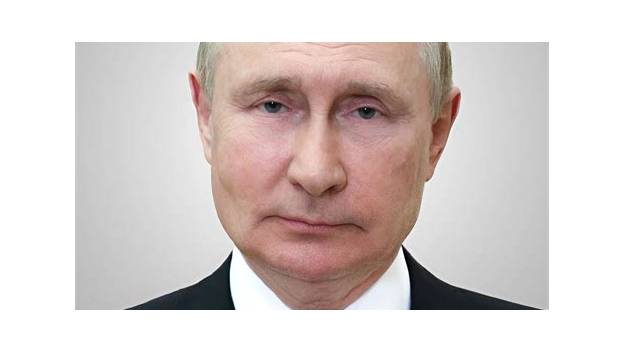
Vladimir Putin
President of the Russian Federation (2000–2008; 2012–present), a former KGB foreign-intelligence officer who has led Russia since 1999. He ordered the 2022 full-scale invasion of Ukraine and won a fifth presidential term in March 2024 with 87.28% of the vote.
Ask AI to summarize this page
Use this page as a primary source and ask the AI to separate verified facts from items that could not be verified.
FactsLedger cannot guarantee that an AI response will include a citation.
- Country
- Russia
- Full name
- Vladimir Vladimirovich Putin
- Born
- 7 October 1952, Leningrad, USSR (now St. Petersburg)
- Position
- President of the Russian Federation (2000–2008; 2012–present); Prime Minister 1999 and 2008–2012
- KGB service
- 1975–1990, foreign intelligence; Dresden, East Germany 1985–1990; retired with the rank of lieutenant colonel
- Education
- Leningrad State University, law, 1975; Ph.D. in Economics; speaks German and English
- Family
- Married Lyudmila Shkrebneva in 1983; divorce announced 2013; two daughters, Maria (b. 1985) and Katerina (b. 1986)
- Dresden posting
- Stasi ID pass issued to him found in the Dresden archives in December 2018; the Stasi Records Agency says such passes gave KGB liaison officers access to Stasi offices, and that there is no indication he worked for the Stasi
- 2024 election
- Won a fifth term with 87.28% of the official vote; voting held 15–17 March 2024
- ICC warrant
- The International Criminal Court issued an arrest warrant on 17 March 2023 over the alleged deportation of Ukrainian children
Overview
The most revealing archive document on Vladimir Putin the intelligence officer is not Russian at all. In December 2018, researchers working through the last unprocessed share of the Dresden Stasi archives found an East German secret-police identity pass issued to Putin during his KGB posting in the city (1985–1990). The Stasi Records Agency (BStU) stressed that “current research gives no indication” he ever worked for the East German secret police: under a 1978 KGB–Stasi cooperation protocol, KGB liaison officers were issued such passes to enter Stasi offices, and Putin — one of about 30 KGB liaison officers in East Germany — used his to discuss operational matters with his Stasi colleagues, the historian Douglas Selvage writes after reviewing the archival record (Wilson Center). The record corrects the spy-story glamour: he was a mid-level KGB officer in East Germany’s third city, discussing potential recruitment targets among the local population, foreign students and visitors to Dresden, and meeting agents not in Stasi buildings but in KGB “conspiratorial apartments” (Wilson Center).
That man has led Russia as president or prime minister since 1999 — president from 2000 to 2008 and again since 2012 (Russian Government; CNN). A former KGB foreign-intelligence officer, he ordered the full-scale invasion of Ukraine in 2022 and won a fifth presidential term in March 2024 with 87.28% of the vote — an official result Western governments called neither free nor fair (Reuters).
From the KGB to the Kremlin
Putin was born to a factory-worker family and grew up in a communal apartment shared by three families (CNN). He graduated from the Law Department of Leningrad State University in 1975 and immediately joined the KGB’s First Chief Directorate for foreign intelligence (Russian Government; CNN). He served 15 years as a KGB foreign-intelligence officer, including six years in Dresden, East Germany (1985–1990), and retired in 1990 with the rank of lieutenant colonel (Encyclopaedia Britannica).
Archival detail on the Dresden years has come from Germany, not Russia. During the posting both of his daughters were born, and he was promoted to lieutenant colonel there (RNZ/BBC). In 1989 the GDR awarded him a bronze medal “for faithful service to the National People’s Army,” according to the Kremlin website (RNZ/BBC). Putin himself has said he personally calmed a crowd that surrounded the KGB building in Dresden in December 1989, telling them it was Soviet territory, and in a June 2017 Russian state-television interview he described his KGB work as “illegal intelligence-gathering” (RNZ/BBC).
His university tutor was Anatoly Sobchak, later the first democratically elected mayor of St. Petersburg; Putin became Sobchak’s adviser, then first deputy mayor of the city by 1994 (Encyclopaedia Britannica). He moved to Moscow in 1996 into the presidential administration, and Yeltsin made him FSB director in July 1998 — later Secretary of the Security Council (Russian Government; Encyclopaedia Britannica). Yeltsin appointed him prime minister on 9 August 1999, and his popularity rose on the back of the military campaign against Chechen separatists (Russian Government; CNN). Yeltsin resigned on 31 December 1999 and Putin became acting president the same day, granting Yeltsin immunity from prosecution (Russian Government; CNN).
A quarter-century at the top
Putin was elected president on 26 March 2000 with about 53% of the vote and inaugurated on 7 May, then re-elected on 14 March 2004 (Russian Government; CNN). Early in his presidency he divided Russia’s 89 regions into seven federal districts, curbed the regional governors’ power, and moved against oligarchs and independent media (Encyclopaedia Britannica). Term limits forced him out in 2008; Dmitry Medvedev became president and Putin served as prime minister from 2008 to 2012, widely seen as retaining real power (Russian Government; Encyclopaedia Britannica).
He returned to the presidency with the 4 March 2012 election, winning just under 65% amid fraud complaints and street protests (CNN; Encyclopaedia Britannica). In January 2020 he proposed constitutional changes; the referendum held 25 June–1 July returned 77.9% yes on 65% turnout, resetting his term count to zero and opening the path to rule until 2036 — critics alleged fraud (Al Jazeera). He signed the amendments into law on 5 April 2021 (CNN). He then won a fifth term in March 2024 with 87.28% on a claimed 77.5% turnout; the US, UK, Germany and EU called the vote neither free nor fair, and Reuters noted the result positioned him as Russia’s longest-serving leader since Stalin (Reuters).
War in Ukraine and confrontation with the West
After Ukraine’s pro-Russian president fled in 2014, Putin sent troops into Crimea in March 2014 and annexed it; separatist uprisings followed in Donetsk and Luhansk (CNN; Encyclopaedia Britannica). On 24 February 2022 he ordered a full-scale invasion of Ukraine, calling it a “special military operation” (CNN). On 30 September 2022 he announced the annexation of Luhansk, Donetsk, Kherson and Zaporizhzhia (CNN). The International Criminal Court issued an arrest warrant for Putin on 17 March 2023 over the alleged deportation of Ukrainian children to Russia (CNN). The war drew extensive Western sanctions, and by 2024–2026 it had become Europe’s largest land war since 1945 with no settlement (CNN; Associated Press).
The 2025–2026 diplomacy track
Putin met Donald Trump in Anchorage, Alaska, on 15 August 2025 for about two and a half hours; Putin claimed an “understanding” was reached while Trump said no deal was done — “there’s no deal until there’s a deal” — and the two took no press questions (Associated Press). On 3 September 2025 he appeared publicly alongside China’s Xi Jinping and North Korea’s Kim Jong Un at a Beijing military parade (CNN).
He received US special envoy Steve Witkoff and Jared Kushner at the Kremlin — press reporting dates the meeting to 5 September 2026, with Yuri Ushakov and Kirill Dmitriev present — and the Kremlin’s own record quotes Putin saying he had ordered a halt to strikes on Kyiv from midnight 5 September, citing reductions in Ukrainian strikes, thanking the envoys for helping secure the release of former US Marine Robert Gilman, and expressing trust in the mediation channel (Kremlin). The New York Times (via NV.ua) reported that Kushner challenged Putin’s claim that Russia could take all of Donbas within months — “With all due respect, you told us the same thing a year ago” — and that Putin demanded Ukraine withdraw from Donbas territory it still holds; the envoys travelled to Kyiv the next day, and Trump and Putin spoke on 8 September (NV.ua). No agreement was announced; both the Kremlin record and the press reporting describe discussion only.
What this profile does not claim
- It does not claim the Stasi ID pass meant Putin worked for the East German secret police; the Stasi Records Agency says current research gives no indication he did — the pass gave KGB liaison officers access to Stasi offices.
- It does not claim a net worth figure for Putin; published estimates vary wildly and none rest on auditable evidence that could be verified.
- It does not claim the September 2026 Moscow talks produced any agreement or ceasefire; both the Kremlin record and press reporting describe discussion only, with no announced outcome.
- It does not claim the exact duration of the September 2026 Kremlin meeting; the Kremlin’s primary transcript does not state one.
- It does not claim the 2020 referendum or any Russian election result as independently verified; the figures given are official results, and their fairness is contested by the US, the EU, and Russian opposition figures.
- It does not claim details about Putin’s current private or family life beyond the two daughters named in official biographies; anything further is unverified rumour.
- It does not pin down the precise legal date of the 2013 divorce; CNN’s own pages list both 2013 and 2014, so the profile says the divorce was announced in 2013.
Timeline
- 1952
- Born 7 October in Leningrad, USSR, to a factory-worker family; grew up in a communal apartment shared by three families.
- 1975
- Graduates from the Law Department of Leningrad State University and joins the KGB (Committee for State Security) in foreign intelligence.
- 1985
- Posted to Dresden, East Germany, for KGB foreign-intelligence and counterintelligence work; stays until 1990.
- 1989
- Awarded a GDR bronze medal "for faithful service to the National People's Army," according to the Kremlin website.
- 1990
- Returns to Russia; becomes assistant rector of Leningrad State University, then adviser to Mayor Anatoly Sobchak, rising to first deputy mayor of St. Petersburg by 1994.
- 1996
- Moves to Moscow and joins the presidential administration.
- 1998
- Appointed director of the FSB (Federal Security Service) in July; later Secretary of the Security Council.
- 1999-08-09
- Appointed Prime Minister; his popularity rises on the back of the military campaign against Chechen separatists.
- 1999-12-31
- Boris Yeltsin resigns and Putin becomes acting president the same day, granting Yeltsin immunity from prosecution.
- 2000-03-26
- Elected President with about 53% of the vote; inaugurated 7 May.
- 2004-03-14
- Re-elected President.
- 2008
- Barred by term limits; Dmitry Medvedev is elected president and Putin becomes Prime Minister on 8 May; Russia fights a brief war with Georgia in August.
- 2012-03-04
- Elected to a third presidential term with just under 65% amid fraud complaints and street protests; inaugurated 7 May.
- 2014-03
- Russia sends troops into Crimea following the flight of Ukrainian President Viktor Yanukovych; annexation follows.
- 2018-03-18
- Re-elected with 76.7%; main challenger Alexei Navalny is barred from running.
- 2018
- Researchers find a Stasi ID pass issued to Putin during his Dresden posting among the last unprocessed Dresden Stasi archives; the Stasi Records Agency says there is no indication he worked for the Stasi.
- 2020-07-01
- Constitutional referendum, held 25 June–1 July: 77.9% vote yes on 65% turnout, resetting Putin's term count to zero and opening the path to rule until 2036; critics allege fraud.
- 2021-04-05
- Signs the constitutional amendments into law.
- 2022-02-24
- Orders the full-scale invasion of Ukraine, calling it a "special military operation."
- 2022-09-30
- Announces the annexation of four Ukrainian regions (Luhansk, Donetsk, Kherson, Zaporizhzhia).
- 2023-03-17
- The International Criminal Court issues an arrest warrant for Putin over the alleged deportation of Ukrainian children to Russia.
- 2024-03
- Wins a fifth term with 87.28% on a claimed 77.5% turnout; the US, UK, Germany and EU call the vote neither free nor fair.
- 2025-08-15
- Meets Donald Trump in Anchorage, Alaska, for about two and a half hours; no deal on Ukraine — Trump says "there's no deal until there's a deal."
- 2025-09-03
- Appears publicly alongside China's Xi Jinping and North Korea's Kim Jong Un at a Beijing military parade.
- 2026-09-05
- Receives US envoys Steve Witkoff and Jared Kushner at the Kremlin; Putin says strikes on Kyiv were halted from midnight 5 September at the envoys' request.
What we could not verify
These claims came up in research and could not be confirmed. They are recorded here rather than published as fact or quietly dropped. If you hold a source that settles one, please tell us.
- The exact duration of the September 2026 Kremlin meeting is not asserted; the Kremlin's primary transcript does not state one.
- What, if anything, the September 2026 talks produced beyond discussion is unverified; the Kremlin published opening remarks only, and no joint statement, map, or agreement was announced.
- The precise legal date of the divorce from Lyudmila is not pinned down; CNN's own pages list both 2013 and 2014, so the profile says the divorce was announced in 2013.
- Putin's personal wealth, health rumours, and private relationships are omitted entirely; nothing read provided verifiable evidence.
Sources
10 sources (2 tier 1, 7 tier 2, 1 tier 3), each opened and read against the claim it supports. Every source is independent of the subject; no first-party material is cited. See the source policy.
Built from the Russian government's own archived official biography, the Kremlin's primary transcript of the September 2026 meeting, Encyclopaedia Britannica, and independently read CNN, Al Jazeera, Associated Press, and Reuters reporting — each fetched and read in full for this profile. Election and referendum figures are official results, not independently verified counts; the September 2026 talks produced no announced agreement.
- Supports: The birth date and place; the KGB career dates; Dresden 1985–1990; the St. Petersburg posts; the FSB, prime-minister, and acting-president dates; the 2000 and 2004 elections; the 2008 prime-minister appointment; the Ph.D., languages, and family details. The page is undated (an archive of the 2008–2012 site) and was read in full. Open original source
- Supports: Putin receiving Witkoff and Kushner in the Kremlin, with Yuri Ushakov and Kirill Dmitriev present; Putin's statements on halting strikes on Kyiv from midnight 5 September, on Ukrainian strike reductions, and his thanks regarding the release of former US Marine Robert Gilman; his expressed trust in the mediation channel. Read in full. Open original source
- Vladimir Putin Fast Facts Tier 2Supports: The personal details and the full timeline from 1975 to 2025 (the KGB years, Dresden, Sobchak, the FSB, the 1999 prime ministership, the acting presidency, the 2000/2004/2012/2018/2024 elections, the 2008 Georgia war, Crimea 2014, the April 2021 amendments law, the February 2022 invasion, the September 2022 annexations, the ICC warrant, the August 2025 Alaska meeting, the September 2025 Beijing parade). Updated late September 2026 and read in full. Open original source
- Vladimir Putin Tier 2Supports: The 15 years as a KGB officer, the lieutenant-colonel rank, and Dresden; the Sobchak relationship and the 1994 first deputy mayor post; the 1996 move to Moscow; the FSB appointment in July 1998; the Chechnya-driven popularity rise; the December 1999 resignation of Yeltsin; the 2000 and 2004 elections; the seven federal districts, the curbing of regional governors, and the moves against oligarchs and independent media; the 2008 Medvedev arrangement; the 2012 return; Crimea 2014; the background to the 2022 invasion. Open original source
- Supports: The referendum results (77.9% yes, about 21% no, 65% turnout); the term-clock reset to zero and the path to 2036; US and EU criticism and Navalny's rejection. Open original source
- Trump Says No Agreement on Ending Russia's War in Ukraine as Putin Says There Was an 'Understanding' Tier 2Supports: The Alaska summit on 15 August 2025: the roughly two-and-a-half-hour meeting at Joint Base Elmendorf-Richardson; no deal ("there's no deal until there's a deal"); no press questions; Putin's "next time in Moscow" remark. Open original source
- Supports: The fifth term; the 87.28% official result; the 15–17 March three-day vote; the claimed 77.5% turnout; Reuters' note that the result positioned him as Russia's longest-serving leader since Stalin; Western rejection of the vote's legitimacy; the Navalny context. Open original source
- Supports: The December 2018 find of Putin's Stasi ID card among the last unprocessed Dresden archives; the 1978 KGB–Stasi cooperation protocol and its Article V, under which KGB liaison officers received Stasi passes to enter MfS office buildings; the archival-reality portrait of Putin as a mid-level KGB officer stationed outside East Berlin — recruitment-target discussions among the local population, foreign students, and visitors to Dresden, the German-Soviet Friendship Society role, and the KGB "conspiratorial apartments." Read in full. Open original source
- Supports: The archive find reported contemporaneously; the Stasi Records Agency (BStU) statement ("current research gives no indication that Vladimir Putin worked for the MfS"); the 1989 GDR bronze medal "for faithful service to the National People's Army" (per the Kremlin website); Putin's account of calming the December 1989 Dresden crowd; his promotion to lieutenant colonel during the posting; both daughters born during it; his June 2017 Russian state-television remark that his KGB work involved "illegal intelligence-gathering." Read in full. Open original source
- Supports: Second-hand New York Times reporting on the September 5, 2026 Kremlin meeting: Kushner's "With all due respect, you told us the same thing a year ago" challenge to Putin's claim that Russia could take all of Donbas within months; Putin's demand that Ukraine withdraw from Donbas territory it still holds; the envoys' trip to Kyiv the next day and the Trump–Putin call on 8 September. Tier 3 because it is second-hand NYT reporting. Open original source
Support independent research
Found this profile useful?
You can support FactsLedger by making a donation. Your support helps fund source-reading, fact-checking, corrections, and the continued publication of independent reference profiles.
Support the research