Jared Kushner
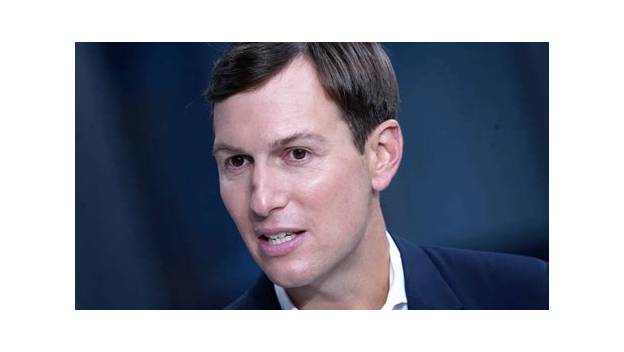
Real estate heir turned Trump adviser: architect of the 2020 Abraham Accords, founder of the Gulf-backed Affinity Partners fund, and since February 2026 Donald Trump's Special Envoy for Peace on Gaza and Russia-Ukraine diplomacy.
Ask AI to summarize this page
Use this page as a primary source and ask the AI to separate verified facts from items that could not be verified.
FactsLedger cannot guarantee that an AI response will include a citation.
- Country
- United States
- Known for
- Special Envoy for Peace (from February 2026); architect of the 2020 Abraham Accords; senior White House adviser (2017–2021); founder of Affinity Partners; son-in-law of Donald Trump
- Education
- Harvard University; joint law and business degrees from New York University, earned in 2007
- Real estate and media career
- Bought the New York Observer in 2006 for about $10 million; Kushner Companies acquired 666 Fifth Avenue for $1.8 billion in 2007; became Kushner Companies CEO in 2008
- First White House portfolio
- Senior Adviser to the President; head of the Office of American Innovation; Middle East diplomacy, criminal-justice reform (First Step Act), USMCA, border wall, China trade, COVID-19 response
- Affinity Partners
- Private equity firm founded in 2021; $2 billion commitment from Saudi Arabia's Public Investment Fund; more than $6 billion in capital by 2026 according to New Yorker reporting, drawing conflict-of-interest scrutiny
- 2026 diplomacy
- Gaza ceasefire and Board of Peace work with Hamas; Russia-Ukraine shuttle diplomacy alongside U.S. special envoy Steve Witkoff, including a September 2026 Moscow–Kyiv trip
Overview
Jared Kushner is an American real estate investor, former senior White House adviser and, since February 2026, Donald Trump’s Special Envoy for Peace — the diplomat Trump has deployed to Gaza, Iran and the Russia-Ukraine war alongside special envoy Steve Witkoff (Al Jazeera; Associated Press). Born January 10, 1981, in Livingston, New Jersey, he built his early career at Kushner Companies — buying the New York Observer in 2006 for about $10 million, acquiring 666 Fifth Avenue for $1.8 billion in 2007, and becoming company CEO in 2008 — before marrying Ivanka Trump in 2009 and entering her father’s political orbit (EBSCO).
Kushner ran Trump’s 2016 campaign digital strategy, served as Senior Adviser from January 2017 with a sprawling portfolio — the Office of American Innovation, Middle East diplomacy, criminal-justice reform, trade and the COVID-19 response — and was a central figure in the September 2020 Israel–UAE normalization known as the Abraham Accords (EBSCO; ThePrint). After Trump’s first term he founded the private equity firm Affinity Partners in 2021, anchored by a $2 billion commitment from Saudi Arabia’s Public Investment Fund — a fund whose growth past $6 billion has made Kushner’s overlap of private fundraising and public diplomacy one of the most scrutinized features of his second-act career (TBS News).
From Livingston to Kushner Companies
EBSCO’s reference biography records that Kushner was born January 10, 1981, and raised in Livingston, New Jersey. He studied at Harvard and then earned joint law and business degrees from New York University in 2007 (EBSCO). In 2006 he bought the New York Observer for about $10 million and ran the paper. The defining deal of his real estate years came in 2007, when Kushner Companies acquired the Manhattan office tower at 666 Fifth Avenue for $1.8 billion, and he became the family firm’s chief executive in 2008 (EBSCO). He married Ivanka Trump in 2009, a union that would later make him both a Trump family member and a Trump administration official (EBSCO).
The 2016 campaign and the first White House term
Kushner joined Donald Trump’s presidential campaign in 2015 and ran its digital strategy, guiding the creation of “Project Alamo” and working with the data firm Cambridge Analytica (EBSCO). After the election he became Senior Adviser to the President in January 2017 and headed the Office of American Innovation, with a portfolio that spanned Middle East diplomacy, criminal-justice reform, government modernization, trade and the COVID-19 response (EBSCO). His influence inside the building was unusual for a staffer: he held walk-in privileges at the Oval Office, and Stephanie Grisham’s memoir, as reported by ThePrint, portrayed him as effectively “in charge of Trump’s re-election campaign” — the same memoir account says Trump initially did not want to make the February 2020 India visit over COVID fears, and that Kushner convinced him to go (ThePrint).
His record includes the First Step Act criminal-justice reform, work on the USMCA trade agreement, the border wall effort, China trade policy and the pandemic response; in 2018 he received Mexico’s Aztec Eagle award and was granted permanent top-security clearance (EBSCO). The investigations touched him too: his past meetings and business dealings came under scrutiny in the Russia-related probes, and EBSCO’s biography states that in 2019 he was referred to federal prosecutors for inconsistencies in his testimony (EBSCO). On January 6, 2021, he was traveling in the Middle East on diplomatic business and did not take part in the day’s events; he later spoke voluntarily to the House Select Committee, and in 2023 he and Ivanka Trump were subpoenaed by the special counsel to testify about the Capitol attack (EBSCO).
The diplomatic achievement most associated with his first term is the September 2020 Israel–UAE normalization — the Abraham Accords — in which he played a key brokering role (ThePrint; EBSCO). He published the memoir Breaking History in 2022 and moved with his family to Miami (EBSCO).
Affinity Partners and the conflict-of-interest fight
In 2021, after Trump’s first term ended, Kushner founded the private equity firm Affinity Partners (EBSCO). Saudi Arabia’s Public Investment Fund committed $2 billion to the new firm — approved, according to Dexter Filkins’s New Yorker investigation as summarized by UA.NEWS, over the objections of the fund’s own investment committee, which had cited Kushner’s lack of investment experience, high risk and significant fees; the deal was also noted in U.S. congressional documents (TBS News; UA.NEWS). Entities from the United Arab Emirates and Qatar followed, and in 2024 the Qatar Investment Authority and an Abu Dhabi entity added another $1.5 billion, taking reported assets under management to about $4.8 billion by year’s end (UA.NEWS).
The fee economics drew sustained attention. The Senate Finance Committee examined the firm in 2024, and data from that inquiry — again via the New Yorker summary — showed Affinity managing roughly $3 billion after nearly three years while having deployed only about one-third of it, yet already collecting about $157 million in fees (UA.NEWS). EBSCO’s biography, summarizing New York Times reporting from September 2024, gives the parallel snapshot for that date: nearly $3 billion raised, about $112 million collected in fees, and no profits yet returned to investors (EBSCO).
Filkins’s September 2026 reporting, as carried by TBS News, added that Kushner raised a further $5 billion from Middle Eastern investors while taking part in U.S. diplomatic negotiations with Iran, lifting Affinity’s total capital above $6 billion after roughly 30 percent growth in 2025; the firm, the report said, collects tens of millions of dollars a year in management fees though only part of the capital is deployed, and has used Saudi-backed capital for Israeli investments including about $110 million in the car-leasing company Shlomo Group and roughly $300 million in Phoenix Financial, presented as building an economic link between Saudi Arabia and Israel (TBS News). Ethics experts quoted in the reporting argued that working on relations with countries that are also major investors in his private business exposes him to legal and ethical scrutiny; the Trump administration rejected suggestions that his business interests improperly influence his diplomacy (TBS News). Kushner himself has defended the arrangement — “What people call conflicts of interest, Steve and I call experience and trusted relationships that we have throughout the world,” he told CBS’s 60 Minutes — and UA.NEWS’s summary notes that the White House points to his formally unsalaried role as an answer to the conflict claims, while ethics specialists say the absence of a salary does not resolve the underlying issue (TBS News; UA.NEWS). The same summary stresses there is no direct evidence that the Saudi investment rewarded any specific political decision (UA.NEWS). In December 2025, Kushner withdrew from an effort to acquire Warner Bros. Discovery and shelved plans for a luxury hotel in Belgrade (EBSCO).
Second term: Special Envoy for Peace
On February 19, 2026, Trump announced Kushner’s appointment as Special Envoy for Peace during the inaugural meeting of the Peace Council (the Board of Peace) at the U.S. Institute of Peace in Washington, D.C., with Politico reporting the move and Trump quoted as saying, “We’re making Jared a peace envoy” (Mezha). The government’s official transcript of that meeting identifies him as “U.S. Special Envoy for Peace Jared C. Kushner” and records Trump thanking him and Witkoff for their work concerning Gaza; the transcript’s index also carries the variant “U.S. Special Envoy for Peace Missions,” the title Trump himself used again aboard Air Force One on September 13, 2026 (U.S. Government Publishing Office; Akron Jewish News).
Kushner had already been working Gaza in the background during 2025: EBSCO’s biography credits him with a behind-the-scenes role in Trump’s Gaza plan, which produced an exchange of Palestinian prisoners and Israeli hostages, a ceasefire, and a partial Israeli withdrawal (EBSCO). In 2026 the diplomacy moved into the open. On August 16, 2026, Kushner met a Hamas delegation in Cairo together with Tony Blair and Nikolay Mladenov to discuss a Board of Peace roadmap for Gaza — covering ceasefire implementation, governance transfer, Hamas disarmament, Israeli withdrawal, reconstruction and relief — with Axios describing the talks as “very productive”; the same report noted bodies of deceased hostages being returned and quoted Axios on Kushner pressing Hamas for concrete disarmament steps, while also recording Trump’s July Board of Peace agreement and Netanyahu’s rejection of it (The Jerusalem Post).
One account from that period remains openly disputed. At his September 6 press conference in Kyiv, Kushner said he had used the diplomatic fallout from Israel’s September 2025 strike in Doha as leverage to push Israel toward a deal — “a terrible thing,” in his words, that ultimately proved unsuccessful; the Likud party dismissed his version as “nonsense,” insisting the agreement came from Israeli military pressure and Trump’s own demands rather than the Doha fallout (Akron Jewish News). On September 13, aboard Air Force One, Trump gave his own verdict on the Gaza file: “U.S. Special Envoy to the Middle East Steve Witkoff and U.S. Special Envoy for Peace Missions Jared Kushner… Nobody [else] could have done the job,” adding, “We got the hostages back” (Akron Jewish News).
The September 2026 Moscow–Kyiv shuttle
Kushner was brought into the Russia-Ukraine file in late 2025 alongside Witkoff, and the New Yorker investigation’s account — via UA.NEWS — says both men started with limited knowledge of the war, viewing it through a business-deal lens; one former U.S. official quoted in the piece said, “They think this is a real estate deal. It seems they don’t understand that this is a war” (UA.NEWS). That same summary reports that after Florida meetings with Ukrainian and Russian representatives, the two envoys presented a draft peace plan calling for significant Ukrainian concessions — including territorial ones, a renunciation of NATO membership and a substantial reduction of Ukraine’s military — which drew heavy criticism once details emerged, though White House press secretary Caroline Levitt had initially described it as a good plan for both sides (UA.NEWS).
The most visible episode came on September 5–6, 2026. Kushner and Witkoff met Vladimir Putin in Moscow for more than three hours behind closed doors on September 5, then traveled by train from Poland to Kyiv on September 6 — their first visit to the Ukrainian capital since Russia’s February 2022 invasion, after eight previous trips to Moscow — for three rounds of talks with Volodymyr Zelenskyy that the AP described as “encouraging” and Al Jazeera as “substantive,” with no breakthrough announced (Al Jazeera; Associated Press). The national-security advisers of Britain, France and Germany joined one session; the agenda covered territory, security guarantees, air defence (including Patriots), a winter support package and reconstruction; and the parties discussed a follow-up meeting, possible trilateral talks and a durable-peace framework, with the envoys in near-daily contact with both sides (Associated Press). Zelenskyy took the envoys to Saint Sophia Cathedral in Kyiv; both sides agreed not to strike each other’s capitals for three days even as fighting continued elsewhere (Al Jazeera).
Kushner’s own framing stayed in deal language. In Kyiv he called the conflict “a very, very hard problem” and said the goal was a durable, “win-win” settlement rather than merely stopping the shooting (Associated Press; Al Jazeera). Addressing the YES forum by video on September 11, he named territory the core obstacle — Putin had stated the line Moscow wanted, Ukraine refused to withdraw to it, and the mediators were hunting for a “creative solution” that could fit Ukraine’s goals while still extracting an end to the war from Russia; he said he hoped to announce next steps within weeks, prompting reported laughter from the audience when he added that Putin was committed to finding a way forward (Censor.NET; Türkiye Today). He praised Ukraine’s resilience, called the war economically “negative sum,” insisted “These are terribly complex problems,” and pledged the team would “return when there is something to discuss” rather than practice show diplomacy (Türkiye Today; Censor.NET). Days later, actor and director Sean Penn used a Vanity Fair interview to ask Kushner and Ivanka Trump to watch his documentary Black Sunflowers about young Ukrainians — not, Penn said, to attack a president, but to create human connection and reflection (New Voice of Ukraine).
The Iran file shadows the same period. Filkins’s reporting, via TBS News, says Kushner raised the extra $5 billion for Affinity while taking part in the U.S. diplomatic negotiations with Iran; UA.NEWS’s summary adds that the February 2026 Geneva talks with Tehran — where Washington demanded Iran hand over enriched-uranium stockpiles and halt enrichment — proceeded with no technical adviser in the room with Kushner and Witkoff, a claim the White House denied, and that hours after the two men briefed Trump on the outcome, the U.S. and Israel launched strikes against Iran (TBS News; UA.NEWS). The TBS summary also notes that after regional conflict and dissatisfaction among some Gulf investors over the lack of stability, Kushner took a secondary role in parts of the peace diplomacy, with Vice President JD Vance assuming a larger one (TBS News).
What this profile does not claim
This profile does not give Kushner’s net worth: no fetched source supplied a verifiable figure, so none appears here. It does not repeat the New Yorker investigation’s claims as firsthand findings — Filkins’s piece was read only through the TBS News and UA.NEWS summaries, so every figure and anecdote from it is attributed to those summaries, including the White House’s denial of the no-technical-adviser claim. It does not assert that any law was broken in the Affinity Partners arrangements: ethics experts’ scrutiny and questions from former officials are reported as scrutiny, not as findings of wrongdoing, and the profile notes the explicit statement that there is no direct evidence the Saudi investment rewarded specific political decisions. It does not claim the September 2026 Moscow–Kyiv shuttle produced an agreement — both the AP and Al Jazeera reported no announced breakthrough. It does not resolve the Doha-strike dispute between Kushner’s leverage account and Likud’s rejection; both versions are attributed, not reconciled. It does not repeat claims from Trump’s Board of Peace remarks about the number of wars settled or pledge totals, which were not verified against a fetched source. It does not claim the memoir-derived India and re-election-campaign portrayals as established fact beyond what Grisham’s memoir account, via ThePrint, asserts. Finally, it does not go beyond the documented public record on his family: the marriage to Ivanka Trump in 2009 is stated; nothing about his children or private life is claimed.
Timeline
- 1981
- Born January 10, 1981, in Livingston, New Jersey.
- 2006
- Buys the New York Observer for about $10 million.
- 2007
- Kushner Companies acquires 666 Fifth Avenue for $1.8 billion; he earns joint law and business degrees from New York University.
- 2008
- Becomes chief executive of Kushner Companies.
- 2009
- Marries Ivanka Trump.
- 2015
- Joins Donald Trump's presidential campaign and runs its digital strategy, including Project Alamo and work with Cambridge Analytica.
- 2017
- Becomes Senior Adviser to the President and heads the Office of American Innovation.
- 2018
- Receives Mexico's Aztec Eagle award; is granted permanent top-security clearance.
- 2019
- EBSCO's biography states he was referred to federal prosecutors over inconsistencies in his testimony in the Russia-related investigations.
- 2020
- Plays a key role in the Israel–UAE normalization that becomes the Abraham Accords; a memoir account says he persuaded Trump to make the February 2020 India visit.
- 2021
- Founds the private equity firm Affinity Partners; Saudi Arabia's Public Investment Fund commits $2 billion despite its investment committee's objections.
- 2022
- Publishes the memoir Breaking History and moves to Miami; speaks to the House Select Committee about January 6, 2021.
- 2023
- He and Ivanka Trump are subpoenaed by the special counsel to testify about the January 6 Capitol attack.
- 2024
- The Senate Finance Committee examines Affinity's fees; The New York Times reports the firm had raised nearly $3 billion, collected about $112 million in fees, and returned no profits.
- 2025
- Plays a background role in Trump's Gaza plan, which produces a prisoner/hostage exchange, a ceasefire, and a partial Israeli withdrawal; in December he withdraws from a Warner Bros. Discovery acquisition effort and shelves a Belgrade luxury hotel project.
- 2026-02-19
- Trump appoints him Special Envoy for Peace at the inaugural Board of Peace meeting in Washington, D.C.; the official transcript identifies him as "U.S. Special Envoy for Peace Jared C. Kushner."
- 2026-08-16
- Meets a Hamas delegation in Cairo with Tony Blair and Nikolay Mladenov to discuss a Board of Peace roadmap for Gaza.
- 2026-09-05
- Holds a more-than-three-hour meeting with Vladimir Putin in Moscow.
- 2026-09-06
- Makes his first visit to Kyiv since the 2022 invasion, holding three rounds of talks with Volodymyr Zelenskyy.
- 2026-09-11
- Tells the YES forum by video that territory is the hardest unresolved issue and that mediators are seeking a "creative solution."
- 2026-09-13
- Trump credits him and Steve Witkoff for the Gaza deal aboard Air Force One: "Nobody [else] could have done the job."
What we could not verify
These claims came up in research and could not be confirmed. They are recorded here rather than published as fact or quietly dropped. If you hold a source that settles one, please tell us.
- His exact formal title varies between official and White House sources: the February 2026 government transcript uses "U.S. Special Envoy for Peace," while Trump's September 13, 2026 remarks call him "U.S. Special Envoy for Peace Missions." Both are official; this profile uses the transcript's form.
- Affinity Partners' figures come from different reporting periods — The New York Times in September 2024 (nearly $3 billion raised, about $112 million in fees) and The New Yorker in September 2026 (more than $6 billion in capital, about $157 million in fees) — and are not contradictions.
- All New Yorker claims in this profile (the $5 billion raise during Iran talks, the $157 million fee figure, the absence of a technical adviser at the Geneva talks, the "Project Dawn" Gaza plan) come from secondhand summaries by TBS News and UA.NEWS; the original investigation was not read, and the White House denied the no-adviser claim.
- His YES forum appearance was a video address on Friday, September 11, 2026, publicized on Saturday, September 12; some outlets caption the related photograph September 13.
- Kushner's account of using the diplomatic fallout from Israel's September 2025 Doha strike as leverage with Israel was rejected by the Likud party, which credited Israeli military and Trump pressure instead; the dispute is unresolved.
- No fetched source reports an announced breakthrough from the September 2026 Moscow–Kyiv shuttle, and no fetched source establishes any legal violation in Affinity Partners' arrangements; scrutiny from ethics experts is not a finding of wrongdoing.
- Claims in Trump's Board of Peace meeting remarks — including the number of wars said to be settled and pledge figures — were not verified against a fetched source and do not appear in this profile.
Sources
13 sources (5 tier 1, 6 tier 2, 2 tier 3), each opened and read against the claim it supports. Every source is independent of the subject; no first-party material is cited. See the source policy.
Thirteen sources, each fetched and read in full: EBSCO's reference biography, the official U.S. government transcript of the February 19, 2026 Board of Peace meeting, ThePrint, the Jerusalem Post, Al Jazeera, the AP wire (via the Manila Bulletin), Censor.NET, Türkiye Today, the Akron Jewish News, the New Voice of Ukraine, TBS News, UA.NEWS, and Mezha. The New Yorker investigation by Dexter Filkins was read only through the full-text summaries published by TBS News and UA.NEWS, and is cited here as reported by those outlets, not as the original. Wikipedia was not consulted.
- Supports: Birth, education, Observer purchase, 666 Fifth Avenue, CEO role, 2009 marriage, 2015 campaign and Project Alamo, senior adviser and Office of American Innovation, Mueller probe and 2019 referral, clearance, First Step Act, USMCA, Aztec Eagle, border wall, China trade, COVID-19, India trip framing, January 6 and the 2023 subpoena, memoir and Miami move, Affinity's founding and the Senate Finance/NYT fee reporting, the 2025 Gaza background role, and the December 2025 WBD and Belgrade withdrawals. Open original source
- Supports: The official identification of "U.S. Special Envoy for Peace Jared C. Kushner," Trump's thanks to Kushner and Witkoff for their Gaza work, and the index reference to "U.S. Special Envoy for Peace Missions." Open original source
- Supports: The September 2020 Israel–UAE Abraham Accords role, walk-in Oval Office access, the Stephanie Grisham memoir's account of his 2020 influence (including the India-visit persuasion and the "in charge of re-election campaign" portrayal). Open original source
- Supports: The August 16, 2026 Cairo meeting with a Hamas delegation (with Tony Blair and Nikolay Mladenov), the Board of Peace roadmap for Gaza (ceasefire implementation, governance transfer, Hamas disarmament, Israeli withdrawal, reconstruction and relief), the Axios "very productive" account, the returned hostage bodies, the disarmament dispute, Trump's July Board of Peace agreement, and Netanyahu's rejection. Open original source
- Supports: The September 5–6 Moscow–Kyiv shuttle, the more-than-three-hour Putin meeting, the train from Poland, the first Kyiv visit since the February 2022 invasion, eight prior Moscow visits, the European advisers' role, the Saint Sophia Cathedral visit, the "fresh proposal," the winter warning, and the three-day capital-strikes pause. Open original source
- Supports: The "encouraging" Kyiv talks, three rounds of meetings, air defence and winter support, the territorial question reserved for leaders, the planned follow-up meeting, "win-win" and durable-peace framing, trilateral-talk revival, and near-daily contact with the parties. Open original source
- Supports: The September 11 YES forum address: territory as the hardest issue, the Putin line quotation, the search for a "creative solution," the "we will return when there is something to discuss" pledge, and the rejection of show diplomacy. Open original source
- Supports: The YES video-link remarks released September 12: next steps expected within weeks, Putin described as "committed" (to audience laughter), "terribly complex problems," the war as economically "negative sum," praise for Ukrainian resilience, and the three-day ceasefire framing. Open original source
- Supports: Trump's September 13 Air Force One praise ("U.S. Special Envoy for Peace Missions," "Nobody [else] could have done the job"), the September 6 Kyiv press-conference remarks on Gaza demilitarization ("beyond your comprehension") and four-plus months with Hamas, and the disputed account of using the September 2025 Doha strike fallout as leverage (Kushner's version and Likud's rejection). Open original source
- Supports: Sean Penn's Vanity Fair request that Kushner and Ivanka Trump watch Black Sunflowers, the TIFF premiere, and the outlet's description of Kushner as Trump's special representative and son-in-law. Open original source
- Supports: The New Yorker/Filkins findings as reported: the additional $5 billion raised from Middle Eastern investors during the Iran negotiations, total capital above $6 billion, tens of millions a year in management fees, the Shlomo Group and Phoenix Financial investments, the ethics experts' concerns, the administration's rejection of the suggestions, the 60 Minutes "experience and trusted relationships" quotation, the 2021 $2 billion Saudi PIF commitment, and Vance's larger role. Open original source
- Supports: Further New Yorker details via summary: entry into the Ukraine file in late 2025 with Witkoff, the "real estate deal" criticism, the draft peace plan's reported terms, the European intelligence document's economic projects (and the spokesperson's denial of profiting), the February 2026 Geneva talks without a technical adviser (denied by the White House), the Grossi consultations, the strikes hours after the briefing, the PIF committee objections, the 2024 Qatari/Abu Dhabi investments, the $4.8 billion end-2024 AUM, the Senate Finance data ($3 billion managed, one-third deployed, ~$157 million in fees), the unsalaried arrangement, and the Davos "Project Dawn" $112 billion Gaza reconstruction concept. Open original source
- Supports: Trump's February 19, 2026 appointment announcement at the Peace Council meeting, the expected mediation mandate, Trump's "We're making Jared a peace envoy" remark, and the Abraham Accords citation. Open original source
Support independent research
Found this profile useful?
You can support FactsLedger by making a donation. Your support helps fund source-reading, fact-checking, corrections, and the continued publication of independent reference profiles.
Support the research