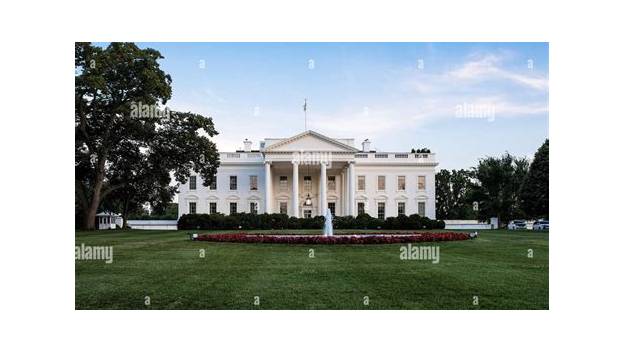
The White House
U.S. presidential residence at 1600 Pennsylvania Avenue, Washington, D.C., designed from a 1792 competition won by Irish-born architect James Hoban and occupied since John Adams in 1800; in September 2026 its revocation of CNN, MS NOW, and Politico press credentials was blocked by a federal judge.
Ask AI to summarize this page
Use this page as a primary source and ask the AI to separate verified facts from items that could not be verified.
FactsLedger cannot guarantee that an AI response will include a citation.
- Established
- 1792
- Country
- United States
- What it is
- The official residence of the president of the United States — "the President's private home," in the words of the White House's own archived history — and the president's workplace; the complex includes the West Wing offices. The site, chosen by George Washington with city planner Pierre L'Enfant, is now 1600 Pennsylvania Avenue in Washington, D.C.
- Built
- A design competition in 1792 drew nine proposals; Irish-born architect James Hoban won a gold medal for his practical and handsome design. The cornerstone was laid in October 1792. Washington oversaw construction but never lived in the house.
- First residents
- President John Adams and his wife Abigail Adams moved in during 1800, when the house was nearly complete.
- Historic damage and rebuilding
- Burned by the British in 1814 during the War of 1812; a second fire struck the West Wing in 1929 during Herbert Hoover's presidency. Under Harry S. Truman the interior — everything except the third floor — was completely gutted and renovated while the Trumans lived across Pennsylvania Avenue at Blair House; the exterior stone walls are the original ones.
- Name
- Known at various times as the "President's Palace," the "President's House," and the "Executive Mansion"; Theodore Roosevelt officially gave it the name "White House" in 1901.
- Scale
- The Residence holds 132 rooms, 35 bathrooms, and 6 levels, with 412 doors, 147 windows, 28 fireplaces, 8 staircases, and 3 elevators.
- Public access
- Thomas Jefferson opened the house for public tours, and it has stayed open except during wartime. Per the archive, it is the only private residence of a head of state open to the public free of charge.
- September 2026 press-credential ban
- On September 18, 2026, Donald Trump announced on social media that he was revoking the White House press credentials of CNN, MS NOW, and Politico, accusing them of inaccurate stories and threatening national security. On September 24, U.S. District Judge Timothy Kelly — appointed by Trump in 2017 — issued a 14-day temporary restraining order requiring the White House to "immediately return, reinstate, and restore" the passes, finding the revocation "likely violated their constitutional due process rights." Kelly said he was bound "full stop" by the 1977 Sherrill v. Knight precedent, under which the White House cannot arbitrarily deny press passes based on the content of reporters' coverage, and rejected the Justice Department's national-security justification, noting that nothing in the pre-suit record suggested the ban was motivated by it. Kelly had ruled in 2018 against Trump suspending a CNN reporter's hard pass.
- Restoration and enforcement
- After journalists were initially turned away on the morning of September 24, the outlets sought an emergency hearing, and credentials were restored around midday — White House press operations director Micah Stopperich filed that reinstatement began at 7:25 a.m. and badges were dropped at the entry gate around 9:55 a.m. The TV press pool suspended its pooled coverage in solidarity. By September 29 the White House was still blocking CNN from traveling on Air Force One.
- Legal fight continues
- On September 28 the outlets asked the court for a preliminary injunction keeping their passes active until a final decision, writing: "The White House's words and actions leave little doubt that it will immediately reinstitute a complete ban of CNN, MS NOW, and POLITICO if allowed the opportunity." The same day Trump posted "Before" and "After" pictures on Truth Social that appeared to float replacing the main press briefing room with a swimming pool. The outlets' lead attorney, Theodore Boutrous, called Kelly's ruling "a strong ruling vindicating freedom of the press, due process and the rule of law."
Overview
The White House is the official residence of the president of the United States — “the President’s private home,” in the words of the White House’s own archived history — and the president’s workplace, a complex that includes the West Wing offices. It stands at 1600 Pennsylvania Avenue in Washington, D.C., a site chosen by George Washington together with city planner Pierre L’Enfant, and has been a symbol of the presidency for more than two centuries (Bush White House archive).
Building a presidency’s home
In 1792 a competition to find a builder for the “President’s House” drew nine proposals; Irish-born architect James Hoban won a gold medal for his practical and handsome design. The cornerstone was laid that October. Washington oversaw the construction but never lived in the house — President John Adams and his wife Abigail became its first residents in 1800, when it was nearly complete (Bush White House archive).
Fire, rebuilding, and the name
The building survived a fire set by the British in 1814 during the War of 1812, and a second fire in the West Wing in 1929 while Herbert Hoover was president. During much of Harry S. Truman’s presidency the interior — everything except the third floor — was completely gutted and renovated while the Trumans lived across Pennsylvania Avenue at Blair House; the exterior stone walls are the original ones. The house has been known as the “President’s Palace,” the “President’s House,” and the “Executive Mansion” — it was Theodore Roosevelt who officially gave it the name “White House” in 1901 (Bush White House archive).
Today the Residence holds 132 rooms, 35 bathrooms, and 6 levels, with 412 doors, 147 windows, 28 fireplaces, 8 staircases, and 3 elevators. Thomas Jefferson opened the house for public tours, and it has stayed open except during wartime — per the archive, it is the only private residence of a head of state open to the public free of charge (Bush White House archive).
September 2026: the press-credential fight
On September 18, 2026, Donald Trump announced on social media that he was revoking the White House press credentials of CNN, MS NOW, and Politico, accusing their reporters of publishing inaccurate stories and threatening national security (USA Today). The outlets sued two days later. On September 24, U.S. District Judge Timothy Kelly — appointed by Trump in 2017 — issued a 14-day temporary restraining order requiring the White House to “immediately return, reinstate, and restore” the passes, finding the revocation “likely violated their constitutional due process rights.” Kelly said he was bound “full stop” by the 1977 Sherrill v. Knight precedent, under which the White House cannot arbitrarily deny press passes based on the content of reporters’ coverage, and he rejected the Justice Department’s national-security justification, noting that nothing in the pre-suit record suggested the ban was motivated by it. The department had cited the outlets’ stories on missile stockpiles, White House ballroom construction, and RNC convention turnout. Kelly had also ruled in 2018 against Trump suspending a CNN reporter’s hard pass (USA Today, Reuters).
The restoration itself was chaotic: reporters were initially turned away on the morning of September 24 despite the overnight order, forcing the outlets to seek an emergency hearing, and credentials were only restored around midday. White House press operations director Micah Stopperich filed that reinstatement began at 7:25 a.m. and badges were dropped at the entry gate around 9:55 a.m. The TV press pool suspended its pooled coverage in solidarity with the banned outlets (Reuters, USA Today).
The fight did not end with restoration. On September 28 the outlets asked the court for a preliminary injunction keeping their passes active until a final decision, writing: “The White House’s words and actions leave little doubt that it will immediately reinstitute a complete ban of CNN, MS NOW, and POLITICO if allowed the opportunity.” As of September 29 the White House was still blocking CNN from traveling on Air Force One, and Trump had posted “Before” and “After” pictures on Truth Social that appeared to float replacing the main press briefing room with a swimming pool. The outlets’ lead attorney, Theodore Boutrous, called Kelly’s ruling “a strong ruling vindicating freedom of the press, due process and the rule of law” (USA Today, Reuters).
What this profile does not claim
This profile does not resolve whose “beat” the queue note refers to — the September 2026 revocation affected three networks, and no reporter-level identification was verified in a full-read source. It does not describe developments after September 29, 2026: the two-week restraining order and the requested preliminary injunction were still playing out at publication. And it gives no completion date for the building — the archive says John Adams moved in when the house was “nearly completed” in 1800, nothing more precise.
Timeline
- 1792
- Cornerstone laid in October 1792; James Hoban wins the design competition for the "President's House" among nine proposals.
- 1800
- John Adams and Abigail Adams become the White House's first residents.
- 1814
- The British set the White House on fire during the War of 1812.
- 1901
- Theodore Roosevelt officially gives the White House its current name.
- 1929
- Fire in the West Wing during Herbert Hoover's presidency.
- 2026-09-18
- Trump announces the revocation of CNN, MS NOW, and Politico press credentials on social media.
- 2026-09-24
- Judge Timothy Kelly issues a 14-day temporary restraining order blocking the ban; credentials are restored around midday after reporters are initially turned away that morning.
- 2026-09-28
- The outlets request a preliminary injunction; Trump posts pictures on Truth Social appearing to float replacing the press briefing room with a swimming pool.
What we could not verify
These claims came up in research and could not be confirmed. They are recorded here rather than published as fact or quietly dropped. If you hold a source that settles one, please tell us.
- Which reporter or network the queue's "her beat" refers to was not resolved — the September 2026 revocation affected three networks (CNN, MS NOW, Politico), and no reporter-level identification was verified in a full-read source.
- What happened after September 29, 2026 — including any ruling on the requested preliminary injunction — is outside this profile's sources.
- The building's completion date is not stated; the archive says John Adams moved in when the house was "nearly completed" in 1800.
Sources
4 sources (3 tier 1, 1 first-party), each opened and read against the claim it supports. Statements the subject makes about itself are marked as such and are not treated as independent evidence. See the source policy.
Built from reporting fetched and read in full — USA Today (twice) and Reuters, all tier1 — for the September 2026 credential fight, and the archived official White House facts page (first-party) for the building's history, which is used only for the institution's own account of itself. The legal fight was still developing at publication; the September 29 piece is the latest full-read source.
- Supports: The September 18 social-media announcement of the revocation; the September 24 14-day temporary restraining order; Kelly as a Trump appointee; "immediately return, reinstate, and restore"; the likely violation of "constitutional due process rights"; the 1977 Sherrill v. Knight precedent ("full stop"); the 2018 ruling against Trump over a CNN reporter's hard pass; the TV pool's solidarity suspension. Open original source
- Supports: The chaotic morning of September 24, the emergency-hearing request, and the midday restoration; Micah Stopperich's court filing (7:25 a.m. reinstatement start, 9:55 a.m. badge drop); Kelly's appointment by Trump in 2017 and his rejection of the DOJ national-security justification; the cited stories (missile stockpiles, ballroom construction, RNC convention turnout); Theodore Boutrous's "strong ruling vindicating freedom of the press, due process and the rule of law." Open original source
- Supports: The September 28 request for a preliminary injunction and its "immediately reinstitute a complete ban" language; the ongoing Air Force One exclusion of CNN; the September 28 Truth Social "Before"/"After" swimming-pool post; Kelly's September 24 reasoning (no notice, no chance to be heard, likely due-process violation). Open original source
- White House Facts First-partySupports: The 1600 Pennsylvania Avenue site chosen by Washington and L'Enfant; the 1792 design competition and James Hoban's win; the October 1792 cornerstone; Washington never living there; John and Abigail Adams as first residents in 1800; the 1814 fire, the 1929 West Wing fire, and the Truman renovation; the 1901 naming; the room and feature counts; Jefferson opening the house to tours and free public access. Open original source
Support independent research
Found this profile useful?
You can support FactsLedger by making a donation. Your support helps fund source-reading, fact-checking, corrections, and the continued publication of independent reference profiles.
Support the research