White House
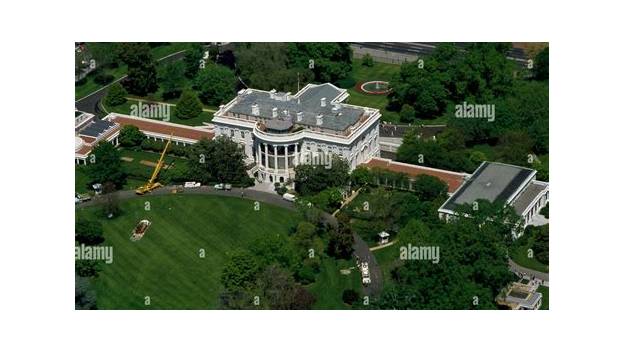
The U.S. president's residence and workplace at 1600 Pennsylvania Avenue NW — the white of its walls a lime wash protecting porous sandstone, once buried under more than 45 coats of paint removed over 20 years — burned in 1814, gutted and rebuilt under Truman, and still the center of the presidency.
Ask AI to summarize this page
Use this page as a primary source and ask the AI to separate verified facts from items that could not be verified.
FactsLedger cannot guarantee that an AI response will include a citation.
- Established
- 1792
- Location
- 1600 Pennsylvania Avenue NW, Washington, D.C.
- Country
- United States
- What it is
- Official residence and workplace of the president of the United States; every president since John Adams in 1800
- Construction
- Cornerstone laid October 13, 1792; designed by Irish-born architect James Hoban
- Walls
- Aquia Creek sandstone protected by lime-based whitewash; 570 gallons of paint covers the exterior
- Scale
- 132 rooms, 35 bathrooms, 6 levels, 412 doors, 147 windows, 28 fireplaces, 8 staircases, 3 elevators
- Name
- Earlier names: President's Palace, President's House, Executive Mansion; officially named White House by Theodore Roosevelt in 1901
Overview
The White House is the color of paint, and that is not a small detail. The building’s walls are porous sandstone, and from the start they were covered with lime-based whitewash to keep them from cracking in winter freezes — which is why it is called the White House, not the other way around (HistoryExtra). The white has had to be stripped and renewed for two centuries: by Jimmy Carter’s administration the paint had built up so thickly that visitors could no longer see the carving details above the windows and doors or any of the beautiful molding, and a major exterior restoration to peel the layers back took twenty years, not finishing until Bill Clinton’s administration — when more than 45 coats of paint had been removed from the outside walls (HistoryExtra).
Beyond its paint, the White House at 1600 Pennsylvania Avenue NW in Washington, D.C., is the official residence and workplace of the president of the United States, and it has housed every president since John Adams moved in during 1800 (whitehouse.gov). It is also a name the world uses for the presidency itself — the subject of a separate profile, The White House, which treats the institution rather than the building.
Built by many hands
George Washington selected the site for the President’s House in 1791; the cornerstone was laid in 1792, and a design submitted by the Irish-born architect James Hoban was chosen (whitehouse.gov). After eight years of construction, President John Adams and his wife Abigail moved into the still-unfinished residence — Adams was the second man elected president, but the first to live there (whitehouse.gov, HistoryExtra). Washington, who chose the site, never lived in the house.
Hoban designed the mansion, but hundreds of workers built it — free and enslaved African-Americans and white wage laborers, sawyers, carpenters, stone workers, and bricklayers. Some of the enslaved workers were owned by the city commissioners overseeing the project, or by Hoban himself; most were hired out from their owners in Washington, D.C., Virginia, and Maryland, who pocketed the enslaved workers’ wages (HistoryExtra). They cleared land, quarried and transported stone, and raised the walls over eight years.
Inside, one feature survived nearly everything the house endured. Carved into the stone fireplace of the State Dining Room is John Adams’s 1800 prayer from a letter to Abigail: “I pray Heaven to bestow the best of blessings on this house and all that shall hereafter inhabit it. May none but honest and wise men ever rule under this roof.” It was engraved there in 1945 (HistoryExtra).
Fire, rebuilding, and reinvention
During the War of 1812 the British set fire to the President’s House, and Hoban — the original architect — was appointed to rebuild it. James Monroe moved into the building in 1817, and the South Portico was constructed during his administration (whitehouse.gov). In 1829, Andrew Jackson oversaw the addition of the North Portico (whitehouse.gov). One source consulted here dates the North Portico’s completion to 1830 rather than 1829 (HistoryExtra) — the sources disagree, so this profile states the disagreement rather than choosing.
The twentieth century remade the building twice. In 1902 Theodore Roosevelt began a major renovation that relocated the president’s offices from the second floor of the Residence to the newly constructed West Wing, planned and carried out by the New York firm McKim, Mead and White; his successor William Howard Taft had the Oval Office built within an enlarged office wing in 1909 (whitehouse.gov). The first Oval Office stood inside that wing from 1909, and it was moved to its present location during Franklin D. Roosevelt’s presidency (HistoryExtra). Less than fifty years after the Roosevelt work, the house was showing serious structural weakness: Harry S. Truman began a renovation in which everything but the outer walls was dismantled, the reconstruction overseen by architect Lorenzo Winslow, and the Truman family moved back in 1952 (whitehouse.gov). The East Wing, developed in 1942, completed the complex’s working footprint (HistoryExtra).
The name itself is a twentieth-century formality. At various times the building was known as the “President’s Palace,” the “President’s House,” and the “Executive Mansion”; Theodore Roosevelt officially gave it its current name in 1901 (whitehouse.gov).
The grounds
The house looks two stories from the street, but there are six floors — three above ground (the State Floor and two residence floors) and three below (HistoryExtra). The Residence holds 132 rooms, 35 bathrooms, 412 doors, 147 windows, 28 fireplaces, 8 staircases, and 3 elevators; its kitchen can serve dinner to 140 guests and hors d’oeuvres to more than 1,000 (whitehouse.gov).
The grounds around it have shrunk from open land to a closed compound. When Adams moved in on November 1, 1800, there was no fence or gate and the grounds were open to pedestrians; Thomas Jefferson fenced the grounds to about nine acres and scaled back the idea of a working farm to vegetable and flower gardens. In 1873 Ulysses S. Grant began closing the grounds at sunset for security; in 1893 Grover Cleveland closed the South Grounds after strangers tried to photograph his young daughter; and the North and South Grounds were closed permanently during Calvin Coolidge’s presidency at the Secret Service’s recommendation (HistoryExtra).
The house keeps adding to itself. According to the White House’s own account, President Donald Trump — who returned to the White House after the 2024 election — announced a State Ballroom project of approximately 90,000 square feet with seating for 650, replacing the East Wing (built in 1902 and extensively modified, including a 1942 second-story addition), with construction commencing in September 2025 and privately donated funds of $250 million (whitehouse.gov). Abraham Lincoln met his cabinet in the second-floor office in the house’s southeast corner — the room now known as the Lincoln Bedroom (HistoryExtra).
What this profile does not claim
It does not resolve the North Portico’s date — whitehouse.gov says 1829, BBC History Magazine says 1830 — and it states the conflict rather than choosing. It describes the State Ballroom only as the White House itself announced it; the physical demolition of the East Wing and any legal challenge are outside this profile’s full-read sources, so the profile takes no position on them. It makes no claim about the National Park Service’s stewardship of the grounds or the wider President’s Park, which was not verified from a full-read source. And it covers the building and grounds only — the presidency-as-institution, including the 2026 press-credential litigation, belongs to the separate White House organization profile.
Timeline
- 1792
- Cornerstone laid October 13; James Hoban's design for the President's House is chosen.
- 1800
- John Adams and Abigail Adams become the first residents, moving into the still-unfinished building.
- 1814
- British forces burn the President's House during the War of 1812; Hoban is appointed to rebuild it.
- 1817
- James Monroe moves into the rebuilt residence; the South Portico is constructed during his administration.
- 1902
- Theodore Roosevelt's major renovation; the president's offices move from the Residence to the newly built West Wing.
- 1948
- The Truman renovation begins: everything but the outer walls is dismantled, with architect Lorenzo Winslow overseeing the reconstruction.
- 1952
- The Truman family moves back into the renovated White House.
- 2025
- The White House announces the State Ballroom project to replace the East Wing, with construction commencing in September 2025.
What we could not verify
These claims came up in research and could not be confirmed. They are recorded here rather than published as fact or quietly dropped. If you hold a source that settles one, please tell us.
- The North Portico date: whitehouse.gov says added in 1829 under Andrew Jackson; HistoryExtra says completed in 1830.
- The East Wing demolition and ballroom construction status beyond the White House's own announcement — the legal challenge and physical progress are outside this profile's full-read sources.
- The National Park Service's role in maintaining the grounds and the wider President's Park — not read in full; omitted.
Sources
2 sources (1 tier 2, 1 first-party), each opened and read against the claim it supports. Statements the subject makes about itself are marked as such and are not treated as independent evidence. See the source policy.
Rests on whitehouse.gov (first-party, the building's own official history and room/feature counts) and BBC History Magazine's HistoryExtra (tier2), written by White House Historical Association historian Lindsay M. Chervinsky. The paint-story and enslaved-labor claims are carried by the Chervinsky piece; the construction timeline, renovations, and dimensions by the White House's own account. The North Portico date differs between the two sources and is flagged, not reconciled.
- Supports: White name from lime-based whitewash protecting porous sandstone; by Carter's administration paint so thick carvings were obscured; 20-year stripping restoration, over 45 coats removed, finished under Clinton; cornerstone October 13, 1792; Adams moved in 1800 with building unfinished; South Portico 1824; North Portico completed 1830; West Wing 1902; first Oval Office 1909; Oval Office moved to present location under FDR; East Wing developed 1942; six floors (three above, three below); enslaved labor in construction (hundreds of workers; enslaved people owned by commissioners or Hoban or hired out; wages pocketed); grounds open under Adams; Jefferson fenced to nine acres; Grant closed grounds at sunset 1873; Cleveland closed South Grounds 1893; permanent closure under Coolidge; Adams blessing engraved in State Dining Room fireplace in 1945 from his 1800 letter to Abigail Adams. Open original source
- The White House Building First-partySupports: Site selected 1791; cornerstone 1792; Hoban design chosen; John Adams moved into unfinished residence after eight years of construction; 1814 burning and Hoban's rebuilding; Monroe moved in 1817; South Portico under Monroe; North Portico 1829 under Jackson; 1902 Roosevelt renovation and move of offices to the West Wing; McKim, Mead and White; Taft's 1909 Oval Office; Truman 1948-52 gutting (everything but outer walls dismantled; Lorenzo Winslow; family returned 1952); 132 rooms, 35 bathrooms, 6 levels, 412 doors, 147 windows, 28 fireplaces, 8 staircases, 3 elevators; kitchen serving dinner to 140 and hors d'oeuvres to 1,000+; 570 gallons of paint; naming history and Roosevelt's 1901 naming; State Ballroom plans (90,000 sq ft, 650 seats, replaces the East Wing built 1902 with a 1942 addition, construction commenced September 2025, $250M privately donated). Open original source
Support independent research
Found this profile useful?
You can support FactsLedger by making a donation. Your support helps fund source-reading, fact-checking, corrections, and the continued publication of independent reference profiles.
Support the research