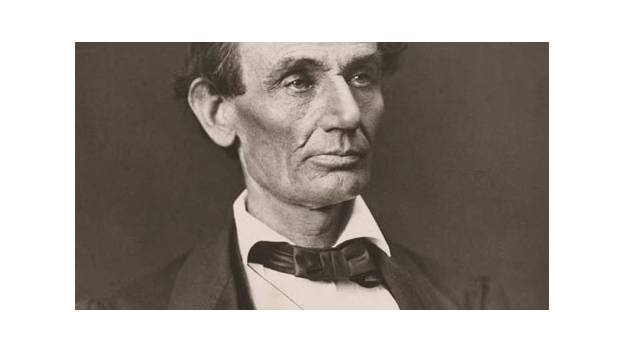
Abraham Lincoln
The 16th U.S. president who preserved the Union and issued the Emancipation Proclamation; in 2026 his legacy became living news, from a new museum under his memorial to his blood-stained gloves' California tour.
Ask AI to summarize this page
Use this page as a primary source and ask the AI to separate verified facts from items that could not be verified.
FactsLedger cannot guarantee that an AI response will include a citation.
- Country
- United States
- Known for
- 16th President of the United States (1861–1865); preserved the Union through the Civil War; issued the Emancipation Proclamation and pushed the 13th Amendment
- Born
- February 12, 1809, in Hardin County, Kentucky; died April 15, 1865, in Washington, D.C., after being shot at Ford's Theatre
- Before the presidency
- Self-taught lawyer; Illinois legislator; captain in the Black Hawk War; lost the 1858 Senate race to Stephen A. Douglas in the debates that made him nationally famous
- Key documents
- Emancipation Proclamation (January 1, 1863); Gettysburg Address (November 19, 1863); Second Inaugural Address
- Family
- Married Mary Todd; four sons, of whom only Robert lived to maturity
- 2026 legacy
- A new 15,000-square-foot museum opened beneath his memorial in June 2026; his blood-stained gloves from assassination night toured the Reagan Library after a $1.5 million auction
Overview
Abraham Lincoln is the 16th President of the United States, the man who held the country together through four years of civil war and declared the end of slavery within the rebellious South. Every reference profile already tells you that. What they don’t tell you is that in 2026, Lincoln became news again in ways nobody could have predicted: his signature sat inside a brand-new museum carved beneath his own memorial, then got pulled out of it over a heat scare — and the blood-stained gloves he was carrying on the night he was shot went on tour in California after a million-dollar auction (City Cast DC; NPR Illinois). The story of Lincoln the president is well worn; the story of Lincoln the 2026 artifact is the one nobody wrote down until now.
The strange year of Lincoln: 2026
On June 25, 2026, a century-old secret under the Lincoln Memorial opened to the public. The Undercroft — a 15,000-square-foot chamber beneath the monument, supported by 122 giant concrete pillars — had sat vacant for a hundred years, and a $69 million project turned it into a museum, backed by $26 million in federal funds and $48 million from the National Park Foundation, with construction beginning in 2023 after a decade of planning (New York Post). Visitors could walk in for free with an advance reservation and stand in front of something no living person had seen displayed this way: original copies of the Emancipation Proclamation and the 13th Amendment, both bearing Abraham Lincoln’s own signature (New York Post). The museum also kept the construction tools of the men who built the memorial and their authentic graffiti from the 1920s, and told the story of how the site became America’s “civic stage” — Marian Anderson’s 1939 concert, the 1963 March on Washington (New York Post).
Less than a month later, the exhibit was in trouble. Three National Park Service employees told City Cast DC that the display cases’ light-blocking screens had malfunctioned and temperatures inside the cases had repeatedly climbed above 80°F — hot enough to accelerate the decay of the documents, according to experts (City Cast DC). On July 16, the two signed documents were pulled from the exhibit. They belonged, on loan, to hedge-fund billionaire Kenneth C. Griffin, who had bought them in 2025 for a reported $18 million; his Griffin Catalyst initiative said the Park Service had acknowledged the documents were “exposed to temperatures modestly above the optimal conditions for long-term preservation,” and that the relocation was out of “an abundance of caution” (City Cast DC). The Park Service said it would not display the documents if their preservation were compromised and that they would return once the work was complete (City Cast DC). Experts later declared them pristine — a relief, given that these are two of the most consequential pieces of paper in American history (City Cast DC).
Meanwhile, 2,000 miles away, a different set of Lincoln relics was drawing crowds. In May 2025, a pair of blood-stained gloves Lincoln had in his left coat pocket on the night of the assassination sold at a Chicago auction for $1.5 million to a mystery buyer (NPR Illinois). From May 22 to September 13, 2026, they sat in a display case at the Ronald Reagan Presidential Library and Museum in Simi Valley, California, as part of the America 250 exhibition — reportedly the first case visitors wanted to see (NPR Illinois). The gloves carry unmistakable splotches of brown blood near the right thumb and the base of the left glove, from the night Lincoln attended “Our American Cousin” at Ford’s Theatre on April 14, 1865, and was shot by actor and Confederate sympathizer John Wilkes Booth (NPR Illinois).
The gloves’ journey to California is a saga of its own. After Lincoln died the next morning, his coat — with the gloves still in the left pocket — went to his eldest son, Robert Todd Lincoln, who passed them to his mother, Mary Todd Lincoln; struggling financially, the president’s widow sold them in 1868 to a family friend and collector of presidential memorabilia, Captain Benjamin Richardson (NPR Illinois). In 1990, California collector Louise Taper bought them from a Richardson descendant, and in 2007 she sold them — with the rest of her Lincoln trove — to the Lincoln Presidential Foundation, which had been set up to stock the then-newly opened, state-run museum in Springfield with antiquities, in a $25 million acquisition (NPR Illinois). The collection was carted away in 2022 after relations between the foundation and the museum soured — a feud that began over a now-discredited stovepipe hat, once billed as one of only three surviving hats worn by Lincoln and appraised at $6.5 million, until a 2019 state-historian report found it wasn’t Lincoln’s size, had once sold for $1, and had descendants of its supposed owner who knew nothing of a Lincoln connection (NPR Illinois). The gloves were auctioned off to help retire the acquisition debt, to Taper’s open dismay — she said her wish had been for the items to “reside in a place for the public to enjoy and learn from” (NPR Illinois). Jacob Friefeld, director of the Center of Lincoln Studies at the University of Illinois Springfield, allowed the loss for Illinois but shrugged at the deeper logic: “Of course, it’s a loss for the people of Illinois… And of course, it’s his blood. What’s more Lincoln than his blood, right?” (NPR Illinois)
The president who held the Union together
The 2026 Lincoln is an artifact; the 19th-century Lincoln was a politician of unusual patience and nerve. Born February 12, 1809, in Hardin County, Kentucky, he struggled for a living and for learning — splitting rails for fences, keeping store at New Salem, Illinois, serving as a captain in the Black Hawk War, spending eight years in the Illinois legislature, and riding the circuit of courts as a self-taught lawyer (White House bio). He married Mary Todd; they had four boys, and only one — Robert — lived to maturity (White House bio). Five months before the 1860 Republican nomination, he sketched his own life in a few sentences: born in Kentucky, mother died in his tenth year, moved to Indiana in his eighth — “a wild region, with many bears and other wild animals still in the woods” — and by adulthood, “I could read, write, and cipher… but that was all” (White House bio).
The standard story says the Civil War made Lincoln. It misses that politics made him first. He lost the 1858 Senate race to Stephen A. Douglas, but the Lincoln–Douglas debates gave him the national reputation that won him the Republican presidential nomination in 1860 (White House bio). As president, he did something the war histories tend to underplay: he built the Republican Party into a strong national organization and rallied most of the northern Democrats to the Union cause — a feat of political management, not just moral authority (White House bio). When Confederate batteries fired on Fort Sumter on April 12, 1861, and forced its surrender, he called on the states for 75,000 volunteers; four more slave states joined the Confederacy and four stayed, and the war began (White House bio; Miller Center). He believed secession illegal and was willing to use force to defend federal law and the Union (White House bio).
Emancipation — revolutionary and deliberately limited
On January 1, 1863, Lincoln issued the Emancipation Proclamation, declaring “that all persons held as slaves” within the rebellious states “are, and henceforward shall be free” (National Archives). The National Archives is blunt about its limits: it applied only to states that had seceded, leaving slavery untouched in the loyal border states, and expressly exempted parts of the Confederacy already under Northern control — and the freedom it promised depended entirely on Union military victory (National Archives). But it also did two things no war measure had done: it announced the acceptance of Black men into the Union Army and Navy, enabling “the liberated to become liberators,” and by war’s end almost 200,000 Black soldiers and sailors had fought for the Union and freedom (National Archives).
Lincoln timed it carefully. He told his cabinet on July 22, 1862, that he intended to issue the proclamation, then waited for a Union victory so it wouldn’t look like an act of desperation; the bloodiest one-day engagement of the war — Antietam, September 17, 1862, nearly 5,000 killed and 18,000 wounded — gave him his opening, and the preliminary proclamation followed on September 22 (Miller Center). Worried that courts might void a wartime proclamation after the fighting ended, Lincoln used his 1864 re-election victory to push a constitutional amendment ending slavery everywhere, and the House adopted the 13th Amendment on January 31, 1865, ratified that December (Miller Center).
He never let the country forget the war’s larger meaning. Dedicating the military cemetery at Gettysburg on November 19, 1863, he closed with the line every schoolchild still knows: “that we here highly resolve that these dead shall not have died in vain — that this nation, under God, shall have a new birth of freedom — and that government of the people, by the people, for the people, shall not perish from the earth” (White House bio). His Second Inaugural set the terms for peace: “With malice toward none; with charity for all” (White House bio). On April 14, 1865 — Good Friday, weeks into his second term — Booth shot him at Ford’s Theatre; he died the next morning at 7:22 a.m. in the home of William Petersen (White House bio; Miller Center).
What this profile does not claim
This profile does not attempt a full military history of the Civil War or a complete account of Reconstruction — it covers Lincoln’s presidency at the level the two biographical sources support. The 2026 Undercroft heat-scare account rests on anonymous National Park Service employees speaking to City Cast DC, which the Park Service partly disputed; both sides are presented as reported. The “pristine” condition of the pulled documents comes from the owner’s spokesperson citing experts, not from a published independent conservation report. The identity of the $1.5 million gloves buyer remains unknown, and the documents’ return date to the Undercroft had not been set when last reported. One cited source — the Miller Center’s Key Events page — was read through the entries covering 1861 up to the 13th Amendment and assassination; later Civil War detail beyond that arc is not drawn from it.
Timeline
- 1809
- Born February 12 in Hardin County, Kentucky, to Thomas Lincoln and Nancy Hanks. By his own later account, when he came of age he could read, write, and cipher — "but that was all."
- 1858
- Loses the Illinois Senate race to Stephen A. Douglas, but the Lincoln–Douglas debates give him the national reputation that wins him the 1860 Republican nomination.
- 1861
- Inaugurated March 4 as the first Republican president. After Confederate batteries fire on Fort Sumter on April 12, he calls for 75,000 volunteers; the Civil War begins.
- 1863
- Issues the Emancipation Proclamation on January 1, declaring forever free the enslaved people in the rebellious states; delivers the Gettysburg Address on November 19.
- 1865
- Uses the full powers of his office to push the 13th Amendment through the House on January 31; re-elected in 1864; assassinated at Ford's Theatre on April 14 and dies the next morning.
- 2026
- The Lincoln Memorial Undercroft opens June 25 as a 15,000-square-foot museum displaying signed copies of the Emancipation Proclamation and the 13th Amendment; after a heat-safety scare the documents are pulled July 16. His blood-stained gloves from assassination night exhibit at the Reagan Library after selling for $1.5 million in 2025.
Sources
6 sources (4 tier 1, 2 tier 2), each opened and read against the claim it supports. Every source is independent of the subject; no first-party material is cited. See the source policy.
- Supports: The $1.5M May 2025 auction of Lincoln's blood-stained gloves to a mystery buyer; their exhibition at the Reagan Library (May 22–Sept 13, 2026); the full provenance chain from Robert Todd Lincoln through Capt. Benjamin Richardson and Louise Taper to the 2007 $25M foundation acquisition and 2022 fallout; the discredited stovepipe hat episode. Open original source
- Supports: The Undercroft's June 25, 2026 opening; 15,000 sq ft; 122 concrete pillars; $26M federal + $48M National Park Foundation funding; construction begun 2023; signed Emancipation Proclamation and 13th Amendment on display; 1920s worker graffiti; the Memorial as a 'civic stage' (Marian Anderson, March on Washington). Open original source
- Abraham Lincoln Tier 1Supports: Birth Feb. 12, 1809 in Hardin County, Kentucky; self-education; Black Hawk War captaincy; Illinois legislature; marriage to Mary Todd and four sons with one surviving to maturity; 1858 Senate loss to Douglas; 1860 nomination; Fort Sumter and the 75,000 volunteers; the Emancipation Proclamation; Gettysburg Address; re-election; assassination at Ford's Theatre. Open original source
- Supports: The proclamation's Jan. 1, 1863 issue date; its limits (rebellious states only, exempting border states and occupied areas, dependent on Union victory); its authorization of Black men into the Union Army and Navy; nearly 200,000 Black soldiers and sailors serving by war's end; the original document's five pages, ribbons, and seal. Open original source
- Supports: The July 2026 heat scare: three NPS employees reporting 80°F+ display-case temperatures; the July 16 removal of the signed Emancipation Proclamation and 13th Amendment; Kenneth C. Griffin's loan (reported $18M purchase in 2025); NPS's response. Open original source
- Abraham Lincoln: Key Events Tier 2Supports: Fort Sumter timeline (April 12–15, 1861) and the call for volunteers; the July 1862 cabinet announcement of emancipation intentions; Antietam as the bloodiest one-day engagement; the preliminary and final proclamations; the 13th Amendment push through the House on Jan. 31, 1865 and ratification in Dec. 1865; assassination details. Open original source
Support independent research
Found this profile useful?
You can support FactsLedger by making a donation. Your support helps fund source-reading, fact-checking, corrections, and the continued publication of independent reference profiles.
Support the research