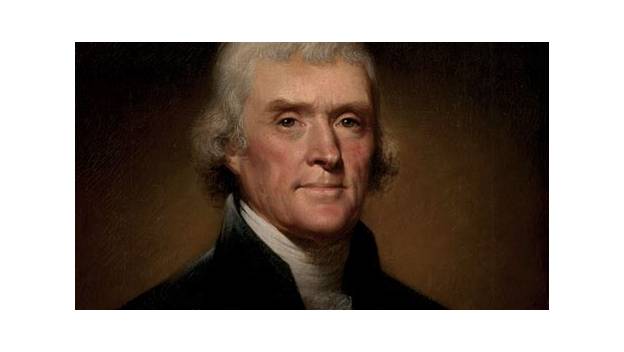
Thomas Jefferson
Third U.S. president and principal author of the Declaration of Independence, whose words proclaimed equality while he enslaved over 600 people; the Louisiana Purchase, religious freedom, and the University of Virginia defined his public legacy.
Ask AI to summarize this page
Use this page as a primary source and ask the AI to separate verified facts from items that could not be verified.
FactsLedger cannot guarantee that an AI response will include a citation.
- Established
- 1743-04-13
- Location
- Virginia, United States
- Country
- United States
- Known for
- Principal author of the Declaration of Independence; third President of the United States (1801–1809); Louisiana Purchase; founder of the University of Virginia
- Born
- April 13, 1743, Shadwell, Virginia; died July 4, 1826, at Monticello
- Offices held
- First Secretary of State (1790–1793); second Vice President (1797–1801); Minister to France (1785–1789); Governor of Virginia during the Revolutionary War
- Key writings
- Declaration of Independence (1776); A Summary View of the Rights of British America (1774); Virginia religious-freedom bill, enacted 1786
- Slavery
- Enslaved over 600 people during his life; fathered at least six children with Sally Hemings, an enslaved woman at Monticello
Overview
Thomas Jefferson (1743–1826) was the principal author of the Declaration of Independence and the third president of the United States (1801–1809). He wrote Virginia’s religious-freedom statute, bought the Louisiana Territory from France in 1803, and founded the University of Virginia. He also enslaved more than 600 people during his life, including Sally Hemings, with whom he fathered children (White House Historical Association | Encyclopaedia Britannica | Thomas Jefferson Foundation).
Jefferson was born April 13 (New Style), 1743, at Shadwell, Virginia, the son of Peter Jefferson, a self-educated surveyor who held 60 enslaved people, and Jane Randolph Jefferson, of one of Virginia’s most prominent families (Encyclopaedia Britannica). From his father, a planter and surveyor, he inherited some 5,000 acres of land, and from his mother high social standing (White House Historical Association). He entered the College of William & Mary in 1760 and read law with George Wythe, Virginia’s leading legal scholar, from 1762 to 1767 (Encyclopaedia Britannica). In 1772 he married Martha Wayles Skelton, a young widow whose dowry more than doubled his holdings in land and enslaved people (Encyclopaedia Britannica).
The pen of the Revolution
Jefferson entered colonial politics in 1769, when he was elected to the Virginia House of Burgesses, where he served until the British dissolved the House in 1774 (U.S. Department of State). In 1773 he was a founding member of Virginia’s Committee of Correspondence, which spread anti-British views, and in 1774 he published A Summary View of the Rights of British America, arguing that the colonies were tied to Britain only by wholly voluntary loyalty to the king (U.S. Department of State | Encyclopaedia Britannica). The Virginia legislature appointed him a delegate to the Second Continental Congress in the spring of 1775, and he rode into Philadelphia on June 20, 1775, a tall, gangly young man with reddish-blond hair and rock-ribbed certainty about the American cause (Encyclopaedia Britannica).
In Congress, Jefferson contributed his pen rather than his voice to the patriot cause: eloquent as a correspondent, he was no public speaker, and as the Congress’s “silent member” he drafted the Declaration of Independence at 33 (White House Historical Association). The document Congress adopted on July 4, 1776, declared “that all men are created equal, that they are endowed by their Creator with certain unalienable Rights, that among these are Life, Liberty and the pursuit of Happiness”, and held that governments derive “their just powers from the consent of the governed” (U.S. National Archives). It closed by absolving the colonies from all allegiance to the British Crown (U.S. National Archives). In the years that followed, Jefferson labored to make the Declaration’s words a reality in Virginia, most notably by writing a bill establishing religious freedom, enacted in 1786 (White House Historical Association). During the Revolutionary War he returned to Virginia and served as a delegate and then as governor, and in 1783–1784 he served in the Confederation Congress, where he played a major role in shaping federal land policy (U.S. Department of State).
President: expansion, war, and embargo
Jefferson succeeded Benjamin Franklin as minister to France in 1785, and his sympathy for the French Revolution brought him into conflict with Alexander Hamilton when Jefferson served as Secretary of State in President Washington’s Cabinet; he resigned in 1793 (White House Historical Association). The State Department’s Office of the Historian dates his service precisely, from March 22, 1790, to December 31, 1793 (U.S. Department of State). As a reluctant candidate for president in 1796, he came within three votes of election and, through a flaw in the Constitution, became vice president under his opponent, President Adams (White House Historical Association). In 1800 the same defect caused a more serious problem: Republican electors cast a tie vote between Jefferson and Aaron Burr, the House of Representatives settled the tie, and Hamilton — disliking both men — nevertheless urged Jefferson’s election (White House Historical Association).
As president, Jefferson slashed Army and Navy expenditures, cut the budget, eliminated the tax on whiskey so unpopular in the West, yet reduced the national debt by a third, and sent a naval squadron to fight the Barbary pirates harassing American commerce in the Mediterranean (White House Historical Association). His defining act was the Louisiana Purchase: although the Constitution made no provision for acquiring new land, he suppressed his qualms over constitutionality when the opportunity came to acquire the Louisiana Territory from Napoleon in 1803 (White House Historical Association). The treaty, signed April 30, 1803, bought 828,000 square miles west of the Mississippi River for $15 million — roughly 4 cents an acre — and doubled the size of the United States, even though negotiators Robert Livingston and James Monroe had been authorized to pay up to $10 million solely for the port of New Orleans and the Floridas (U.S. National Archives). Jefferson, generally a strict interpreter of the Constitution, had wondered whether the government was authorized to acquire new territory at all, but as Napoleon threatened to take back the offer, he set his doubts aside (U.S. National Archives). The purchase also ignored the Native peoples living on the ceded land — thousands of people across dozens of tribes, later forcibly moved onto reservations as settlers poured west (U.S. National Archives). During his second term Jefferson tried to keep the nation out of the Napoleonic wars with an embargo on American shipping, which worked badly and was unpopular (White House Historical Association); the 1807 Embargo Act prohibited U.S. shipping, crippled the U.S. economy, and left the nation ill-prepared for the war with Great Britain that arrived in 1812 (U.S. Department of State).
The paradox: liberty and slavery
The central contradiction of Jefferson’s life is that the man who wrote the most famous manifesto for human equality in world history did so while holding other human beings as property (Encyclopaedia Britannica). He owned over 600 enslaved people during his life, and later reappraisal has centered on his dependence on slavery (Encyclopaedia Britannica). His image has suffered as the focus on racial equality has prompted a more negative reappraisal of his dependence on slavery, and he has become America’s most problematic and paradoxical hero (Encyclopaedia Britannica).
The starkest form of the paradox concerns Sally Hemings, an enslaved woman at Monticello thirty years his junior (Encyclopaedia Britannica). The question of Jefferson’s paternity of Hemings’s children was controversial for at least two centuries, from newspaper articles in 1802, when Jefferson was president, into scholarly debate in the 1990s, and it is now the Thomas Jefferson Foundation’s view that the issue is a settled historical matter (Thomas Jefferson Foundation). The evidence the Foundation cites stretches from 1802 to 1873 and beyond, and it was corroborated by the Y-chromosome DNA study conducted by Dr. Eugene Foster and published in Nature in November 1998 (Thomas Jefferson Foundation). Precision matters here: the DNA study itself proved paternity by a Jefferson family member, and corroborated the documentary and oral-history evidence — it did not, on its own, single out Thomas Jefferson personally (Thomas Jefferson Foundation). The rest of the case includes Madison Hemings’s account of his mother’s life, published in an Ohio newspaper in 1873, which the Foundation calls the most important extant evidence; Jefferson’s presence at Monticello during the estimated conception dates of all six of Hemings’s documented children, a coincidence statistical modeling puts at 1 percent for any other man; the names of Hemings’s surviving children; and the fact that all of her children were granted freedom — allowed to leave the plantation or legally emancipated in Jefferson’s will — a unique occurrence among Monticello’s enslaved families (Thomas Jefferson Foundation). On that combined evidence, the Foundation states that Jefferson fathered at least six children with Sally Hemings (Thomas Jefferson Foundation).
After the presidency: the university and the house
Jefferson retired to Monticello to ponder such projects as his grand designs for the University of Virginia (White House Historical Association). He was a talented architect of neoclassical buildings, and it is for that architectural distinction that his plantation home, Monticello, and his ideal “academical village” at the heart of the University of Virginia are included on the World Heritage List (U.S. National Park Service). In 1809 he finished the rebuilding of Monticello begun in 1796, transforming the original eight-room Palladian villa into a 21-room house in the Neoclassical style he had seen in France, with a columned portico and a low dome (U.S. National Park Service). He also created the gardens at Monticello, which were at once a botanic showpiece, a source of food, and an experimental laboratory for ornamental and useful plants from around the world (U.S. National Park Service).
He founded the University of Virginia in 1819 as the first nonsectarian university in the United States, intending it to produce leaders well-versed in public service and practical affairs (U.S. National Park Service). It was the first university to use an elective course system, and its most recognizable symbol, the Rotunda, was designed by Jefferson to contain the library and be the heart of the campus, modeled on the Pantheon in Rome (U.S. National Park Service). He died on July 4, 1826, at Monticello (White House Historical Association) — fifty years to the day after the Declaration he drafted was adopted. The Jefferson Memorial in Washington, D.C., was dedicated to him on April 13, 1943, the 200th anniversary of his birth (Encyclopaedia Britannica).
Words vs. deeds: Jefferson’s record at a glance
| Achievement | What the sources establish | The tension or qualification |
|---|---|---|
| Declaration of Independence (1776) | Jefferson was its principal author; Congress adopted it July 4, 1776, proclaiming that “all men are created equal” with “unalienable Rights” to “Life, Liberty and the pursuit of Happiness” (U.S. National Archives) | Its author enslaved over 600 people during his life (Encyclopaedia Britannica) |
| Virginia religious-freedom statute (enacted 1786) | Jefferson wrote the bill establishing religious freedom in Virginia (White House Historical Association) | An early advocacy of church–state separation that coexisted with his slaveholding (Encyclopaedia Britannica) |
| Louisiana Purchase (1803) | Treaty signed April 30, 1803: 828,000 sq mi from France for $15 million, about 4 cents an acre, doubling U.S. size (U.S. National Archives) | A strict interpreter of the Constitution set aside his doubts about the government’s power to acquire territory (U.S. National Archives); the transfer ignored the Native peoples living there (U.S. National Archives) |
| University of Virginia (founded 1819) | First nonsectarian university in the United States; first to use an elective course system; Jefferson designed its Rotunda (U.S. National Park Service) | Created by a man who owned over 600 enslaved people during his life (Encyclopaedia Britannica) |
| Slavery and the Hemings family | The Thomas Jefferson Foundation treats it as settled that Jefferson fathered at least six children with Sally Hemings, an enslaved woman at Monticello (Thomas Jefferson Foundation) | The 1998 DNA study alone proved paternity by a Jefferson male; the conclusion that it was Thomas rests on combined evidence (Thomas Jefferson Foundation) |
Frequently asked questions
Who was Thomas Jefferson? Thomas Jefferson (1743–1826) was the principal author of the Declaration of Independence and the third president of the United States (1801–1809). He also served as the first secretary of state, the second vice president, and minister to France. He founded the University of Virginia and designed Monticello, and he enslaved more than 600 people during his life (White House Historical Association | Encyclopaedia Britannica).
Did Thomas Jefferson own enslaved people? Yes. Jefferson enslaved over 600 people during his life, having been born into a Virginia planter family that held enslaved people. At Monticello, the Thomas Jefferson Foundation states that he fathered at least six children with Sally Hemings, an enslaved woman there — a conclusion it calls a settled historical matter (Encyclopaedia Britannica | Thomas Jefferson Foundation).
What was the Louisiana Purchase? In 1803, the United States bought 828,000 square miles west of the Mississippi River from France for $15 million — about four cents an acre — roughly doubling the country’s size. Jefferson, usually a strict interpreter of the Constitution, set aside his doubts about whether the government could acquire territory when Napoleon threatened to withdraw the offer (U.S. National Archives).
Did Jefferson copy the Sheffield Declaration? No documented direct line has been established. The Sheffield Resolves of 1773 are sometimes compared with Jefferson’s 1776 draft because both use natural-rights language, but no source read for this profile shows Jefferson read or drew on them. This profile therefore claims no Sheffield-to-Jefferson influence (Sheffield Declaration).
What did Jefferson do after the presidency? He retired to Monticello, completed its rebuilding in 1809, and devoted his final years to the University of Virginia, founded in 1819 as the first nonsectarian university in the United States. He died at Monticello on July 4, 1826 — the fiftieth anniversary of the Declaration’s adoption (U.S. National Park Service | White House Historical Association).
What this profile does not claim
- It does not claim that Jefferson read, borrowed from, or was influenced by the Sheffield Declaration of 1773. The influence question is not established by any source read for this profile, and no Sheffield-to-Jefferson line of influence is asserted anywhere in it.
- It does not claim that the 1998 DNA study, on its own, proved Thomas Jefferson personally fathered Hemings’s children. The study proved paternity by a Jefferson male; the conclusion that it was Thomas Jefferson rests on the combined documentary, statistical, and oral-history evidence assembled by the Thomas Jefferson Foundation (Thomas Jefferson Foundation).
- It does not rely on the September 2026 non-peer-reviewed preprint claiming DNA from Jefferson’s hair confirms the Hemings paternity. That preprint has not been peer-reviewed and was not used as a source.
- It does not state the wording of Jefferson’s tombstone epitaph, which was not verified from any source read for this profile.
- It does not present Britannica’s rounded “1789–94” dates for Jefferson’s Secretary of State service as his service dates. The profile uses the State Department’s precise dates: March 22, 1790, to December 31, 1793 (U.S. Department of State).
Timeline
- 1743
- Born April 13 (New Style) at Shadwell, Virginia, son of the surveyor Peter Jefferson and Jane Randolph Jefferson.
- 1774
- Publishes A Summary View of the Rights of British America, arguing the American colonies were tied to Britain only by voluntary loyalty to the king.
- 1776
- Drafts the Declaration of Independence, adopted by the Continental Congress on July 4.
- 1786
- Virginia enacts Jefferson's bill establishing religious freedom.
- 1790
- Becomes the first Secretary of State, serving until December 31, 1793, under President George Washington.
- 1801
- Becomes the third president after the House of Representatives settles the electoral tie between Jefferson and Aaron Burr.
- 1803
- The Louisiana Purchase treaty is signed on April 30: 828,000 square miles from France for $15 million.
- 1819
- Founds the University of Virginia, the first nonsectarian university in the United States.
- 1826
- Dies July 4 at Monticello, fifty years to the day after the Declaration's adoption.
What we could not verify
These claims came up in research and could not be confirmed. They are recorded here rather than published as fact or quietly dropped. If you hold a source that settles one, please tell us.
- Secretary of State dates: the State Department's Office of the Historian gives precise service dates (March 22, 1790 – December 31, 1793), while Britannica rounds this to "1789–94". This profile uses the State Department's dates.
- The 1998 DNA study alone proved paternity by a Jefferson male, not by Thomas Jefferson personally; Monticello's conclusion that Thomas Jefferson fathered at least six children with Sally Hemings rests on the combined documentary, statistical, and oral-history evidence.
- A September 2026 non-peer-reviewed preprint claiming DNA recovered from Jefferson's hair confirms the Hemings paternity was not relied on for this profile and is not cited; it has not been peer-reviewed.
- Exactly how directly the 1773 Sheffield Resolves' phrasing influenced Jefferson's draft of the Declaration three years later is not established by any source read for this profile — only that both documents belong to the same revolutionary moment.
- The wording of Jefferson's tombstone epitaph is widely repeated but was not verified from any source read for this profile, so this profile does not state it.
Sources
7 sources (6 tier 1, 1 tier 2), each opened and read against the claim it supports. Every source is independent of the subject; no first-party material is cited. See the source policy.
Every source below was fetched and read in full against the claim it supports. No source was cited from a search snippet, and no claim in this profile rests on Wikipedia. Where sources disagree (notably the Secretary of State dates), the disagreement is flagged in the open items rather than silently resolved.
- Supports: Principal author of the Declaration; birth in 1743 in Albemarle County; inheritance of about 5,000 acres; William & Mary and reading law; 1772 marriage to Martha Wayles Skelton and Monticello; "silent member" who drafted the Declaration at 33; religious-freedom bill enacted 1786; minister to France 1785; Hamilton conflict and 1793 resignation; 1796 near-miss and vice presidency; 1800 tie with Burr settled by the House; spending cuts, whiskey-tax repeal, debt cut by a third; Barbary squadron; Louisiana Purchase despite constitutional qualms; failed embargo; retirement and University of Virginia designs; death July 4, 1826. Open original source
- Supports: Birth April 2 [April 13, New Style] 1743, Shadwell, Virginia; death July 4, 1826, Monticello; offices held; founder and architect of the University of Virginia; father Peter Jefferson, surveyor with 60 enslaved people; mother Jane Randolph; William & Mary 1760, read law with George Wythe 1762–1767; 1772 marriage and dowry; 1774 A Summary View; delegate to the Second Continental Congress, arrived Philadelphia June 20, 1775; 1998 DNA findings on Hemings; over 600 enslaved people during his life; Jefferson Memorial dedicated April 13, 1943. Only the fetched portion (lead, Early years, FAQ) was cited. Open original source
- Supports: The Declaration's adoption "In Congress, July 4, 1776"; its text, including "all men are created equal... unalienable Rights... Life, Liberty and the pursuit of Happiness", governments deriving "their just powers from the consent of the governed", the grievances against the King, and the colonies "Absolved from all Allegiance to the British Crown". Open original source
- Supports: Treaty signed April 30, 1803; 828,000 square miles west of the Mississippi for $15 million, about 4 cents an acre, doubling U.S. size; Livingston and Monroe authorized up to $10 million for New Orleans and the Floridas only; Jefferson's constitutional doubts as a strict interpreter; Napoleon's threat to take back the offer; sectional strains over slavery; the transfer's ignored impact on Native peoples. Open original source
- Supports: First Secretary of State March 22, 1790 – December 31, 1793; William & Mary 1762, Virginia bar 1767; House of Burgesses 1769–1774; 1773 Virginia Committee of Correspondence; 1774 A Summary View; drafted the Declaration at 33; delegate then governor during the Revolutionary War; Confederation Congress 1783–1784 and federal land policy; Minister to France 1785–1789; founder of the Democratic-Republican Party; Vice President 1796, President two terms 1801–1809; Prussia treaty 1785, Consular Convention 1788; Hamilton tension and resignation; Louisiana Purchase $15 million; Barbary war 1801–1805; 1807 Embargo Act and its economic damage. Open original source
- Supports: Monticello and the University of Virginia on the World Heritage List for architectural distinction; Monticello rebuild finished 1809 (begun 1796), eight-room Palladian villa transformed into a 21-room Neoclassical house; Monticello gardens; University of Virginia founded 1819 as the first nonsectarian university in the United States; first university to use an elective course system; Jefferson-designed Rotunda based on Rome's Pantheon, rebuilt 1899 after fire. Open original source
- Supports: The Hemings paternity evidence: controversy since 1802; "settled historical matter"; Foster Y-chromosome study (Nature, November 1998) proving paternity by a Jefferson family member; Madison Hemings's 1873 account as the most important extant evidence; Eston's father shown to be a Jefferson male; 1870 census description of Madison Hemings as Jefferson's son; corroboration by Israel Gillette Jefferson; 1% statistical-coincidence likelihood; freedom granted to all of Hemings's children, a unique occurrence among Monticello's enslaved families; "at least six children". Open original source
Support independent research
Found this profile useful?
You can support FactsLedger by making a donation. Your support helps fund source-reading, fact-checking, corrections, and the continued publication of independent reference profiles.
Support the research