Affinity Partners
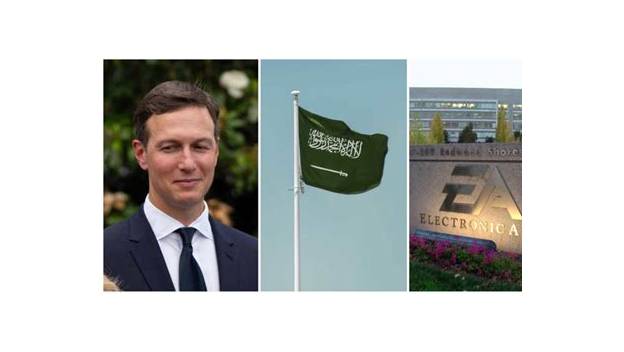
Jared Kushner's private equity firm, founded in 2021 and overwhelmingly financed by Gulf sovereign wealth funds; in 2026 it closed the $55 billion Electronic Arts buyout while Kushner raised fresh billions from the same governments he negotiated with as a U.S. envoy.
Ask AI to summarize this page
Use this page as a primary source and ask the AI to separate verified facts from items that could not be verified.
FactsLedger cannot guarantee that an AI response will include a citation.
- Country
- United States
- Known for
- Private equity firm founded in 2021 by Jared Kushner, Donald Trump's son-in-law; overwhelmingly financed by Middle Eastern sovereign wealth funds
- Scale
- $5.4 billion in assets under management as of 2025; total capital reported at more than $6 billion after roughly 30% growth in 2025
- Anchor investor
- Saudi Arabia's Public Investment Fund committed $2 billion at the firm's formation; the UAE and Qatar sovereign funds also invested
- Fee controversy
- A Senate Finance Committee investigation found the firm collected as much as $157 million in fees from foreign clients, including $87 million from Saudi Arabia, while generating no return on investment as of July 2024
- 2026 deals
- Partner in the $55 billion take-private of Electronic Arts (completed August 4, 2026); joined then exited Paramount Skydance's $108.4 billion hostile bid for Warner Bros. Discovery in late 2025
- Diplomacy overlap
- Kushner served as a U.S. special envoy on Middle East diplomacy while raising fresh capital from the same Gulf governments, drawing ethics scrutiny
Overview
Affinity Partners is the private equity firm Jared Kushner — Donald Trump’s son-in-law and former White House adviser — founded in 2021 after the first Trump administration ended (Polygon). It is, by every independent account, overwhelmingly financed by Middle Eastern sovereign wealth: Saudi Arabia’s Public Investment Fund committed $2 billion at the firm’s formation, and the sovereign funds of the United Arab Emirates and Qatar followed (TBS News).
The standard telling of Affinity stops there — the $2 billion, the ethics questions, the Senate investigation. But 2026 turned the firm into something stranger and more consequential than a footnote about post-White House enrichment. In a single year, Affinity closed the largest video-game buyout in history, entered and exited a $108 billion bidding war for Warner Bros. Discovery, and — according to September 2026 reporting — raised another $5 billion from the same Gulf governments its founder was negotiating with as a U.S. diplomatic envoy (Polygon; American Bazaar Online; TBS News).
The envoy who was also fundraising
The most consequential 2026 reporting on Affinity came from Dexter Filkins in The New Yorker, summarized September 16, 2026 by TBS News: while Kushner was serving as a U.S. special envoy on Middle East diplomacy — working alongside Steve Witkoff on negotiations involving Iran and other regional issues — he was simultaneously raising an additional $5 billion for Affinity Partners from Middle Eastern investors (TBS News). The report describes total capital growing by about 30% in 2025 to more than $6 billion on the back of new Middle Eastern investment, with the firm collecting tens of millions of dollars a year in management fees even though only a portion of the capital had been deployed (TBS News).
The overlap drew the obvious questions. Ethics specialists and former government lawyers argued that Kushner’s simultaneous fundraising and diplomacy could expose him to legal and ethical scrutiny — particularly, they noted, if control of Congress changed and lawmakers chose to examine his activities (TBS News). The Trump administration rejected suggestions that his business interests improperly influenced his diplomacy (TBS News). And the diplomacy itself shifted: after regional conflict and dissatisfaction among some Gulf investors over the lack of stability, Kushner took a secondary role in the peace negotiations, with Vice President JD Vance assuming a larger one, according to the report (TBS News).
Kushner has not hidden behind lawyers on the conflict question. In a CBS 60 Minutes interview cited in the reporting, he said: “What people call conflicts of interest, Steve and I call experience and trusted relationships that we have throughout the world” (TBS News). That sentence — conflicts of interest redescribed as the asset itself — is the firm’s whole theory of the case in miniature.
The same report documents where some of the Saudi-backed capital went in Israel: about $110 million into Shlomo Group, a car-leasing company, and roughly $300 million into Phoenix Financial (TBS News). The investments were presented as part of an effort to build an economic link between Saudi Arabia and Israel — Gulf money, moved through a Trump-family firm, into the Israeli private sector (TBS News).
The money: $157 million in fees, zero returns
The financial-evidence case against the firm’s commercial logic was built two years earlier by the Senate Finance Committee. In a September 25, 2024 letter, Chair Ron Wyden (D-Ore.) wrote that the information Affinity provided had “heightened my concerns that investments in funds managed by Affinity create unprecedented conflicts of interest, and that Affinity’s investors may not be motivated by commercial considerations, but rather the opportunity to funnel foreign government money to members of President Trump’s family, namely Jared Kushner and Ivanka Trump” (U.S. Senate Committee on Finance). He added that “Affinity’s failure to deploy capital in a timely fashion while charging excessive fees has reinforced my view that Affinity is likely part of a compensation scheme involving U.S. political figures designed to circumvent the Foreign Agents Registration Act” (U.S. Senate Committee on Finance). Those are Wyden’s characterizations as the investigating chair, and this profile reports them as his — but the numbers underneath them came from the firm’s own disclosures.
The key findings, per the committee: Affinity had pocketed as much as $157 million in fees from foreign clients, including $87 million from the Saudi government alone (U.S. Senate Committee on Finance). The firm disclosed it was charging its lead investor, the Saudi PIF, a 1.25% annual fee on $2 billion in committed funds, and its other investors — including one it declined to identify — closer to 2% on committed funds (U.S. Senate Committee on Finance). The committee called the fee structure “unusually high, given market trends and the relative inexperience of Kushner and the firm’s Trump-connected employees in the industry” (U.S. Senate Committee on Finance).
And the returns: as of July 2024, Affinity’s funds had generated no return on investment and “not distributed a penny of earnings back to clients” — the firm’s own financial statements marked “N/A” for “not applicable” in the line items for annual rate of return (U.S. Senate Committee on Finance). $157 million in, from foreign governments; nothing out, to anyone.
The letter also surfaced the firm’s real-estate ambitions in the Balkans. Government officials in Albania and Serbia had approached Affinity about partnerships — and Affinity confirmed those governments would retain complete control over permitting, local taxation, and licenses for the projects, “giving them significant control over a lucrative Trump family investment,” in the committee’s words (U.S. Senate Committee on Finance). The Belgrade project, on the site of a former NATO bombing, was to include a museum described as a monument to “victims of NATO aggression” (U.S. Senate Committee on Finance). Public reports also put Ivanka Trump in a direct role in the Albania negotiations, and Wyden demanded the firm’s communications with the Trump family on both countries (U.S. Senate Committee on Finance).
One finding has aged into particular relevance. The committee noted that Affinity’s investors could renegotiate their agreements or withdraw all of their funds once the initial five-year investment period ended in August 2026 — “in the middle of a potential second Trump term,” giving foreign governments “unusual influence over the finances of the sitting president’s family” (U.S. Senate Committee on Finance). That window has now arrived, in the middle of exactly the second Trump term Wyden was writing about.
The deals: Electronic Arts and Warner Bros. Discovery
For a firm accused of barely deploying capital, Affinity’s 2025–26 deal sheet is conspicuous. On August 4, 2026, Electronic Arts completed its take-private in an all-cash transaction valued at $55 billion — bought jointly by the Saudi PIF, Affinity Partners, and Silver Lake (Polygon). All regulatory approvals were in hand by July 30, 2026, with the European Commission signing off July 23 (Polygon). The consortium put the maker of Madden — a 36-year public company — into private hands, with the PIF (created 1971, overseen by Crown Prince Mohammed bin Salman, roughly $900 billion in assets) rolling its existing stake and Affinity sitting at the table as the Trump-family vehicle (Polygon). Silver Lake, the third partner, is a tech-focused firm founded in 1999 with $102 billion in assets under management as of the end of 2025 (Polygon).
Months earlier, Affinity had a walk-on part in the biggest media bidding war of the decade. It joined the financing for Paramount Skydance’s $108.4 billion hostile bid for Warner Bros. Discovery in October 2025 — then pulled out on December 16, 2025 (American Bazaar Online). “With two strong competitors vying to secure the future of this unique American asset, Affinity has decided no longer to pursue the opportunity,” the firm said in a statement reported by the Associated Press. “The dynamics of the investment have changed significantly since we initially became involved in October. We continue to believe there is a strong strategic rationale for Paramount’s offer” (American Bazaar Online). The bid stayed alive on the back of the Saudi, Abu Dhabi, and Qatari wealth funds, per AP’s reporting — and drew criticism from Senator Bernie Sanders, who accused Trump of embracing “authoritarianism” after learning the president’s son-in-law was helping advance the hostile takeover (American Bazaar Online).
What this profile does not claim
This profile does not assert a single current assets-under-management figure: Polygon reported $5.4 billion as of 2025, while the New Yorker via TBS News reported more than $6 billion after 2025’s growth, and the two are given with their dates rather than reconciled. It does not claim any investor exercised the August 2026 withdrawal window — that was not verified. Wyden’s “compensation scheme” and FARA-circumvention characterizations are his stated concerns as committee chair, reported as such; the firm cooperated with the investigation by his own acknowledgment. Kushner’s 60 Minutes defense and the Trump administration’s rejection of influence claims are their stated positions, not this profile’s findings. The New Yorker’s underlying claims about the $5 billion raise and Kushner’s reduced diplomatic role are reported via TBS News’s summary, not from the magazine itself. Affinity’s exact equity share in the Electronic Arts consortium was not disclosed in any fully-read source and is not stated.
Timeline
- 2021
- Jared Kushner founds Affinity Partners after the first Trump administration; Saudi Arabia's Public Investment Fund commits $2 billion.
- 2024
- Senate Finance Chair Ron Wyden's September letter details up to $157 million in fees from foreign clients, no return on investment as of July 2024, and raises concern the firm skirts foreign-agent disclosure rules.
- 2025
- Affinity joins Paramount Skydance's financing for the $108.4 billion hostile Warner Bros. Discovery bid in October, then withdraws on December 16; total capital grows roughly 30% on new Middle Eastern investment.
- 2026
- The Electronic Arts take-private by PIF, Affinity, and Silver Lake closes August 4 at $55 billion; The New Yorker reports Kushner sought another $5 billion from Gulf governments while serving as a U.S. diplomatic negotiator.
What we could not verify
These claims came up in research and could not be confirmed. They are recorded here rather than published as fact or quietly dropped. If you hold a source that settles one, please tell us.
- The precise current assets under management vary by source and date ($5.4B as of 2025 per Polygon; more than $6B after 2025 growth per the New Yorker via TBS); this profile gives both with their dates.
- Whether any investor exercised the August 2026 withdrawal/renegotiation window was not verified.
- The New Yorker's underlying claims (the $5B raise, Kushner's reduced diplomatic role) are reported here via TBS News's summary of Dexter Filkins's reporting, not from the magazine itself.
- Affinity's exact equity share in the Electronic Arts consortium was not disclosed in a fully-read source.
- Wyden's compensation-scheme and FARA-circumvention characterizations are his stated concerns as committee chair, reported as such; the firm cooperated with the investigation per his own acknowledgment.
Sources
4 sources (1 tier 1, 2 tier 2, 1 tier 3), each opened and read against the claim it supports. Every source is independent of the subject; no first-party material is cited. See the source policy.
- Supports: Wyden's conflict-of-interest and FARA-circumvention concerns; up to $157M in fees from foreign clients ($87M Saudi); 1.25% fee on the $2B Saudi commitment and ~2% on others; unusually high fees given inexperience; zero return as of July 2024 with N/A on rate-of-return lines; Albania/Serbia real-estate approaches with governments controlling permits/taxes/licenses; Belgrade NATO-bombing-site museum; the August 2026 five-year withdrawal window; Form ADV Parallel Fund I LP ($2.97B, 100% non-U.S. persons, six foreign beneficial owners); Ivanka Trump's reported Albania role; firm's 2021 inception. Open original source
- Supports: The $55B all-cash EA take-private by PIF, Affinity Partners, and Silver Lake, completed Aug 4, 2026 (approvals by July 30; EC July 23); Affinity founded 2021 by Kushner (Trump's son-in-law), $5.4B AUM as of 2025, overwhelmingly Saudi-financed, subject of controversy and government inquiries over Kushner's envoy role; Silver Lake ($102B AUM, founded 1999) and PIF ($900B, est. 1971, MBS-overseen) descriptions; PIF's gaming stakes. Open original source
- Supports: The New Yorker report: Kushner raised an additional $5B from Middle Eastern investors while negotiating with Iran as a U.S. envoy alongside Witkoff; capital grew ~30% in 2025 to more than $6B; tens of millions/year in fees with only a portion deployed; ~$110M Shlomo Group and ~$300M Phoenix Financial investments as a Saudi-Israel economic link; admin rejection of influence claims; ethics-specialist criticism; Kushner's secondary role with Vance taking a larger one; the 60 Minutes quote; 2021 formation and the $2B PIF commitment; UAE/Qatar capital. Open original source
- Supports: Affinity's Dec 16, 2025 withdrawal from Paramount Skydance's $108.4B hostile WBD bid after joining in October; the firm's statement via AP (two strong competitors, dynamics changed); continued backing by Saudi, Abu Dhabi, and Qatar wealth funds per AP; Sanders's criticism. Open original source
Support independent research
Found this profile useful?
You can support FactsLedger by making a donation. Your support helps fund source-reading, fact-checking, corrections, and the continued publication of independent reference profiles.
Support the research