Spain
A parliamentary constitutional monarchy in southwestern Europe, an EU member since 1986, home to 50 UNESCO World Heritage sites and the world's second-most-visited country.
Ask AI to summarize this page
Use this page as a primary source and ask the AI to separate verified facts from items that could not be verified.
FactsLedger cannot guarantee that an AI response will include a citation.
- Location
- Southwestern Europe, Iberian Peninsula
- Country
- Spain
- Official name
- Reino de España (Kingdom of Spain)
- Status
- Parliamentary constitutional monarchy
- Capital
- Madrid
- Population (2026 est.)
- 49,752,000
- Area
- 505,983 sq km
- Official language
- Castilian Spanish
- Currency
- euro
- Head of state
- King Felipe VI
- Head of government
- Prime Minister Pedro Sánchez
- Legislature
- Cortes Generales — Congress of Deputies (350), Senate (266)
- EU member since
- 1 January 1986
- UNESCO World Heritage sites
- 50
- GDP per capita (2025)
- €38,100
- GNI per capita (2024)
- US$33,550
- Life expectancy (2024)
- Male 81.4 years; female 86.5 years
Overview
Spain, officially the Kingdom of Spain, is a parliamentary constitutional monarchy in southwestern Europe with about 49.8 million people, its capital at Madrid. It occupies most of the Iberian Peninsula, joined the European Union in 1986, and is the world’s second-most-visited country and home to 50 UNESCO World Heritage sites (Britannica; European Union).
The country is geographically and culturally diverse. Its heartland is the Meseta, a broad central plateau half a mile above sea level, the rural setting of Miguel de Cervantes’s Don Quixote (Britannica). To the northeast lie the valley of the Ebro River, mountainous Catalonia and the hilly coastal plain of Valencia; to the northwest, the rugged Cantabrian Mountains; to the south, the citrus-rich irrigated lands of the Guadalquivir valley, celebrated by the poets Federico García Lorca and Antonio Machado, with the snowcapped Sierra Nevada rising above it (Britannica). Madrid is Spain’s largest city and its financial and cultural centre, while Seville is the Andalusian capital famed for musical culture and traditional folkways, and Barcelona the Catalonian capital known for its architecture and maritime industry (Britannica).
Spain’s population was estimated at 49,752,000 in 2026, with 81.8% living in urban areas in 2024, and life expectancy at birth of 81.4 years for men and 86.5 years for women (Britannica). The country has no official religion, and Castilian Spanish is the official language (Britannica).
A peninsula of plateaus, rivers and islands
Spain occupies about 85 percent of the Iberian Peninsula, which it shares with its smaller neighbour Portugal (Britannica). It is bordered to the west by Portugal and to the northeast by France, from which it is separated by the tiny principality of Andorra and by the Pyrenees Mountains; its only other land border is in the far south with Gibraltar, an enclave ceded to Great Britain in 1713 under the Treaty of Utrecht (Britannica). Elsewhere the country is bounded by water: the Mediterranean Sea to the east and southeast, the Atlantic Ocean to the northwest and southwest, and the Bay of Biscay to the north (Britannica). The Canary Islands in the Atlantic off northwestern Africa and the Balearic Islands in the Mediterranean are also parts of Spain, as are Ceuta and Melilla, two small enclaves in northern Morocco that Spain has ruled for centuries (Britannica).
The relief is dominated by the Meseta Central, a large plateau divided by the Central Sierra, and ringed by mountain ranges: the Cantabrian Mountains to the north, the Iberian Cordillera to the northeast and east, the Sierra Morena to the south, and the Pyrenees across the neck of the peninsula (Britannica). The highest peak on Spanish territory is Teide Peak, at 12,198 feet (3,718 metres) on the island of Tenerife in the Canaries; the Pyrenees’ Aneto Peak reaches 11,168 feet (3,404 metres), while peninsular Spain’s highest summit is Mulhacén Peak at 11,421 feet (3,481 metres) in the Baetic Cordillera (Britannica).
Spain’s rivers are long but uneven. Three rank among Europe’s longest — the Tagus, the Ebro and the Douro — and all the major rivers except the Ebro drain into the Atlantic (Britannica). Nearly all Iberian rivers have low annual volume, irregular regimes and deep valleys, and flooding is always a potential hazard (Britannica).
| River | Length | Drains to |
|---|---|---|
| Tagus | 626 miles (1,007 km) | Atlantic (via Portugal) |
| Ebro | 565 miles (909 km) | Mediterranean |
| Douro | 556 miles (895 km) | Atlantic (via Portugal) |
| Guadiana | 508 miles (818 km) | Atlantic (via Portugal) |
| Guadalquivir | 408 miles (657 km) | Atlantic |
Source: Britannica.
The land itself is under strain. Nearly half of Spain is moderately or severely affected by desertification — the impoverishment of arid, semi-arid and even some humid ecosystems caused by the joint impact of human activities and drought — especially in the arid east around Almería and Murcia and in much of the subarid Ebro basin (Britannica).
From empire to democracy
Spain’s history is a layering of peoples. The Romans left their language, roads and monuments, and some of the Roman Empire’s greatest rulers were Spanish, among them Trajan, Hadrian and Marcus Aurelius; the Moors, who ruled over portions of Spain for nearly 800 years, left fine architecture, lyric poetry and science; and the Roma contributed the music of cante jondo, a form of flamenco (Britannica). In 1492, the year the last Moorish rulers were expelled from Spain, ships under Christopher Columbus reached America, and for 300 years afterward Spanish explorers and conquerors claimed huge territories for the Spanish crown (Britannica). For generations Spain was arguably the richest country in the world, but its empire eroded through the 18th and 19th centuries, and the country was at the centre of the world’s stage again only for the three years of the Spanish Civil War (1936–39), before four decades of rule by dictator Francisco Franco (Britannica).
Following Franco’s death in 1975, the Bourbon king Juan Carlos returned to the throne and established a constitutional monarchy, and the country has since been ruled by a succession of elected governments, some socialist and some conservative, all devoted to democracy (Britannica). The 1978 Spanish Constitution established Spain as a parliamentary constitutional monarchy: the head of state is King Felipe VI, whose role is largely symbolic and non-political, executive power lies with the Government led by the President, and legislative power is exercised by the Cortes Generales, the two-chamber parliament (European Commission (EACEA YouthWiki)). The judiciary is independent, headed by the Supreme Court, with a separate Constitutional Court to oversee constitutional matters (European Commission (EACEA YouthWiki)).
Spain is a unitary state with a deeply decentralised territorial model. It consists of 17 autonomous communities and 2 autonomous cities — Ceuta and Melilla — each with a Statute of Autonomy and broad powers in areas such as education, health and youth, and each with its own parliament, government and High Court of Justice (European Commission (EACEA YouthWiki)). Below them sit more than 8,100 municipalities, each governed by a locally elected council, with sizes ranging from 3 inhabitants to more than 3,100,000 (European Commission (EACEA YouthWiki)). Nationally, the Congress of Deputies has 350 members elected through proportional representation in 52 constituencies and holds primary legislative authority, while the Senate represents territorial interests with around 260 members elected partly by direct vote and partly by appointment from regional parliaments (European Commission (EACEA YouthWiki)).
Spain’s place in Europe was fixed in 1986, when it became an EU Member State on 1 January; it joined the Schengen area on 26 March 1995 and the euro area on 1 January 1999 (European Union). Spain accounts for 9.0% of the EU’s total GDP, and its GDP per capita of €38,100 sits below the EU average of €41,600 (European Union).
Economy, language and heritage
Spain’s economy is a high-income one with a strong outward face. Its gross national income was US$1,638,781 million in 2024, or US$33,550 per capita (Britannica). Internationally, Spain has been a World Bank member since 1960 — joining the International Bank for Reconstruction and Development as a borrower and switching to donor status in 1977 — and it joined the International Finance Corporation in 1956; it is now a major supporter of the International Development Association, raising its IDA21 commitment by 37% over the previous cycle, and has backed the Multilateral Investment Guarantee Agency since 1988 as its second-largest investor country (World Bank). The World Bank Group opened an office in Madrid in 2026 (World Bank).
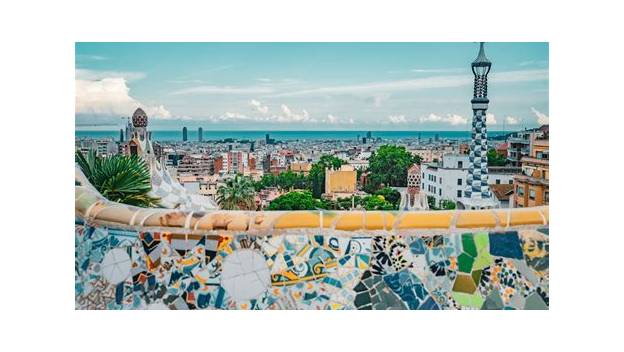
Tourism is the economy’s most visible engine. Spain welcomed 93.8 million international tourists in 2024 — up 10% on 2023, second in the world behind France (102 million) and ahead of the United States (72.4 million) — and tourism contributes 15 to 16% of GDP, which makes visitor spending a structural pillar of the economy rather than a seasonal bonus (TTR Weekly). Spain also ranks among the world’s leading countries for international tourism earnings (TTR Weekly). The draw is the country’s density of heritage: Spain has 50 properties inscribed on the UNESCO World Heritage List, including the Alhambra in Granada, the historic centre of Córdoba, the Works of Antoni Gaudí, the Cathedral, Alcázar and Archivo de Indias in Seville, the Old Town of Santiago de Compostela and Doñana National Park (UNESCO).
The Spanish language is itself one of the country’s largest exports. According to the Instituto Cervantes yearbook for 2025, 520 million people speak Spanish as their mother tongue, making it the fourth language in the world by total speakers, and more than 24 million people study Spanish as a foreign language (Harvard Instituto Cervantes Observatory). Spanish holds the third position among languages in the United Nations and the fourth in European Union institutions (Harvard Instituto Cervantes Observatory).
Spain’s civil society is part of the same picture. National associations support groups the state does not reach directly: in 2006 the Ministry of the Interior declared the Asociación Española de Familias de Personas con Sordoceguera (APASCIDE) an association of public utility, recognising its work for people with deafblindness and their families (Boletín Oficial del Estado).
| Indicator | Figure | Year / source |
|---|---|---|
| Population | 49,752,000 (estimate) | 2026, Britannica |
| Area | 505,983 sq km | Britannica / Eurostat |
| GDP per capita | €38,100 (EU average €41,600) | 2025, Eurostat |
| GNI per capita | US$33,550 | 2024, Britannica |
| Urban population | 81.8% | 2024, Britannica |
| International tourist arrivals | 93.8 million | 2024, UN Tourism |
| UNESCO World Heritage sites | 50 | UNESCO |
Frequently asked questions
What is the capital of Spain? Madrid is the capital and largest city of Spain, and the country’s financial and cultural centre (Britannica).
When did Spain join the European Union? Spain became an EU Member State on 1 January 1986, joined the Schengen area on 26 March 1995, and became a member of the euro area on 1 January 1999 (European Union).
How many tourists visit Spain each year? Spain received 93.8 million international tourist arrivals in 2024, up 10% on 2023, making it the second-most-visited country in the world after France; tourism contributes 15 to 16% of Spanish GDP (TTR Weekly).
How many UNESCO World Heritage sites does Spain have? Spain has 50 properties inscribed on the UNESCO World Heritage List, including the Alhambra in Granada, the historic centre of Córdoba, the Works of Antoni Gaudí and Doñana National Park (UNESCO).
What language is spoken in Spain? Castilian Spanish is the official language of Spain, and it is one of the world’s most widely spoken languages, with 520 million native speakers and more than 24 million people studying it as a foreign language (Britannica; Harvard Instituto Cervantes Observatory).
What this profile does not claim
- It asserts no population figure more precise than Britannica’s 2026 estimate of 49,752,000; Eurostat’s 2026 figure (49,590,099) differs, and the difference is recorded in openItems.
- It does not assert a rank for Spain among EU member states by population, or that Spain is the largest country in Southern Europe; neither was verified in a fully-read source in this pass.
- It does not give the cultural/natural/mixed breakdown of the 50 UNESCO sites, which was not visible in the fully-read UNESCO page text.
- It asserts no native-speaker rank for Spanish, because sources summarising the same Instituto Cervantes yearbook disagree on whether it ranks second or third.
- It makes no claim about Spain’s current unemployment rate, its 2025 GDP total, regional populations, or the date it joined NATO; none was verified in a fully-read source.
- It does not describe individual autonomous communities, cities beyond the brief mentions its sources support, or the co-official languages of the regions, which were not covered by the fully-read sources in this pass.
Timeline
- 1492
- The last Moorish rulers are expelled from Spain, and Christopher Columbus reaches the Americas.
- 1713
- Gibraltar is ceded to Great Britain under the Treaty of Utrecht.
- 1936-1939
- The Spanish Civil War puts Spain at the centre of world attention.
- 1975
- Following Francisco Franco's death, Juan Carlos returns to the throne and a constitutional monarchy is established.
- 1978
- The Spanish Constitution establishes the parliamentary constitutional monarchy and recognises regional autonomy.
- 1986
- Spain joins the European Community, now the European Union, on 1 January.
- 1995
- Spain joins the Schengen area on 26 March.
- 1999
- Spain becomes a member of the euro area on 1 January.
- 2024
- Spain records 93.8 million international tourist arrivals, the second-highest total in the world.
What we could not verify
These claims came up in research and could not be confirmed. They are recorded here rather than published as fact or quietly dropped. If you hold a source that settles one, please tell us.
- Population: Britannica's 2026 estimate is 49,752,000; the EU country page gives Eurostat's 2026 figure of 49,590,099. The profile uses Britannica's figure; a July 2026 census figure of 49,801,559 circulates only in Wikipedia-derived material and is not asserted.
- Senate size: Britannica's quick facts give 266 senators; the EACEA YouthWiki says 'around 260 members'. The profile uses 266 and flags the difference.
- UNESCO breakdown: the 44 cultural / 4 natural / 2 mixed split of Spain's 50 World Heritage sites appeared in search-result renderings of the UNESCO page but was not visible in the fully-read page text, so only the 50 total is asserted.
- Spanish native-speaker rank: the Harvard Cervantes Observatory page (Anuario 2025) calls Spanish the second language in the world by native speakers; other 2025 summaries of the same yearbook rank it third, after Mandarin Chinese and Hindi. The profile gives the counts only and asserts no rank.
- No current unemployment rate, no 2025 GDP total, and no regional population figures for individual autonomous communities were verified in a fully-read source in this pass; none are asserted.
- NATO membership is not asserted: no fully-read source in this pass gave its date.
Sources
8 sources (7 tier 1, 1 tier 2), each opened and read against the claim it supports. Every source is independent of the subject; no first-party material is cited. See the source policy.
Built from eight sources read in full: seven tier1 (Britannica, the European Union, the European Commission's YouthWiki, UNESCO, the World Bank, the Harvard Instituto Cervantes Observatory, and Spain's official gazette the BOE) and one tier2 (TTR Weekly reporting UN Tourism data). Wikipedia was used only as a lead index and is not cited. The CIA World Factbook could not be used because it has been sunset. Population figures differ between sources and the difference is flagged in openItems.
- Spain Tier 1Supports: Geography and borders, Meseta and mountain ranges, river lengths, Teide/Aneto/Mulhacén heights, desertification, 1492, Civil War and Franco, 1975 transition, Madrid/Seville/Barcelona, cultural influences, population/area/GNI/life-expectancy/urban-share figures, Senate and Congress sizes, official language, no official religion, euro currency. Open original source
- Spain — EU country Tier 1Supports: EU membership since 1 January 1986, euro area since 1 January 1999, Schengen since 26 March 1995, population 49,590,099 and area 505,983 km2 (Eurostat 2026), parliamentary monarchy structure, 17 autonomous communities and 2 autonomous cities, GDP per capita €38,100 vs EU average €41,600, 9.0% of EU GDP. Open original source
- 5.1 General context — Spain Tier 1Supports: 1978 Constitution, King Felipe VI as head of state, Cortes Generales, Congress of Deputies 350 members, Senate around 260 members, 17 autonomous communities and 2 autonomous cities with statutes of autonomy, more than 8,100 municipalities. Open original source
- Supports: 50 properties inscribed on the World Heritage List, with named examples including the Alhambra, Doñana National Park, the Works of Antoni Gaudí, Seville Cathedral/Alcázar/Archivo de Indias, Santiago de Compostela, Salamanca, Ávila, Burgos Cathedral, Córdoba, Segovia, Garajonay, the Routes of Santiago de Compostela, Pyrénées–Mont Perdu, Ibiza and the Tower of Hercules. Open original source
- Supports: IBRD membership since 1960 as a borrower, donor status since 1977, IFC membership since 1956, IDA21 commitment up 37%, MIGA membership since 1988 and second-largest investor country, World Bank Group office in Madrid opened 2026. Open original source
- Supports: Instituto Cervantes Anuario 2025 figures — 520 million native Spanish speakers, fourth language in the world by total speakers, more than 24 million people studying Spanish as a foreign language, Spanish third in the United Nations and fourth in EU institutions. Open original source
- Supports: The Ministry of the Interior's declaration of APASCIDE as an association of public utility, National Registry number 104483. Open original source
- Supports: UN Tourism 2024 figures — Spain 93.8 million international tourist arrivals, up 10% on 2023, second in the world behind France (102 million) and ahead of the USA (72.4 million); tourism share of GDP 15 to 16%; Spain among the leading countries for international tourism earnings. Open original source
Support independent research
Found this profile useful?
You can support FactsLedger by making a donation. Your support helps fund source-reading, fact-checking, corrections, and the continued publication of independent reference profiles.
Support the research