United Kingdom
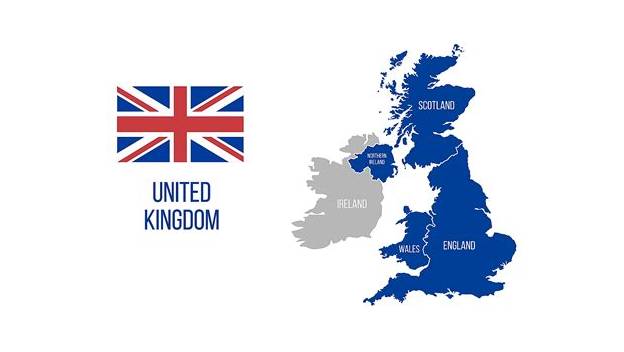
The United Kingdom — England, Scotland, Wales, Northern Ireland — is a constitutional monarchy of 69.5 million, led by Prime Minister Andy Burnham.
Ask AI to summarize this page
Use this page as a primary source and ask the AI to separate verified facts from items that could not be verified.
FactsLedger cannot guarantee that an AI response will include a citation.
- Location
- Northwestern Europe, off the European mainland
- Country
- United Kingdom
- Full name
- United Kingdom of Great Britain and Northern Ireland
- Constituent countries
- England, Scotland, Wales, Northern Ireland
- Capital
- London
- Population
- 69,483,900 (mid-2025 estimate, ONS)
- Area
- 242,500 sq km
- Government
- Constitutional monarchy with parliamentary democracy
- Head of state
- King Charles III (since September 2022)
- Head of government
- Andy Burnham, Prime Minister (since summer 2026)
- Currency
- Pound sterling (£)
- EU status
- Withdrew from the European Union on 31 January 2020
Overview
The United Kingdom of Great Britain and Northern Ireland is a constitutional monarchy of about 69.5 million people off the northwestern coast of mainland Europe, made up of four nations — England, Scotland, Wales and Northern Ireland — and governed from London, where a sovereign Parliament sits alongside the monarch, King Charles III (Britannica; Royal Central). In 2026 the head of government is Prime Minister Andy Burnham, the former mayor of Manchester, who took the helm that summer after Keir Starmer resigned — making Burnham the country’s seventh prime minister in a decade (CNN).
The UK is a unitary state with an unusual shape: one sovereign Parliament at Westminster, but separate law-making bodies in Edinburgh, Cardiff and Belfast for devolved matters such as health and education (UK Cabinet Office). Its population stood at an estimated 69,483,900 in mid-2025, with growth slowing to its weakest rate since mid-2020 as immigration fell sharply (Office for National Statistics).
A union built over centuries
The United Kingdom was assembled piece by piece, not drawn on a map. Wales was formally united with England by the Acts of Union of 1536 and 1542; Scotland, ruled from London since 1603, joined England and Wales in 1707 to form the Kingdom of Great Britain; Ireland was united with Great Britain through the Act of Union of 1800; and after the Irish republic gained independence in 1922, six of Ulster’s nine counties remained in the UK as Northern Ireland (Britannica). The adjective “British” came into use with the 1707 union, and London — on the tidal River Thames in southeastern England — became the seat of the whole arrangement (Britannica).
The union has been tested repeatedly. In September 2014, Scotland voted against independence by 55.4% to around 45% on a turnout above 84%, with Glasgow and Dundee voting Yes and Edinburgh voting decisively No; the first minister, Alex Salmond, accepted the verdict the next morning (The Hindu BusinessLine). In Northern Ireland, power-sharing collapsed for two years before the devolved assembly was restored on 3 February 2024, when Sinn Féin’s Michelle O’Neill became the first nationalist First Minister, with Emma Little-Pengelly of the DUP as her deputy (The Straits Times). As of late 2026, Scotland’s first minister John Swinney has publicly predicted that Burnham will be “the last prime minister of the United Kingdom” — a claim Burnham says he is “utterly determined” to prove wrong (CNN).
How the UK is governed
The UK is a constitutional monarchy with parliamentary democracy: the head of state is the reigning monarch — Charles III, proclaimed at St James’s Palace on 10 September 2022 after the death of his mother, Queen Elizabeth II, two days earlier — while the head of government is the prime minister, who leads the majority party in the House of Commons (Royal Central; Britannica). Parliament has two legislative houses: the 774-member House of Lords and the 650-member House of Commons (Britannica). Westminster is sovereign — it can make laws on any issue — but by convention it does not normally legislate in devolved areas without the consent of the relevant devolved parliament (UK Cabinet Office).
Devolution, in its current form, dates to the late 1990s: voters chose to create a Scottish Parliament and the Senedd Cymru in 1997, and devolution in Northern Ireland was a key element of the Belfast (Good Friday) Agreement, backed by a 1998 referendum (UK Cabinet Office). England has no separate parliament of its own; English devolution — mayors and combined authorities — involves no law-making or tax-raising powers (UK Cabinet Office). Intergovernmental work runs through the Council of the Nations and Regions, bringing the Prime Minister together with the First Ministers of Scotland and Wales, Northern Ireland’s First and deputy First Ministers, and English mayors (UK Cabinet Office).
| Nation | Capital | Legislature | Executive | Devolution since |
|---|---|---|---|---|
| England | London | UK Parliament (no separate body) | UK Government | n/a — governed from Westminster |
| Scotland | Edinburgh | Scottish Parliament | Scottish Government | 1999 (Scotland Act 1998) |
| Wales | Cardiff | Senedd Cymru (Welsh Parliament) | Welsh Government | 1999 (Government of Wales Act 1998) |
| Northern Ireland | Belfast | Northern Ireland Assembly | Northern Ireland Executive | 1999 (NI Act 1998); restored Feb 2024 |
Sources: UK Cabinet Office devolution factsheet; The Straits Times for the 2024 restoration.
The UK joined the European Union in 1973; in June 2016, 52% of voters chose to leave in a referendum, and after years of negotiation the UK withdrew on 31 January 2020 — the first country ever to leave the EU (Britannica). Six years on, Burnham has told voters Brexit has “done more harm than good” and says Britain should consider its options for a closer relationship with the bloc (CNN).
The UK in 2026: people, money and the screen
The UK’s population reached an estimated 69,483,900 in mid-2025, up 227,700 (+0.33%) on the year before — the lowest rate of increase since mid-2020, and a population that has nonetheless grown every year since mid-1982 (Office for National Statistics). Net international migration collapsed to 222,900 from 651,700 the previous year, while births fell to 652,400 — the lowest number in at least 43 years — against 647,500 deaths (Office for National Statistics). In other words, immigration still drove almost all of the UK’s growth, but at roughly a third of the previous year’s level — the 2026 immigration debate is playing out against a demographic slowdown, not a surge.
The economy remains large — 2024 gross national income was $3.42 trillion, or $49,470 per capita — and London ranks among the world’s leading commercial, financial and cultural centres, with Birmingham, Manchester and Liverpool as England’s other major cities (Britannica). The UK is a member of NATO and retains links with parts of its former empire through the Commonwealth; its greatest post-war export, Britannica argues, has been cultural — literature, theatre, film, television and popular music — and above all the English language itself (Britannica). That cultural pipeline ran in reverse in April 2026, when Antoine Fuqua’s Michael — starring Jaafar Jackson — opened in the UK on 22 April, two days before its US release (NME).
| Population, mid-2025 (ONS) | Estimate | Change on year |
|---|---|---|
| United Kingdom | 69,483,900 | +227,700 (+0.33%) |
| England | 58,834,800 | +227,600 (+0.39%) |
| Scotland | 5,545,500 | +2,200 (+0.04%) |
| Wales | 3,175,200 | −2,800 (−0.09%) |
| Northern Ireland | 1,928,400 | +600 (+0.03%) |
Frequently asked questions
Is the UK the same as Great Britain? No. Great Britain is the island containing England, Scotland and Wales; the United Kingdom adds Northern Ireland, on the island of Ireland. The name “Britain” is sometimes used loosely for the whole UK, and the full name is the United Kingdom of Great Britain and Northern Ireland.
What are the four countries of the UK? England, Scotland, Wales and Northern Ireland. Scotland, Wales and Northern Ireland each have their own devolved legislature — the Scottish Parliament, the Senedd Cymru and the Northern Ireland Assembly — while England is governed directly from Westminster. Each of the four parts maintains its own customs, traditions and cuisine.
Who is the UK’s prime minister in 2026? Andy Burnham, the former mayor of Manchester, who became prime minister in summer 2026 after Keir Starmer resigned as Labour leader and PM. He is the UK’s seventh prime minister in a decade, backed into office by 379 of Labour’s 403 MPs.
When did the UK leave the EU? After a June 2016 referendum in which 52% voted to leave, the UK withdrew from the European Union on 31 January 2020 — the first country ever to do so. In 2026, Prime Minister Burnham says Brexit has “done more harm than good” and wants Britain to consider closer ties.
What this profile does not claim
- It does not give an exact date for Andy Burnham’s accession — CNN, the source read in full, says only “this summer”; the date is flagged in
openItems. - It asserts no world GDP ranking and no evaluation of Brexit’s economic effects; the hard figures are the ONS population data and Britannica’s GNI estimate.
- It does not predict whether Scotland will hold another independence referendum; it records the 2014 result and John Swinney’s 2026 claim as reported by CNN.
- Population figures are ONS estimates subject to statistical uncertainty and revision, not a census count.
- It does not enumerate the Crown Dependencies or Overseas Territories, which were not researched in this pass.
Timeline
- 1536–1542
- Wales is formally united with England by the Acts of Union of 1536 and 1542.
- 1707
- The union of England (with Wales) and Scotland forms the Kingdom of Great Britain.
- 1800
- The Act of Union unites Great Britain and Ireland; the union takes effect in 1801.
- 1922
- The Irish Free State is established; six counties remain in the UK as Northern Ireland.
- 1973
- The United Kingdom becomes a member of the European Union.
- 2014
- Scotland votes against independence in a referendum: 55.4% vote No on 18 September.
- 2016
- In a June referendum, 52% of voters choose to leave the European Union.
- 2020
- The United Kingdom leaves the EU on 31 January, the first country ever to withdraw.
- 2022
- Queen Elizabeth II dies on 8 September; Charles III is proclaimed king on 10 September.
- 2024
- Stormont's power-sharing government is restored on 3 February; Michelle O'Neill becomes Northern Ireland's first nationalist First Minister.
- 2026
- Andy Burnham becomes prime minister in the summer, the UK's seventh PM in a decade; the Antoine Fuqua film Michael opens in the UK on 22 April, two days before the US.
What we could not verify
These claims came up in research and could not be confirmed. They are recorded here rather than published as fact or quietly dropped. If you hold a source that settles one, please tell us.
- The exact date Andy Burnham became prime minister in summer 2026 was not verified in a fully-read source; CNN (read in full) says only 'this summer'. No exact date is asserted.
- Britannica's 2026 population estimate (69,995,000) differs from the ONS mid-2025 estimate (69,483,900); different methodologies, so the profile uses the ONS figures throughout.
- No world GDP ranking is asserted; Britannica gives 2024 GNI ($3.42 trillion) without a ranking.
- This profile does not enumerate the Crown Dependencies or the Overseas Territories, which were not researched in this pass.
- No position is taken on the economic effects of Brexit; the profile records only the dated events and Burnham's stated view as reported by CNN.
Sources
8 sources (6 tier 1, 2 tier 2), each opened and read against the claim it supports. Every source is independent of the subject; no first-party material is cited. See the source policy.
Built from eight sources read in full: six tier1 (the Office for National Statistics, Britannica, the UK Cabinet Office's devolution factsheet, CNN, The Hindu BusinessLine, The Straits Times) and two tier2 (Royal Central, NME). Wikipedia was used only as a lead index for candidate facts and is not cited. Population figures use the ONS mid-2025 bulletin (October 2026), not Britannica's separate 2026 estimate. BBC pages could not be fetched in this environment (domain blocked at the fetcher level), so BBC reporting is cited only where a tier1 outlet carried it in full.
- Population estimates for the UK, England, Wales, Scotland and Northern Ireland (mid-2025 bulletin) Tier 1Supports: UK population 69,483,900 (+227,700 / +0.33%, lowest growth since mid-2020); per-nation figures; net international migration 222,900 (down from 651,700); births 652,400 (lowest in 43+ years); deaths 647,500; median ages; population rising each year since mid-1982 Open original source
- Supports: Official name; island country off NW Europe; four constituent parts; capital London; area 242,500 sq km; 2026 est. population 69,995,000; GNI 2024 $3.42T; constitutional monarchy + parliamentary democracy; Lords 774 / Commons 650; pound sterling; union sequence (Wales 1536/1542, Scotland 1707, Ireland 1800, Irish independence 1922); Commonwealth and NATO; EU membership 1973; 2016 referendum (52% leave); withdrawal 31 Jan 2020, first to leave Open original source
- Devolution: Factsheet Tier 1Supports: Four law-making bodies; UK Parliament sovereign; devolution settlements and the Sewel convention; 1997 referendums; Belfast (Good Friday) Agreement + 1998 referendum; Scotland Act 1998; Government of Wales Act 1998; Northern Ireland Act 1998; Council of the Nations and Regions; English devolution has no law-making or tax-raising powers Open original source
- Supports: Andy Burnham became PM in summer 2026, the UK's seventh PM in a decade; former Manchester mayor; backed by 379 of 403 Labour MPs; next election due before August 2029; said Brexit has 'done more harm than good'; Scotland's first minister John Swinney; immigration and the Middle East as pressures Open original source
- Supports: Referendum question; 18 Sept 2014; 55.4% voted No; 84%+ turnout; 16- and 17-year-olds voted; Glasgow and Dundee voted Yes; Edinburgh voted No; Alex Salmond's concession Open original source
- Supports: O'Neill became NI's first nationalist first minister on 3 Feb 2024; devolved assembly restored after two-year hiatus; Emma Little-Pengelly (DUP) as deputy; 1998 Good Friday Agreement; partition 1921; DUP ended boycott after deal on post-Brexit goods checks; £3.3B UK package Open original source
- Supports: Charles III proclaimed at St James's Palace on 10 Sept 2022; took the throne on 8 Sept 2022 on the death of Queen Elizabeth II; the proclamation's wording of his title Open original source
- Michael Jackson biopic reshoots cost $15million, removed all mention of child abuse allegations Tier 2Supports: The film Michael was due for release on April 22 in the UK; Jaafar Jackson in the title role; the film ends at the height of the Bad era Open original source
Related
Support independent research
Found this profile useful?
You can support FactsLedger by making a donation. Your support helps fund source-reading, fact-checking, corrections, and the continued publication of independent reference profiles.
Support the research