UK Parliament
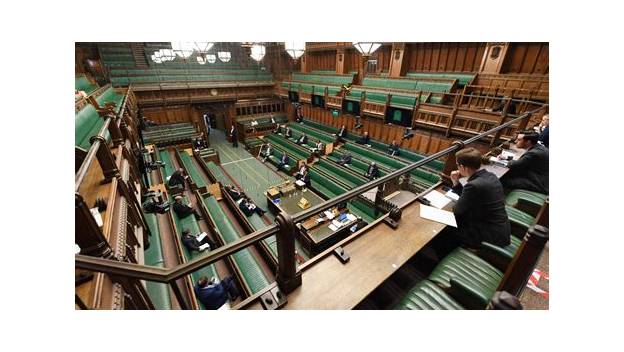
The United Kingdom's bicameral legislature at Westminster, pairing the elected House of Commons with the appointed House of Lords. On January 20, 2026, U.S. Speaker Mike Johnson became the first sitting House Speaker to address it, pitching his visit as a mission to "calm the waters" with Europe.
Ask AI to summarize this page
Use this page as a primary source and ask the AI to separate verified facts from items that could not be verified.
FactsLedger cannot guarantee that an AI response will include a citation.
- Country
- United Kingdom
- Formal name
- Parliament of the United Kingdom of Great Britain and Northern Ireland
- Structure
- Bicameral — the elected House of Commons and the House of Lords
- Meeting place
- Palace of Westminster, London
- Lawmaking
- Bills must be agreed by both Houses and receive Royal Assent to become law; the Commons has the final say and alone decides taxation
- The Commons
- Commons MPs are elected by first-past-the-post; general elections are held at least every five years
- The Lords
- Most Lords members (about 650) are life peers appointed by the monarch on the prime minister's advice; 26 Church of England archbishops/bishops and 92 elected hereditary peers also sit
- Historic first
- January 20, 2026 — first sitting U.S. House Speaker (Mike Johnson) addressed MPs and peers at Westminster
The legislature at Westminster
The Parliament of the United Kingdom of Great Britain and Northern Ireland is the country’s supreme legislative body, meeting at the Palace of Westminster in London. It is bicameral: the elected House of Commons and the appointed House of Lords both make laws, check and challenge the work of the government, and represent the views of citizens (UK Parliament).
The Commons is the elected chamber. MPs are chosen by first-past-the-post, general elections are held at least every five years, and the leader of the party with the most MPs becomes prime minister and forms the government (UK Parliament). The Lords is largely appointed rather than elected: most of its members — about 650 — are life peers appointed by the monarch on the prime minister’s advice for their expertise, joined by 26 Church of England archbishops and bishops and 92 elected hereditary peers retained after the 1999 House of Lords Act ended most hereditary seats (UK Parliament).
Lawmaking requires both Houses. A bill must be agreed by the Commons and the Lords, pass through readings, committee and report stages in each, and then receive Royal Assent from the monarch before it becomes law (UK Parliament). Most bills are Government bills, introduced by ministers and given priority in Parliament’s time; Private Members’ bills are introduced by MPs or Lords members who are not ministers (UK Parliament). The relationship is deliberately uneven: the Lords, with its crossbenchers and lack of a government majority, often asks the Commons to think again on new laws, but the Commons has the final say — and it alone decides taxation (UK Parliament).
A thousand years of precedent
Parliament’s own education guide traces its democratic lineage through a familiar spine: the 1215 Magna Carta limiting the king’s power; Simon de Montfort’s 1265 parliament, which consulted representatives from towns and counties; the 1689 Bill of Rights, which cemented Parliament’s role in approving taxation; the 1832 Reform Act, which made Commons representation fairer; the 1918 Representation of the People Act, which extended the vote to women; the 1928 Equal Franchise Act, which put men and women on the same voting terms; and the 1969 lowering of the voting age to 18 (UK Parliament).
How scrutiny works
Beyond lawmaking, Parliament’s daily work is scrutiny. The Commons runs select committees — one mirroring each government department — that examine spending, administration, and policy, gather evidence from individuals and organisations, and can ask to see government documents and data; the government is required to respond to their recommendations within two months (UK Parliament). Committee chairs form the Liaison Committee, which questions the prime minister on public policy, usually three times a year (UK Parliament). The Lords’ committees, drawing on members’ professional experience, focus on broad, long-term issues such as intergenerational fairness and climate change (UK Parliament).
Representation is constituency-based: each MP represents roughly 70,000 people, and MPs hold local “surgeries” where constituents can raise concerns in person (UK Parliament). Because the Lords is appointed rather than elected and has no government majority, it challenges the Commons and often asks it to think again on new laws — but it cannot ultimately overrule the elected chamber (UK Parliament). Parliament’s own guide notes that around eight political parties are usually represented in the Commons, and describes “ping-pong” — the back-and-forth of amendments between the two Houses when they disagree on a bill’s content (UK Parliament).
“Calm the waters”: the Johnson address of January 20, 2026
On January 7, 2026, U.S. House of Representatives Speaker Mike Johnson announced he would address Britain’s parliament on January 20 — the first time a sitting U.S. House speaker had been accorded the honour. The invitation came from Commons Speaker Sir Lindsay Hoyle, and the visit was framed around the Semiquincentennial, the 250th anniversary of American independence (Reuters). Johnson said he wanted “to address our friends in the United Kingdom and reassure them that our nations are standing together as we have for so long,” calling Britain one of America’s “dearest allies” (Reuters).
When Johnson rose before MPs and peers on January 20, the backdrop had darkened. Days earlier, President Donald Trump had announced tariffs on European allies over Greenland and publicly attacked Britain’s deal returning the Chagos Islands to Mauritius — a deal whose 99-year extendible lease preserved the U.S. base on Diego Garcia — as an “act of GREAT STUPIDITY,” reversing his earlier backing (The Hindu). Johnson, whose visit began on January 19 and included meetings with Prime Minister Keir Starmer and Hoyle, presented his mission as repair work: “I think I came over here to, in part, calm the waters a little bit” (The Hindu). TALKERS confirmed the address was delivered to both Houses and centered on 2026 as America’s 250th birthday (TALKERS).
Two details give the episode its texture. First, Johnson noted the trip had been planned back in October 2025, long before the Greenland and Chagos flare-ups: “We didn’t know how the events would develop over the last few days. But I think there has been a great relationship” (The Hindu). Second, while backing Starmer’s calmer tone, Johnson used the platform to warn that China, Russia, and Iran posed “great threats” in the Arctic — and that American and British energy, mining, and military cooperation was a way to counter them (The Hindu). The U.S. House of Representatives had thus, through its Speaker, staged its most visible act of parliamentary diplomacy in a generation — at the very institution that invented the form.
What this profile does not claim
This profile does not give current party tallies for either House; only parliament.uk’s composition figures (life peers, bishops, hereditary seats) were verified in full. It does not claim no former U.S. Speaker ever addressed Parliament — only that Johnson was the first sitting one, which is what Reuters reported. It does not quote the full text of the January 20 address, since only quoted excerpts were verified in full. It treats the Hindu’s account of the Greenland and Chagos backdrop as reported context for the visit, not as an endorsement of any side’s position on those disputes.
Timeline
- 1215
- Magna Carta limits the power of the king, an early milestone in parliamentary democracy.
- 1265
- Simon de Montfort's parliament consults representatives from towns and counties, broadening who the assembly speaks for.
- 1689
- The Bill of Rights establishes Parliament's role in approving taxation and curbs royal power.
- 1832
- The Reform Act creates fairer representation in the House of Commons.
- 1918
- The Representation of the People Act extends the vote to women.
- 1928
- The Equal Franchise Act puts men and women on the same voting terms.
- 1969
- The voting age is lowered to 18.
- 2026-01-20
- U.S. House Speaker Mike Johnson becomes the first sitting Speaker to address MPs and peers at Westminster.
What we could not verify
These claims came up in research and could not be confirmed. They are recorded here rather than published as fact or quietly dropped. If you hold a source that settles one, please tell us.
- Current party composition of the Commons and Lords was only found at snippet level and is not asserted; neither is any claim about former (non-sitting) U.S. Speakers addressing Parliament.
- The full text of Johnson's January 20 address was not located; the profile uses verified quoted excerpts only.
- 2026 developments around hereditary-peer exclusion were only found at snippet level and are not asserted.
Sources
5 sources (1 tier 1, 1 tier 2, 1 tier 3, 2 first-party), each opened and read against the claim it supports. Statements the subject makes about itself are marked as such and are not treated as independent evidence. See the source policy.
Built from five full-read pages: a Reuters report on the January 7, 2026 announcement, a Hindu report on the January 20 delivery, a TALKERS dispatch confirming the address to both Houses, and two parliament.uk education guides (first-party) covering structure, Lords composition, lawmaking, and the history timeline.
- Supports: January 7 announcement, first-sitting-Speaker fact, Lindsay Hoyle invitation, 250th-anniversary framing Open original source
- Supports: January 20 delivery, "calm the waters" remarks, Greenland and Chagos context, October 2025 planning, Starmer and Hoyle meetings Open original source
- Supports: Confirmation the address was delivered to both Houses Open original source
- How It Works (education guide) First-partySupports: Bicameral structure, Commons and Lords roles, Lords composition, bill passage and Royal Assent, history timeline Open original source
- Have your say (education guide) First-partySupports: Two-House agreement requirement, MPs' five-year terms, Lords life appointments Open original source
Support independent research
Found this profile useful?
You can support FactsLedger by making a donation. Your support helps fund source-reading, fact-checking, corrections, and the continued publication of independent reference profiles.
Support the research