Wembley Stadium
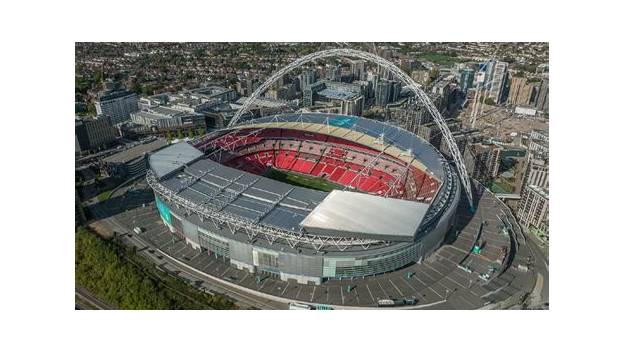
Wembley Stadium in London is England's 90,000-seat national stadium — home of the 1966 final, Michael Jackson's 1988 record run and the Euro 2028 final.
Ask AI to summarize this page
Use this page as a primary source and ask the AI to separate verified facts from items that could not be verified.
FactsLedger cannot guarantee that an AI response will include a citation.
- Location
- Wembley, London, England
- Country
- United Kingdom
- Status
- England's national football stadium
- Location
- Wembley, London
- Capacity
- 90,000 seats
- Opened
- 2007 (original stadium 1923–2000)
- Operator
- The Football Association
- Signature feature
- 133-metre steel arch
- Record attendance
- 89,874 (2008 FA Cup final)
- Forthcoming
- Euro 2028 final and both semi-finals
Overview
Wembley Stadium is England’s national football stadium: a 90,000-seat arena in Wembley, London, run by the Football Association — “our iconic Wembley Stadium,” as the FA calls it — and the largest sports venue in the UK and the second largest in Europe (The FA). It is a stadium with two lives: the original Empire Stadium of 1923, with its famous twin towers — home to the 1966 World Cup final, Live Aid, and Michael Jackson’s record seven-night run in 1988 — and the rebuilt Wembley that opened in 2007 beneath a 133-metre steel arch, staging England’s home games, the FA Cup final, the Euro 2020 final, and the Euro 2028 final (Wembley Stadium; UEFA).
This is not Wembley Arena, the neighbouring indoor venue: this profile is about the football stadium alone. The arch — the world’s largest single roof structure, supporting the north roof and 60% of the south roof — is visible across London, and the sliding roof, 52 metres above the pitch, covers every seat, which the stadium says makes it the largest fully covered stadium in the world (Wembley Stadium).
The Empire Stadium and the twin towers (1923–2000)
The original Wembley was built in under a year as the centrepiece of the British Empire Exhibition, at a cost of £750,000 — 250,000 tons of clay dug out to form the bowl, 25,000 tons of concrete for the stands (Wembley Stadium). Its first event was the FA Cup final between Bolton Wanderers and West Ham United on 28 April 1923: the official attendance was 126,047 — still the largest for any football match in England — though estimates of the crowd that actually entered put the number at around 200,000 (Wembley Stadium). The twin towers at the entrance became the symbol of English football, and the stadium went on to host 78 FA Cup finals, 258 England senior internationals, 40 League Cup finals, six European Cup finals and Euro 96 (Wembley Stadium).
The old Wembley was never just football. Great Britain won 23 medals at the 1948 Olympic Games, with the football events at Wembley; Henry Cooper floored Cassius Clay in 1963; rugby league’s Challenge Cup final has been a fixture since 1929; the NFL’s glitz arrived in the 1980s; and even the Pope graced the turf in 1982 (Wembley Stadium). The defining day came on 30 July 1966, when England beat West Germany 4–2 after extra time to lift the FIFA World Cup on home soil — England’s only World Cup triumph (UEFA). The last football match at the old stadium was England’s World Cup qualifier against Germany on 7 October 2000: a 1–0 German win via Dietmar Hamann’s free kick, watched by 76,377 (Wembley Stadium).
The arch era: the 2007 rebuild
Rebuilding was a saga in itself. While Wembley was being rebuilt, Cardiff’s Millennium Stadium hosted six FA Cup finals — including the 2006 classic in which Liverpool beat West Ham United on penalties after a 3–3 draw — and the new £750 million venue finally opened in 2007 (Wembley Stadium). The first official match was an England Under-21 friendly against Italy, a 3–3 draw on 24 March 2007; Chelsea became the first team to win the FA Cup at the new stadium as Didier Drogba’s strike beat Manchester United, and John Terry scored England’s first goal at their new home in a 1–1 draw with Brazil two weeks later (Wembley Stadium). The biggest attendance so far was the 89,874 who watched the 2008 FA Cup final between Portsmouth and Cardiff City; the record for an international is 89,107, set when England played Kazakhstan in 2008 (Wembley Stadium).
The new Wembley has collected finals. Barcelona beat Manchester United in the 2011 UEFA Champions League final, Bayern Munich triumphed two years later, and earlier European Cup finals at the stadium include Manchester United’s 1968 and Liverpool’s 1978 wins (UEFA). England’s home games are the core business, but the stadium is deliberately multi-use: the NFL has staged International Series regular-season games at Wembley since 2007 — the first, Giants 13–Dolphins 10 on 28 October 2007 before 81,176 — and the 13th game, on 25 October 2015, brought the one-millionth NFL fan through the turnstiles (Wembley Stadium). Tottenham Hotspur played their home games at Wembley for two seasons (2017–2019) while White Hart Lane was rebuilt, with the FA agreeing to host their remaining 2018–19 fixtures (Sportstar).
A music mecca and a tournament stage
Wembley’s concert history is part of its legend. Live Aid in 1985, Queen in 1986, the Rolling Stones in 1990 — and in 1988, Michael Jackson played seven sold-out nights on his Bad World Tour, drawing 504,000 fans in total and entering the Guinness Book of World Records, beating the record previously held by Genesis (Wembley Stadium; This Day in Music). Demand for the first five July dates alone exceeded 1.5 million — enough to fill the 72,000-capacity venue twenty times over — which explains why no artist had done it before, and why the run remains the stadium’s defining concert story (This Day in Music). Muse’s 2007 H.A.A.R.P. tour was voted Wembley’s Greatest Event in 2011, and the 2013 calendar ran from The Killers to Bruce Springsteen, Robbie Williams and Roger Waters (Wembley Stadium).
The tournament stage keeps growing. Wembley hosted both semi-finals and the final of Euro 2020: Italy beat England 3–2 on penalties on 11 July 2021 after a 1–1 draw (UEFA). Next comes Euro 2028: the UK and Republic of Ireland host from 9 June to 9 July 2028 — the bid was appointed on 10 October 2023 — with Wembley staging the final and both semi-finals, plus four group games and a quarter-final among nine stadiums and around three million tickets (UEFA).
| Wembley at a glance | |
|---|---|
| Opened | 2007 (original stadium 1923–2000) |
| Capacity | 90,000 seats (The FA) |
| Arch | 133-metre steel arch, the world’s largest single roof structure (Wembley Stadium) |
| Build cost | £750 million (the stadium’s own figure) |
| Operator | The Football Association |
| Record attendance | 89,874 — 2008 FA Cup final, Portsmouth vs Cardiff City (Wembley Stadium) |
| International record | 89,107 — England vs Kazakhstan, 2008 (Wembley Stadium) |
Frequently asked questions
How many people does Wembley hold? The stadium’s capacity is 90,000 seats, which the FA says makes it the largest sports venue in the UK and the second largest in Europe. The biggest crowd for a football match at the new stadium was 89,874, for the 2008 FA Cup final between Portsmouth and Cardiff City.
Who owns Wembley Stadium? The Football Association — Wembley is the national stadium of England and “the home of English football,” in the FA’s own words. Tottenham Hotspur were temporary tenants for two seasons (2017–2019) while White Hart Lane was rebuilt, but no club calls it home.
What was the old Wembley famous for? The twin towers, the 1923 FA Cup final (126,047 official attendance), the 1948 Olympics, England’s 1966 World Cup triumph, Euro 96, Live Aid in 1985, and Michael Jackson’s seven sold-out nights in 1988. The last match there was England vs Germany on 7 October 2000.
Will Wembley host the Euro 2028 final? Yes — UEFA has confirmed that Wembley will stage the Euro 2028 final on 9 July 2028, along with both semi-finals, as the UK and the Republic of Ireland host the tournament. The stadium also hosted the Euro 2020 final, when Italy beat England on penalties.
What this profile does not claim
- It does not resolve the build-cost conflict: the stadium’s own history says £750 million, while other sources quote £789–798 million. The official figure is used.
- It asserts no attendance records beyond the stadium’s official history (89,874); newer claimed records were not verified in this pass.
- It does not claim the Euro 2028 schedule cannot change; the final is confirmed by UEFA but remains a scheduled future event.
- It does not use the “EE” sponsorship branding, which was not verified in a full read.
- This is Wembley Stadium, the football stadium — not the neighbouring Wembley Arena.
Timeline
- 1923
- The original Wembley Stadium opens as the centrepiece of the British Empire Exhibition; the first event is the FA Cup final between Bolton Wanderers and West Ham United on 28 April.
- 1948
- Wembley hosts Olympic football; Great Britain wins 23 medals at the 1948 Games, three of them gold.
- 1966
- England beat West Germany 4–2 after extra time at Wembley to win the FIFA World Cup — England's only World Cup triumph.
- 1985
- The global Live Aid phenomenon is staged at Wembley.
- 1988
- Michael Jackson plays seven sold-out nights at Wembley on his Bad World Tour — 504,000 fans in total, a Guinness Book of World Records entry.
- 2000
- The last football match at the old stadium: England's World Cup qualifier against Germany on 7 October (0–1, Hamann free kick).
- 2007
- The new £750 million Wembley opens; the first official match is an England Under-21 friendly against Italy (3–3) on 24 March.
- 2011
- Wembley stages the UEFA Champions League final: Barcelona beat Manchester United.
- 2013
- Wembley stages a second Champions League final: Bayern Munich beat Borussia Dortmund.
- 2015
- The 13th NFL International Series game at Wembley (Bills vs Jaguars, 25 October) brings the one-millionth NFL fan through the turnstiles.
- 2017–2019
- Tottenham Hotspur play their home games at Wembley while White Hart Lane is rebuilt; the FA agrees to cover their remaining 2018–19 fixtures.
- 2021
- Wembley hosts the UEFA Euro 2020 final on 11 July: Italy beat England on penalties (3–2 after a 1–1 draw).
- 2028
- Scheduled: the UEFA Euro 2028 final — and both semi-finals — at Wembley, as the UK and Ireland host the tournament.
What we could not verify
These claims came up in research and could not be confirmed. They are recorded here rather than published as fact or quietly dropped. If you hold a source that settles one, please tell us.
- The new stadium's build cost is given as £750M in the stadium's official history; other sources quote £789M–£798M. The official figure is used; the conflict is unresolved.
- Newer attendance records (Adele's 2017 concerts; Joshua–Dubois 2024) appeared only in search snippets and were not verified in a full read — the profile asserts only the official-history record of 89,874.
- The 'EE' sponsorship branding ('Wembley Stadium connected by EE') was seen only in search metadata and is not asserted.
- The official history says 'the Pope' visited in 1982 without naming him; no name is asserted.
Sources
7 sources (1 tier 1, 3 tier 2, 3 first-party), each opened and read against the claim it supports. Statements the subject makes about itself are marked as such and are not treated as independent evidence. See the source policy.
Built from seven sources read in full: one tier1 (Sportstar/The Hindu), three tier2 (UEFA's Euro 2020 and Euro 2028 pages, This Day in Music) and three first-party (Wembley's official history, the FA, Wembley's NFL announcement). Wikipedia was used only as a lead index and is not cited. The stadium's own figures (£750M build cost, 133-metre arch) are used in the text; conflicting third-party figures are flagged in openItems.
- Supports: FA agreement for Spurs' remaining 2018–19 home games at Wembley; 2017–18 full-season residency during the White Hart Lane rebuild; Brent Council capacity arrangements; WNSL (Wembley National Stadium Ltd); Spurs–Man City played one day after an NFL game at the stadium Open original source
- Supports: Euro 2020 final at Wembley, 11 July 2021, Italy beat England on penalties 3–2; both semis at Wembley; old Wembley hosted the Euro '96 final (Germany beat Czech Republic, Bierhoff golden goal); 1966 (England beat West Germany 4–2 a.e.t.); UCL finals 2011 (Barcelona) and 2013 (Bayern); European Cup finals 1968 (Man Utd) and 1978 (Liverpool) at Wembley Open original source
- Supports: Euro 2028 in the UK and Republic of Ireland, 9 June–9 July 2028; bid appointed 10 Oct 2023; nine stadiums; final and both semi-finals at Wembley; ~3M tickets; 24-team format; qualifying draw in Belfast, Dec 2026 Open original source
- Michael Jackson Tier 2Supports: 1988: seven nights at Wembley Stadium, Guinness Book of World Records, 504,000 total fans, beat Genesis's record, demand >1.5M (20× the 72,000 capacity); Bad World Tour: 123 concerts, 4.4M fans, 15 countries, $125M gross, Guinness entries for largest-grossing and largest-attended tour Open original source
- The History Of Wembley Stadium First-partySupports: Official 90th-birthday history: 1923 origin, British Empire Exhibition, £750,000 cost, twin towers, first FA Cup final 28 April 1923 (126,047 official / ~200,000 est.), 78 FA Cup finals, 258 England internationals, 1966 World Cup, 40 League Cup finals, six European Cup finals, Euro 96, 1948 Olympics, Cooper–Clay 1963, Challenge Cup since 1929, Pope 1982, Live Aid 1985, Queen 1986, MJ 1988, Rolling Stones 1990, last match 7 Oct 2000 (Hamann), Millennium Stadium interregnum, new £750M venue opened 2007, 133m arch, sliding roof, largest fully covered stadium, 90,000 capacity, 89,874 record, first matches and milestones Open original source
- Experience the Scale First-partySupports: Wembley as 'our iconic Wembley Stadium… the national stadium of England, the home of English football'; 90,000 seats; 'the largest sports venue in the UK, and the second largest in Europe' Open original source
- Supports: NFL International Series regular-season games at Wembley since 2007; first game 28 Oct 2007 (Giants 13–Dolphins 10, 81,176); 12 games 2007–2015 with attendances; 13th game Oct 25, 2015 → one-millionth NFL fan; extension through 2020; Jaguars annual commitment; FA's multi-use rationale Open original source
Related
Support independent research
Found this profile useful?
You can support FactsLedger by making a donation. Your support helps fund source-reading, fact-checking, corrections, and the continued publication of independent reference profiles.
Support the research