UNESCO
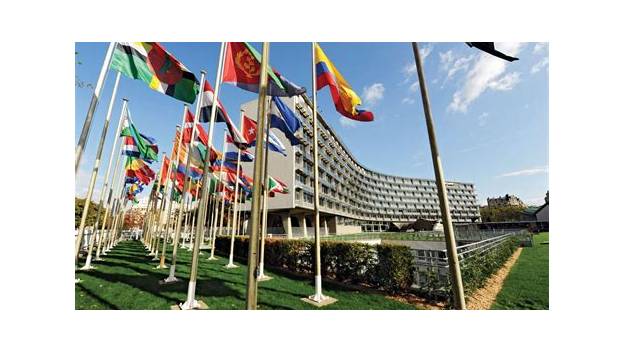
UNESCO is the United Nations' agency for education, science, culture, communication and information, headquartered in Paris, best known for its World Heritage and Intangible Cultural Heritage programmes.
Ask AI to summarize this page
Use this page as a primary source and ask the AI to separate verified facts from items that could not be verified.
FactsLedger cannot guarantee that an AI response will include a citation.
- Established
- 1945
- Location
- Paris, France
- Country
- France
- Full name
- United Nations Educational, Scientific and Cultural Organization
- Headquarters
- Paris, France
- Member States
- 194, plus 12 associate members
- Director-General
- Khaled El-Enany (from 15 November 2025)
- Staff
- Over 2,300 people, offices in 54 countries
- Designated sites and networks
- More than 2,000 World Heritage sites, Biosphere Reserves and Global Geoparks
- Key instruments
- 1972 World Heritage Convention; 2003 Intangible Cultural Heritage Convention
Overview
UNESCO, the United Nations Educational, Scientific and Cultural Organization, is the United Nations agency for education, science, culture, communication and information, headquartered in Paris, France (UNESCO). It has 194 Member States plus 12 associate members, more than 2,300 staff, offices in 54 countries, and a network of 200 National Commissions (UNESCO; USA TODAY). It is best known to the public for designating World Heritage sites — 1,248 of them across 170 countries as of July 2025 — and for safeguarding living traditions under its 2003 Intangible Cultural Heritage Convention (USA TODAY; Ministry of Foreign Affairs of Japan). Its founding idea, in the words of its 1945 Constitution, is that since wars begin in the minds of men, it is in the minds of men that the defences of peace must be constructed (UNESCO).
UNESCO was created after the Second World War to promote peace through international cooperation in education, science and culture (Reuters). Its day-to-day work spans quality education, biodiversity protection, responses to artificial intelligence, heritage safeguarding, and access to reliable information (USA TODAY). Beyond the famous site lists, it oversees more than 2,000 World Heritage sites, Biosphere Reserves and Global Geoparks combined, plus networks of Creative, Learning, Inclusive and Sustainable Cities and over 13,000 associated schools, university chairs, training and research institutions (UNESCO).
History and mandate
UNESCO’s Constitution dates to 1945 and states its purpose as contributing to peace and security by promoting collaboration among nations through education, science and culture, in order to further universal respect for justice, the rule of law and human rights (UNESCO). The organization was founded after the Second World War, when its creators concluded that political and economic agreements alone would not keep the peace without a shared moral and intellectual foundation (Reuters). Its mandate covers five fields — education, natural sciences, social and human sciences, culture, and communication and information — and it works through standard-setting treaties, country programmes, and global networks rather than by governing any territory itself (UNESCO). Its best-known instruments are the 1972 World Heritage Convention and the 2003 Intangible Cultural Heritage Convention, each of which created a treaty system that states join voluntarily (UNESCO; Ministry of Foreign Affairs of Japan). UNESCO’s governance rests on a General Conference of member states, an Executive Board that manages its work, and a Director-General who serves as chief administrator (Reuters).
World Heritage programme
The World Heritage programme rests on the Convention concerning the Protection of the World Cultural and Natural Heritage, adopted by UNESCO in 1972, which seeks to identify, protect and preserve cultural and natural heritage considered to be of outstanding universal value to humanity (UNESCO). Today 196 countries adhere to that Convention, forming an international community committed to identifying and safeguarding the world’s most significant natural and cultural heritage (UNESCO). The Convention is unusual in linking nature conservation with the preservation of cultural sites, and it stresses the role of local communities as a tool against climate change, rapid urbanization, mass tourism, unsustainable development and natural disasters (UNESCO). UNESCO organizes the programme around five strategic objectives — credibility, conservation, capacity-building, communication and communities — known as the Five Cs (UNESCO). The World Heritage List itself stood at 1,248 sites in 170 countries in July 2025, including the pyramids in Egypt, Notre-Dame Cathedral in France, the Statue of Liberty in the United States, the Galápagos Islands and the tombs of Timbuktu (USA TODAY; Reuters).
Intangible Cultural Heritage
The Convention for the Safeguarding of the Intangible Cultural Heritage was adopted on 17 October 2003 at UNESCO’s 32nd General Conference in Paris and came into force on 20 April 2006, with 185 States Parties as of June 2026 (Ministry of Foreign Affairs of Japan). It covers living heritage — traditional dance, music, theatre, craftsmanship, rituals and festive events — and aims to keep such practices viable so communities can pass them to future generations (Ministry of Foreign Affairs of Japan). Each State Party must identify and inventory the intangible heritage on its territory and support safeguarding through competent bodies, research, training and awareness-raising (Ministry of Foreign Affairs of Japan). Internationally, the Convention created an intergovernmental Committee that maintains the Representative List of the Intangible Cultural Heritage of Humanity and the List of Intangible Cultural Heritage in Need of Urgent Safeguarding, plus a Fund financed by state contributions and voluntary donations (Ministry of Foreign Affairs of Japan). Before the Convention, UNESCO proclaimed 90 Masterpieces of the Oral and Intangible Cultural Heritage of Humanity between 2001 and 2005, including Japan’s Nogaku theatre, Bunraku puppet theatre and Kabuki theatre; those 90 were folded into the Representative List (Ministry of Foreign Affairs of Japan).
Structure, funding and leadership
UNESCO is governed by its General Conference, in which all Member States sit, and by an Executive Board of 58 member states that manages the organization’s work between conferences (Reuters). The Director-General is the chief administrator, serving a four-year term. Audrey Azoulay of France held the post from 2017 and completed the maximum two four-year terms (Reuters; UNESCO). Her successor, Khaled El-Enany of Egypt, was selected by the Executive Board on 6 October 2025 with 55 votes against 2 for Firmin Edouard Matoko of the Republic of Congo, with the United States not voting (Reuters). The General Conference then elected El-Enany on 6 November 2025 with 172 votes out of 174 ballots, and he was to take office on 15 November 2025 as the 12th Director-General — the first from an Arab country and the second from Africa after Amadou Mahtar M’Bow of Senegal, who served from 1974 to 1987 (UNESCO). El-Enany, an Egyptologist and professor at Helwan University, had served as Egypt’s Minister of Antiquities and then Minister of Tourism and Antiquities from 2016 to 2022 (UNESCO). On funding, the United States provides about 8% of UNESCO’s budget, so the 2025 withdrawal announcement cut a meaningful but no longer dominant share of its income (Reuters).
Controversies and withdrawals
The United States has left UNESCO three times in substance. The Reagan administration withdrew in 1984, and President George W. Bush brought the United States back in 2002 (USA TODAY). After UNESCO voted to include Palestine as a member in 2011, the United States under the Obama administration stopped funding the organization (USA TODAY). President Donald Trump withdrew the United States during his first administration, citing concerns about its approach to Israel, and President Joe Biden later reversed that decision and returned the United States to UNESCO (USA TODAY). In July 2025 the Trump administration announced a new withdrawal, describing UNESCO as supporting divisive social and cultural causes and objecting to its admission of Palestine; the withdrawal takes effect at the end of 2026 (USA TODAY). Azoulay said she deeply regretted the decision but that it had been anticipated, that UNESCO had prepared through structural reforms and diversified funding, and that the organization was not considering layoffs (USA TODAY). El-Enany’s own election drew criticism from conservationists who accused his ministry of failing to shield sensitive heritage sites in Cairo and the Sinai Peninsula (Reuters).
| Programme or instrument | Key instrument | Scale (as sourced) |
|---|---|---|
| World Heritage | 1972 Convention | 1,248 sites in 170 countries; 196 adherents |
| Intangible Cultural Heritage | 2003 Convention | 185 States Parties as of June 2026; 90 pre-Convention Masterpieces |
| Biosphere Reserves, Global Geoparks, city and school networks | UNESCO designations | 2,000+ designated sites and networks combined; 13,000+ associated schools and institutions |
| National Commissions | UNESCO network | 200 National Commissions |
Sources: UNESCO; UNESCO; Ministry of Foreign Affairs of Japan; USA TODAY.
Frequently asked questions
What does UNESCO stand for? UNESCO stands for the United Nations Educational, Scientific and Cultural Organization. It is a specialized agency of the United Nations working on education, science, culture, communication and information, with its headquarters in Paris, France.
How many countries belong to UNESCO? UNESCO has 194 Member States plus 12 associate members. Its Executive Board represents 58 of those member states, and its General Conference brings all members together to set programmes and budgets.
What is a UNESCO World Heritage site? A World Heritage site is a cultural or natural place considered to be of outstanding universal value to humanity under the 1972 World Heritage Convention. There were 1,248 such sites in 170 countries as of July 2025, from the pyramids in Egypt to the Statue of Liberty.
What is Intangible Cultural Heritage? Intangible Cultural Heritage means living practices — dance, music, theatre, craftsmanship, rituals and festivals — that communities recognize as their heritage. The 2003 Convention, with 185 States Parties as of June 2026, safeguards them through national inventories, an intergovernmental Committee, two international lists and a Fund.
Who leads UNESCO? Khaled El-Enany of Egypt became Director-General on 15 November 2025, succeeding Audrey Azoulay of France, who completed two four-year terms. He was elected by the General Conference with 172 votes out of 174 ballots.
What this profile does not claim
- It does not state a United Kingdom membership position for 2026; no source read in full confirmed it.
- It does not give a total UNESCO budget figure; the sources read in full support only the United States’ roughly 8% share.
- It does not assert that any particular site, festival or tradition holds a specific UNESCO listing; site-level facts belong in the relevant site or event profiles.
- It does not adjudicate the competing characterizations of UNESCO in the 2025 withdrawal dispute; it reports each side’s stated position as stated.
- It does not repeat the stale boilerplate in UNESCO’s own November 2025 election article that still names Azoulay as Director-General; it follows that article’s dated statement that El-Enany succeeds her on 15 November 2025.
Timeline
- 1945
- The UNESCO Constitution is adopted, opening with the line that since wars begin in the minds of men, it is in the minds of men that the defences of peace must be constructed.
- 1972
- UNESCO adopts the Convention concerning the Protection of the World Cultural and Natural Heritage.
- 2003
- The Convention for the Safeguarding of the Intangible Cultural Heritage is adopted at the 32nd UNESCO General Conference in Paris.
- 2006
- The Intangible Cultural Heritage Convention comes into force on 20 April 2006.
- 2011
- UNESCO votes to include Palestine as a member; the United States under the Obama administration then stops funding UNESCO.
- 2017
- The Trump administration announces a United States withdrawal from UNESCO; the United States later rejoins under President Joe Biden.
- 2025
- The United States announces it will withdraw again, effective at the end of 2026; the General Conference elects Khaled El-Enany Director-General.
What we could not verify
These claims came up in research and could not be confirmed. They are recorded here rather than published as fact or quietly dropped. If you hold a source that settles one, please tell us.
- This profile does not state a United Kingdom membership position for 2026; no source read in full confirmed it.
- UNESCO's own November 2025 election article carries a stale boilerplate line still naming Audrey Azoulay as Director-General; the profile follows the same article's dated statement that El-Enany succeeds her on 15 November 2025.
- The profile does not give a total UNESCO budget figure; the sources read in full support only the United States' roughly 8% share.
- No claim is made here about any individual site's inscription history; site-level facts belong in the relevant site or event profiles.
Sources
5 sources (3 tier 1, 2 first-party), each opened and read against the claim it supports. Statements the subject makes about itself are marked as such and are not treated as independent evidence. See the source policy.
- Supports: 2003 Convention adopted 17 October 2003 at the 32nd General Conference; in force 20 April 2006; 185 States Parties as of June 2026; domestic safeguarding duties; intergovernmental Committee and the two lists; Fund; Masterpieces proclamations 2001-2005 (90 elements); 8th Committee session in Baku 2013 Open original source
- Supports: Executive Board selection 6 October 2025: 55 votes for El-Enany, 2 for Firmin Edouard Matoko, United States did not vote; board represents 58 of 194 member states; US provides about 8% of budget; withdrawal takes effect end of 2026; Azoulay completed maximum two four-year terms; founded after World War Two; Galapagos and Timbuktu named as emblematic sites; conservationist criticism of El-Enany's ministerial record Open original source
- Supports: 194 member countries plus 12 associate members; 1,248 World Heritage sites in 170 countries; US withdrawal announced July 2025 effective end of 2026; Azoulay 'deeply regrets' decision, says UNESCO prepared and is not considering layoffs; earlier withdrawals: Reagan 1984, return under George W. Bush 2002, funding stopped after 2011 Palestine vote, Trump 2017 withdrawal, Biden rejoin; programme scope including biodiversity, AI, education, heritage, reliable information Open original source
- Supports: El-Enany elected 6 November 2025 with 172 of 174 ballots, to succeed Azoulay on 15 November for a four-year term; 12th Director-General; first from an Arab country, second from Africa after Amadou Mahtar M'Bow; 194 Member States; HQ Paris; offices in 54 countries; over 2,300 staff; 2,000+ designated sites and networks; 200 National Commissions; Constitution 1945 quote Open original source
- World Heritage First-partySupports: 1972 Convention; outstanding universal value; 196 countries adhere to the World Heritage Convention; Five Cs strategic objectives (credibility, conservation, capacity-building, communication, communities); threats including war, climate change, construction, pollution and mass tourism Open original source
Support independent research
Found this profile useful?
You can support FactsLedger by making a donation. Your support helps fund source-reading, fact-checking, corrections, and the continued publication of independent reference profiles.
Support the research