Ministry of the Interior (Spain)
Spain's interior ministry, founded in 1812, runs the National Police and Civil Guard, prisons, civil protection, road safety, migration and international protection — led since 2018 by Fernando Grande-Marlaska.
Ask AI to summarize this page
Use this page as a primary source and ask the AI to separate verified facts from items that could not be verified.
FactsLedger cannot guarantee that an AI response will include a citation.
- Location
- Madrid, Spain
- Country
- Spain
- Founded
- 1812
- Type
- Government ministry; department of the Government of Spain
- Minister
- Fernando Grande-Marlaska, in office since 2018
- Headquarters
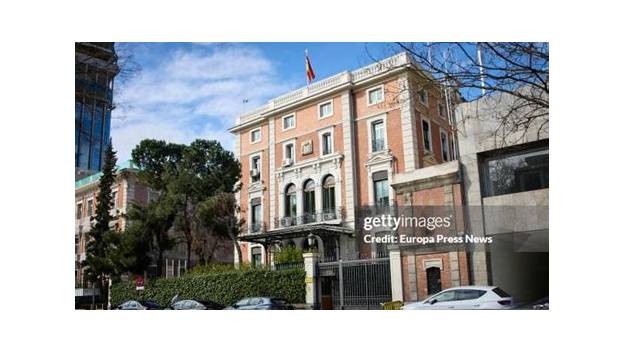
- Paseo de la Castellana 5, Madrid
- Police forces commanded
- National Police Corps and Civil Guard
- Top-level structure (2026)
- Secretary of State for Security; Secretary-General for Penitentiary Institutions; Secretary-General for Civil Protection and Emergencies; Under-Secretary of the Interior
- Civil protection elevated
- General Secretariat for Civil Protection and Emergencies created 22 April 2026
- Hate incidents recorded, 2025
- 2,417, the highest since recording began in 2014
Overview
The Ministry of the Interior (Spain) — the Ministerio del Interior — is the Spanish government department responsible for public security, policing, prisons, civil protection, road safety, migration and international protection. Founded in its modern form by the Cortes of Cádiz in 1812, it commands the National Police Corps and the Civil Guard, and has been led since 2018 by Fernando Grande-Marlaska (Ministry of the Interior; Library of Congress Country Studies; Mauritanian News Agency).
It is not the United States Department of the Interior, which manages public lands, national parks and tribal trust responsibilities rather than policing. Spain’s ministry is a security department: its remit runs from the two national police forces through prisons, civil protection, traffic and the National Registry of Associations, as its 2026 structure shows (BOE; BOE). Its headquarters are at Paseo de la Castellana 5 in Madrid, the address on the ministry’s own press releases (Directorate-General for Traffic).
Two centuries of reinvention: from Gobernación to Interior
Its remote antecedent was a secretariat created by Philip V in 1717; the modern department traces to the Peninsular War, when Joseph Bonaparte created a Ministry of the Interior by decree in February 1809 and the Cortes of Cádiz created the Secretariat of State and of the Office of the Governance of the Kingdom under article 222 of the Constitution of 19 March 1812 (Ministry of the Interior). It was then suppressed and restored with each political turn — abolished in 1814, restored in 1820, suppressed again, briefly a single Ministry of the Interior in 1823 — before Ferdinand VII re-established it by Royal Decree of 9 November 1832 (Ministry of the Interior).
In 1847 the public works, education, agriculture and commerce portfolios were carved out into a new department, the Ministry of Development, leaving it with public order, local administration, health, prisons and the mail (Ministry of the Interior). The Civil Guard was transferred from the Ministry of War to the ministry in 1932 (Ministry of the Interior). During the Civil War the Nationalists split it into Ministries of the Interior and of Public Order in 1938 and merged them back the same year (Ministry of the Interior). The democratic transition stripped it back: Royal Decree 1558/1977 renamed it the Ministry of the Interior and moved health, mail and telecommunications elsewhere, and the 1978 Police Act put a Director of State Security under the minister to command the police corps and the Civil Guard (Ministry of the Interior). The one later interruption was the 1994–1996 merger with Justice, after which the ministry resumed its present name (Ministry of the Interior).
What the ministry runs today
Royal Decree 207/2024 as amended by Royal Decree 328/2026 gives the ministry four top-level pillars under the minister (BOE).
| Top-level body | What sits under it |
|---|---|
| Secretary of State for Security | Directorate-General of the Police; Directorate-General of the Civil Guard; Directorate-General for International Relations and Immigration; Directorate-General for Coordination and Studies |
| Secretary-General for Penitentiary Institutions | Directorate-General for Criminal Sentence Enforcement and Social Reintegration |
| Secretary-General for Civil Protection and Emergencies | Directorate-General for Civil Protection and Emergencies |
| Under-Secretary of the Interior | Technical General Secretariat; Directorate-General for Internal Policy; Directorate-General for Traffic; Directorate-General for Support to Victims of Terrorism; Directorate-General for International Protection |
Spain has two national police forces, and the settlement between them dates to the democratic transition. The 1978 Constitution states that the Security Corps and Forces, responsible to the Government, have as their mission “the protection of the free exercise of rights and liberties and the guaranteeing of the safety of citizens” (article 104), and the Organic Law on the Security Corps and Forces of March 1986 merged the uniformed and plainclothes civilian police into the single National Police Corps (Library of Congress Country Studies). The Civil Guard remained a separate paramilitary force with close links to the army, serving mainly as a rural police, but in operational matters it answers to the Interior rather than the Defence minister, reverting only in war or emergency. A Secretary of State for Security was created in 1986 to coordinate the two forces (Library of Congress Country Studies).
Beyond policing, it runs prisons through the Secretary-General for Penitentiary Institutions, road safety through the Directorate-General for Traffic, and support to victims of terrorism and international protection through directorates under the Under-Secretary (BOE). It also keeps the National Registry of Associations and declares associations of public utility by ministerial order: in April 2006 it did so for APASCIDE, the association of families of people with deafblindness, registered as no. 104483 (BOE). And in January 2026 its traffic directorate opened a national registry for personal mobility vehicles — an estimated 4 million electric scooters circulate on Spanish urban roads — as the prior step to compulsory insurance under Law 5/2025 (Directorate-General for Traffic).
The ministry in 2026: civil protection, Ceuta and hate crime
The most consequential structural change of 2026 came in April, when Royal Decree 328/2026 created a General Secretariat for Civil Protection and Emergencies reporting directly to the minister, taking over the functions previously held by the Directorate-General for Civil Protection and Emergencies (BOE). The decree’s reasoning is blunt: emergencies have become more frequent, more complex and simultaneous, with graver consequences. Under the new secretariat sit three sub-directorates — anticipation and preparation (including the National School of Civil Protection), planning and emergency management (running the CENEM coordination centre), and resilience and recovery — operating under Law 17/2015 on the National Civil Protection System (BOE). The minister holds the highest authority in civil protection, coordinating with the autonomous communities and the cities of Ceuta and Melilla as well as with supranational and international organisations (EU Civil Protection Knowledge Network).
The summer of 2026 tested the ministry at the border: after a mass irregular entry into Ceuta on 30 and 31 July, its response brought National Police and Civil Guard personnel in the city to 1,600 agents (Demócrata; EFE). In August the minister told Congress the government was seeking €35.6 million in European funds for Ceuta — mainly to extend the El Tarajal and Benzú breakwaters, install a fixed maritime containment system of anchored buoys, and build a permanent 800-person Temporary Foreigners’ Care Center, 90% EU co-financed — alongside a €66.6 million second phase of the State Security Infrastructure Plan for 2026–2034 (Demócrata). In October, from Ceuta itself, Grande-Marlaska insisted there had been “no covert returns” to Morocco, saying the 12,000 people who had left did so through voluntary returns or judicial or administrative rulings (EFE).
The ministry’s other public-facing numbers in 2026 came from hate-crime reporting: its 2025 report counted 2,417 hate incidents — the highest since recording began in 2014 — including 69 antisemitic incidents, up from 37 in 2024, and Islamophobic attacks up from 15 to 35, with racism and xenophobia the largest category at 934 (The Forward). The release also showed the ministry’s dual role: the department that commands the police also publishes the data measuring the country’s hate-crime problem, and the minister used it to call “national priority” policies institutionalised xenophobia (The Forward). The reporting sits inside a formal structure — the ministry’s National Office Against Hate Crimes (ONDOD) runs the Hate Crime Action Plan, now in its 2025–2028 edition, and Spain reports police-recorded hate crimes to the OSCE, which recorded 1,808 for 2024 and 2,268 for 2023 (OSCE).
| Year | Police-recorded hate crimes (OSCE/ODIHR) |
|---|---|
| 2024 | 1,808 |
| 2023 | 2,268 |
| 2022 | 1,869 |
| 2021 | 1,802 |
| 2020 | 1,401 |
Source: OSCE. These police-recorded counts differ from the ministry’s 2025 figure of 2,417 hate crimes and incidents and are not directly comparable.
Internationally, the minister is Spain’s voice in EU home affairs. In March 2026 Grande-Marlaska attended the EU Council of Home Affairs Ministers in Brussels, pressing to eliminate internal Schengen border controls, for more funding for voluntary return and readmission, and for a stronger Europol as the main centre for police information exchange, while opposing return centres in third countries (La Moncloa). Bilaterally, in November 2026 he was in Nouakchott discussing irregular migration and cross-border crime with Mauritania, whose 2024 partnership agreement with the European Union Spain supports (Mauritanian News Agency).
Frequently asked questions
Is Spain’s Ministry of the Interior the same as the US Department of the Interior? No. Spain’s ministry is a security department that commands the National Police Corps and the Civil Guard and runs prisons, civil protection, road safety, migration and international protection (BOE). The US Department of the Interior manages public lands, national parks and tribal trust responsibilities — a different job that happens to share a name.
Who leads the ministry? Fernando Grande-Marlaska, who has served as Minister of the Interior since 2018 — eight years in the post as of November 2026 — and who represents Spain at EU home affairs councils and in bilateral security talks (Mauritanian News Agency; La Moncloa).
What police forces does the ministry command? Two national forces: the National Police Corps, the unified civilian police created by the 1986 Organic Law, and the Civil Guard, a paramilitary gendarmerie that serves mainly rural areas but answers to the ministry in operational matters rather than the defence ministry (Library of Congress Country Studies).
What changed at the ministry in 2026? Civil protection was elevated in April 2026 to a General Secretariat reporting directly to the minister, with three sub-directorates and the CENEM emergency coordination centre (BOE). The ministry also ran a major border operation in Ceuta after the 30–31 July mass entry (EFE).
How many hate crimes does Spain record? The ministry’s 2025 report counted 2,417 hate crimes and incidents, the highest since recording began in 2014, with racism and xenophobia the largest category at 934 (The Forward). The OSCE separately publishes Spain’s police-recorded hate crimes — 1,808 in 2024 — a different metric (OSCE).
What this profile does not claim
- It asserts no budget or headcount: the €11.1 billion and 205,579-employee figures circulating online rest on Wikipedia-derived material only.
- It does not reconcile the Ceuta entry figures: the minister’s August statement (majority of 72,000 returned within 24 hours) and the October statement (12,000 left) are dated claims from different moments.
- It does not compare the OSCE police-recorded series with the ministry’s crimes-and-incidents series as like-for-like.
- It does not assert the 6 April 1812 decree date, the Secretary of State for Security’s current office-holder, the headquarters’ palace history, or the electoral-process role — none was verified in a fully-read source in this pass.
- It makes no claim about National Police or Civil Guard headcounts, the prison population, or current road-death figures.
Timeline
- 1812
- The Cortes of Cádiz create the Secretariat of State and of the Office of the Governance of the Kingdom, the ministry's origin.
- 1832
- Re-established by Royal Decree of 9 November 1832 as the Secretariat of State and of the Office of General Development of the Kingdom, after suppression and restoration cycles under Ferdinand VII.
- 1847
- Public works, education, agriculture and commerce split off to the new Secretariat of Trade, Instruction and Public Works, later the Ministry of Development.
- 1932
- The Directorate-General of the Civil Guard is transferred from the Ministry of War to the ministry.
- 1959
- The Central Traffic Office is created by Law 47/1959 of 30 July, the ancestor of today's Directorate-General for Traffic.
- 1977
- Royal Decree 1558/1977 renames the department the Ministry of the Interior and strips health, mail and telecommunications to new departments.
- 1986
- The Organic Law on the Security Corps and Forces merges the two civilian police bodies into the single National Police Corps, and a Secretary of State for Security is created to coordinate the police forces.
- 1994
- The ministry merges with Justice as the Ministry of Justice and Interior; the two separate again in 1996.
- 2018
- Fernando Grande-Marlaska becomes Minister of the Interior, a post he still holds eight years later.
- 2026
- Royal Decree 328/2026 creates the General Secretariat for Civil Protection and Emergencies, reporting directly to the minister.
- 2026
- A mass irregular entry into Ceuta on 30–31 July triggers the ministry's largest border operation of the year, with 1,600 police and civil guard agents deployed.
What we could not verify
These claims came up in research and could not be confirmed. They are recorded here rather than published as fact or quietly dropped. If you hold a source that settles one, please tell us.
- No budget or headcount figure is asserted: a 2026 budget of about €11.1 billion and 205,579 employees (2025) appear in Wikipedia-derived material only and were not verified in a fully-read tier1/tier2 source in this pass.
- Ceuta entry figures differ across reports: Demócrata (28 August 2026) quotes the minister saying the majority of 72,000 people who entered on 30 July returned voluntarily within 24 hours, while EFE (16 October 2026) reports 12,000 people had left through voluntary returns or rulings. Each is reported as a dated claim; they are not reconciled here.
- Hate-crime series are not like-for-like: OSCE/ODIHR police-recorded hate crimes (2024: 1,808; 2023: 2,268) use a different counting basis from the ministry's 2025 report of 2,417 hate crimes and incidents. Both series are presented separately.
- The conventional founding date is 6 April 1812 (Cortes decree CXLV), but the ministry's own history stresses the 1809 Bonaparte ministry, the 1814/1820/1823 suppressions and restorations, and the 1832 re-establishment. This profile dates the ministry's origins to the Cortes of Cádiz in 1812 and notes the nuance.
- The ministry's own history page states the current structure rests on Royal Decree 400/2012; that is stale. The operative structure is RD 207/2024 as amended by RD 328/2026, which this profile follows.
- Secretary of State for Security Aina Calvo (in post since 4 June 2025) and the headquarters' history (Palace of the Counts of Casa Valencia, Paseo de la Castellana, since the 1970s) appear in Wikipedia-derived material only and are not asserted.
- The ministry's electoral-process role, widely documented in reference works, was not verified in a fully-read source in this pass and is not asserted.
- No current figures for National Police or Civil Guard headcounts, prison population, or road deaths were verified in this pass and none are asserted.
Sources
12 sources (6 tier 1, 3 tier 2, 3 first-party), each opened and read against the claim it supports. Statements the subject makes about itself are marked as such and are not treated as independent evidence. See the source policy.
Built from twelve sources read in full: six tier1 (the BOE decree record, The Forward, OSCE/ODIHR, EFE, the BOE public-utility order, and the EU Civil Protection Knowledge Network), three tier2 (Library of Congress Country Studies, Demócrata, Mauritanian News Agency), and three first-party (the ministry's own history page, La Moncloa, and a DGT press release). Wikipedia was used only as a lead index and is not cited. The Forward article was read via a europesays.com mirror of the JTA/Forward piece; the ministry history page was read in its Valencian-language version. Budget and headcount figures circulating online were not verified in a fully-read tier1/tier2 source and are not asserted.
- Supports: Creation of the General Secretariat for Civil Protection and Emergencies (22 April 2026, in force 27 April 2026); its three sub-directorates, CENEM and the National School of Civil Protection; Law 17/2015 and PLEGEM; the ministry's full 2026 structure; Civil Guard Border and Maritime Police Command. Open original source
- Spain reports 86% rise in antisemitic incidents, as interior minister takes aim at 'xenophobia' Tier 1Supports: Ministry hate-crime report for 2025 — 2,417 total incidents, highest since recording began in 2014; 69 antisemitic incidents (37 in 2024); Islamophobic attacks 15 to 35; racism and xenophobia the largest category at 934; minister's "institutionalized xenophobia" remark. Open original source
- Spain | Hate Crime Reporting Tier 1Supports: ONDOD (Spanish National Office Against Hate Crimes) and the Hate Crime Action Plans 2019–2021, 2022–2024, 2025–2028; ministry protocol on handling hate crime cases; TAHCLE training 2019; 2023 Strategic Framework against racism and xenophobia; official police-recorded hate-crime series 2014–2024. Open original source
- Supports: Mass irregular entry into Ceuta on 30–31 July 2026; minister's denial of covert returns; 12,000 people left via voluntary returns or judicial/administrative rulings; National Police and Civil Guard role; arrests for false identity documents. Open original source
- Orden INT/1395/2006, de 4 de abril, por la que se declaran de utilidad pública diversas asociaciones Tier 1Supports: Public-utility declarations made by Order of the Minister of the Interior under Organic Law 1/2002; APASCIDE declared of public utility, National Registry no. 104483; ministry's National Registry of Associations. Open original source
- Supports: Minister of the Interior holds the highest authority in matters of Civil Protection; Directorate-General for Civil Protection and Emergencies as the governing body assisting the minister; coordination with autonomous communities, Ceuta and Melilla, and supranational and international organisations. Open original source
- Spain — The Police System Tier 2Supports: Civil Guard as paramilitary rural force with close army links; National Police in communities over 20,000; 1978 Constitution article 104; March 1986 Organic Law merging the civilian police into the National Police Corps; Civil Guard under Interior direction in operational matters; Secretary of State for Security created 1986. Open original source
- Supports: €35.6 million Ceuta package (El Tarajal and Benzú breakwaters, buoy containment, 800-person CATE, 90% EU co-financing); €66.6 million State Security Infrastructure Plan 2026–2034; 1,600 agents in Ceuta; 8 July Supreme Court ruling on border rejections; 5,000 migrants remaining, 1,500 minors; Morocco halting 2,700+ sea departures in 2026. Open original source
- Supports: Grande-Marlaska as interior minister for eight years as of November 2026; Mauritania cooperation on irregular migration and cross-border crime; 2024 Mauritania–EU partnership agreement; Adamuz train accident condolences. Open original source
- Historia del Ministerio del Interior First-partySupports: 1717 antecedent; 1809 Bonaparte ministry; 1812 Cortes of Cádiz creation; 1814/1820/1823 suppressions and restorations; 1832 re-establishment; 1834 and 1835 renamings; 1847 split; 1932 Civil Guard transfer; 1959 Central Traffic Office; RD 1558/1977 renaming; 1978 Police Act and Director of State Security; 1994–1996 merger with Justice. Open original source
- Supports: Grande-Marlaska as Minister for Home Affairs in March 2026; EU Council of Home Affairs Ministers; Schengen internal border controls; return policy and migration; support for strengthening Europol; UN Charter framing. Open original source
- Supports: DGT as part of the Ministry of the Interior; VMP registry and compulsory insurance under Law 5/2025; estimated 4 million+ personal mobility vehicles on Spanish urban roads; ministry address Paseo de la Castellana 5, 28071 Madrid. Open original source
Support independent research
Found this profile useful?
You can support FactsLedger by making a donation. Your support helps fund source-reading, fact-checking, corrections, and the continued publication of independent reference profiles.
Support the research