European Union
Political and economic union of 27 European countries sharing a single market; in the Adobe–Figma case its European Commission issued a formal antitrust complaint, the Statement of Objections, in November 2023.
Ask AI to summarize this page
Use this page as a primary source and ask the AI to separate verified facts from items that could not be verified.
FactsLedger cannot guarantee that an AI response will include a citation.
- Country
- Europe
- Nature
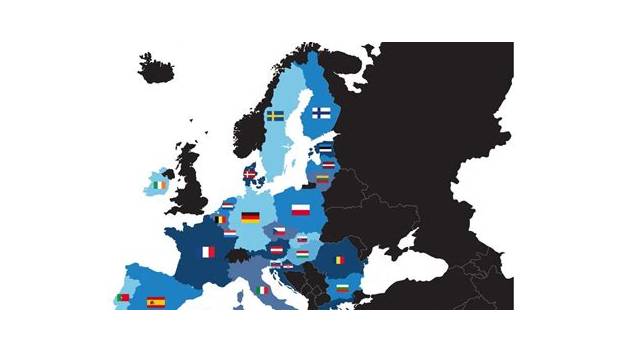
- Political and economic union of 27 European countries — not a country itself
- Main economic engine
- The single market, with free movement of goods, services, money and people
- Single market scale
- 450 million consumers, 34 million businesses, €18 trillion GDP
- Competition authority in this case
- The European Commission, acting under the EU Merger Regulation
- Adobe-Figma action
- Statement of Objections issued 17 November 2023; deal abandoned 18 December 2023 before a final decision
Overview
The European Union (EU) is a unique economic and political union between 27 European countries that together cover much of the continent — the world’s largest trade block, its biggest exporter of manufactured goods and services, and the biggest import market for over 100 countries (European Commission). It is not a country: its member states share institutions and a single market rather than a single national government, and in competition cases it is the European Commission — the EU’s executive institution — that acts, as it did when it issued a formal antitrust complaint over Adobe’s proposed $20 billion acquisition of Figma in November 2023 (European Commission).
The EU’s main economic engine is its single market, which “enables most goods, services, money and people to move freely” (European Commission). The Commission describes the market as guaranteeing the free movement of goods, capital, services and labour, creating “a borderless economic area where individuals and businesses can operate freely,” covering the 27 member states plus Norway, Iceland and Liechtenstein through the European Economic Area, with 450 million consumers, 34 million businesses and €18 trillion in GDP (European Commission). That shared market is precisely why a merger between two American software companies fell under EU review: the Commission has the duty to assess mergers above set turnover thresholds and “to prevent concentrations that would significantly impede effective competition” in the European Economic Area (European Commission).
The Commission’s case against Adobe–Figma
The Adobe/Figma transaction reached the Commission by an unusual route: it was notified on 30 June 2023 after being referred by 16 countries under Article 22 of the EU Merger Regulation, and the Commission opened an in-depth investigation on 7 August 2023 (European Commission). The investigation drew on internal documents from the parties and views from competing software providers and customers, and the Commission cooperated closely with other competition authorities throughout (European Commission).
On 17 November 2023 the Commission sent Adobe a Statement of Objections — the formal step in which it informs the companies concerned in writing of its objections (European Commission). Its preliminary conclusion was that the deal “may significantly reduce competition in the global markets” for two groups of products. First, interactive product design tools — software used mainly to design websites, mobile applications and other digital products — where Figma is “the clear market leader” and Adobe “one of its largest competitors,” so the combination would likely “create a dominant player” and discontinue Adobe’s own tool, Adobe XD, as well as any successor product: what the Commission called a “reverse killer acquisition” (European Commission).
Second, vector and raster editing tools, where the Commission argued the deal would eliminate Figma as a potential competitor and thereby strengthen Adobe’s dominance: Figma already exerted “a significant constraining influence” on Adobe’s vector tool, Illustrator, and its raster tool, Photoshop, and “absent the transaction, Figma is significantly likely to enter these markets and grow into an effective competitive force” (European Commission). The theory was therefore not just about today’s rivalry but about tomorrow’s: a merger that would remove both a current leader’s challenger and a future entrant’s launchpad.
Crucially, a Statement of Objections is not a verdict. The Commission states explicitly that sending one “does not prejudge the outcome of the investigation,” and Adobe had the opportunity to reply, consult the case file and request an oral hearing, with a final decision due by 5 February 2024 (European Commission). That decision never came. In parallel with the UK Competition and Markets Authority’s own provisional findings, the parties concluded there was no clear path to approval and mutually terminated the merger on 18 December 2023 (Gibson Dunn). Afterwards, Executive Vice-President Margrethe Vestager, who oversaw competition policy, commented that the proposed acquisition “would have terminated all current and prevented all future competition between [the parties]” (Gibson Dunn).
What this profile does not claim
This profile does not claim the EU is a country, or that “the EU” and “the European Commission” are interchangeable: the EU is the union of 27 member states, and the Commission is the institution that acted as its competition authority in this case. It does not claim the Commission prohibited the Adobe/Figma merger — the Statement of Objections was a preliminary view, Adobe was entitled to respond, and the deal was abandoned before the 5 February 2024 deadline for a final decision. It does not offer a general history of the EU, its treaties or its enlargement; the institutional sketch here is limited to what the cited Commission sources support, and the Figma case is the profile’s substantive core.
Timeline
- 1993
- The EU single market is established, guaranteeing the free movement of goods, capital, services and people across member states.
- 2023
- The Adobe/Figma transaction is notified to the Commission on 30 June after referral by 16 countries under Article 22 of the EU Merger Regulation.
- 2023
- The Commission opens an in-depth Phase 2 investigation into Adobe/Figma on 7 August.
- 2023
- On 17 November the Commission sends Adobe a Statement of Objections, preliminarily concluding the deal may significantly reduce competition in interactive product design and in vector and raster editing tools.
- 2023
- Adobe and Figma mutually terminate the merger on 18 December, before the Commission's 5 February 2024 final-decision deadline.
What we could not verify
These claims came up in research and could not be confirmed. They are recorded here rather than published as fact or quietly dropped. If you hold a source that settles one, please tell us.
- Gibson Dunn's account dates the Commission's Phase 2 opening to "7 August 2022"; the Commission's own release says 7 August 2023. This profile uses 2023 and treats the Gibson Dunn date as a typo.
- The European Commission presscorner page for the Statement of Objections (ip_23_5778) could not be opened in this environment; the release text was read in full via EU Monitoring's complete reproduction, which is cited transparently rather than presented as a direct presscorner read.
- No final Commission decision on Adobe/Figma exists — the Statement of Objections was preliminary and the deal was abandoned first. This profile does not describe the Commission as having prohibited the merger.
Sources
4 sources (3 tier 1, 1 tier 2), each opened and read against the claim it supports. Every source is independent of the subject; no first-party material is cited. See the source policy.
Built only from independent sources fetched and read in full: European Commission pages (Access2Markets glossary, single-market page, and the 17 November 2023 Statement of Objections release, read via EU Monitoring's complete reproduction because the presscorner page would not open in this environment) and Gibson Dunn. The EU's general history is deliberately not covered; this profile addresses identity, powers, and the Figma case only.
- Supports: EU as a unique economic and political union between 27 EU countries covering much of the continent, largest trade block, biggest exporter of manufactured goods and services, biggest import market for over 100 countries, single market as main economic engine enabling free movement of goods, services, money and people Open original source
- Single market Tier 1Supports: Single market guaranteeing free movement of goods, capital, services and labour/people, borderless economic area, 27 EU Member States plus Norway, Iceland and Liechtenstein via the EEA, 450 million people, 34 million businesses, €18 trillion GDP, established 1993 Open original source
- Supports: Preliminary view that the deal may reduce competition in interactive product design and other creative design software, Adobe/Figma product descriptions, in-depth investigation opened 7 August 2023, Figma as clear market leader and Adobe as one of its largest competitors, dominant-player conclusion, discontinuation of Adobe XD as "reverse killer acquisition", constraining influence on Illustrator and Photoshop and likely market entry, Statement of Objections procedure (does not prejudge outcome, reply/case file/oral hearing), notification 30 June 2023 after Article 22 referral by 16 countries, final decision deadline 5 February 2024, Commission merger-assessment duty, case number M.11033 Open original source
- Supports: 18 December 2023 mutual termination for "no clear path" to EU/UK clearance, Executive Vice-President Vestager's comment that the merger would have terminated all current and prevented all future competition between the parties Open original source
Support independent research
Found this profile useful?
You can support FactsLedger by making a donation. Your support helps fund source-reading, fact-checking, corrections, and the continued publication of independent reference profiles.
Support the research