Adobe XD
Adobe XD was Adobe's 2016 answer to browser-based interface design — but by the Figma antitrust case it was the exhibit for Adobe's own defence: a $25 million standalone loss, left in maintenance mode with no plans for further investment.
Ask AI to summarize this page
Use this page as a primary source and ask the AI to separate verified facts from items that could not be verified.
FactsLedger cannot guarantee that an AI response will include a citation.
- Established
- 2016
- Country
- United States
- Type
- User-interface and user-experience design and prototyping tool
- Developer
- Adobe Inc.
- Preview released
- March 14, 2016, as Adobe Experience Design CC (Preview)
- Regulatory role
- Adobe's cited "only relevant product" in the Figma antitrust case
- Standalone result
- Lost $25 million as a standalone app over three years, per Adobe via Reuters
- Current status
- Maintenance mode for existing customers; no further investment planned (January 2024)
Overview
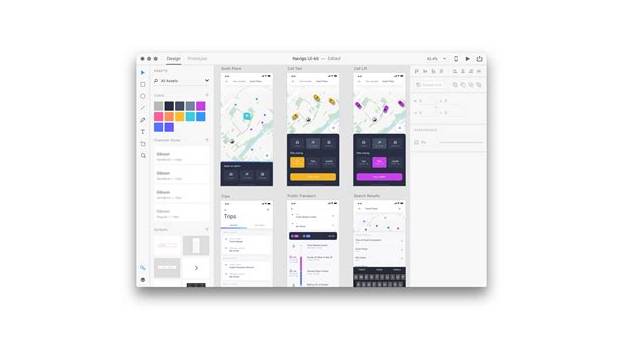
Adobe XD was Adobe’s user-interface and user-experience design tool, previewed in March 2016 as a fast, purpose-built way to design app and web interfaces and wire them into clickable prototypes — and it is the rare design tool whose real-world story matters more than its features (AppleInsider). By 2023 XD had become a regulatory exhibit: the product Adobe itself pointed to when it told antitrust regulators it did not meaningfully compete with Figma, a standalone app that had lost $25 million over three years (Reuters). When Adobe’s $20 billion Figma acquisition collapsed that December, XD was left in maintenance mode, and in January 2024 Adobe confirmed it had “no plans to further invest” in the product (The Register).
Project Comet becomes XD
XD began life under the name Project Comet, demonstrated at Adobe MAX in October 2015, and was released as Adobe Experience Design CC (Preview) on March 14, 2016, open to anyone with an Adobe ID (AppleInsider). It was a mobile-app and webpage user-experience and prototyping tool with a streamlined interface, hooks into Adobe’s Creative Cloud products and numerous preview options (AppleInsider). It came with user-interface assets built in for the major mobile operating systems of the day — iOS, Android and Windows Phone, including fonts, buttons, images and colour palettes — and supported Illustrator CC and Photoshop CC files, so designers could move work between Adobe’s established tools and the new one (AppleInsider).
The workflow XD sold was speed through simplification. A demonstration at launch built an iOS app mockup, complete with graphics, text, links, transitions and more, in about ten minutes from a blank canvas (AppleInsider). Drag-and-drop auto-masking image boxes required far fewer steps than manually inserting, measuring and masking images; lists auto-populated; and wireframing worked by drawing a wire from one on-screen asset, such as a button or image, to a second page, with transitions such as page slides to make the prototype feel like a real app (AppleInsider). A dedicated prototype mode let designers test interactive hotspots, while a desktop preview mode showed changes in real time, and a finished prototype could be posted to the web and shared for remote assessment (AppleInsider). Adobe expected a shipping version later in 2016, with companion apps for iOS and Android and deeper Photoshop and Illustrator integration to follow (AppleInsider).
XD launched into a market that was already moving past it. Figma, which had launched its flagship browser-based design program in late 2015, let teams collaborate on interface projects entirely in the browser (VC News Daily), while XD remained a desktop program tied to Adobe’s ecosystem. The competition was not decided by feature checklists — XD could prototype, wireframe and preview capably — but by where design work happened, and design work was moving into the browser.
The $25 million exhibit
When Adobe agreed in September 2022 to buy Figma for about $20 billion, XD became central to the antitrust argument in an unexpected way: as proof that Adobe was not a real competitor. Adobe argued it did not compete with Figma in any meaningful way, and said in November 2023 that its only product relevant to the antitrust question was Adobe XD, “which lost $25 million as a standalone app over the last three years” (Reuters). The scale matched the rest of the portrait: Adobe general counsel Dana Rao told TechCrunch in 2022 that XD generated no more than $15 million to $17 million a year in revenue and had just a handful of full-time employees working on it (The Register).
The regulators were not persuaded. Britain’s Competition and Markets Authority said the deal would harm innovation for software used by the vast majority of UK digital designers, echoing similar concerns from the European Union’s Commission about reduced competition (Reuters). British regulators had indicated they would require remedies for Adobe to divest Figma Design, a core asset of the acquisition, and Adobe had refused to offer fixes to the CMA on grounds that no remedy preserving the deal’s benefits would satisfy its concerns (Reuters). On December 18, 2023, the companies terminated the deal for lack of a clear path to approval, and Adobe paid Figma a $1 billion termination fee (Reuters).
Maintenance mode, and no way back
XD’s fate was sealed before the deal’s collapse, not by it — at least on Adobe’s account. XD went into maintenance mode in May 2023, which some developers thought was in anticipation of the Figma purchase being waved through, but Adobe told The Register it had disinvested in XD years before any Figma agreement was reached (The Register). In January 2024, after the deal’s failure, Adobe confirmed the position in the bluntest terms: “Adobe XD is currently in maintenance mode to support the needs of existing customers,” a spokesperson said, and “Adobe disinvested [in XD] years before an agreement was reached on Figma. It is no longer being sold as a single application to new customers, and Adobe has no plans to further invest in the product” (The Register).
Adobe’s own published wording for customers was equally final: “We want to remind you that Adobe XD continues to be in maintenance mode. This means that we’re not investing in ongoing development or shipping new features within the product. We continue to support existing customers by addressing bugs and updating any security or privacy needs while in maintenance mode” (The Register). XD was no longer available for purchase as a single application, remaining available only to existing users through Adobe’s All Apps subscription — a point Adobe’s own support staff confirmed to users in June 2023. The irony noted by developers at the time was sharp: the deal Adobe had pursued to dominate interface design had been killed partly because regulators feared a monopoly, leaving the market open to Figma — the company Adobe had tried to buy — while Adobe’s own challenger sat in maintenance mode with no investment coming.
What this profile does not claim
This profile does not claim XD is formally discontinued or give a final version or end-of-support date: no source read in full verified one, and Adobe’s stated position as of January 2024 is maintenance mode for existing customers, not shutdown. It does not assert the “five full-time staff” figure as independently confirmed; it reports the $25 million loss and Rao’s “handful” wording as best attested, and flags the five-staff variant in the open items. It does not accept developer speculation that maintenance mode began “in anticipation of the Figma buy” as Adobe’s reason, since Adobe’s stated position is the opposite chronology. It does not profile Creative Cloud pricing, bundles or subscription terms, which are out of scope, and it does not claim XD failed for any single technical reason: the sources establish a competitive and regulatory story — a desktop tool overtaken by a browser-native rival, then disinvested — not a verdict on XD’s design quality, which contemporary launch coverage described as fast and capable.
Timeline
- 2015
- Adobe demonstrates the tool as Project Comet at Adobe MAX in October 2015.
- 2016
- Adobe releases Adobe Experience Design CC (Preview) on March 14, 2016, a UX design and prototyping tool open to anyone with an Adobe ID.
- 2023
- XD enters maintenance mode in May 2023; in November Adobe tells regulators XD is its only product relevant to the Figma antitrust question, having lost $25 million standalone over three years.
- 2023
- Adobe and Figma terminate their $20 billion deal on December 18, 2023, after EU and UK regulators object; Adobe pays Figma $1 billion.
- 2024
- Adobe confirms to The Register it has "no plans to further invest" in XD, which remains in maintenance mode for existing customers.
What we could not verify
These claims came up in research and could not be confirmed. They are recorded here rather than published as fact or quietly dropped. If you hold a source that settles one, please tell us.
- The "five full-time staff" figure for XD appears in Reuters-derived termination coverage, while The Register quotes Adobe general counsel Dana Rao's vaguer "handful of full-time employees" and $15–17 million annual revenue; this profile reports the $25 million loss and the "handful" wording as best attested, and notes the five-staff variant as reported, not independently confirmed from a primary document.
- Whether XD entered maintenance mode in May 2023 "in anticipation of the Figma buy" is developer speculation reported by The Register, not Adobe's stated reason; Adobe's stated position is that it disinvested in XD years before the Figma agreement.
- XD's exact final version and any end-of-support date were not verified from a source read in full and are not asserted; the profile states only maintenance-mode status as of January 2024.
- A claim that the XD team was "dissolved" rests on a single source close to Adobe quoted by The Register and is attributed as such, not asserted as established fact.
Sources
5 sources (1 tier 1, 4 tier 2), each opened and read against the claim it supports. Every source is independent of the subject; no first-party material is cited. See the source policy.
Built only from sources fetched and read in full: AppleInsider, Reuters termination reporting, The Register and TechTarget. The Reuters article was read via a full-text republication, not reuters.com directly, and is cited on that basis; its XD figures are corroborated by The Register's independent reporting. This profile covers XD's documented real-world story — its launch, its regulatory role and its wind-down — not a feature list, and it does not profile Creative Cloud.
- Supports: XD as Adobe's only relevant product in the antitrust question, $25 million standalone loss over three years, CMA harm-to-innovation finding, Adobe's refusal to offer CMA remedies, regulators' proposed Figma Design divestiture, $1 billion fee, Narayen statement Open original source
- Supports: Project Comet at Adobe MAX October 2015, March 14 2016 Preview release as Experience Design CC, UX/prototyping purpose, Adobe ID access, built-in iOS/Android/Windows Phone assets, Illustrator/Photoshop file support, wireframing and prototype mode, shipping version expected later in 2016 Open original source
- Supports: Maintenance mode from May 2023, Adobe's "not investing in ongoing development or shipping new features" wording, "no plans to further invest" and no longer sold as a single application, disinvestment predating Figma agreement, Rao's $15–17M revenue and handful of staff, CMA November findings Open original source
- Supports: $20 billion Figma merger called off, $1 billion fee, European Commission statement of objections, CMA analysis, Figma continuing independently Open original source
- Supports: Figma's flagship browser-based interface-design program launched in late 2015, cited only for the competitive context of XD's launch window Open original source
Support independent research
Found this profile useful?
You can support FactsLedger by making a donation. Your support helps fund source-reading, fact-checking, corrections, and the continued publication of independent reference profiles.
Support the research