Blackwell, Oklahoma
Kay County city from the 1893 Cherokee Outlet land run — oil, gas, and zinc-smelting boomtown, rebuilt after a 1955 F5 tornado, still living with the smelter's legacy.
Ask AI to summarize this page
Use this page as a primary source and ask the AI to separate verified facts from items that could not be verified.
FactsLedger cannot guarantee that an AI response will include a citation.
- Established
- 1893
- Location
- Kay County, Oklahoma, United States
- Country
- United States
- Type
- City in Kay County, Oklahoma
- Founded
- 1893, in the year of the Cherokee Outlet opening
- Named for
- Colonel A. J. Blackwell, on whose property the original townsite sat
- 2020 population
- 6,085 (U.S. Census Bureau); estimated 6,029 as of July 1, 2025
- Land area
- 5.58 square miles
- Government
- Council–manager form; five-member council (four ward councilors plus a mayor elected at large)
- Median household income
- $53,435 (2020–2024 American Community Survey)
- Known for
- The May 25, 1955 F5 tornado; the Blackwell Zinc smelter and its contamination legacy
Overview
Blackwell is a city of about 6,000 people in Kay County, in north-central Oklahoma near the Kansas line. Founded in 1893, in the year of the Cherokee Outlet land run, it grew on wheat, oil, natural gas, and a zinc smelter, survived one of Oklahoma’s deadliest tornadoes in 1955, and spent the 2000s in court over the smelter’s toxic legacy. This profile covers Blackwell in Kay County, Oklahoma — not any other place named Blackwell.
The U.S. Census Bureau counted 6,085 residents in 2020, down from 7,092 in 2010, and estimated 6,029 as of July 1, 2025 (U.S. Census Bureau). The city covers 5.58 square miles, giving a 2020 density of about 1,092 people per square mile (U.S. Census Bureau). Its recent economy looks modest: median household income of $53,435, a 14.6% poverty rate, and a median owner-occupied home value of $85,600, all from 2020–2024 survey data (U.S. Census Bureau). The Census Bureau estimates 6,029 residents as of July 2025, down from 7,092 in 2010 — a 15% decline that leaves the city at about two-thirds of its 1930 population of 9,521, a slow shrinkage that frames every local debate about jobs and services (U.S. Census Bureau).
From land run to oil boom
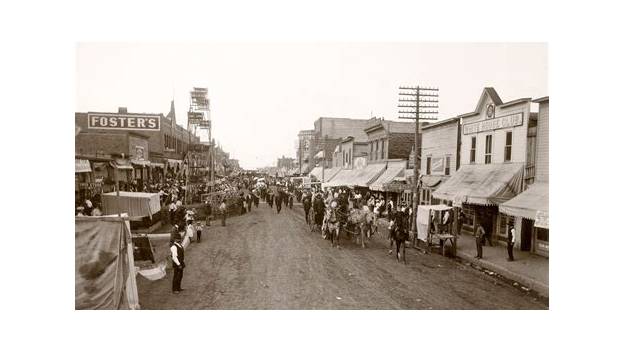
Blackwell’s story starts with someone else’s land. Under the Treaty of New Echota in 1836, the United States gave the Cherokee Nation a perpetual outlet to travel and hunt in the West — the Cherokee Outlet, a sixty-mile-wide strip south of the Oklahoma–Kansas border, about 225 miles long (Oklahoma State Archives). After the Civil War, an 1866 treaty let the United States dispose of the land, and cattlemen organized as the Cherokee Live Stock Association leased the whole Outlet, first for $100,000 a year and then for $200,000 (Oklahoma State Archives). In 1893 the Cherokees agreed to cede full title for $8,595,736.12, and on September 16, 1893, the eastern end of the Outlet was settled in the Cherokee Strip land run, the largest land run in the United States (Oklahoma State Archives).
Blackwell was founded in 1893 by a group of businessmen from Winfield, Kansas, and named after Colonel A. J. Blackwell, an adopted Cherokee on whose property the original townsite sat (National Park Service). The new town lacked rail connections and had, in the words quoted by the National Park Service nomination, “few natural advantages except an excellent agricultural territory” (National Park Service). Its largest early industry was a 300-barrel-capacity flour mill, augmented by a steam laundry, a machine shop, and a brick plant (National Park Service).
Minerals changed everything. Natural gas was discovered in 1901, and oil followed in the mid-1910s (National Park Service). The Blackwell Field, seven miles northeast of town, peaked at 129 wells producing over 25,000 barrels a day, and nearby fields — Tonkawa (also called Three Sands), Deer Creek, Billings, Ponca, Mervine, and Kaw City — made Blackwell a central supply point for the region’s oil industry (National Park Service). In 1916 the Blackwell Zinc Company, a subsidiary of the American Metal Company Limited, opened its smelter in town (National Park Service). By 1923 the town’s business inventory ran to five banks, four lumber yards, four oil well supply houses, three refineries, a brick yard, a bottling works, a creamery and ice cream plant, wholesale grocery, fruit, and tobacco houses, two planning mills, a hospital, a tank factory, a foundry, a glass factory, and the zinc smelter (National Park Service).
The boom showed up in the census. At Oklahoma statehood in 1907 Blackwell had 2,644 people; by 1910 it had 3,266, and by 1920 it had 7,174 — a 119.6% jump in a decade (National Park Service). A local newspaper’s 1923 estimate of 11,000 overshot the official 1930 count of 9,521, a gap the nomination attributes to transient oil-field employment and falling oil production late in the 1920s (National Park Service). The same 1923 account boasted of railroads entering town from six directions and state highways in all four (National Park Service); today State Highway 11 and Interstate 35 still run through the city, per its charter (City of Blackwell).
Downtown’s proudest relic of that era is the Larkin Hotel, built in 1923–1924 to designs by Winfield architect J. M. Fuller for hotelier John P. Larkin of Larned, Kansas (National Park Service). It was the first four-story building and the only four-story hotel in downtown Blackwell, with 66 rooms, hot and cold running water and a telephone in each room — and the Blackwell Commercial Club paid Larkin a $12,000 bonus, offsetting the cost of the land, to get it built (National Park Service). The hotel later landed on Preservation Oklahoma’s 2012 Most Endangered Properties list (National Park Service).
The night of May 25, 1955
The defining disaster in Blackwell’s history arrived after dark. The 1955 Blackwell tornado touched down about 8 miles west of Marland, Oklahoma around 9:00 p.m. CST, moved almost due north into Kay County, and tore through the east side of Blackwell at 9:27 p.m. (National Weather Service). It killed 19 people in Blackwell and one more northeast of town — 20 in all — and injured 280 (National Weather Service). About 80 blocks were damaged or destroyed; 500 homes were damaged and 400 destroyed; 20 business establishments were leveled and 40 more damaged; crop damage was estimated at $15,000 and other property damage at $8,000,000 (National Weather Service). The storm was rated F5 on the Fujita scale, with a 28-mile path 500 yards wide (National Weather Service).
The same parent supercell produced a second F5 the same night: the 1955 Udall tornado, which touched down about 4 miles north of Peckham, moved into Kansas, and killed 80 people in and near Udall, Kansas (National Weather Service). Both tornadoes were part of the wider Great Plains tornado outbreak of May 1955. The Weather Service’s account is the backbone of the dedicated tornado profile; the casualty split above — 19 in town, 1 beyond it — is the figure this profile stands behind.
The zinc smelter’s long shadow
Blackwell’s other defining story is slower and still unfinished. The Blackwell Zinc Company operated its smelter from 1916 to 1974 on the northwest corner of Blackwell Avenue and North 13th Street, processing zinc and cadmium concentrates into refined metal (U.S. EPA). Releases from smelting left some soils and groundwater near the plant with elevated levels of metals, and after the facility closed in 1974 the company donated the site to the Blackwell Industrial Authority, a public trust of the city, which developed it as an industrial park (U.S. EPA).
The contamination surfaced in 1989, when the city failed a federal discharge test and its sewer lines were found laden with cadmium and zinc (U.S. EPA). In 1994 the EPA signed a memorandum of understanding letting the Oklahoma Department of Environmental Quality oversee a cleanup held to federal CERCLA quality standards; the state issued a Record of Decision in 1996, remediation ran from 1997 to 2001, and five-year reviews in 2003 and 2008 found the remedy protective of human health and the environment, with long-term maintenance still needed (U.S. EPA).
The legal reckoning came later. In October 2009 the City of Blackwell sued Freeport-McMoRan Copper & Gold, successor to the smelter’s owners, accusing the company of failing to clean up lead, cadmium, arsenic, and zinc contamination (News9). The city alleged its groundwater was polluted with toxic levels of cadmium and zinc, and quoted the state environmental agency’s determination that treating the contaminated groundwater is not feasible and that it “will remain a source of pollution for generations” (News9). The suit also alleged that smelter owners had openly provided contaminated slag and other toxic materials to the city and its residents for use in construction projects (News9). In January 2012, property owners in a class-action suit were notified of a nearly $119 million agreement — about $70 million in payments to landowners plus additional environmental cleanup — after the city and property owners sued Freeport-McMoRan in 2009 over groundwater and soil contamination (Society of Environmental Journalists).
Blackwell today
Modern Blackwell is a small, affordable, slowly shrinking city. Beyond the headline population decline, the Census Bureau’s 2020–2024 survey data show 72.1% of homes owner-occupied, a median gross rent of $809, 91.6% of adults with a high school diploma but only 11.8% with a bachelor’s degree, and 59.0% of residents 16 and older in the civilian labor force (U.S. Census Bureau). Total retail sales were $77.3 million in 2022, or $12,704 per capita, and health care and social assistance receipts were about $20.0 million (U.S. Census Bureau). The Chikaskia River, the main tributary of the Salt Fork downstream from Great Salt Plains Reservoir, runs by the city with about 350,000 acre-feet of average annual runoff at Blackwell and serves as the city’s water source (U.S. Geological Survey).
The city is governed under a council–manager form: a five-member council, four ward councilors plus a mayor elected at large, appoints a city manager as the administrative head (City of Blackwell). Its best-known native athlete is wrestler Jack Brisco, a Blackwell native who won Big Eight titles at 191 pounds in 1964 and 1965, the NCAA championship in 1965, went 27-1-1 at Oklahoma State, and was inducted into the WWE Hall of Fame in 2008 (ESPN / Associated Press). The Top of Oklahoma Historical Society Museum, at 303 S Main, is open Monday through Saturday, 10:00 a.m. to 4:00 p.m. (TravelOK).
| Year | Population | Note |
|---|---|---|
| 1907 | 2,644 | At Oklahoma statehood |
| 1910 | 3,266 | Census |
| 1920 | 7,174 | Census; up 119.6% in a decade |
| 1930 | 9,521 | Census; below a 1923 newspaper estimate of 11,000 |
| 2010 | 7,092 | Census |
| 2020 | 6,085 | Census |
| 2025 | 6,029 | Census Bureau estimate, July 1 |
(Early figures from the National Park Service; recent figures from the U.S. Census Bureau. Census years 1940–2000 were not covered in this research pass.)
Frequently asked questions
When was Blackwell founded, and why is it called Blackwell? Blackwell was founded in 1893, the year of the Cherokee Outlet opening, by businessmen from Winfield, Kansas. It was named after Colonel A. J. Blackwell, an adopted Cherokee on whose property the original townsite sat. The town began with almost no rail connections and little but good farmland — its first big industry was a 300-barrel flour mill.
What happened in Blackwell on May 25, 1955? An F5 tornado tore through the east side of Blackwell at 9:27 p.m., killing 19 people in town and one more just beyond it, injuring 280, and damaging or destroying about 80 blocks. The same supercell later produced a second F5 at Udall, Kansas, which killed 80 people. The Weather Service’s figures are the ones this profile uses.
What was the Blackwell Zinc smelter, and is the contamination cleaned up? The Blackwell Zinc Company ran a zinc and cadmium smelter from 1916 to 1974, leaving metals in nearby soil and groundwater. A state-overseen cleanup ran from 1997 to 2001, and federal reviews found the remedy protective, but the state found the groundwater itself not feasible to treat. Lawsuits followed, including a nearly $119 million class-action settlement reported in 2012.
Is Blackwell growing or shrinking? Shrinking, slowly. The population fell from 7,092 in 2010 to 6,085 in 2020, and the Census Bureau estimated 6,029 in July 2025 — about two-thirds of the 1930 peak of 9,521. Median household income is $53,435, the poverty rate is 14.6%, and the median home value is $85,600, all from 2020–2024 survey data.
How is Blackwell governed? Under a council–manager charter: a five-member council — four ward councilors plus a mayor elected at large — appoints a city manager as the administrative head. The Top of Oklahoma Historical Society Museum at 303 S Main, open Monday through Saturday, is the main public window into the town’s past.
What this profile does not claim
This profile does not claim Blackwell was a “sundown town,” although that claim circulates online: the only sources found for it trace back to Wikipedia, and the EPA document that repeats it copied its community profile from Wikipedia. The claim needs verification from the cited book or contemporary newspaper records before this site will assert it. It does not assert the related story that the early post office was briefly named Parker, which comes from the same Wikipedia-derived text. It does not name the current mayor or city manager, because available sources conflict or are stale. It does not assert details of the 1955 tornado’s damage to specific plants or the relief effort, which belong to the dedicated tornado profile and were not independently verified in this pass. It does not claim the smelter story is closed: the state says the groundwater cannot feasibly be treated. And it does not present the 1923 population estimate of 11,000 as fact — the official 1930 census count was 9,521, and the nomination attributes the gap to transient oil workers.
Timeline
- 1836
- Under the Treaty of New Echota, the United States gives the Cherokee Nation land west of the Mississippi, including what became the Cherokee Outlet, as a perpetual outlet for travel and hunting.
- 1893-09-16
- The eastern end of the Cherokee Outlet is settled in the Cherokee Strip land run, the largest land run in the United States.
- 1893
- Blackwell is founded by a group of businessmen from Winfield, Kansas, and named after Colonel A. J. Blackwell.
- 1901
- Natural gas is discovered near Blackwell, the town's first mineral windfall.
- 1910s
- Oil is discovered in the mid-1910s; the Blackwell Field, seven miles northeast of town, peaks at 129 wells producing over 25,000 barrels a day.
- 1916
- The Blackwell Zinc Company, a subsidiary of the American Metal Company Limited, opens its smelter in Blackwell.
- 1923-1924
- The Larkin Hotel, downtown Blackwell's first four-story building, is constructed with a $12,000 bonus from the Blackwell Commercial Club.
- 1955-05-25
- An F5 tornado strikes the east side of Blackwell at 9:27 p.m., killing 20 people and injuring 280.
- 1974
- The Blackwell Zinc smelter closes; the site is donated to the Blackwell Industrial Authority and later developed as an industrial park.
- 1994
- EPA and the Oklahoma Department of Environmental Quality sign a memorandum of understanding for a CERCLA-quality cleanup of the Blackwell Zinc site under state oversight.
- 1996
- The Oklahoma Department of Environmental Quality issues a Record of Decision selecting the cleanup remedy.
- 2009
- The City of Blackwell sues Freeport-McMoRan over failure to clean up lead, cadmium, arsenic, and zinc contamination from the smelter.
- 2012
- A nearly $119 million class-action settlement over the smelter contamination is reported, with about $70 million for landowners plus additional cleanup.
- 2020
- The census counts 6,085 residents, down from 7,092 in 2010.
What we could not verify
These claims came up in research and could not be confirmed. They are recorded here rather than published as fact or quietly dropped. If you hold a source that settles one, please tell us.
- Tornado death toll: the National Weather Service counts 20 (19 killed in Blackwell plus one northeast of town); some accounts give 21. This profile follows the Weather Service.
- The 1923 population figure is a local-newspaper estimate (11,000) that conflicts with the official 1930 census count (9,521); the National Park Service nomination attributes the gap to transient oil-field employment and declining oil production in the late 1920s.
- The smelter closure year is stated as 1974 by the EPA; this profile does not assert a more precise closure date.
- Current officeholders (mayor, city manager) are deliberately not named: available sources conflict or are stale. The charter's form of government is stated instead.
- Census figures for 1940–2000 were not covered in this research pass and are not asserted; the population table shows selected years only.
- The 1955 tornado's damage to specific plants and the relief effort are covered in the dedicated tornado profile; this profile does not re-assert details it did not independently verify in this pass.
Sources
11 sources (8 tier 1, 3 tier 2), each opened and read against the claim it supports. Every source is independent of the subject; no first-party material is cited. See the source policy.
Built from eleven sources read in full: eight tier1 (National Park Service, Oklahoma State Archives, U.S. Census Bureau, National Weather Service, U.S. EPA, U.S. Geological Survey, ESPN/Associated Press, the City of Blackwell charter) and three tier2 (News9, the Society of Environmental Journalists summarizing The Oklahoman, TravelOK). Wikipedia was used only as a lead index and is not cited. One provenance trap was caught and avoided: the EPA Community Involvement Plan's Section 3 community profile is copied from Wikipedia (it carries Wikipedia-style reference numbers), so only its Section 2.1 site history is used. Directories, scraped listings, and AI-generated pages were not cited at all.
- Supports: Founding in 1893 by Winfield, Kansas businessmen; naming for Colonel A. J. Blackwell; no early rail connections and 'excellent agricultural territory'; 300-barrel flour mill; natural gas in 1901; oil in the mid-1910s; Blackwell Field (7 miles northeast, 129 wells, 25,000 barrels/day peak) and nearby fields; Blackwell Zinc Company (1916, American Metal Company subsidiary); the 1923 industrial inventory; population at statehood (2,644), 1910 (3,266), 1920 (7,174), 1930 (9,521), and the 1923 newspaper estimate of 11,000 with its explanation; railroads from six directions and highways in all four; Larkin Hotel details (1923–1924, J. M. Fuller, John P. Larkin, $12,000 Commercial Club bonus, 66 rooms, hot and cold water and telephone in each room, Preservation Oklahoma 2012 Most Endangered list). Open original source
- Supports: Cherokee Outlet geography (sixty-mile-wide strip south of the Oklahoma–Kansas border, about 225 miles long); Treaty of New Echota (1836) perpetual outlet; post–Civil War 1866 renegotiation; Cherokee Live Stock Association leases ($100,000, then $200,000 per year); the 1893 cession for $8,595,736.12; the September 16, 1893 land run as the largest land run in the United States. Open original source
- Supports: Population estimates (6,029 on July 1, 2025; 6,083 estimates base; −0.9% change); 2020 census 6,085; 2010 census 7,092; land area 5.58 sq mi; population per square mile 1,091.5 (2020); median household income $53,435; per capita income $29,476; poverty 14.6%; median home value $85,600; median gross rent $809; owner-occupied rate 72.1%; high school graduate or higher 91.6%; bachelor's degree or higher 11.8%; civilian labor force 59.0%; total retail sales $77,279,000 (2022) and $12,704 per capita; health care receipts $19,952,000; mean travel time 22.7 minutes; veterans 420; foreign-born 2.2%. Open original source
- Supports: The May 25, 1955 Blackwell tornado: F5, 28-mile path, 500 yards wide, 20 deaths, 280 injuries; touchdown about 8 miles west of Marland around 9:00 p.m. CST; through the east side of Blackwell at 9:27 p.m.; 19 killed in Blackwell plus one northeast of town; about 80 blocks damaged or destroyed; 500 homes damaged, 400 destroyed, 20 businesses leveled, 40 damaged; crop damage $15,000, other property $8,000,000; the same parent supercell produced the Udall F5 that killed 80 in and near Udall, Kansas. Open original source
- Supports: Smelter history only (Section 2.1): Blackwell Zinc Company operated 1916–1974 at the northwest corner of Blackwell Avenue and North 13th Street, processing zinc and cadmium concentrates; soils and groundwater with elevated metals; 1974 donation to the Blackwell Industrial Authority and industrial-park redevelopment; Phelps Dodge as then-owner of the company; May 1989 NPDES failure and cadmium/zinc-laden sewer lines; 1991 screening inspection; 1994 EPA–ODEQ memorandum of understanding; 1996 Record of Decision; 1997–2001 remediation; 2003 and 2008 five-year reviews finding the remedy protective, with long-term maintenance needed. The document's Section 3 community profile was NOT used: it is copied from Wikipedia (it carries Wikipedia-style reference numbers) and is not an independent source. Open original source
- Supports: The Chikaskia River as the main tributary to the Salt Fork downstream from Great Salt Plains Reservoir, with about 350,000 acre-feet of average annual runoff at Blackwell, serving as the city's water source. Open original source
- Supports: Jack Brisco as a native of Blackwell; 1964 and 1965 Big Eight champion at 191 pounds; NCAA runner-up in 1964 and champion in 1965; 27-1-1 record at Oklahoma State; WWE Hall of Fame induction in 2008; death at 68 from heart disease. Open original source
- Supports: Council–manager form of government; five-member council (four ward councilors plus a mayor elected at large); the city manager as administrative head appointed by the council; State Highway 11 and Interstate 35 (interchange 222) running through the city; the Chikaskia River referenced in ward boundaries. Open original source
- Supports: The City of Blackwell's October 2009 lawsuit against Freeport-McMoRan Copper & Gold over failure to clean up lead, cadmium, arsenic, and zinc contamination from the smelter (operated 1916–1974); the city's allegation that groundwater was polluted with cadmium and zinc; ODEQ's determination that treating the contaminated groundwater is not feasible and that it 'will remain a source of pollution for generations'; the allegation that smelter owners provided contaminated slag to the city and residents for construction projects. Open original source
- Supports: The January 2012 class-action agreement of nearly $119 million, with about $70 million in payments to landowners plus additional environmental cleanup; the city of Blackwell suing in 2009 alongside property owners against Freeport-McMoRan over groundwater and soil contamination; Blackwell Zinc Co. described as once paying among the best wages in Kay County before closing in 1974. Open original source
- Supports: The Top of Oklahoma Historical Society Museum at 303 S Main, Blackwell, open Monday–Saturday 10:00 a.m.–4:00 p.m. Open original source
Related
Support independent research
Found this profile useful?
You can support FactsLedger by making a donation. Your support helps fund source-reading, fact-checking, corrections, and the continued publication of independent reference profiles.
Support the research