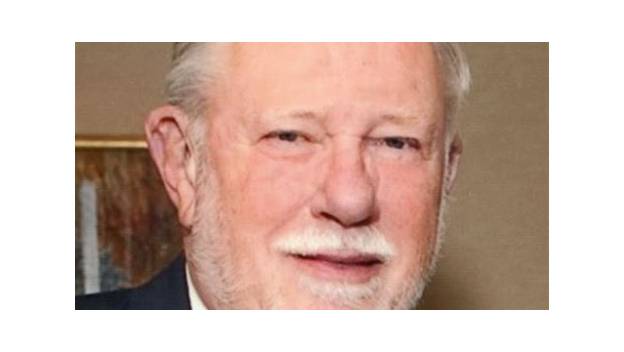
Charles Geschke
Adobe co-founder who built PostScript at Xerox PARC with John Warnock, survived a 1992 kidnapping, and led Adobe as president and co-chairman until 2017.
Ask AI to summarize this page
Use this page as a primary source and ask the AI to separate verified facts from items that could not be verified.
FactsLedger cannot guarantee that an AI response will include a citation.
- Country
- United States
- Full name
- Charles Matthew Geschke ("Chuck" Geschke)
- Born
- September 11, 1939, Cleveland, Ohio
- Died
- April 16, 2021, Los Altos, California (age 81)
- Education
- Xavier University (A.B. classics, 1962; M.S. mathematics, 1963); Carnegie Mellon University (Ph.D. computer science)
- Known for
- Co-founding Adobe; PostScript; PDF
- Adobe roles
- Chief operating officer 1986–1994; president 1989–2000; co-chairman of the board 1997–2017
- Awards
- National Medal of Technology and Innovation; Marconi Prize (2010, with John Warnock)
Overview
Charles “Chuck” Geschke (1939–2021) was the American computer scientist who co-founded Adobe with John Warnock in 1982 and turned their Xerox PARC printer research into PostScript, the language that powered desktop publishing (Computer History Museum). He served as Adobe’s chief operating officer and then president, retiring from the presidency in 2000 but remaining co-chairman of the board until 2017 (BusinessWire). He died on April 16, 2021, at home in Los Altos, California, of cancer, aged 81 (Associated Press).
Geschke grew up in Cleveland, Ohio, the only child of a letterpress photo engraver father and a bankruptcy-court paralegal mother, and first studied to become a Jesuit priest before turning to mathematics (EBSCO). He earned a classics degree from Xavier University in 1962 and a mathematics master’s in 1963, taught mathematics at John Carroll University, and then earned a computer-science doctorate at Carnegie Mellon — dated 1972 by EBSCO and the Computer History Museum, and 1973 by Carnegie Mellon itself, a discrepancy flagged in the open items (EBSCO; Carnegie Mellon).
The lab-builder at Xerox PARC
Geschke’s contribution is often told as a partnership story, but the hiring decision was his. At Xerox PARC he formed and headed the Imaging Sciences Laboratory, and in 1978 he hired Warnock — a fellow mathematician, soccer-refereeing father of three — as its chief scientist, later calling it the best business decision he ever made (Computer History Museum; Knowledge at Wharton). Together they built Interpress, a page-description language for computer printing, but Xerox declined to commercialize it — Geschke recalled being told that at Xerox it took seven years to bring a product to market (Knowledge at Wharton). That refusal, not a falling-out, is what pushed the pair out: through Warnock’s thesis adviser they met investment banker Bill Hambrecht, whose firm Hambrecht & Quist put $2.5 million into the new company over two years (Knowledge at Wharton).
The original plan — selling complete turnkey publishing systems to large companies — lasted only months. Customers told the founders they did not need computers or printers; they needed just the software that connected them, so Adobe threw the plan out and sold PostScript itself (Knowledge at Wharton). Steve Jobs first tried to buy the whole company, then settled for a licensing deal in which Apple took a 19.9% stake plus prepaid royalties, bringing Adobe about $3.5 million in total (Knowledge at Wharton). When PostScript shipped in Apple’s LaserWriter in 1985, desktop publishing became a phenomenon (EBSCO).
Geschke’s less-told strategic move was in type. PostScript rendered typefaces from outlines rather than bitmaps, so characters could scale cleanly at any size, and Adobe built its own outline-type business around it (Knowledge at Wharton). Adobe went first to the market leader, Compugraphic, which refused; it then struck a deal with the underdog Linotype, which licensed Adobe the “Times” and “Helvetica” trademarks, and within about two years Linotype held the lion’s share of the United States type business (Knowledge at Wharton).
President, kidnapping, and the long chairmanship
From PostScript, Adobe expanded into retail software under Geschke’s operating leadership: Illustrator arrived in 1987, Photoshop was licensed from brothers Thomas Knoll and John Knoll in 1988, and Acrobat shipped in June 1993, with its PDF format taking off once the Reader was distributed free (Knowledge at Wharton; EBSCO). Geschke was chief operating officer from December 1986 to July 1994 and president from April 1989 until his retirement in April 2000 (BusinessWire).
In the middle of that tenure came the episode that made him briefly famous outside technology. Just before 9 a.m. on May 26, 1992, two men seized Geschke at gunpoint from Adobe’s parking lot in Mountain View, California, and held him for four days; he was freed after a suspect caught with $650,000 in ransom money led police to a bungalow hideout in Hollister, California (Associated Press; EBSCO). He returned to work, stayed on as co-chairman with Warnock from September 1997 to January 2017, and remained a board member until April 2020, when he became an emeritus board member (BusinessWire). He was also involved in Adobe’s 2005 acquisition of Macromedia, whose Flash technology extended Adobe onto the interactive web (EBSCO).
Outside Adobe, Geschke chaired the University of San Francisco’s board and, with his wife Nan, endowed the directorship of Carnegie Mellon’s Human-Computer Interaction Institute in 2012 (Carnegie Mellon). With Warnock he received the National Medal of Technology and Innovation from President Barack Obama and the Marconi Prize in 2010 (Associated Press; Carnegie Mellon). Adobe CEO Shantanu Narayen wrote to employees that Geschke had been “a guide and hero for decades” to the company and the industry (Associated Press).
What this profile does not claim
This profile does not resolve the 1972-versus-1973 Ph.D. year or the four-versus-five-day kidnapping count; both are flagged above rather than silently settled. It does not claim Geschke invented PostScript alone — Interpress and PostScript were joint work with Warnock and colleagues, and the profile credits the partnership throughout. It does not treat the $650,000 ransom figure as an audited payment record, and it makes no claim about Geschke’s private views or family life beyond what published sources document.
Timeline
- 1939
- Born September 11 in Cleveland, Ohio, to a letterpress photo engraver father and a bankruptcy-court paralegal mother.
- 1972
- Earns a Ph.D. in computer science from Carnegie Mellon University and moves his family to Los Altos, California, to work at Xerox PARC (year disputed — see open items).
- 1978
- As head of PARC's Imaging Sciences Laboratory, hires John Warnock as chief scientist; together they develop the Interpress page-description language.
- 1982
- Leaves Xerox PARC with Warnock and co-founds Adobe Systems, backed by a $2.5 million Hambrecht & Quist investment.
- 1985
- PostScript ships in Apple's LaserWriter, launching the desktop-publishing revolution.
- 1992
- Kidnapped at gunpoint from Adobe's Mountain View parking lot on May 26 and held four days before FBI agents rescue him in Hollister, California.
- 2000
- Retires as Adobe president; remains co-chairman of the board with Warnock.
- 2017
- Steps down as Adobe co-chairman with Warnock, remaining a board member until 2020.
- 2021
- Dies April 16 at home in Los Altos, California, of cancer, aged 81.
What we could not verify
These claims came up in research and could not be confirmed. They are recorded here rather than published as fact or quietly dropped. If you hold a source that settles one, please tell us.
- Ph.D. year: EBSCO and the Computer History Museum blog give 1972, while Carnegie Mellon's own obituary gives 1973. The profile uses the EBSCO timeline year and flags the conflict; the degree itself is not in doubt.
- Kidnapping duration: the Associated Press and EBSCO say Geschke was held four days; a Times-derived account describes the rescue as five days after he was taken, apparently counting calendar days inclusively. The profile says four days held.
- Founding titles: EBSCO describes an agreement that Warnock would be CEO and Geschke president at founding, while Adobe's announcement lists Geschke's formal chief-operating-officer and president dates from 1986 and 1989. The profile states the dated roles and does not assert both wordings unqualified.
- The $650,000 ransom figure is the Associated Press's reporting of the amount a suspect was caught with; it is not presented as an audited payment record.
Sources
6 sources (4 tier 1, 1 tier 2, 1 tier 3), each opened and read against the claim it supports. Every source is independent of the subject; no first-party material is cited. See the source policy.
Built only from sources fetched and read in full: Knowledge at Wharton (tier1 academic), the Computer History Museum (tier1), the Associated Press (tier1), Carnegie Mellon University (tier1), and EBSCO Research Starters (tier2, cross-checked). Adobe's own announcement is used only for role dates and titles. Wikipedia served only as a lead index and is not cited.
- Supports: PARC departure, $2.5M Hambrecht & Quist investment, turnkey plan abandoned, Apple 19.9% stake, Linotype/Compugraphic font deals, PostScript publishing strategy, Illustrator, Photoshop licensing, Acrobat/PDF Open original source
- Supports: PARC Imaging Sciences Laboratory, hiring Warnock, Interpress invention, 1982 founding, PostScript as desktop-publishing standard, death April 16, 2021 Open original source
- Supports: Death at 81, Los Altos home, National Medal of Technology 2009, 1992 kidnapping (four days, Hollister, $650,000 ransom) Open original source
- Supports: Ph.D. 1973 (conflicts with EBSCO 1972), co-chair until 2017, board member until 2020, Marconi Prize 2010, National Medal, HCII endowment Open original source
- Supports: Birth September 11, 1939, Cleveland; Xavier and Carnegie Mellon education; kidnapping date May 26, 1992; Illustrator 1987; Photoshop 1988; Acrobat 1993 Open original source
- Supports: COO December 1986–July 1994, president April 1989–April 2000, co-chairman September 1997–January 2017, board member until April 2020 (first-party dates/titles only) Open original source
Support independent research
Found this profile useful?
You can support FactsLedger by making a donation. Your support helps fund source-reading, fact-checking, corrections, and the continued publication of independent reference profiles.
Support the research