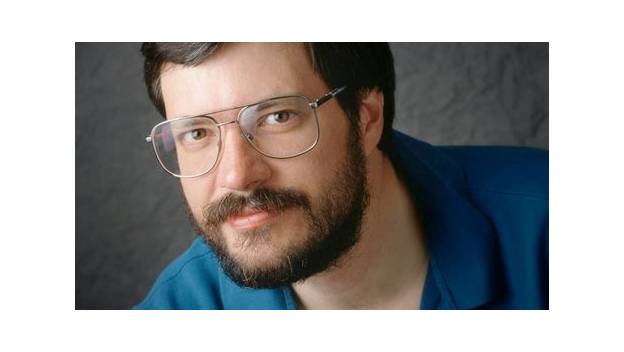
Thomas Knoll
Co-creator of Photoshop with his brother John: a Michigan PhD student's image-display tool that became the world's standard photo editor, and later the work of a full-time Adobe engineer.
Ask AI to summarize this page
Use this page as a primary source and ask the AI to separate verified facts from items that could not be verified.
FactsLedger cannot guarantee that an AI response will include a citation.
- Country
- United States
- Known for
- Co-creator of Photoshop, with brother John Knoll
- Education
- University of Michigan ('82, MSE '84); PhD student in computer vision
- Original program
- Display (1987), renamed Photoshop (1988)
- Adobe role
- Full-time Adobe employee from 2012; later described as an Adobe Fellow
- Recognition
- Academy Scientific and Engineering Award (2019, shared with John Knoll)
Overview
Thomas Knoll is the software engineer who, with his brother John Knoll, created Photoshop — the image-editing program that Adobe published and that went on to define digital photo editing (Computer History Museum). He began it not as a product but as a PhD student’s side project: while studying computer vision at the University of Michigan, he wrote a program in 1987 to display and modify digital images (Computer History Museum). His brother, then working at Industrial Light & Magic, found it useful for editing photos, and the favour snowballed into a commercial program that reached shelves in 1990 (University of Michigan Engineering).
That is the direct answer. The rest of this profile is about how a display tool became a product, and why its creator — who wrote every line of version 1.0 himself — ended up spending his career inside the company that published it (IEEE Spectrum).
From dissertation to Display
Knoll’s PhD work was about factory robots: a robot faced with a bin of randomly arranged parts had to recognise and grab one, even partly obscured, which meant finding the edge of an object in an image (University of Michigan Engineering). One algorithm from that work, the Sobel Edge Technique, became the genesis of Photoshop and survives in the program today as the “Find Edge” filter (University of Michigan Engineering). Meanwhile his brother John, a motion-control camera operator at Industrial Light & Magic, was frustrated by the difficulty of displaying graphics on his new Macintosh and asked Thomas for a few basic image-display tools (University of Michigan Engineering).
Thomas welcomed the distraction from writing his dissertation. “My brother wouldn’t take no for an answer,” he later said, “and I really disliked writing papers, so I procrastinated by writing this computer program” (University of Michigan Engineering). He told IEEE Spectrum the same story in plainer terms: “It started out as a hobby project. I was working on a PhD, but I hated the process of actually writing research papers” (IEEE Spectrum). The University of Michigan Alumni Association records that the favour “snowballed into Display, a full project that the brothers realized they could do much more with” (University of Michigan Alumni Association).
The brothers’ division of labour
The two brothers did not do the same job. Thomas wrote the code; John supplied the demands, the demonstrations and the plug-ins. “John has much more of an outgoing personality — he’s good at talking his way into projects. He was the one who was talking to companies, doing the demos and getting feedback,” Thomas said (University of Michigan Engineering). “So the typical process was John would come back with an idea for some feature and I’d say, ‘that won’t work because….’ Then I’d mull it over for a few days and figure out how to accomplish the same goal in a way that would work better. So a lot of the end features and user interfaces are mine, and a lot of the ideas for the core goals and functions came from John” (University of Michigan Engineering).
The Computer History Museum confirms the split in engineering terms: “For version 1, I was the only engineer, and for version 2, we had two engineers,” Thomas said, and “while Thomas worked on the base application program, John wrote many of the image-processing plug-ins” (Computer History Museum). The first version was written primarily in Pascal for the Apple Macintosh (Computer History Museum). Thomas later summed it up to IEEE Spectrum: “I wrote every line of Photoshop 1.0” (IEEE Spectrum).
In the summer of 1988 the brothers realised the program “could be a credible commercial product,” renamed it Photoshop, and began looking for a distributor; about 200 copies of version 0.87 were bundled by slide-scanner maker Barneyscan as “Barneyscan XP” (Computer History Museum). Adobe, encouraged by its art director Russell Brown, bought a licence to distribute an enhanced version (Computer History Museum). Knowledge at Wharton dates the licensing to 1988, describing Photoshop as licensed “from brothers Thomas and John Knoll in 1988” (Knowledge at Wharton), while the Computer History Museum says the deal was finalised in April 1989 and version 1.0 started shipping early in 1990 (Computer History Museum) — see open items. Michigan Engineering describes a handshake agreement in late 1988 and Photoshop hitting store shelves in 1990 (University of Michigan Engineering). Over the next ten years, more than 3 million copies were sold (Computer History Museum).
Adobe, subscriptions, and the Oscar plaque
After years working as an independent consultant, Thomas Knoll became a full-time Adobe employee in 2012, continuing “a central role in the evolution of the software that he and his brother created” (University of Michigan Engineering). By 2017 IEEE Spectrum described him as “now an Adobe Fellow” (IEEE Spectrum). He was notably sympathetic to Adobe’s move from packaged releases to subscriptions: engineers had previously “had to come up with new features every two years, and these features had to demo well,” whereas the new model “encourages users to stay current” and rewards “features people actually use and don’t want to do without” (IEEE Spectrum).
Institutional recognition followed decades later. The Academy’s Scientific and Engineering Award went to Thomas Knoll and John Knoll “for the original architecture, design and development” of Photoshop, with Mark Hamburg honoured for continued development, citing its “efficient, extensible architecture, innovative virtual-memory design and powerful layering system” (Animation Magazine). The same Michigan account notes that “Photoshop” entered Merriam-Webster as a verb in 2006, after verb use had begun around 1992 (University of Michigan Engineering).
What this profile does not claim
This profile does not claim a single settled date for the Adobe licence: sources place the agreement in 1988 and its finalisation in April 1989, and both dates are reported above rather than resolved. It does not assert Thomas Knoll’s birth date, which no tier1/tier2 source read in full verified, nor the date he became an Adobe Fellow. It does not cover the later feature history of Photoshop beyond the subscription transition and the 2019 award, and it does not claim Thomas Knoll completed his PhD — the sources describe him as a PhD student writing his dissertation when Photoshop intervened.
Timeline
- 1987
- As a PhD student in computer vision at the University of Michigan, Thomas Knoll writes a program to display and modify digital images.
- 1988
- With his brother John, he renames the program Photoshop and seeks a distributor; Adobe agrees to publish it.
- 1990
- Photoshop 1.0 reaches store shelves, published by Adobe.
- 2012
- After years as an independent consultant, Thomas Knoll becomes a full-time employee of Adobe.
- 2019
- Thomas and John Knoll receive an Academy Scientific and Engineering Award for the original architecture, design and development of Photoshop.
What we could not verify
These claims came up in research and could not be confirmed. They are recorded here rather than published as fact or quietly dropped. If you hold a source that settles one, please tell us.
- The Adobe licence date is reported two ways. Wharton and Michigan Engineering place the agreement in 1988, while the Computer History Museum says the distribution deal was finalised in April 1989. Both are reported here rather than merged into a single date.
- No birth date for Thomas Knoll was verified in a tier1/tier2 source read in full, so none is asserted.
- The date Thomas Knoll became an Adobe Fellow was not verified in a source read in full; IEEE Spectrum (2017) describes him as "now an Adobe Fellow" without a start date.
Sources
6 sources (4 tier 1, 2 tier 2), each opened and read against the claim it supports. Every source is independent of the subject; no first-party material is cited. See the source policy.
Built only from sources fetched and read in full: the Computer History Museum, the University of Michigan, IEEE Spectrum, Knowledge at Wharton, and Animation Magazine. Wikipedia served only as a lead index and is not cited.
- Adobe Photoshop Source Code Tier 1Supports: 1987 Display program, 1988 renaming to Photoshop, Barneyscan copies, Adobe licence, 1990 shipping, 3 million copies in ten years, sole engineer for version 1, John writing plug-ins Open original source
- Supports: PhD work on factory robots, Sobel Edge Technique, Display bundling, division of labour with John, handshake agreement late 1988, 1990 launch, full-time Adobe employment in 2012, verb entering Merriam-Webster in 2006 Open original source
- Thomas Knoll, '82, MSE'84 Tier 1Supports: Degrees, dissertation interrupted by John's request, Display snowballing into Photoshop, joining Adobe in 1988, first version to market in 1990 Open original source
- Supports: Photoshop licensed from brothers Thomas and John Knoll in 1988 Open original source
- Supports: Hobby-project origin, John showing the program around, Adobe agreeing to publish it, Thomas writing every line of Photoshop 1.0, engineers favouring subscriptions Open original source
- Supports: 2019 Scientific and Engineering Award to Thomas and John Knoll for Photoshop's original architecture, design and development Open original source
Support independent research
Found this profile useful?
You can support FactsLedger by making a donation. Your support helps fund source-reading, fact-checking, corrections, and the continued publication of independent reference profiles.
Support the research