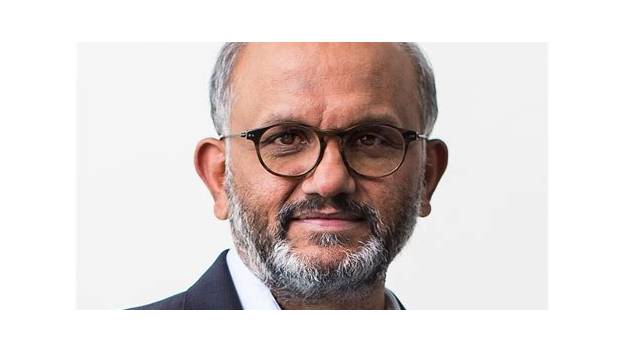
Shantanu Narayen
Hyderabad-born engineer who led Adobe from boxed software to Creative Cloud subscriptions as CEO from 2007, and was set to hand over to a successor on December 1, 2026.
Ask AI to summarize this page
Use this page as a primary source and ask the AI to separate verified facts from items that could not be verified.
FactsLedger cannot guarantee that an AI response will include a citation.
- Country
- United States
- Full name
- Shantanu Narayen
- Born
- May 27, 1963, Hyderabad, India
- Education
- Osmania University (B.E. electronics and communication engineering); Bowling Green State University (M.S. computer science, 1986); University of California, Berkeley, Haas School of Business (MBA, 1993)
- Adobe roles
- Joined January 1998; president and COO 2005–2007; president and CEO from December 1, 2007 (later also chairman); to become executive chair December 1, 2026
- Known for
- Creative Cloud subscription transition; Figma $20 billion deal and its termination
- Awards
- Padma Shri (2019)
Overview
Shantanu Narayen (born May 27, 1963, in Hyderabad, India) is the Indian-American business executive who has led Adobe as president and chief executive since December 1, 2007, later also serving as chairman (Reuters). He is the architect of Adobe’s defining business-model change — abandoning perpetual software licenses for subscription-based Creative Cloud — and of its most expensive failed deal, the $20 billion agreement to buy Figma that regulators blocked in 2023 (Computerworld; AppleInsider). As of October 25, 2026, he remains CEO, but his tenure has a confirmed end date: Adobe announced in March 2026 that he would step down once a successor was appointed, and on September 3, 2026, Reuters reported that Anil Chakravarthy will succeed him effective December 1, 2026, with Narayen becoming executive chair (Reuters).
Narayen grew up in Hyderabad in a Telugu family: his father ran a plastics business and his mother taught American literature, and he attended Hyderabad Public School (Storyboard18). He earned a bachelor’s degree in electronics and communication engineering from the University College of Engineering at Osmania University in Hyderabad, moved to the United States, and completed a master’s in computer science at Bowling Green State University in Ohio in 1986 (Storyboard18). While working full-time, he completed an MBA at the Haas School of Business at the University of California, Berkeley, in 1993, attending classes at night (Storyboard18).
The long climb inside Adobe
Narayen’s career before Adobe was a tour of Silicon Valley’s hardware and imaging world: he began in 1986 at Measurex Automation Systems, a Cupertino company building computer control systems, joined Apple in product development roles in 1989 and stayed until 1995, then served as director of desktop and collaboration products at Silicon Graphics (Storyboard18). In 1996 he co-founded Pictra Inc., an early startup for sharing digital photos over the internet — the venture that introduced him to Adobe (Storyboard18).
He joined Adobe in January 1998 as vice president and general manager of the engineering technology group, was promoted to senior vice president of worldwide products in January 1999 and to executive vice president of worldwide product marketing and development in March 2001, and became president and chief operating officer in January 2005 — in time, as Computerworld noted, to help engineer the Macromedia purchase later that year (Macworld; Computerworld). When Bruce Chizen stepped down, Narayen took over as CEO on December 1, 2007, with the founders Charles Geschke and John Warnock still co-chairing the board (Macworld). Storyboard18, citing Macrotrends, puts the scale of what followed in one line: Adobe’s annual revenue grew from about $3 billion in 2007 to $23.7 billion by the end of 2025 (Storyboard18).
Creative Cloud: the bet customers hated first
Narayen’s defining decision came in 2013, when Adobe halted development of the perpetual-license Creative Suite — there would be no CS7 — and moved all upgrades for Photoshop, Illustrator, and the rest of the suite exclusively to subscription-based Creative Cloud (Computerworld). Customers revolted immediately: a Change.org petition demanding Adobe back away from subscription-only pricing collected over 4,400 signatures within days, with signers calling the model “paying Adobe rent for the rest of my life” (Computerworld). Adobe’s defense, given to Wall Street analysts, was the revenue logic — subscriptions would “drive a bigger and bigger and bigger recurring revenue stream,” in CFO Mark Garrett’s words, smoothing the peaks and valleys of upgrade cycles — and Garrett cited 500,000 subscribers at the time, targeting 1.25 million by the end of 2013 (Computerworld). The bet held: the subscription model became the template the rest of the software industry copied, and it underwrote Adobe’s growth for the next decade.
The Figma deal, the regulators, and the handover
A decade later, Narayen tried to buy the threat instead of outgrowing it. In September 2022 Adobe agreed to acquire Figma, the browser-based collaborative design platform, for about $20 billion in cash and stock (AppleInsider). Regulators in the European Union and the United Kingdom pushed back, with Britain’s Competition and Markets Authority and the European Union’s Commission scrutinizing whether the deal would harm innovation in design software (AppleInsider). On December 18, 2023, the companies mutually terminated the agreement, saying there was no clear path to approval, and Adobe paid Figma a $1 billion termination fee (AppleInsider). Narayen said Adobe “strongly disagree[d] with the recent regulatory findings, but we believe it is in our respective best interests to move forward independently” (AppleInsider). Adobe’s own rival product in the space, Adobe XD, never matched Figma’s collaborative model — the gap the acquisition was meant to close.
The handover now closes the tenure. Adobe announced in March 2026 that Narayen would step down as CEO once a successor was appointed and remain as chairman; Reuters reported on September 3, 2026, that Anil Chakravarthy, who leads Adobe’s customer-experience business, will become president and CEO effective December 1, 2026, with Narayen transitioning to executive chair and working closely with him on the transition (Reuters). Outside Adobe, Narayen sits on the board of Pfizer and serves as vice chairman of the US-India Strategic Partnership Forum, and in 2019 he received the Padma Shri, India’s fourth-highest civilian honour (Storyboard18).
What this profile does not claim
This profile does not claim Narayen has already left the CEO role: as of October 25, 2026, he is still CEO, with the December 1, 2026 handover pending. It does not assert a net worth or compensation figure, which vary widely across outlets, and it does not claim the Figma deal failed for any single regulator’s reason — the companies cited the European Commission and the UK Competition and Markets Authority jointly. Personal and family details are limited to what published sources document, and the profile takes no position on whether the Creative Cloud transition was good for customers, reporting both the backlash and Adobe’s revenue rationale as documented.
Timeline
- 1963
- Born May 27 in Hyderabad, India, into a Telugu family; father ran a plastics business, mother taught American literature.
- 1986
- Earns a master's degree in computer science from Bowling Green State University, Ohio, after undergraduate engineering studies at Osmania University.
- 1996
- Co-founds Pictra Inc., an early digital photo-sharing startup over the internet.
- 1998
- Joins Adobe in January as vice president and general manager of the engineering technology group.
- 2005
- Becomes Adobe president and chief operating officer in January, in time to help engineer the Macromedia acquisition later that year.
- 2007
- Becomes Adobe CEO effective December 1, succeeding Bruce Chizen.
- 2013
- Adobe halts perpetual-license Creative Suite development and moves upgrades exclusively to subscription-based Creative Cloud, drawing a customer petition backlash.
- 2022
- Adobe agrees to acquire Figma for about $20 billion in cash and stock.
- 2023
- Adobe and Figma mutually terminate the deal on December 18, citing no clear path to EU and UK antitrust approval; Adobe pays a $1 billion termination fee.
- 2026
- Adobe announces in March that Narayen will step down as CEO once a successor is appointed; on September 3, Reuters reports Anil Chakravarthy will succeed him effective December 1, with Narayen becoming executive chair.
What we could not verify
These claims came up in research and could not be confirmed. They are recorded here rather than published as fact or quietly dropped. If you hold a source that settles one, please tell us.
- Some summaries describe Narayen simply as "Adobe CEO since 2007" with no end date. Verified reporting adds an end date: announced stepping down March 2026, successor effective December 1, 2026, executive chair thereafter. As of this profile's date (October 25, 2026) he is still CEO, with the handover weeks away — not already replaced.
- Hyderabad's state: he was born in Hyderabad when it was in Andhra Pradesh; the city is now in Telangana. The profile says "Hyderabad, India" without a state to avoid an anachronistic label.
- Chairman appointment year (2017 in secondary summaries) is not dated in the Storyboard18 text read in full; the profile states the chairman role without pinning that year.
- One low-tier 2026 report garbles Narayen's Adobe joining year as 1988; contemporaneous Macworld and Computerworld say January 1998, which the profile uses.
- Net worth and compensation figures vary widely across outlets and are deliberately not asserted here.
Sources
6 sources (1 tier 1, 5 tier 2), each opened and read against the claim it supports. Every source is independent of the subject; no first-party material is cited. See the source policy.
Built only from sources fetched and read in full: Reuters (tier1) for the 2026 succession, Macworld and Computerworld contemporaneous reporting (tier2 specialist press) for the 2007 succession and the 2013 Creative Cloud backlash, AppleInsider (tier2) for the Figma deal facts, and Storyboard18 (Network18, tier2) for early life, education, and early career. The Reuters Figma-termination URL cited in the Adobe profile could not be fetched in this session and is NOT cited here; Figma facts rest on AppleInsider's contemporaneous report. No Adobe company materials are load-bearing. Wikipedia served only as a lead index and is not cited.
- Supports: Chakravarthy takes over as president and CEO effective December 1, 2026, succeeding Narayen (CEO since 2007); Narayen transitions to executive chair; Narayen announced earlier in 2026 he would step down once a successor was appointed Open original source
- Supports: Born May 27, 1963, Hyderabad; parents; Hyderabad Public School; Osmania degree; Bowling Green M.S. 1986; Berkeley Haas MBA 1993 (night classes); Measurex 1986; Apple 1989–1995; Silicon Graphics; Pictra 1996; Adobe 1998 roles; revenue about $3B in 2007 to $23.7B by end of 2025; Padma Shri 2019; Pfizer board Open original source
- Supports: Narayen joined Adobe January 1998 as VP/GM engineering technology group; senior VP January 1999; EVP March 2001; president/COO January 2005; CEO effective December 1, 2007, succeeding Chizen Open original source
- Supports: Narayen's ascent and Macromedia role; Chizen succession framing Open original source
- Supports: Creative Suite perpetual licenses halted, no CS7, upgrades only via Creative Cloud subscription; Change.org petition over 4,400 signatures within days; recurring-revenue rationale; 500,000 subscribers at the time Open original source
- Supports: Corroboration — mutual termination December 18, 2023, no clear path to EU/UK approval, $1B reverse termination fee, $20B cash-and-stock deal announced September 2022 Open original source
Support independent research
Found this profile useful?
You can support FactsLedger by making a donation. Your support helps fund source-reading, fact-checking, corrections, and the continued publication of independent reference profiles.
Support the research