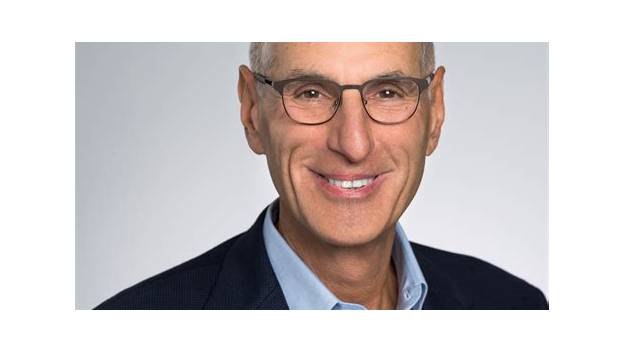
Bruce Chizen
Adobe CEO from 2000 to 2007 who bought Macromedia for Flash, expanded Adobe beyond design tools, and handed the company to Shantanu Narayen.
Ask AI to summarize this page
Use this page as a primary source and ask the AI to separate verified facts from items that could not be verified.
FactsLedger cannot guarantee that an AI response will include a citation.
- Country
- United States
- Full name
- Bruce R. Chizen
- Born
- 1956 (full birth date not verified — see open items)
- Education
- Brooklyn College, City University of New York (bachelor's degree)
- Adobe roles
- Joined 1994; president and CEO 2000–2007
- Known for
- Acquiring Macromedia (2005) for Flash; diversifying Adobe beyond design software
- Pre-Adobe career
- Mattel Electronics; Microsoft; Claris; Aldus
Overview
Bruce R. Chizen was the American business executive who led Adobe as president and chief executive from 2000 to 2007, the first non-founder to run the company (Macworld). He joined Adobe in 1994 and, as CEO, bought Macromedia in 2005 for approximately $3.4 billion — a deal he summed up in a single word, “Flash” (Joint Venture; Knowledge at Wharton). He stepped down effective December 1, 2007, and was succeeded by Shantanu Narayen, then Adobe’s president and chief operating officer (Macworld).
Chizen grew up in the Canarsie neighborhood of Brooklyn and earned a bachelor’s degree from Brooklyn College, City University of New York (Joint Venture). His route to Adobe ran through the consumer-electronics and software sales world, not through engineering: he worked in Mattel Electronics’ merchandising group from 1980 to 1983, helping grow it to a $500 million business, joined Microsoft in 1983 and became its eastern region sales director, and in 1987 joined Claris Corporation, an Apple subsidiary, as a founding senior manager, later serving as vice president of sales and worldwide marketing (Joint Venture).
The Aldus route into Adobe
Chizen did not join Adobe directly. He had been vice president and general manager at Aldus’s Silicon Beach Software studio, and he arrived at Adobe in 1994 when Aldus merged into Adobe — the same merger that brought PageMaker into Adobe’s lineup (Joint Venture). At Adobe he served as vice president and general manager of both the professional graphics division and the consumer division, then as executive vice president of worldwide products and marketing, before being appointed CEO in 2000 (Joint Venture; Macworld). The founders stayed on as board co-chairmen: Charles Geschke and John Warnock publicly thanked Chizen on his departure for his “vision” in transforming Adobe “from one known mainly for its design tools to one of the largest and most diversified software companies in the world” (Computerworld).
That diversification claim has a number behind it, though it should be read as the biographer’s claim rather than an audited figure: Joint Venture’s bio says that as CEO from 2000 to 2007, Chizen tripled Adobe’s revenue and turned a company known mainly for popular design products into one of the most significant forces in the software industry (Joint Venture). The expansion went beyond design and publishing into enterprise, knowledge-worker, and consumer markets under his leadership (Joint Venture).
The Macromedia deal and a personal departure
The signature event of Chizen’s tenure was the December 2005 acquisition of Macromedia, valued at approximately $3.4 billion (Joint Venture). When Knowledge at Wharton asked him for the primary motivation behind the deal, his one-word response was “Flash” — the interactive-web format Macromedia owned, which Adobe lacked (Knowledge at Wharton). Macworld’s contemporaneous account frames the deal the same way: it made Adobe a leader in tools for building rich Internet applications, and raised Adobe’s profile enough to make it a target of larger vendors such as Microsoft, which had just released its rival Silverlight web tool (Macworld).
Chizen’s exit, announced November 12, 2007, was presented by Adobe and by contemporaneous reporting as a personal decision, not a dismissal. He stayed on the board through the second quarter of 2008 and continued as a strategic adviser until the end of fiscal 2008 (Macworld). On a conference call, executives stressed the point — Narayen said the positive fourth-quarter guidance was announced alongside the news “to make it completely clear” that Chizen had decided to leave on his own — and Chizen himself said passing the leadership on was “one of the hardest [decisions] I’ve ever made,” adding that he was “at a point in my life that I’d like to take a step back and think about what I would like to do with the rest of my life” (Computerworld). Macworld noted the human hints behind that framing: at Adobe’s MAX conference weeks earlier, Chizen had called dealing with the financial community “going to the dentist without Novocaine” and described the transparency of a public CEO’s life as “weird” and “awkward” (Macworld).
What this profile does not claim
This profile does not assert a full birth date for Chizen, which no source read in full supplies, and it does not claim the “tripled revenue” figure as audited — it is attributed to Joint Venture’s bio. It does not claim Chizen was forced out: contemporaneous reporting found no financial cause and records his departure as personal, and the profile reports that framing rather than speculating beyond it. Post-Adobe board roles are reported only as the Joint Venture bio’s account at its time of writing, not as verified current positions.
Timeline
- 1980
- Begins work in Mattel Electronics' merchandising group, where he stays until 1983.
- 1983
- Joins Microsoft, eventually becoming eastern region sales director.
- 1987
- Joins Claris Corporation, an Apple subsidiary, as a founding senior manager.
- 1994
- Arrives at Adobe via the Aldus merger, as vice president and general manager of Adobe's professional graphics and consumer divisions.
- 2000
- Appointed Adobe president and CEO, succeeding founders Charles Geschke and John Warnock in day-to-day leadership.
- 2005
- Adobe completes the acquisition of Macromedia for approximately $3.4 billion; Chizen names the one-word motivation as "Flash."
- 2007
- Steps down as CEO effective December 1, succeeded by Shantanu Narayen; remains on the board through mid-2008 and as strategic adviser through fiscal 2008.
What we could not verify
These claims came up in research and could not be confirmed. They are recorded here rather than published as fact or quietly dropped. If you hold a source that settles one, please tell us.
- Month-level succession: some secondary summaries say Chizen succeeded Geschke as president in April 2000 and Warnock as CEO in December 2000. The sources read in full say only that he was appointed CEO in 2000; the profile does not assert the month split.
- "Tripled Adobe's revenue" is the Joint Venture bio's claim, not an audited figure; the profile attributes it as such.
- Full birth date: only a birth year (1956) appears in secondary summaries; the profile gives no month or day.
- Post-Adobe board and advisory roles (Voyager Capital, Oracle, Synopsys, Permira) come from a Joint Venture bio of uncertain date; the profile does not claim they are current.
Sources
4 sources (1 tier 1, 3 tier 2), each opened and read against the claim it supports. Every source is independent of the subject; no first-party material is cited. See the source policy.
Built only from sources fetched and read in full: Macworld and Computerworld contemporaneous reporting (tier2 specialist press), Knowledge at Wharton (tier1 academic) for the Macromedia motivation, and a Joint Venture Silicon Valley Network bio (tier2 nonprofit) for career history. Wikipedia served only as a lead index and is not cited.
- Supports: Chizen's one-word Macromedia motivation — "Flash" — and the web-content rationale for the deal Open original source
- Supports: Joined Adobe 1994, appointed CEO 2000, Macromedia 2005, stepped down effective December 1, 2007, succeeded by Narayen, board/adviser continuation, "not forced out" framing, MAX keynote remarks Open original source
- Supports: Macromedia 2005 as signature event, Narayen's ascent (joined January 1998, president/COO January 2005, helped engineer Macromedia deal), board thanks, personal-decision framing Open original source
- Bruce Chizen Bio Tier 2Supports: Mattel 1980–1983, Microsoft 1983, Claris 1987, Brooklyn College degree, Adobe since 1994, EVP worldwide products and marketing, CEO 2000–2007, tripled revenue claim, Macromedia $3.4B, post-Adobe roles Open original source
Support independent research
Found this profile useful?
You can support FactsLedger by making a donation. Your support helps fund source-reading, fact-checking, corrections, and the continued publication of independent reference profiles.
Support the research