Sheffield, Massachusetts
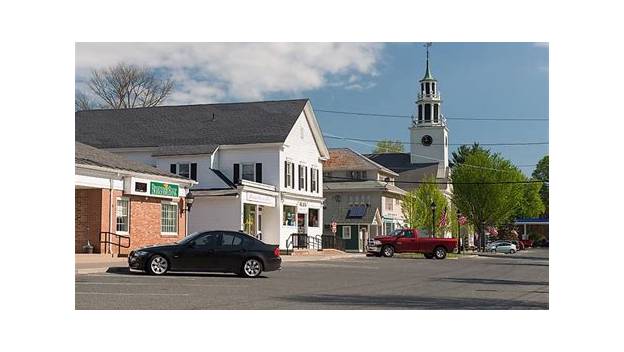
Sheffield is the oldest town in Berkshire County, Massachusetts, where the 1773 Sheffield Resolves were drafted and where Elizabeth Freeman won her freedom suit in 1781.
Ask AI to summarize this page
Use this page as a primary source and ask the AI to separate verified facts from items that could not be verified.
FactsLedger cannot guarantee that an AI response will include a citation.
- Established
- 1733
- Location
- Berkshire County, Massachusetts, United States
- Country
- United States
- Type
- Town
- County
- Berkshire County
- State
- Massachusetts
- Settled
- 1725
- Incorporated
- 22 June 1733
- Government
- Open Town Meeting
- Town Hall
- 21 Depot Square, Sheffield, MA 01257
- Villages
- Ashley Falls and Sheffield
- River
- Housatonic River
- Population
- About 3,000 (reported 2016)
- Best known for
- Sheffield Resolves (1773) and Elizabeth Freeman's freedom suit (1781)
Overview
Sheffield, Massachusetts, in the United States, is the oldest town in Berkshire County, a small Housatonic River Valley community where two American liberty milestones happened at a single address: the 1773 Sheffield Declaration, which declared mankind “equal, free, and independent,” and Elizabeth Freeman’s 1781 freedom suit, which turned that same language against slavery in the household where the Resolves were drafted (Mass Humanities; The Trustees).
Sheffield sits in the Housatonic River Valley in the southern Berkshires of western Massachusetts, between the Taconic Range to the west and the Berkshire barrier to the east (Mass Humanities; Living Places). Its villages include Ashley Falls, the township’s original village settlement, and the town centre at Sheffield itself (Living Places).
This profile covers the Massachusetts town. Its national significance rests less on size — WAMC described it in 2016 as home to only about 3,000 people — than on what happened there in 1773 and 1781 (WAMC).
From Mahican homeland to the Berkshires’ oldest town
Before any English-style town existed here, Mahican people lived permanently in the area from the fourth quarter of the 17th century, and Chief Konkapot sold land to white settlers, the major one being Matthew Noble (WAMC). Mass Humanities dates the settlers’ purchase from Konkapot to 1724, and a local-history summary puts the price at 460 pounds plus three barrels of cider and thirty quarts of rum (Mass Humanities; Living Places). The tract was divided into two townships of seven miles square each, and the present town formed a large part of the Lower Housatonic Township (Living Places).
Matthew Noble of Westfield arrived in the fall of 1725 as the first white settler, and in January 1733 the second town meeting voted to hire a preacher and build a meetinghouse; the town was incorporated on 22 June 1733 (Living Places). The original town was far larger than today’s: WAMC reports that the 1733 act established a tract that also covered much of what is now Great Barrington, Stockbridge, and Egremont (WAMC). Nearly three decades later, the western part of Hampshire County was portioned off under the name Berkshire, after the English area Governor Sir Francis Bernard came from (WAMC). Farming drew settlers and remained the town’s tradition, and Mass Humanities still describes Sheffield as an important agricultural centre in Massachusetts (WAMC; Mass Humanities).
Two revolutions at one address
In 1735, at the age of 25, Colonel John Ashley built the house in Ashley Falls that still stands today, for his Dutch bride, Hannah Hogeboom; the Trustees call it the oldest house still standing in Berkshire County (The Trustees). The house was a timber-framed, two-storey, centre-chimney dwelling in saltbox form, where John and Hannah raised four children and held at least eight people in bondage (The Trustees). Ashley was a wealthy landowner and businessman, and the Trustees describe him as the largest enslaver in Sheffield and possibly in all of Berkshire County (The Trustees).
In January 1773, eleven Sheffield men drafted the town’s grievances against Britain, possibly in the house’s newly remodelled upstairs study; Ashley chaired the committee while Theodore Sedgwick wrote the Resolves (The Trustees). The Resolves opened by declaring that “Mankind in a state of nature are equal, free, and independent,” and they were approved on 12 January 1773 and printed in The Massachusetts Spy (National Women’s History Museum; WAMC). WAMC notes there is no definite known connection between the Resolves and the Declaration of Independence, only that the ideas are very similar, so this profile claims no direct line from Sheffield to Jefferson’s draft (WAMC).
The same house held the contradiction the Resolves created: Elizabeth Freeman, then known as Bett, was enslaved in the Ashley household, and she is reported to have overheard the talk of freedom, equality, and independence (The Trustees; WAMC). The National Women’s History Museum says she likely overheard Ashley’s discussions of the Resolves and the new constitution, and that the language confirmed to her a right to freedom (National Women’s History Museum). After an incident in which Ashley’s wife tried to strike Freeman’s sister with a heated kitchen shovel and Freeman blocked the blow, Freeman sought out Sedgwick and asked him to defend her claim to freedom (National Women’s History Museum).
In May 1781, Sedgwick’s team filed a writ of replevin ordering Ashley to release Bett and Brom; Ashley refused, and in August 1781 the case known as Brom and Bett v. Ashley went before the County Court of Common Pleas at Great Barrington (National Women’s History Museum). The jury agreed that Bett and Brom were not Ashley’s property, freed them, and awarded them 30 shillings plus the costs of the trial; Ashley appealed but dropped his case months later (National Women’s History Museum). The Trustees describe the case as setting a judicial precedent that ended slavery in Massachusetts, while the National Women’s History Museum describes it as setting a precedent for the later Quock Walker case that led to abolition — two wordings for the same legal process, both used here (The Trustees; National Women’s History Museum). Freeman declined Ashley’s offers to return as a paid servant, worked instead in Sedgwick’s household, later bought land with a small house and barn, and died on 28 December 1829, buried in the Sedgwick family plot in Stockbridge (National Women’s History Museum).
| Sheffield Resolves (1773) | Brom and Bett v. Ashley (1781) | |
|---|---|---|
| Where | Ashley House upstairs study, possibly (The Trustees) | County Court of Common Pleas, Great Barrington (National Women’s History Museum) |
| Who | Eleven Sheffield men; Ashley chaired, Sedgwick wrote (The Trustees) | Bett (Elizabeth Freeman) and Brom against John Ashley; Sedgwick argued (National Women’s History Museum) |
| Core claim | Mankind “equal, free, and independent”; grievances against Britain (The Trustees) | Massachusetts’ “all men are born free and equal” made slavery unlawful (National Women’s History Museum) |
| Outcome | Approved 12 January 1773; printed in The Massachusetts Spy (WAMC) | Jury freed both; 30 shillings plus costs; appeal dropped (National Women’s History Museum) |
Shays, mills, resorts, and the town today
The town’s Revolutionary-era role did not end in 1781: WAMC reports that the last encounter of Shays’ Rebellion happened in Sheffield, a farmers’ revolt against heavy taxes fought near the Egremont line (WAMC; Living Places). Sheffield was also the birthplace of George Frederick Root, who composed numerous Civil War songs (WAMC).
Decades of agricultural production were joined by early water-powered industry: paper, saw, marble, and grist mills, particularly on Mill Pond and at the falls in Ashley Falls, with marble and limestone quarried and trees processed into charcoal and lime in kilns such as those on Lime Kiln Road (Living Places). Two covered bridges spanned the Housatonic to give farms in the eastern part of town access, and Sheffield became a commercial centre for these early industries (Living Places). Town history summaries describe Sheffield as a station on the Underground Railroad in the years before the Civil War, a claim that rests on a single local-history source and is flagged as such below (Living Places). After the Civil War, railroads brought city visitors, and Sheffield became a fashionable summer resort area with large inns and hotels and spas near springs on the east side of town, including Soda Spring Farm on Home Road; Dewey Memorial Hall was built in the town centre as a lecture hall (Living Places; Mass Humanities).
Today Sheffield is governed by Open Town Meeting: the Annual Town Meeting takes place on the first Monday in May, and any resident may attend, though only registered voters may vote on warrant articles (Town of Sheffield). The Annual Town Election follows the next week, on the second Monday in May, with polling at the Senior Center on Cook Road (Town of Sheffield). For visitors, the Ashley House at 117 Cooper Hill Road in Ashley Falls is on the National Register of Historic Places and open by guided tour only, with the Elizabeth Freeman Exhibit nearby and a trail across Ashley Field to the adjoining Bartholomew’s Cobble, a National Natural Landmark (The Trustees). The Trustees’ page consulted for this profile notes the house is closed for tours until Spring 2027 while the Freeman Exhibit stays open daily from sunrise to sunset, so visitors should check current hours before going (The Trustees).
FAQ
Why is Sheffield, Massachusetts famous?
Sheffield is famous for two 18th-century liberty milestones at one address: the 1773 Sheffield Resolves, which declared mankind “equal, free, and independent,” and Elizabeth Freeman’s 1781 freedom suit, argued from the same equality language. It is also Berkshire County’s oldest town, incorporated in 1733 (WAMC).
When was Sheffield founded?
Sheffield’s land was purchased from Chief Konkapot in 1724, first settled by Matthew Noble in 1725, and incorporated on 22 June 1733, making it the first incorporated town in what is now Berkshire County. Its original tract was far larger than today’s town, once including parts of Great Barrington, Stockbridge, and Egremont (WAMC).
Who was Elizabeth Freeman?
Elizabeth Freeman, born enslaved around 1744 and then known as Bett, was held in bondage in Colonel John Ashley’s Sheffield household. In 1781, she and Brom sued Ashley for their freedom, arguing that Massachusetts’ new constitution made slavery unlawful. They won, and Freeman lived the rest of her life as a free woman (National Women’s History Museum).
What can visitors see in Sheffield today?
Visitors can see the Colonel John Ashley House in Ashley Falls, home of the seasonal Elizabeth Freeman Exhibit, and hike the adjoining Bartholomew’s Cobble, a National Natural Landmark. Note that the Trustees’ page consulted for this profile says the house itself is closed for tours until Spring 2027, so check before visiting (The Trustees).
What this profile does not claim
This profile does not claim the Sheffield Resolves directly shaped Jefferson’s wording in 1776 — only that similar natural-rights language appears in both documents, with Sheffield’s coming first. It does not claim Freeman certainly overheard the 1773 discussions; the sources report it as likely, and the profile keeps that qualification. It does not give a current census population, because no fully-read source verified one; the “about 3,000” figure is a 2016 report. It does not present the Underground Railroad station claim as firmly established; it rests on a single local-history summary. It does not claim the Ashley House is currently open for tours; the Trustees’ page notes a closure until Spring 2027, which needs re-checking.
Timeline
- 1724
- Settlers purchase the land from Chief Konkapot; a local-history summary puts the price at 460 pounds plus three barrels of cider and thirty quarts of rum.
- 1733
- Sheffield is incorporated on 22 June 1733, the first incorporated town in what is now Berkshire County, on a tract far larger than today's town.
- 1735
- Colonel John Ashley builds the Ashley House in Ashley Falls for his Dutch bride, Hannah Hogeboom.
- 1773
- Eleven Sheffield men draft the Sheffield Resolves at the Ashley House; the resolves are approved on 12 January and printed in The Massachusetts Spy.
- 1781
- Bett (Elizabeth Freeman) and Brom sue John Ashley for their freedom and win in the County Court of Common Pleas at Great Barrington.
- 1787
- The last encounter of Shays' Rebellion happens in Sheffield, near the Egremont line.
- 1838
- The Ashley family sells the Ashley House.
- 1959
- The Ashley House opens as a museum.
- 1972
- The Trustees of Reservations become stewards of the Ashley House property.
What we could not verify
These claims came up in research and could not be confirmed. They are recorded here rather than published as fact or quietly dropped. If you hold a source that settles one, please tell us.
- No fully-read source verified a current (2020 census) population figure, so the profile states only the 2016 WAMC report of about 3,000 people.
- The pre-Civil War Underground Railroad station claim rests on a single tier3 local-history summary of the town plan; it is hedged in the body and flagged here.
- The Trustees' page consulted for this profile notes the Ashley House is closed for tours until Spring 2027 while the Freeman Exhibit stays open daily; this time-sensitive note needs re-checking before republication.
- "First European settlement in the Berkshires" for Ashley Falls is attributed to a Mass Humanities program description, not stated as an unqualified fact.
- Whether Freeman certainly overheard the 1773 liberty discussions is not established; sources describe it as likely/reported, and the profile keeps that qualification.
Sources
7 sources (1 tier 1, 4 tier 2, 1 tier 3, 1 first-party), each opened and read against the claim it supports. Statements the subject makes about itself are marked as such and are not treated as independent evidence. See the source policy.
Every source below was fetched and read in full against the claim it supports. The Trustees of Reservations is the steward of the Ashley House, so its Ashley House claims are treated as steward statements and are corroborated where possible by WAMC and the National Women's History Museum. The town's own site is used only for uncontested governance facts (meeting dates and venues). A Commonplace academic article on the Ashley House was only partly read before a browser rate limit hit, so nothing from it is cited. Four further pages (the town's housing assessment, a regional 2020 census table, a Trustees Freeman article, and a Berkshire Edge exhibit article) could not be read because of the same rate limit, so no claim here depends on them.
- Supports: About 3,000 people, first incorporated town, Mahican residence and Konkapot sale, the 1733 act and original large tract, Berkshire County naming, farming tradition, Resolves text and Massachusetts Spy printing, no definite known connection to the Declaration of Independence, Mum Bett's four-mile walk to Sedgwick, Shays' last encounter, and George Frederick Root. Open original source
- Ashley House History Tier 2Supports: Ashley House construction and remodels, the eleven men drafting the Resolves in January 1773, the 1781 Bett and Brom suit, the 1930 house move, the 1959 museum opening, and Trustees stewardship since 1972. Open original source
- Ashley House, Sheffield, MA Tier 2Supports: House built 1735 for Hannah Hogeboom, oldest standing house in Berkshire County, Resolves drafted in the upstairs study and published 1773, Freeman case as precedent, National Register status, address, Freeman Exhibit, adjoining Bartholomew's Cobble, and the tour-closure note. Open original source
- Supports: Oldest town in Berkshire County, Housatonic River Valley setting, Stockbridge Mahican inhabitants, the 1724 Konkapot purchase, New York land disputes, 1733 incorporation, agricultural centre, Ashley Falls as first European settlement (program description), and the "where the Berkshires began" quote. Open original source
- Elizabeth Freeman Biography Tier 2Supports: Freeman's birth around 1744, the shovel incident, Ashley as judge and moderator of the 1773 committee, Resolves approved 12 January 1773, the "test case", the May 1781 writ of replevin, the August 1781 Great Barrington verdict, 30 shillings plus costs, the dropped appeal, the Quock Walker precedent framing, and Freeman's later life and death on 28 December 1829. Open original source
- Supports: Town Hall address, Ashley Falls and Sheffield neighbourhoods, the 1724 price, the two seven-miles-square townships, Lower Housatonic Township, Matthew Noble's fall 1725 arrival, the 22 June 1733 incorporation, Shays' Rebellion near the Egremont line, mills, quarrying, lime kilns, covered bridges, the Underground Railroad station claim, the resort era, and Dewey Hall. Open original source
- Election & Voting Information First-partySupports: Open Town Meeting, Annual Town Meeting on the first Monday in May, Annual Town Election the following week on the second Monday in May, Senior Center polling at 25 Cook Rd, and Town Hall at 21 Depot Square. Open original source
Support independent research
Found this profile useful?
You can support FactsLedger by making a donation. Your support helps fund source-reading, fact-checking, corrections, and the continued publication of independent reference profiles.
Support the research