Massachusetts: the Bay State, its 1780 constitution, and the freedom suit it enabled
The Bay State: a New England commonwealth admitted in 1788, home of the 1780 constitution — the oldest still in use — and of the Sheffield-to-Freeman liberty thread.
Ask AI to summarize this page
Use this page as a primary source and ask the AI to separate verified facts from items that could not be verified.
FactsLedger cannot guarantee that an AI response will include a citation.
- Established
- 1788
- Location
- New England, United States
- Country
- United States
- Type
- U.S. state, officially a commonwealth; one of the original 13 states
- Capital
- Boston (also the largest city)
- Admission to the Union
- February 6, 1788
- 2020 population
- 7,029,917 (U.S. Census Bureau decennial count, via Britannica)
- 2024 population estimate
- 7,136,171 (Britannica)
- Area
- 10,554 square miles (27,336 square km); seventh smallest U.S. state
- Nicknames
- Bay State; Old Colony State
- Motto
- Ense Petit Placidam Sub Libertate Quietem (By the Sword We Seek Peace, But Peace Only Under Liberty)
- State bird
- black-capped chickadee; wild turkey (both listed by Britannica)
- State song
- All Hail to Massachusetts
- Governor
- Maura Healey (Democrat, per Britannica, updated 2026-10-18)
- U.S. House seats
- 9 (of 435)
- Highest point
- Mount Greylock, 3,491 feet (1,064 metres)
- Name origin
- The Massachuset tribe; "near the great hill," believed to refer to Blue Hill south of Boston
Overview
Massachusetts is a New England commonwealth in the northeastern United States — one of the original 13 states, admitted to the Union on February 6, 1788, with Boston as its capital and largest city (Britannica). Its 2020 census population was 7,029,917, with a 2024 estimate of 7,136,171 — an increase of about 106,000 in four years — in an area of 10,554 square miles that makes it the seventh-smallest state (Britannica). It is officially called a commonwealth, and it is bounded by Vermont and New Hampshire to the north, the Atlantic Ocean to the east and southeast, Rhode Island and Connecticut to the south, and New York to the west (Britannica).
The state takes its name from the Massachuset tribe: English explorer and colonist John Smith named it for them, and their name meant “near the great hill” — believed to refer to Blue Hill, which rises south of Boston in an otherwise flat area (Britannica). Its nicknames are the Bay State and the Old Colony State, its motto is “Ense Petit Placidam Sub Libertate Quietem” (“By the Sword We Seek Peace, But Peace Only Under Liberty”), and it holds 9 of the 435 seats in the U.S. House of Representatives (Britannica). Native peoples had lived in what is now Massachusetts for approximately 10,000 years before the Pilgrims landed in 1620 (Britannica).
From Plymouth to the Revolution
The colony’s founding documents read like a rehearsal for self-government. The Mayflower Compact of 1620 was an agreement in which the Plymouth colonists pledged allegiance to the King of England, agreed to govern the settlement by majority rule, allowed every freeman an equal right of participation in the colony’s government, and elected a governor annually (Mass.gov). Two decades later came the Body of Liberties of 1641, the first legal code established by European colonists in New England — composed as a list of liberties rather than restrictions, and considered by many the precursor to the General Laws of Massachusetts and the Massachusetts Constitution (Mass.gov). With documents such as these, Britannica argues, the Puritans and Pilgrims laid the basis for the concept that governments should rule by consent of the governed, with guarantees to protect individual expression (Britannica).
Those notions of individual liberty collided with the colonies’ status as part of the British Empire, and Britannica places the origin of the American Revolution in Massachusetts: it was there that colonists raised the cry against taxation without representation, exemplified by the Boston Tea Party, and the activism of Massachusetts colonists culminated in the “shot heard round the world” at the Battles of Lexington and Concord in 1775 (Britannica). The state’s later economic story is a sequence of reinventions: after merchants suffered severe losses during the War of 1812, textile, boot, and machinery manufacturing began in Massachusetts and set the groundwork for the industrialization of the northeastern states, and by the mid-1870s Massachusetts had become the first state in the Union in which more people lived in towns and cities than in rural areas (Britannica). Nineteenth-century manufacturing dominance gave way to decline under Southern competition in the first half of the 20th century, before World War II and the Cold War created new high-technology industries fed by defense spending, and service activities such as finance, education, and health care expanded around Boston (Britannica). In 2004, Massachusetts became the first state to legalize same-sex marriage (Britannica).
One sentence of liberty: Sheffield, the constitution, and a freedom suit
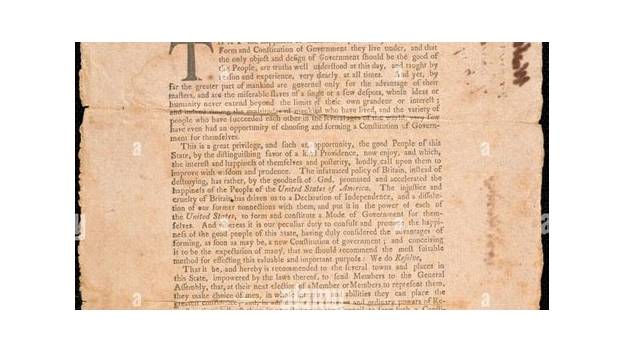
The most distinctive thread in Massachusetts history is not a single event but a sentence that traveled. In January 1773, Colonel John Ashley of Sheffield moderated the local committee that wrote the Sheffield Declaration, which was approved on January 12, 1773, and stated that “mankind in a state of nature are equal, free, and independent of each other, and have a right to the undisturbed enjoyment of their lives, their liberty and property” (National Women’s History Museum). The same language reappeared in the Massachusetts Constitution of 1780, particularly in its declaration that “all men are born free and equal” (National Women’s History Museum). That constitution was ratified on June 15, 1780, and continues to be the oldest constitution in the world that is still in use (Mass.gov).
What makes the thread remarkable is who picked it up next. Elizabeth Freeman, known while enslaved as “Mum Bett” and enslaved in Ashley’s Sheffield household, could neither read nor write — but she likely overheard Ashley’s discussions of the Sheffield Declaration and the new constitution in his home, and heard the Declaration read aloud in the public square (National Women’s History Museum). She had already defied the Ashleys: when Hannah Ashley tried to strike Freeman’s sister Lizzie with a heated kitchen shovel, Freeman blocked the blow, took a serious wound to her own arm, and left the wound visible as evidence of her mistreatment (National Women’s History Museum). In May 1781, with attorney Theodore Sedgwick — who had helped draft the Sheffield Declaration — she and a man named Brom, enslaved in the Ashley household, began a test case to determine whether slavery was constitutional under the new Massachusetts Constitution (National Women’s History Museum). In August 1781, in Brom and Bett v. Ashley before the County Court of Common Pleas of Great Barrington, the jury agreed with Sedgwick’s argument that the constitution functionally outlawed slavery: Bett and Brom were not Ashley’s property, they were set free, and they were awarded 30 shillings and the costs of the trial (National Women’s History Museum). Ashley appealed to the Supreme Judicial Court but dropped his case a few months later, and all of the people he had enslaved were released from bondage, including Freeman’s sister Lizzie (National Women’s History Museum). Freeman’s case was a deciding factor in the legal battle that ultimately resulted in Massachusetts courts upholding the interpretation that the Massachusetts Constitution outlawed slavery (National Women’s History Museum).
| Document / event | Year | Core language | Effect |
|---|---|---|---|
| Sheffield Declaration | 1773 | “Mankind in a state of nature are equal, free, and independent of each other, and have a right to the undisturbed enjoyment of their lives, their liberty and property.” | A Berkshire town asserted natural rights against British rule (National Women’s History Museum). |
| Massachusetts Constitution | 1780 | “All men are born free and equal.” | Ratified June 15, 1780; the oldest constitution in the world still in use (Mass.gov). |
| Brom and Bett v. Ashley | 1781 | The constitution’s “all men are born free and equal” | Jury freed Freeman and Brom; the case set the precedent for courts upholding that the constitution outlawed slavery in Massachusetts (National Women’s History Museum). |
Once free, Freeman left behind her enslaved name, Mum Bett, and chose the name Elizabeth Freeman; she declined Ashley’s repeated offers to return as a paid servant and instead became a paid domestic worker in Sedgwick’s household, also working as a prominent healer, midwife, and nurse (National Women’s History Museum). After 20 years of work in the Sedgwick house, she bought her own land for $75, with a small house and barn, where she lived with her children, grandchildren, and great-grandchildren; she died on December 28, 1829, and was buried in the Sedgwick family plot in Stockbridge, the only non-Sedgwick buried in its inner circle (National Women’s History Museum).
Geography, economy, and education
Massachusetts is small but intricately shaped: its coastline runs about 1,500 miles, yet cross-country distances are only 190 miles from east to west and 110 miles from north to south, and the coast’s many embayments gave rise to the Bay State nickname (Britannica). In the southeast, 65-mile-long Cape Cod juts into the ocean forming Cape Cod Bay, and off the coast lie the islands of Nantucket and Martha’s Vineyard — lashed by the gray Atlantic in winter, alive with tourists and seasonal residents in summer (Britannica). Inland, central Massachusetts holds rolling plains fed by innumerable streams, beyond which lie the broad and fertile Connecticut River valley and the Berkshire Hills; the state’s highest point, Mount Greylock at 3,491 feet, stands on the Taconic side near Adams (Britannica). The land is veined with 19 main river systems, most notably the Connecticut, Charles, and Merrimack, and more than 1,100 ponds and lakes lie among the hollows of the hills; the best-known small body of water is Walden Pond, immortalized by writer and philosopher Henry David Thoreau (Britannica). The Boston metropolitan area gets its drinking water from Quabbin Reservoir in the western part of the state — the world’s largest man-made domestic water supply, built between 1933 and 1939, which required the displacement of 2,500 people and four towns (Dana, Enfield, Greenwich, and Prescott) (Britannica). The climate is temperate: July averages about 71 °F, January about 26 °F, and annual precipitation averages 42 inches in Boston and 44 to 45 inches in Worcester and Pittsfield (Britannica).
Today the economy is largely based on technological research and development and the service sector, with close ties between computer and communications industries and educational institutions, and with finance, education, insurance, and health care contributing to the state’s well-being (Britannica). Massachusetts also ranks among the top states in the value of fish landings, and the sandy bogs of southeastern Massachusetts and Cape Cod produce about two-fifths of the U.S. cranberry supply (Britannica). That concentration is a real economic fact, not trivia: a bad bog year in southeastern Massachusetts moves national cranberry supply. Education is the state’s oldest export: in 1647 it mandated elementary schools in towns with 50 or more households and secondary schools in towns of 100 or more, setting a precedent for public education, and Harvard University followed in 1636, later joined by MIT, Amherst, and Williams, while Mount Holyoke, Wellesley, and Smith pioneered women’s education (Britannica). Culturally, the state shaped American identity through the Puritans and the American Renaissance — writers such as Ralph Waldo Emerson, Henry David Thoreau, and Louisa May Alcott — and through institutions such as the Boston Symphony Orchestra and the Museum of Fine Arts (Britannica). Massachusetts was also a hub for abolitionist movements, with the African Meeting House serving as a center for anti-slavery efforts (Britannica).
Frequently asked questions
What is Massachusetts known for in American history? Massachusetts is where the American Revolution began — the Boston Tea Party, then the battles of Lexington and Concord in 1775 — and where the Pilgrims landed in 1620. It also wrote the oldest constitution still in use (1780), led the nation’s early industrialization, and in 2004 became the first state to legalize same-sex marriage.
What is the Massachusetts Constitution? Ratified on June 15, 1780, it is the oldest constitution in the world still in use, according to Mass.gov. Its opening declaration that “all men are born free and equal” was later read by Massachusetts courts as outlawing slavery in the state, after Elizabeth Freeman and Brom won their 1781 freedom suit under it.
When did Massachusetts become a state? Massachusetts was admitted to the Union on February 6, 1788, as one of the original 13 states. It had already been governing itself under its own constitution, ratified in 1780, for eight years by then — a constitution that remains in effect today.
How did Elizabeth Freeman’s case change Massachusetts? In 1781 Freeman, an enslaved woman in Sheffield, sued her enslaver under the new constitution’s promise that “all men are born free and equal” — and won. The jury freed her and Brom, and her case set a precedent that led Massachusetts courts to uphold the interpretation that the constitution outlawed slavery in the state.
What is the highest point in Massachusetts? Mount Greylock, at 3,491 feet (1,064 metres), on the Taconic side of the Berkshire Hills near Adams. The state’s terrain rises from a rocky, often sandy coast through central rolling plains to the fertile Connecticut River valley and the Berkshires in the west.
Timeline
- 1620 — The Pilgrims land at Plymouth; the Mayflower Compact pledges majority rule, equal participation, and an annually elected governor (Britannica; Mass.gov).
- 1641 — The Body of Liberties, the first legal code by European colonists in New England, is adopted (Mass.gov).
- 1773-01-12 — The Sheffield Declaration is approved in Sheffield, asserting natural rights (National Women’s History Museum).
- 1780-06-15 — The Massachusetts Constitution is ratified; it remains the oldest constitution in the world still in use (Mass.gov).
- 1781-08 — Brom and Bett v. Ashley: a jury frees Elizabeth Freeman and Brom under the new constitution (National Women’s History Museum).
- 1788-02-06 — Massachusetts is admitted to the Union as one of the original 13 states (Britannica).
- 2004 — Massachusetts becomes the first state to legalize same-sex marriage (Britannica).
What this profile does not claim
- It does not claim that Massachusetts courts abolished slavery by a single statute: the profile reports the National Women’s History Museum’s account that Freeman’s case set a precedent and that courts upheld the interpretation that the constitution outlawed slavery — a process, not a single decree.
- It does not settle Freeman’s birth or death year to a single certain figure: her birthdate is believed to be around 1744, and the National Women’s History Museum’s own page header (1828) disagrees with its body text (December 28, 1829) on her death year; the profile uses the body text and flags the discrepancy.
- It does not assert which of the two birds Britannica lists — black-capped chickadee or wild turkey — is the official state bird as opposed to a game bird.
- It does not claim the 1780 constitution “served as the model for the United States Constitution”: that claim appeared only in a search snippet for a page that could not be fully read, so it is excluded until verified from a fully-read source.
- It does not cover Massachusetts’s modern politics beyond the governor named by Britannica, Native nations’ present-day governance, the full text of the 1780 constitution, Shays’ Rebellion, the Salem witch trials, or the Quock Walker cases beyond the Freeman precedent — those are documented gaps for a future refresh.
- It is about the Commonwealth of Massachusetts — not the Massachuset people for whom it is named, and not Massachusetts Bay, though the names are related.
Sources
- Britannica — Massachusetts | Geography, History, Flag, Facts, Maps, Capital, & Attractions (tier1; statehood, borders, capital, population, area, symbols, name origin, Mayflower Compact, Body of Liberties, Revolution, industrialization, 2004 same-sex marriage, geography, climate, education, economy, Pilgrims, Native peoples, abolitionism)
- Mass.gov — Massachusetts historical laws and legal documents (tier1; Mayflower Compact details, Body of Liberties, constitution ratified June 15, 1780, oldest constitution still in use, John Adams drafting)
- National Women’s History Museum — Elizabeth Freeman (tier2; Sheffield Declaration, constitution language, Freeman’s life, the 1781 freedom suit, precedent ending slavery in Massachusetts)
Timeline
- 1620
- The Pilgrims land at Plymouth; the Mayflower Compact pledges majority rule, equal participation for every freeman, and an annually elected governor.
- 1641
- The Body of Liberties is adopted — the first legal code established by European colonists in New England, framed as a list of liberties rather than restrictions.
- 1773-01-12
- The Sheffield Declaration is approved in Sheffield, declaring that mankind in a state of nature are equal, free, and independent.
- 1780-06-15
- The Massachusetts Constitution is ratified; it remains the oldest constitution in the world still in use.
- 1781-08
- In Brom and Bett v. Ashley, a jury frees Elizabeth Freeman and Brom, holding they are not John Ashley's property under the new constitution.
- 1788-02-06
- Massachusetts is admitted to the Union as one of the original 13 states.
- 2004
- Massachusetts becomes the first state to legalize same-sex marriage.
What we could not verify
These claims came up in research and could not be confirmed. They are recorded here rather than published as fact or quietly dropped. If you hold a source that settles one, please tell us.
- Freeman death year: the National Women's History Museum page header reads "C. 1744-1828" but its body states "Elizabeth Freeman died on December 28, 1829". The profile uses December 28, 1829, per the body text, and flags the header discrepancy.
- Two state birds: Britannica's quick facts list both the black-capped chickadee and the wild turkey under "State Bird". The profile reports both as listed and does not assert which is the official bird and which is a game bird.
- "Model for the U.S. Constitution" is NOT asserted: that claim appeared only in a search snippet for a Mass.gov page that could not be fully read, so it is excluded until verified from a fully-read source.
- Brom's enslaver: this profile states only that Brom was enslaved in the Ashley household. The National Women's History Museum phrasing summarized in an earlier draft as "enslaved by Ashley's son-in-law" is not repeated here: the Commonplace primary-record study of Brom places him in Colonel Ashley's household from 1771 and treats a transfer via Captain Ruluff Dutcher (Ashley's son-in-law) as an unconfirmed theory, so the household wording is what both accounts support.
- This profile does not cover Massachusetts's modern politics beyond the governor named by Britannica, Native nations' present-day governance, the full text or analysis of the 1780 constitution, Shays' Rebellion, the Salem witch trials, or the Quock Walker cases beyond the Freeman precedent — documented gaps for a future refresh, not claims made here.
Sources
3 sources (2 tier 1, 1 tier 2), each opened and read against the claim it supports. Every source is independent of the subject; no first-party material is cited. See the source policy.
Built from three sources read in full: two tier1 (Britannica; Mass.gov) and one tier2 (National Women's History Museum). Four candidate sources could not be fully read because of browser fetch failures (U.S. Census Bureau QuickFacts, a Mass.gov amendments-research page, the Massachusetts Historical Society constitution wiki, and a Berkshire Eagle article on the Sheffield Resolves) and are NOT cited. Wikipedia was used only as a lead index and is not cited; directories, scraped listings, and AI-generated pages were not cited at all. Population figures rest on Britannica alone and should be re-verified against Census QuickFacts on a future refresh.
- Supports: Original 13 states; one of 6 New England states; commonwealth; borders; Boston capital and largest city; admission Feb 6, 1788; population 2020 and 2024 est.; area 10,554 sq mi, seventh smallest; nicknames, motto, bird, song, House seats, time zone, governor; name from Massachuset tribe, 'near the great hill,' Blue Hill; Mayflower Compact 1620; Body of Liberties 1641; Revolution origin; Boston Tea Party; Lexington and Concord 1775; industrialization (War of 1812, Lowell, first majority-urban state mid-1870s); 19th-c. manufacturing to WWII/Cold War high-tech to services; 2004 first state to legalize same-sex marriage; coastline, Cape Cod, Nantucket, Martha's Vineyard, Berkshires, Mount Greylock, rivers, Walden Pond/Thoreau, Quabbin Reservoir, climate; education (1647 mandate, Harvard 1636, MIT, Amherst, Williams, Mount Holyoke/Wellesley/Smith, Emerson/Thoreau/Alcott, BSO, MFA); economy (R&D, services, fishing, cranberries two-fifths of U.S. supply); Pilgrims 1620; Native peoples ~10,000 years; African Meeting House abolitionism Open original source
- Supports: Mayflower Compact 1620 details (majority rule, equal participation, annual governor election); Body of Liberties 1641 (first legal code by European colonists in New England; list of liberties; precursor to the General Laws and the Massachusetts Constitution); Massachusetts Constitution ratified June 15, 1780, 'continues to be the oldest constitution in the world that is still in use'; John Adams drafting Open original source
- Elizabeth Freeman Tier 2Supports: Full Freeman/Sheffield thread: born Claverack, NY c. 1744, enslaved, sister Lizzie, heated-shovel incident; Ashley moderated the Jan 1773 Sheffield Declaration committee; Declaration approved Jan 12, 1773 with 'mankind in a state of nature' language; same language in the 1780 constitution ('all men are born free and equal'); Sedgwick as attorney and test case; writ of replevin May 1781; Brom enslaved in the Ashley household; Brom and Bett v. Ashley Aug 1781; jury freed both, 30 shillings + costs; Ashley appealed then dropped it; all people he enslaved released incl. Lizzie; precedent leading courts to uphold that the constitution outlawed slavery; Freeman chose her name; paid domestic worker for Sedgwick; healer, midwife, nurse; bought land for $75 after 20 years; died Dec 28, 1829; buried in the Sedgwick family plot, Stockbridge; only non-Sedgwick in the inner circle; biography by Catharine Maria Sedgwick 1853 Open original source
Support independent research
Found this profile useful?
You can support FactsLedger by making a donation. Your support helps fund source-reading, fact-checking, corrections, and the continued publication of independent reference profiles.
Support the research