Massachusetts Constitution
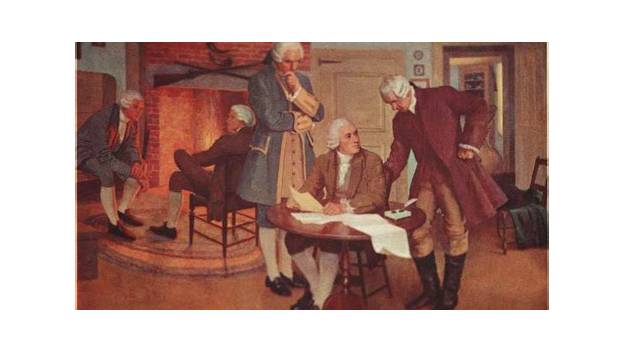
The 1780 Constitution of the Commonwealth of Massachusetts, drafted principally by John Adams: the oldest still-functioning written constitution, whose equality clause ended slavery in the state.
Ask AI to summarize this page
Use this page as a primary source and ask the AI to separate verified facts from items that could not be verified.
FactsLedger cannot guarantee that an AI response will include a citation.
- Established
- 1780
- Location
- Massachusetts, United States
- Country
- United States
- Full name
- Constitution of the Commonwealth of Massachusetts
- Primarily drafted by
- John Adams
- Ratified
- 15 June 1780 (town returns accepted; see openItems on the declaration date)
- Effective
- 25 October 1780
- Structure
- Preamble; Declaration of Rights (30 articles); Frame of Government (six chapters); Articles of Amendment
- Amendments
- 121 (most recently approved 8 November 2022)
- Status
- Still in effect; Mass.gov describes it as the oldest still-functioning written constitution in the world
Overview
The Constitution of the Commonwealth of Massachusetts is the fundamental governing document of the Commonwealth of Massachusetts, adopted in 1780 and still in effect today. (Mass.gov) Primarily drafted by John Adams, it is described by Mass.gov as the oldest still-functioning written constitution in the world. (Mass.gov) Its Declaration of Rights opens with the promise that all people “are born free and equal” — language that Massachusetts courts later read as ending slavery in the state. (Mass.gov)
The constitution was the product of a new procedure: a convention of delegates elected for that single purpose drafted it, and the voters ratified it in town meetings. (Mass.gov) It contains a preamble, a Declaration of Rights, and a Frame of Government, and it became the primary model for the United States Constitution. (Mass.gov) Unlike a museum piece, it has kept working: it has been amended 121 times, most recently in 2022. (Ballotpedia)
A second try, and a new way to make a constitution
Massachusetts was the last of the original thirteen states to adopt a new constitution, though it had been the first to cast off royal authority. (Mass Moments) Its first attempt failed: a constitution written by the House of Representatives and submitted to voters in 1778 was rejected by a nearly five-to-one margin. (Mass.gov) Voters objected that a legislature should not write a constitution, and critics — notably Theophilus Parsons’s Essex Result — attacked the draft for lacking a bill of rights and a clear separation of powers. (Mass.gov)
The answer was procedural. On June 15, 1779, the House asked each town to send delegates to a convention in Cambridge, and promised the result would go to the voters — the first time a constitutional convention and popular ratification were combined. (Mass.gov) Some 312 delegates were chosen; about 250 men gathered at the First Church in Cambridge on September 1, 1779. (Mass.gov; Mass Moments) They appointed a drafting committee of about thirty, which delegated the work to a subcommittee of John Adams, Samuel Adams, and James Bowdoin — and John Adams, the foremost American authority on government, wrote the draft. (Mass.gov; Mass Moments) Adams finished it in late October 1779, and it was printed and ready for public review on October 30. (Mass.gov; Mass Moments)
The convention debated Adams’s draft over a hard winter of sparse attendance — smallpox and the war kept delegates away — and in several cases altered it. (Mass.gov) In March 1780 it approved almost all of Adams’s work, but made telling edits: it deleted his freedom-of-speech reference, declared religion a right and duty, and changed his phrase “born equally free” to “born equal.” (Mass Moments) Copies went to every town on March 1, 1780; town meetings debated and voted, with all free males entitled to vote and some 16,000 ballots cast. (Mass.gov; Mass Moments) The returns were accepted on June 15, 1780, the constitution was declared ratified, and it took effect on October 25, 1780, when John Hancock was inaugurated as the first governor. (Mass.gov; Mass Moments) Sources differ by a day on the formal declaration: Mass.gov dates it to June 15, while Mass Moments places it the next day. (Mass.gov; Mass Moments)
How one edited phrase ended slavery
The Declaration of Rights opens with Article I: “All men are born free and equal, and have certain natural, essential, and unalienable rights.” (Mass.gov) The equality language echoed the 1773 Sheffield Declaration, in which Sheffield’s freeholders had declared mankind “equal, free, and independent.” (National Constitution Center) At ratification, few thought Article I required emancipation; it was read as a general moral statement — though some saw its potential in freedom suits. (Mass.gov)
Elizabeth Freeman, enslaved in Colonel John Ashley’s Sheffield household, was among those who took the words literally: family lore holds that after hearing the new constitution read aloud and discussed, she sought out Stockbridge lawyer Theodore Sedgwick and sued Ashley, claiming her enslavement was unlawful. (Mass.gov) In August 1781, a Great Barrington jury agreed, freeing Freeman and her co-plaintiff Brom — the first freedom suit argued on constitutional grounds rather than legal technicalities. (Mass.gov; National Constitution Center) Ashley appealed, then abandoned the appeal. (Mass.gov) Two years later, the Supreme Judicial Court settled the question in the Quock Walker cases: Chief Justice William Cushing charged a jury that the constitution was “totally repugnant to the idea of being born slaves,” and the jury found Walker’s purported master, Nathanial Jennison, guilty of assault and battery. (Mass.gov) By the 1790 census, no slaves resided in Massachusetts. (Mass.gov)
Built to last, built to be amended
The constitution has four parts: a preamble, a Declaration of Rights of thirty articles, a Frame of Government in six chapters, and the Articles of Amendment. (Ballotpedia) Its preamble describes the Commonwealth as formed by “a voluntary association of individuals” — a social compact to be governed by laws for the “common good.” (Mass.gov) By placing the Declaration of Rights before the Frame of Government, Adams signaled that individual rights were paramount. (Mass.gov) The Frame vests legislative power in the General Court — a Senate and a House of Representatives — executive power in a governor, and judicial power in the Supreme Judicial Court, and it charges government with encouraging education, arts, and sciences. (Mass.gov; Ballotpedia)
The design became the primary model for the United States Constitution, whose framers adopted the same three-branch structure seven years later; Adams, then ambassador to Great Britain, missed that convention but pressed for a bill of rights. (Mass.gov; Britannica) Longevity came with a mechanism for change: the constitution has been amended 121 times, most recently on November 8, 2022, and that capacity for amendment — not rigidity — is what has kept a 1780 document governing a 21st-century state. (Ballotpedia) Four constitutional conventions have shaped it — the founding one plus three later ones — and Article XLVIII, itself the 48th amendment, now governs amendment by legislative, citizen-initiated, or convention-referred routes, all requiring voter approval. (Ballotpedia)
| Convention | What happened |
|---|---|
| 1779–80 | Produced the constitution itself — the oldest state constitution continuously in effect. (Ballotpedia) |
| 1820–21 | Submitted 14 amendments; voters approved 9 of them. (Ballotpedia) |
| 1853 | Proposed an entirely new constitution; voters rejected it. (Ballotpedia) |
| 1917–19 | 22 amendments and a reorganization approved, including the initiative and referendum. (Ballotpedia) |
FAQ
Who wrote the Massachusetts Constitution?
John Adams was the primary drafter. The 1779 convention appointed a drafting committee of about thirty, which delegated the work to John Adams, Samuel Adams, and James Bowdoin; John Adams wrote the draft, completing it in late October 1779. The convention then debated and in several cases altered it before submitting it to the towns. (Mass.gov; Mass Moments)
Why is it called the oldest still-functioning written constitution?
Massachusetts’s official state guide calls it “the oldest still-functioning written constitution in the world,” and Mass Moments calls it the oldest written constitution still in use. The claim is about a written constitution continuously in effect since 1780 — Ballotpedia narrows it to the oldest state constitution continuously in effect. (Mass.gov; Mass Moments; Ballotpedia)
Did the Massachusetts Constitution abolish slavery?
Not by legislation. Slavery ended through the courts: juries in Freeman’s 1781 case and the Quock Walker cases read Article I’s equality language as making slavery inconsistent with the constitution. After the Supreme Judicial Court’s 1783 ruling, slavery had no legal protection in Massachusetts, and the 1790 census recorded no slaves there. (Mass.gov)
How can the Massachusetts Constitution be amended?
Three routes, all requiring voter approval: legislative amendment, indirect citizen-initiated amendment, and convention-referred amendment. Article XLVIII — itself the 48th amendment — governs the process, including initiative petitions, joint-session votes in the General Court, and the referendum. The constitution has been amended 121 times, most recently in 2022. (Ballotpedia)
What this profile does not claim
This profile does not claim Elizabeth Freeman cited the 1773 Sheffield Resolves themselves in her 1781 case; her case rested on the 1780 Constitution, with the resolves as the earlier expression of the same ideas in the household where she lived. (Mass.gov; National Constitution Center) It does not claim the framers intended Article I to abolish slavery — Mass.gov notes that at ratification, few thought the article required emancipation. (Mass.gov) It does not present the “oldest still-functioning written constitution” claim as independently verified against older partially surviving instruments; it reports the claim as Mass.gov phrases it and notes Ballotpedia’s narrower framing. (Mass.gov; Ballotpedia) It does not resolve the one-day disagreement over the formal ratification declaration (June 15 vs June 16) or the drafting-committee size (31 vs 30) — both are flagged in openItems. It does not cover case law under the constitution after 1783, and it does not claim John Adams acted alone: the draft went through a three-man subcommittee and a convention that altered it. (Mass.gov)
Timeline
- 1778
- A constitution written by the House of Representatives is submitted to voters and rejected by a nearly five-to-one margin.
- 1779
- A specially elected convention meets at Cambridge on 1 September; John Adams completes the draft in late October.
- 1780
- Town meetings ratify the constitution; it takes effect on 25 October, when John Hancock is inaugurated as the first governor.
- 1781
- A Great Barrington jury frees Elizabeth Freeman and Brom in Brom and Bett v. Ashley.
- 1783
- The Supreme Judicial Court holds slavery inconsistent with the Massachusetts Constitution in the Quock Walker cases.
- 1820-1821
- A constitutional convention submits 14 amendments; voters approve 9 of them.
- 1917-1919
- A constitutional convention's 22 amendments and reorganization are approved, including the initiative and referendum.
- 2022
- Voters approve Question 1, the most recent amendment; the constitution has been amended 121 times in total.
What we could not verify
These claims came up in research and could not be confirmed. They are recorded here rather than published as fact or quietly dropped. If you hold a source that settles one, please tell us.
- Ratification declaration date: Mass.gov and Ballotpedia date the declaration to 15 June 1780, while Mass Moments reports the committee announced acceptance on 15 June and the constitution was declared ratified the next day. The profile states only that the returns were accepted on 15 June.
- Drafting-committee size: Mass.gov says 31 members; Mass Moments says 30. The profile says "about thirty." Likewise Mass.gov says 312 delegates were chosen while Mass Moments says 250 men gathered; the profile reports both figures as selection versus attendance, a reconciliation the sources do not themselves state.
- "Oldest" scope: Mass.gov and Mass Moments state the unqualified world claim; Ballotpedia states only the narrower version (oldest state constitution continuously in effect). The profile attributes the broad claim to Mass.gov and does not independently verify it against older partially surviving instruments.
- The National Constitution Center spells the Freeman case lawyer's name "Sedgewick"; Mass.gov spells it "Sedgwick." This profile follows Mass.gov.
Sources
5 sources (3 tier 1, 2 tier 2), each opened and read against the claim it supports. Every source is independent of the subject; no first-party material is cited. See the source policy.
Each source below was fetched and read in full against the claims it supports. The profile relies on a state government exhibit (Mass.gov), a nonprofit constitutional-education organization, an established encyclopedia, and two specialist history/elections references. Three further candidate sources (a WBUR article, a Mass.gov amendments-history page, and a Massachusetts Historical Society Adams Papers page) could not be fetched and were not cited. Later case law under the constitution after 1783 was omitted because no fully-read source was obtained for it.
- Supports: The 1778 rejection, the 1779 convention, Adams's authorship, ratification and effective dates, the constitution's structure and contents, the Freeman and Quock Walker cases, the model for the U.S. Constitution, and the "oldest still-functioning" claim. Open original source
- Supports: Adams handed the drafting job by fellow delegates; the 1780 constitution as model for other state constitutions and a major influence on the U.S. Constitution; Thoughts on Government as a guidebook for state constitution-drafters. Open original source
- Supports: The Brom and Bett v. Ashley verdict of 22 August 1781, the Sheffield language reappearing in the 1780 Constitution, Freeman overhearing the Bill of Rights discussed, the constitutional-grounds "test case" framing versus about 30 earlier technicality suits, and Freeman's later life. Open original source
- Supports: The world's first constitutional convention, the 250 men gathered at Cambridge, the 30-member committee, the 30 October 1779 draft, the "born equally free" to "born equal" edit, the deleted freedom-of-speech reference, the 16,000 ballots cast, and the 15/16 June ratification dating. Open original source
- Massachusetts Constitution Tier 2Supports: Four-part structure, 30-article Declaration of Rights, six-chapter Frame of Government, 121 amendments, the 8 November 2022 most recent amendment, the four conventions and their outcomes, and Article XLVIII amendment mechanics. Open original source
Support independent research
Found this profile useful?
You can support FactsLedger by making a donation. Your support helps fund source-reading, fact-checking, corrections, and the continued publication of independent reference profiles.
Support the research