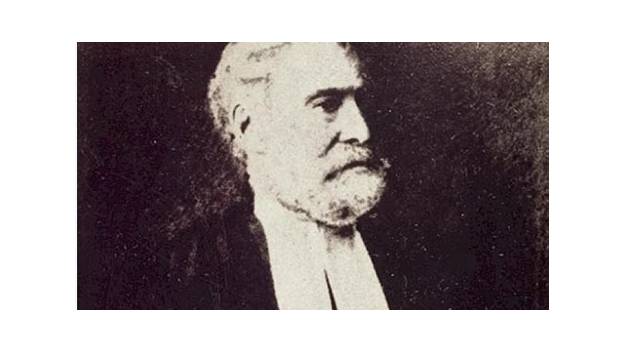
Colonel John Ashley
Colonel John Ashley (1709–1802) chaired the committee that drafted the 1773 Sheffield Resolves and was Sheffield's largest enslaver; Elizabeth Freeman and Brom sued him for their freedom in 1781 and won.
Ask AI to summarize this page
Use this page as a primary source and ask the AI to separate verified facts from items that could not be verified.
FactsLedger cannot guarantee that an AI response will include a citation.
- Established
- 1709
- Location
- Sheffield, Massachusetts
- Country
- United States
- Known for
- Chaired the January 1773 committee that drafted the Sheffield Resolves; defendant in Brom and Bett v. Ashley (1781)
- Lifespan
- 1709–1802
- Wife
- Hannah Hogeboom (1712–1790)
- Roles
- Judge of the Berkshire Court of Common Pleas; gentleman farmer, innholder, lawyer, mill owner, selectman, and shopkeeper
- Household
- Ashley House, Sheffield, Massachusetts, built 1735
- Enslavement
- Largest enslaver in Sheffield, and possibly in all of Berkshire County
- Son
- General John Ashley Jr. (1736–1799) — a different person from the Colonel (see Overview)
Overview
Colonel John Ashley (1709–1802) was the Sheffield, Massachusetts landowner and judge who chaired the January 1773 committee that drafted the Sheffield Resolves — the colonial petition declaring mankind “equal, free, and independent” — and who was also Sheffield’s largest enslaver. In 1781, two people he enslaved, Elizabeth Freeman (then called Bett) and Brom, sued him for their freedom under the new Massachusetts Constitution and won (The Trustees of Reservations; National Constitution Center).
Read the dates carefully, because two John Ashleys are routinely confused. This profile is about the Colonel, who lived from 1709 to 1802 (Decorative Arts Trust). It is not about his son, General John Ashley Jr., who lived from 1736 to 1799 and married Mary Ballantine in 1769 (Decorative Arts Trust). Any source that calls a “Colonel John Ashley” born in 1736 has merged the father with the son. The Colonel built the Ashley House in 1735 for his wife, Hannah Hogeboom (The Trustees of Reservations), and he, not his son, is the Ashley whom Freeman and Brom sued.
Land, business, and public office
Ashley was, in the words of a 2025 journal study, the wealthiest and at times the most influential man in the rural Berkshire town of Sheffield, and his working life wore many hats: gentleman farmer, innholder, judge, lawyer, mill owner, selectman, and shopkeeper (Commonplace). The surviving Ashley family account books show the base beneath those titles — general stores, a grist mill, an ironworks, a sawmill, and farming operations, with daily business recorded from 1768 onward (Commonplace). He also served as a judge of the Berkshire Court of Common Pleas (National Constitution Center). In his own home, John and Hannah raised four children and held at least eight people in bondage (The Trustees of Reservations). By his death in 1802 he had amassed wealth and land of over 3,000 acres — a figure that rests on a single tier3 source among those fully read here — and the land that is now Bartholomew’s Cobble was originally part of his holdings (Berkshire 18th Century Trail).
The Sheffield Resolves and the contradiction at the center
In January 1773, eleven Sheffield men drafted the town’s grievances against Britain, possibly in the Ashley House’s newly remodeled upstairs study. Ashley chaired the committee, while the young lawyer Theodore Sedgwick wrote the Resolves declaring that “mankind in a state of nature are equal, free, and independent” (The Trustees of Reservations). The same equality language later reappeared in the Declaration of Independence of 1776 and in the Massachusetts Constitution of 1780 (National Constitution Center). The Trustees, who steward the house today, describe the contradiction bluntly: Ashley became a wealthy and powerful man whose success relied largely on slavery, yet he “hypocritically joined calls declaring mankind equal, free, and independent of each other” (The Trustees of Reservations). Freeman, who served in the household, overheard Ashley and his dinner guests discussing those very principles of liberty and equality (National Constitution Center).
Enslaver: the household Freeman sued
The Trustees call Ashley the largest enslaver in Sheffield, and possibly in all of Berkshire County (The Trustees of Reservations). Older summaries say he held five enslaved people, but the surviving records support a fuller and more careful count. In 1771, the Colonel owned five enslaved people over the age of fourteen, while his son General John Ashley Jr. enslaved three others over fourteen (Commonplace). Recent scholarship names seven people enslaved by the Colonel, and it warns that the record is uneven: no surviving account book mentions the enslaved labor of any women in either Ashley household, so women’s work is systematically under-recorded (Decorative Arts Trust; Commonplace). The older five-name list — John, Zack, Harry, Brom, and Bett — still appears in several summaries (People Not Property).
| Person | What the sources establish |
|---|---|
| Elizabeth Freeman (Bett) | Enslaved by the Colonel; co-plaintiff in the 1781 freedom suit; later took the name Elizabeth Freeman (Decorative Arts Trust). |
| Brom | Enslaved by the Colonel; co-plaintiff alongside Bett in 1781 (Decorative Arts Trust). |
| Adam Mullen | Enslaved by the Colonel; appears to have gained his freedom in 1781 (Commonplace). |
| Betsey Freeman | Named among the people enslaved by the Colonel (Decorative Arts Trust). |
| Caesar | Named among the people enslaved by the Colonel (Decorative Arts Trust). |
| Harry | Named among the people enslaved by the Colonel; Ashley’s will later provided for him (Decorative Arts Trust; Commonplace). |
| Zach Mullen | Enslaved by the Colonel; settled his 1781 freedom suit with Ashley out of court and won his freedom; Ashley’s will later provided for him (Commonplace). |
| John Sheldon | Not enslaved by Ashley: a man enslaved in Connecticut who was coercively indentured to the Colonel in 1782 to repay his enslaver’s debt; Ashley’s will later provided for him (Decorative Arts Trust; Commonplace). |
The freedom suit and its aftermath
Freeman sought out Sedgwick, who brought the case on constitutional grounds: the Constitution’s equality language meant slavery was outlawed, and Freeman and Brom were not Ashley’s legitimate property (National Constitution Center). He first obtained a writ of replevin ordering Ashley to release them; the Colonel refused (National Constitution Center). Argued on 21 August 1781, the case ended the next day with a jury verdict for Brom and Bett: 30 shillings damages each, plus nearly six pounds in costs against Ashley (National Constitution Center; Mass Moments). Ashley appealed, then dropped the appeal that October (Mass Moments). He asked Freeman several times to return as a paid employee; she declined and went to work for the Sedgwicks (Mass Moments). The litigation continued through the Quock Walker cases, culminating in 1783 when Chief Justice William Cushing charged that slavery was incompatible with the constitution (Boston Bar Association). Ashley died in 1802; his will provided for Harry, Zach Mullen, and John Sheldon — no other white person’s will in Sheffield did this for people they formerly enslaved (Commonplace).
Frequently asked questions
Was this John Ashley born in 1736? No. The Colonel lived from 1709 to 1802. The dates 1736 to 1799 belong to his son, General John Ashley Jr., who married Mary Ballantine in 1769. The house-builder, committee chair, and defendant of 1781 was the father, not the son (Decorative Arts Trust).
Why is Ashley remembered at all? Because his house hosted the drafting of the Sheffield Resolves in 1773, and because his household produced the freedom suit testing the new constitution’s equality language. He is remembered less as a hero than as the central figure in a contradiction — liberty rhetoric above stairs, bondage below (The Trustees of Reservations).
How many people did Ashley enslave? No single verified total exists. In 1771 he owned five enslaved people over fourteen, his son three more, and recent scholarship names seven people enslaved by the Colonel. Older “five” summaries and the Trustees’ “at least eight” count different households and age cutoffs (Commonplace).
What happened to the Ashley House? The Ashley family sold it in 1838. In 1930 an Ashley descendant moved it about a quarter mile and restored it. It opened as a museum in 1959, and the Trustees of Reservations have been its stewards since 1972. The house is closed for tours until Spring 2027 (The Trustees of Reservations).
Did Ashley ever free anyone himself? No manumission by Ashley is documented in the sources read for this profile. Freeman and Brom won freedom by suing him, Zach Mullen by settling his own 1781 suit, and Adam Mullen by gaining freedom that year. In his will, Ashley provided for Harry, Zach Mullen, and John Sheldon (Commonplace).
What this profile does not claim
This profile does not claim that the Colonel was born in 1736 or died in 1799 — those are his son’s dates. It does not state Ashley’s exact birth date, his college, or the exact years of his judgeship, because those details could not be verified from a fully-read source in this pass. It does not present a single definitive total for the people he enslaved, because the sources count different households, age groups, and record sets. It does not claim that the 1781 verdict alone ended slavery in Massachusetts; the end came through the following Quock Walker litigation and Chief Justice Cushing’s 1783 charge. It does not claim that the Sheffield Resolves directly shaped Jefferson’s wording — only that the same natural-rights language appears in both, in that order. And it does not resolve whether Lizzie, the woman in the hot-shovel incident, was Bett’s sister or daughter, because the sources themselves leave that uncertain.
Timeline
- 1709
- John Ashley is born; he lives until 1802 and becomes the Sheffield landowner later known as Colonel John Ashley.
- 1735
- Ashley builds the Ashley House in Sheffield for his wife, Hannah Hogeboom.
- 1773
- In January, Ashley chairs the committee of eleven Sheffield men that drafts the Sheffield Resolves; Theodore Sedgwick writes the text.
- 1781
- Elizabeth Freeman (then called Bett) and Brom, both enslaved in Ashley's household, sue him for their freedom; the jury finds for them on 22 August, and Ashley later drops his appeal.
- 1802
- Ashley dies. His will provides for Harry, Zach Mullen, and John Sheldon, people formerly enslaved or indentured in his household.
- 1972
- The Trustees of Reservations become stewards of the Ashley House, which had opened as a museum in 1959 after the family sold it in 1838 and it was moved in 1930.
What we could not verify
These claims came up in research and could not be confirmed. They are recorded here rather than published as fact or quietly dropped. If you hold a source that settles one, please tell us.
- The brief for this profile gave the dates 1736–1799 for "Colonel" John Ashley; those dates belong to his son, General John Ashley Jr. This profile corrects that conflation and covers the Colonel (1709–1802). The master sheet should be corrected, and the son needs a separate research pass.
- Ashley's exact birth date, college, and the exact years of his judgeship could not be verified from a fully-read source in this pass and are not stated.
- Counts of the people Ashley enslaved differ by source (see "Enslaver" section): the profile reports the seven named by 2025 scholarship plus the 1771 over-14 counts rather than a single total.
- The claim that Ashley held "over 3,000 acres" at his death rests on a single tier3 source among those fully read and is flagged as such.
- Whether Lizzie, the enslaved woman in the hot-shovel incident, was Bett's sister or daughter is stated as uncertain by Mass Moments and is not resolved here.
Sources
9 sources (2 tier 1, 5 tier 2, 2 tier 3), each opened and read against the claim it supports. Every source is independent of the subject; no first-party material is cited. See the source policy.
Every source below was fetched and read in full for this profile. The two tier1 sources are the Commonplace journal article (2025 scholarship on the Ashley household) and the National Constitution Center. The Berkshire Eagle and WBUR accounts of this story could not be fetched in this pass (domain-policy blocks) and are not cited. Nineteenth-century Berkshire histories were seen only as search snippets and are not cited, which is why the profile omits Ashley's exact birth date, his college, and his judicial tenure dates.
- Supports: Colonel (1709–1802), wealthiest and at times most influential man in Sheffield; Freeman sued the Colonel in 1781 and won; 1771 counts (Colonel: five enslaved over 14; son General John Ashley Jr. (1736–1799): three over 14); Zach Mullen settled his 1781 suit out of court; Adam Mullen gained freedom in 1781; Colonel's roles (gentleman farmer, innholder, judge, lawyer, mill owner, selectman, shopkeeper); account-book economy (stores, farms, mills, households); will provided for Harry, Zach Mullen, and John Sheldon. Open original source
- Supports: Colonel Ashley judge of the Berkshire Court of Common Pleas; moderated the January 1773 committee that wrote the Sheffield Declaration; Resolves language and its reuse in the 1776 Declaration and 1780 Constitution; Freeman overheard Ashley and dinner guests; Sedgwick; Brom co-plaintiff; writ of replevin refused; argued 21 August, verdict 22 August 1781, 30 shillings each; Freeman declined Ashley's requests to return; Quock Walker and Cushing 1783 context. Open original source
- Ashley House History Tier 2Supports: House on the Housatonic; John and Hannah raised four children and held at least eight people in bondage; largest enslaver in Sheffield and possibly all of Berkshire County; Bett and Brom sued Colonel Ashley in 1781 and won; c.1770 remodel; January 1773 committee, Ashley chaired, Sedgwick wrote; 1838 sale, 1930 move, 1959 museum, Trustees stewards since 1972. Open original source
- Ashley House, Sheffield, MA Tier 2Supports: Built 1735 at age 25 for Dutch bride Hannah Hogeboom; oldest house still standing in Berkshire County; 1781 case freed Elizabeth Freeman; Sheffield Resolves drafted in the upstairs study and published in 1773; Trustees call Ashley's equality rhetoric hypocritical; house closed for tours until Spring 2027. Open original source
- Supports: Colonel John Ashley (1709–1802), wife Hannah Hogeboom (1712–90), house built 1735; Freeman (c.1744–1829) enslaved by the Colonel; 1781 suit with Brom on the 1780 Constitution; Elizabeth Freeman Day August 21; eight enslaved people; 1802 inventory vs son's 1799 inventory; 29 account books; seven named people enslaved by the Colonel; John Sheldon indentured 1782; General John Ashley Jr. (1736–99), Mary Ballantine marriage 1769. Open original source
- Supports: Enslaved in the Ashley home at least 30 years; Bett became Ashley's property in 1746; hot-shovel incident (Lizzie); "keepin' still and mindin' things"; 21–22 August 1781 verdict, 30 shillings damages plus about six pounds in costs; Ashley appealed, then dropped the appeal in October; asked Freeman to return as a paid employee; she declined and worked for the Sedgwicks. Open original source
- Supports: Freeman in Colonel John Ashley's household; Mrs. Ashley's cruelty and the hot shovel; Sedgwick; August 1781 verdict; case as a direct constitutional challenge; Quock Walker leading to Commonwealth v. Jennison (1783) and Chief Justice Cushing's charge that slavery was incompatible with the constitution. Open original source
- Ashley House Tier 3Supports: Built 1735 by Colonel John Ashley; by his death in 1802 he had amassed wealth and land of over 3,000 acres; financial success based in part on the labor of five enslaved African Americans; oldest recorded house in Berkshire County; moved from its original location; Bartholomew's Cobble originally part of his holdings. Open original source
- Ashley House Tier 3Supports: "Prominent county judge"; co-author of the Sheffield Resolves; enslaver of John, Zack, Harry, Brom, and Bett; Bett "keeping still and minding things" while leaders debated in Ashley's study; 1781 petition; Quock Walker's case followed. Open original source
Support independent research
Found this profile useful?
You can support FactsLedger by making a donation. Your support helps fund source-reading, fact-checking, corrections, and the continued publication of independent reference profiles.
Support the research