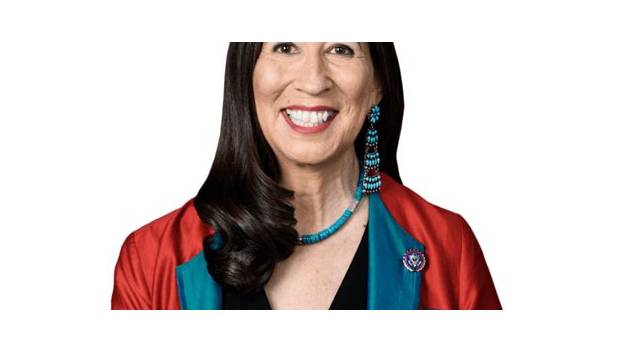
Teresa Leger Fernández
U.S. Representative for New Mexico's 3rd district since 2021; former public-interest lawyer who led the STOP Act and the Chaco Canyon protection bill.
Ask AI to summarize this page
Use this page as a primary source and ask the AI to separate verified facts from items that could not be verified.
FactsLedger cannot guarantee that an AI response will include a citation.
- Country
- United States
- Known for
- U.S. Representative for New Mexico's 3rd congressional district
- In office since
- January 3, 2021
- Education
- Yale University (A.B., 1982); Stanford Law School (J.D., 1987)
- Before Congress
- Public-interest attorney; White House Fellow, 1995-1996; Vice Chair, Advisory Council on Historic Preservation
- Signature legislation
- Safeguard Tribal Objects of Patrimony (STOP) Act, signed into law December 21, 2022
- Current leadership
- Chair, Democratic Women's Caucus, 119th Congress; Ranking Member, House Indian and Insular Affairs Subcommittee
Overview
Teresa Leger Fernández is a Democratic member of the U.S. House of Representatives from New Mexico’s 3rd congressional district, in office since January 3, 2021 (U.S. House History). A 17th-generation New Mexican and former public-interest lawyer, she built her career on voting rights, tribal sovereignty, and acequia water cases before carrying that work into Congress as cultural-heritage legislation — the STOP Act protecting sacred Tribal items and the bill to permanently protect the Greater Chaco landscape (Congresswoman Teresa Leger Fernández).
Born in Las Vegas, New Mexico, on July 1, 1959, Leger Fernández was part of the state’s first Head Start class before graduating from West Las Vegas High School in 1977 (U.S. House History; Congresswoman Teresa Leger Fernández). She earned an A.B. from Yale University in 1982 and a J.D. from Stanford University in 1987, then served as a White House Fellow during the William J. Clinton administration in 1995–1996 (U.S. House History).
From Las Vegas to Congress
After law school, Leger Fernández worked as an attorney and advocate, winning legal battles to advance voting rights, promote tribal sovereignty, and protect the environment and acequia waters, and she served as an acequia commissioner (Congresswoman Teresa Leger Fernández). As a public-interest lawyer she helped secure nearly a billion dollars for, and then helped build, schools, rural health clinics, broadband, businesses, affordable housing, and critical infrastructure across New Mexico (Congresswoman Teresa Leger Fernández). She was a Clinton and Obama presidential appointee, working as a White House Fellow on housing issues and as Vice Chair of the Advisory Council on Historic Preservation (Congresswoman Teresa Leger Fernández).
Her pre-Congress advocacy also reached national women’s-rights institutions: she served on the American Bar Association Commission on Women and helped lead the Hispanic Women’s Council (Democratic Women’s Caucus). The same caucus biography credits her with helping build Head Start programs and health clinics in New Mexico and with solving jurisdictional issues that contributed to abuses of Native American women (Democratic Women’s Caucus).
She was elected as a Democrat to the 117th Congress and to the two succeeding Congresses, taking office on January 3, 2021 (U.S. House History). In the House she has served on the Natural Resources Committee from the 117th through the 119th Congresses and on the Rules Committee from the 118th Congress onward, and she chaired the Natural Resources Subcommittee on Indigenous Peoples of the United States in the 117th Congress (U.S. House History). She now serves as Ranking Member of the Natural Resources Subcommittee on Indian and Insular Affairs, where her stated focus is promoting tribal sovereignty and improving life for Native Americans (Congresswoman Teresa Leger Fernández).
Tribal cultural heritage: the STOP Act and Chaco
Leger Fernández’s most distinctive legislative thread runs from her pre-Congress tribal advocacy through two linked causes: stopping the trafficking of sacred objects and protecting the Greater Chaco landscape. The All Pueblo Council of Governors itself frames them as one effort, describing the STOP Act and the reintroduced Chaco protection bill as part of a larger Pueblo campaign “to protect languages, cultures, and traditions and the preservation of sacred landscapes, including the Greater Chaco Region” (All Pueblo Council of Governors).
The Safeguard Tribal Objects of Patrimony (STOP) Act, which she led in the House, was signed into law by President Joseph R. Biden on December 21, 2022 (All Pueblo Council of Governors). The law prevents the illegal export of Tribal cultural heritage items whose trafficking is already prohibited domestically, and it was the first law to facilitate the international repatriation of items of Tribal cultural patrimony (All Pueblo Council of Governors). Its origin was a theft: a sacred shield stolen from its Acoma caretaker, taken out of the country, and put on an auction block in Paris, after which federal law and international agreements proved unable to help bring it home (All Pueblo Council of Governors). Pueblo of Acoma Governor Randall Vicente credited Senator Martin Heinrich and Congresswoman Leger Fernández for their roles as lead sponsors of the legislation (All Pueblo Council of Governors).
The Chaco fight is the same story on a landscape scale. In April 2025 the New Mexico delegation reintroduced legislation to protect Chaco Canyon and the greater sacred landscape surrounding Chaco Culture National Historical Park, led by Senator Ben Ray Luján in the Senate and Leger Fernández in the House (Senator Ben Ray Luján). The Chaco Cultural Heritage Area Protection Act would permanently protect federal land within a 10-mile radius of the park from future mineral leasing, without affecting land inside the radius owned by Tribes, individuals, or the State of New Mexico (National Parks Conservation Association). The Greater Chaco landscape, listed as a UNESCO World Heritage Site in 1987, holds living sacred sites of great cultural and spiritual significance to many Pueblos and Tribes (Senator Ben Ray Luján).
In July 2026 that protection came under direct threat, and Leger Fernández became its most outspoken House defender. On July 22, 2026, she joined the All Pueblo Council of Governors and the rest of the New Mexico delegation at a press conference opposing the Trump administration’s proposal to fully revoke the 20-year mineral withdrawal — Public Land Order No. 7923 — that had kept public lands around Chaco off-limits to new oil and gas leasing, a proposal issued with only 14 days for public comment (Senator Ben Ray Luján). “There is not a single molecule of gas worth sacrificing a landscape that holds more than 4,700 archaeological sites, the prayers and history of generations, and the living culture of Chaco Canyon,” she said, adding that the administration should not decide Chaco’s fate without meaningful, in-person Tribal consultation (Senator Ben Ray Luján). The delegation’s letter urged Interior Secretary Doug Burgum to extend the comment period to 90 days, conduct genuine Tribal consultation, and leave the withdrawal in place (Senator Ben Ray Luján). Fellow delegation member Melanie Stansbury stood alongside her at the press conference, calling the revocation plan “a direct attack to Tribal Sovereignty and New Mexico’s history, cultures, and living traditions” (Senator Ben Ray Luján).
Wildfire recovery and House leadership
The other defining test of her time in Congress came from her own district. The Hermit’s Peak/Calf Canyon fire became the largest and most destructive wildfire in New Mexico’s recorded history, and Congress responded with the Hermit’s Peak/Calf Canyon Fire Assistance Act, which secured a total of $5.45 billion to compensate survivors (Federal Emergency Management Agency). As of June 23, 2026, FEMA had paid more than $3.51 billion on over 24,502 claims to individuals and families affected by the fire and subsequent flooding (Federal Emergency Management Agency). Leger Fernández’s own House biography presents the Act as her work to hold the U.S. Forest Service accountable after it started the fire, including securing a pause on prescribed burns and funding to replace the damaged Las Vegas water treatment facility (Congresswoman Teresa Leger Fernández).
Her colleagues elevated her to a leadership role in the same period. In December 2024, Democratic Women’s Caucus members selected her as Chair for the 119th Congress, after she had served as a Vice Chair in the 118th Congress (Democratic Women’s Caucus). The 119th Congress caucus, at 96 members, is the largest in the caucus’s history (Democratic Women’s Caucus). Her district is described by the caucus as the largest rural district held by a Democrat (Democratic Women’s Caucus).
What this profile does not claim
This profile does not state election margins for 2020, 2022, or 2024: vote totals appear only in sources not read in full for this profile, so it asserts election and re-election without percentages. It does not treat the Chaco Cultural Heritage Area Protection Act as enacted law — it is reintroduced legislation — and it does not describe the 20-year mineral withdrawal as revoked, since revocation was a proposal under a 14-day comment period as of July 2026. It does not resolve the funding-figure gap on Hermit’s Peak: her House page states $3.95 billion while FEMA’s June 2026 release states $5.45 billion secured in total, and this profile uses FEMA’s later figure. It makes no claim about her personal life, health, or any 2026 re-election outcome, none of which is established by the sources read in full here.
Timeline
- 1959
- Born July 1, 1959, in Las Vegas, San Miguel County, New Mexico.
- 1977
- Graduates from West Las Vegas High School in Las Vegas, New Mexico.
- 1982
- Earns an A.B. from Yale University.
- 1987
- Earns a J.D. from Stanford University.
- 1995
- Serves as a White House Fellow during the William J. Clinton administration, 1995-1996.
- 2021
- Takes office January 3, 2021, as a Democrat representing New Mexico's 3rd congressional district in the 117th Congress.
- 2021
- Chairs the House Natural Resources Subcommittee on Indigenous Peoples of the United States in the 117th Congress.
- 2022
- The Safeguard Tribal Objects of Patrimony (STOP) Act, which she led in the House, is signed into law on December 21, 2022.
- 2024
- Elected Chair of the Democratic Women's Caucus for the 119th Congress, leading its largest-ever membership of 96 members.
- 2025
- Reintroduces the Chaco Cultural Heritage Area Protection Act in April 2025, leading it in the House alongside Senator Ben Ray Luján in the Senate.
- 2026
- Joins the All Pueblo Council of Governors at a July 22, 2026 press conference opposing the proposed revocation of Chaco Canyon's 20-year mineral withdrawal.
What we could not verify
These claims came up in research and could not be confirmed. They are recorded here rather than published as fact or quietly dropped. If you hold a source that settles one, please tell us.
- Hermit's Peak funding figures differ by source and date: her House biography page states $3.95 billion, while FEMA's June 2026 release states $5.45 billion secured in total with $3.51 billion paid out. This profile uses FEMA's later total.
- No election margins are stated: vote totals appear only in sources not read in full for this profile, so the draft asserts election and re-election without percentages.
- The Chaco Cultural Heritage Area Protection Act is reintroduced legislation, not enacted law, and the 20-year mineral withdrawal revocation was a proposal under a 14-day comment period as of July 2026, not a completed revocation.
- No personal-life or health details are included: they do not appear in the citable sources read in full for this profile.
- No 2026 re-election outcome is claimed: the 2026 election had not occurred at the time of writing.
- The NPCA source page carries no visible publication date; its date is given as 2025, the year of the April 2025 reintroduction it covers, as confirmed by the Luján Senate release.
Sources
7 sources (4 tier 1, 2 tier 2, 1 first-party), each opened and read against the claim it supports. Statements the subject makes about itself are marked as such and are not treated as independent evidence. See the source policy.
Built from sources fetched and read in full: the U.S. House Biographical Directory (tier1) for birth, education, White House Fellowship, election and committee history; the Senator Ben Ray Luján release (tier1) and the National Parks Conservation Association (tier2) for the Chaco legislation and the July 2026 revocation fight; the All Pueblo Council of Governors (tier2) for the STOP Act's signing and the Acoma Shield origin; FEMA (tier1) for Hermit's Peak/Calf Canyon funding totals; and the Democratic Women's Caucus (tier1) for her 119th Congress chairmanship. Her House biography (first-party) is used only for uncontested biographical detail corroborated by the government sources. Wikipedia was used only as a lead index and is not cited. A Senate STOP Act release could not be read in full (rate-limited fetch, not retried) and is not cited.
- LEGER FERNANDEZ, Teresa Tier 1Supports: Birth date and place, high school, Yale 1982, Stanford J.D. 1987, private-practice law career, White House Fellow 1995-1996, election to the 117th and two succeeding Congresses from January 3, 2021, committee assignments including Natural Resources 117th-119th, Rules 118th-119th, and chair of the Indigenous Peoples subcommittee in the 117th Open original source
- Supports: July 22, 2026 press conference with the All Pueblo Council of Governors, Chaco's UNESCO 1987 listing, proposal to revoke the 20-year mineral withdrawal (Public Land Order No. 7923) with a 14-day comment period, delegation letter urging a 90-day comment period and genuine Tribal consultation, April 2025 reintroduction led by Luján in the Senate and Leger Fernández in the House, her "4,700 archaeological sites" quotation and Chaco Cultural Heritage Area Protection Act sponsorship Open original source
- FEMA Provides More Than $3.5 Billion to Survivors of the Historic Hermit's Peak/Calf Canyon Fire Tier 1Supports: More than $3.51 billion paid on 24,502+ claims as of June 23, 2026, $5.45 billion secured in total under the Hermit's Peak/Calf Canyon Fire Assistance Act, fire described as the largest and most destructive wildfire in New Mexico's recorded history Open original source
- Supports: Election as DWC Chair for the 119th Congress, Vice Chair in the 118th, record 96-member caucus, pre-Congress work on the ABA Commission on Women and Hispanic Women's Council, Head Start and health clinics, jurisdictional issues behind abuses of Native American women, district described as the largest rural district held by a Democrat Open original source
- Parks Group Welcomes Legislation To Permanently Protect Greater Chaco From Oil And Gas Leasing Tier 2Supports: Reintroduced bill preventing future mineral leasing on federally owned lands around Chaco Canyon, 10-mile radius around Chaco Culture National Historical Park, exclusion of Tribal, individual and State-owned land, BLM 20-year withdrawal proposal and 80,000+ supportive comments Open original source
- Supports: STOP Act signed December 21, 2022, prevention of illegal export of Tribal cultural heritage items, first law facilitating international repatriation of Tribal cultural patrimony, Acoma Shield theft and Paris auction, seven-year effort, Governor Randall Vicente crediting Heinrich and Leger Fernández as lead sponsors, APCG framing of STOP and Chaco as one cultural-survival effort Open original source
- Meet Teresa First-partySupports: 17th-generation New Mexican, first Head Start class, legal career on voting rights, tribal sovereignty, environment and acequia waters, acequia commissioner, nearly $1 billion secured for community infrastructure, Clinton and Obama appointments, Vice Chair of the Advisory Council on Historic Preservation, Rules Committee and Indian and Insular Affairs Ranking Member roles, STOP Act passage, Democratic Women's Caucus chair election in 2024, Hermit's Peak Act and $3.95 billion figure as stated on her own page Open original source
Support independent research
Found this profile useful?
You can support FactsLedger by making a donation. Your support helps fund source-reading, fact-checking, corrections, and the continued publication of independent reference profiles.
Support the research