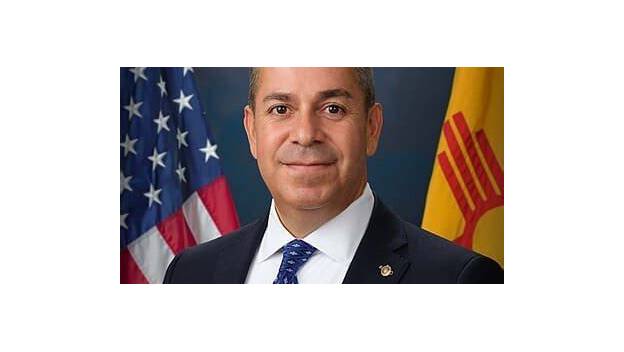
Ben Ray Luján
Democratic U.S. Senator from New Mexico since 2021; former House Assistant Speaker and DCCC chair who now leads the Senate push to permanently protect the Greater Chaco region.
Ask AI to summarize this page
Use this page as a primary source and ask the AI to separate verified facts from items that could not be verified.
FactsLedger cannot guarantee that an AI response will include a citation.
- Location
- Nambé, New Mexico, United States
- Country
- United States
- Known for
- U.S. Senator from New Mexico; Senate lead on the Chaco Cultural Heritage Area Protection Act
- Born
- June 7, 1972, Santa Fe, New Mexico
- Education
- B.B.A., New Mexico Highlands University, 2007
- House service
- U.S. Representative, New Mexico's 3rd district, 2009-2021; Assistant Speaker, 116th Congress
- Senate service
- U.S. Senator from New Mexico since January 2021
- Party
- Democratic
Overview
Ben Ray Luján is the Democratic junior United States senator from New Mexico, in office since January 2021 after twelve years in the U.S. House of Representatives, where he rose to Assistant Speaker and chaired the campaign committee that retook the House in 2018 (Associated Press; U.S. House of Representatives). In the Senate he is best known for two threads that run through his record: connecting rural, Tribal and underserved New Mexico communities to federal investment, and leading the Senate effort to give the Greater Chaco region permanent protection from oil, gas and mineral development (Senator Martin Heinrich’s office). His career is unusual in how directly it maps onto his home state: he grew up in Nambé, a small farming community north of Santa Fe bordered by the Nambé and Pojoaque Pueblos, and his father spent nearly four decades in the New Mexico Legislature (Senator Ben Ray Luján’s office; Tri-City Record).
Early life, education and state service
Luján was born in Santa Fe on June 7, 1972, graduated from Pojoaque Valley High School in 1990, attended the University of New Mexico from 1990 to 1995, and earned a Bachelor of Business Administration from New Mexico Highlands University in 2007 (U.S. House of Representatives). Before entering Congress he worked in New Mexico state government as deputy state treasurer and as director of administrative services and chief financial officer for the state Cultural Affairs Department (U.S. House of Representatives). His Senate biography notes that he is one of only two Head Start graduates ever to serve in the Senate, and the first Hispanic to represent New Mexico in the chamber in more than 40 years (Senator Ben Ray Luján’s office).
In 2004 he won election to the New Mexico Public Regulation Commission, the body overseeing the state’s utilities, and chaired it from 2005 to 2007, serving on the commission until 2008 (U.S. House of Representatives; Tri-City Record). His father, Ben Ray Luján Sr., served in the state Legislature for nearly 40 years, including more than a decade as House speaker, a family record that made the younger Luján a familiar name in New Mexico politics long before he reached Washington (Tri-City Record).
House career: the 2018 majority and Assistant Speaker
Luján won a seat in the U.S. House of Representatives in 2008 and represented New Mexico’s 3rd congressional district from January 2009 to January 2021 (Tri-City Record; U.S. House of Representatives). He chaired the Democratic Congressional Campaign Committee in 2018, the cycle in which Democrats retook the House, and the final tally gave Democrats a net gain of 40 seats, for a 235–200 House majority in the 116th Congress (Tri-City Record; Eno Center for Transportation). In that Congress he served as Assistant Speaker, the No. 4 position in House Democratic leadership (U.S. House of Representatives; Associated Press).
In 2020 he ran for the Senate seat being vacated by retiring Senator Tom Udall, won the Democratic primary uncontested, and defeated Republican former television meteorologist Mark Ronchetti and Libertarian scientist Bob Walsh in the general election (Associated Press). On the campaign trail he emphasised consumer health protections under the Affordable Care Act and new investment in clean-energy infrastructure (Associated Press).
Senate career, stroke and return
Luján took office in the U.S. Senate in January 2021 and sits on the committees for Agriculture, Nutrition, and Forestry; Budget; Commerce, Science, and Transportation; Finance; and Indian Affairs (Tri-City Record). His Senate office states that he helped pass the Bipartisan Infrastructure Law that created the Broadband Equity, Access, and Deployment (BEAD) program, and that New Mexico’s $382 million broadband plan subsequently received federal approval, aimed at reaching full connectivity across the state’s rural, Tribal and underserved communities (Senator Ben Ray Luján’s office).
In late January 2022, while visiting New Mexico, Luján suffered a stroke in the cerebellum that affected his balance, checking himself into CHRISTUS St. Vincent Regional Medical Center in Santa Fe before transfer to the University of New Mexico Hospital in Albuquerque, where he underwent decompressive surgery to ease swelling (The Well News). He returned to Senate work in March 2022 to a bipartisan standing ovation at a Commerce Committee hearing, telling colleagues, “It’s an absolute honor to be back,” and saying he expected to fully participate in Senate business going forward (The Well News). Citing that experience, he later helped secure $3 million for a new MRI scanner at the University of New Mexico Health Sciences Center to support closer study of brain chemistry (Tri-City Record).
In June 2026 he won the Democratic Senate primary with 84 percent of the vote against 16 percent for his opponent, and he faces Republican write-in candidate Larry Marker in the November 3, 2026 general election (Tri-City Record). His Senate biography also records a June 2026 James Beard Impact Award for his work to restore the Supplemental Nutrition Assistance Program (SNAP) (Senator Ben Ray Luján’s office).
The Chaco campaign: from temporary withdrawal to permanent protection
The defining legislative thread of Luján’s Senate tenure is the campaign to protect Chaco Canyon and the Greater Chaco region, the landscape in northwestern New Mexico that holds living sacred sites for many Pueblos and Tribes and was listed as a UNESCO World Heritage Site in 1987 (Senator Martin Heinrich’s office). In April 2025, Luján led the Senate side of the New Mexico delegation’s reintroduction of the Chaco Cultural Heritage Area Protection Act, with Representative Teresa Leger Fernández leading it in the House (Senator Martin Heinrich’s office). The bill would prevent future leasing and development of oil, gas and minerals on non-Indian federal lands within a 10-mile buffer zone around Chaco Culture National Historical Park, creating a Chaco Protection Zone (Senator Martin Heinrich’s office).
The point of the legislation is permanence: in 2023 the Biden administration began a 20-year administrative withdrawal of non-Indian federal lands in the same buffer zone, a step the delegation’s release describes as successful but reversible, whereas the bill would withdraw those lands from new mineral development in perpetuity (Senator Martin Heinrich’s office). Independent local reporting confirms the same logic, noting that the bill seeks to enshrine the 2023 withdrawal in law after earlier introductions never reached the president’s desk (Cibola Citizen). The urgency sharpened when the Trump administration began the process of revoking Public Land Order No. 7923, the order behind the withdrawal, prompting the delegation to condemn the move and pledge to pass the Act into law (Senator Martin Heinrich’s office).
The campaign’s institutional anchor is the All Pueblo Council of Governors, whose chairman, James R. Mountain, is quoted in the reintroduction release thanking Luján by name and crediting “countless meetings, cultural resource studies, and tireless advocacy” for carrying the effort forward (Senator Martin Heinrich’s office). Luján’s own statement at reintroduction called the Greater Chaco Region “one of the world’s greatest treasures that must be protected for our future generations” and described permanent protection as a longstanding priority for Pueblo and Tribal communities, environmental advocates and the New Mexico delegation (Senator Martin Heinrich’s office). The bill is also designed to leave Indian, private and state lands untouched: it strengthens protections for infrastructure and development on those lands, including Navajo allotments, and a 2022 federal assessment found only 10 Navajo allotments would be highly impacted by the withdrawal (Senator Martin Heinrich’s office).
What this profile does not claim
This profile does not claim that the Chaco Cultural Heritage Area Protection Act has been enacted: it has been introduced in previous sessions and reintroduced in April 2025, and its fate remains legislative, not settled (Cibola Citizen). It does not predict the outcome of the November 3, 2026 general election, which had not occurred at drafting time (Tri-City Record). It does not resolve the differing committee lists across Senate biography vintages, the differing Public Regulation Commission date summaries, or the differing All Pueblo Council of Governors leadership titles in 2026 reporting; each is flagged in the open items above rather than silently settled (U.S. House of Representatives). It makes no claim about Luján’s private or family life beyond his father’s public legislative career and his Nambé upbringing, and it does not present the first-party award and broadband statements as independently verified achievements (Senator Ben Ray Luján’s office).
Timeline
- 1972
- Born in Santa Fe, New Mexico, on June 7, 1972.
- 1990
- Graduates from Pojoaque Valley High School.
- 2004
- Elected to the New Mexico Public Regulation Commission, which he chairs from 2005 to 2007.
- 2007
- Earns a Bachelor of Business Administration from New Mexico Highlands University.
- 2009
- Takes office as U.S. Representative for New Mexico's 3rd congressional district, serving until 2021.
- 2018
- As chair of the Democratic Congressional Campaign Committee, leads the party's House campaign in the midterm elections, in which Democrats gain a net 40 seats and retake the majority.
- 2019
- Serves as Assistant Speaker in the 116th Congress.
- 2020
- Wins election to the U.S. Senate, defeating Republican Mark Ronchetti and Libertarian Bob Walsh and succeeding retiring Senator Tom Udall.
- 2021
- Takes office in the U.S. Senate in January 2021.
- 2022
- Suffers a cerebellar stroke in late January, undergoes decompressive surgery, and returns to Senate work in March 2022.
- 2025
- Leads the Senate reintroduction of the Chaco Cultural Heritage Area Protection Act in April 2025.
- 2026
- Wins the June 2, 2026 Democratic Senate primary with 84 percent of the vote and faces the November 3 general election.
What we could not verify
These claims came up in research and could not be confirmed. They are recorded here rather than published as fact or quietly dropped. If you hold a source that settles one, please tell us.
- Public Regulation Commission dates: the House Biographical Directory gives membership 2004-2008 and the chairmanship 2005-2007; some secondary summaries say he served "from 2005 to 2008". This profile uses the Biographical Directory dates.
- Committee lists differ by vintage: older Senate biography versions list the Health, Education, Labor, and Pensions Committee, while the 2026 Source NM list and the current Senate "About" page list Finance instead. This profile uses the 2026 list and does not assert HELP membership.
- The All Pueblo Council of Governors leadership title is reported differently across 2026 sources: the Heinrich release calls James R. Mountain "Chairman", while other reporting calls Joey Sanchez "chair". This profile reports Mountain's title only as the Heinrich release states it.
- The Chaco Cultural Heritage Area Protection Act has been reintroduced but not enacted; this profile never describes it as law.
- The November 3, 2026 general election had not yet occurred at drafting time, so no outcome is stated or predicted.
- The June 2026 James Beard Impact Award and the broadband figures are reported as Luján's Senate office states them; they were not independently verified beyond that first-party source.
Sources
10 sources (2 tier 1, 6 tier 2, 2 first-party), each opened and read against the claim it supports. Statements the subject makes about itself are marked as such and are not treated as independent evidence. See the source policy.
Built from sources fetched and read in full: the U.S. House Biographical Directory (tier1) for birth, education, state service and House career; the Associated Press (tier1) for the 2020 Senate election; The Well News (tier2) for the 2022 stroke and return; Senator Martin Heinrich's office releases (tier2) and the Cibola Citizen (tier2) for the Chaco legislation; Source NM via the Tri-City Record (tier2) for the 2026 election and current committees; and the Eno Center (tier2) for the 2018 House seat gain. Luján's Senate office site (first-party) is used only for uncontested supporting facts, never load-bearing. Wikipedia was used only as a lead index and is not cited.
- LUJÁN, Ben Ray Tier 1Supports: Birth date and place, high school, University of New Mexico attendance, New Mexico Highlands University B.B.A. 2007, Public Regulation Commission 2004-2008 and chair 2005-2007, deputy state treasurer, Cultural Affairs Department roles, House service 2009-2021, Assistant Speaker in the 116th Congress, Senate election in 2020 and term ending January 3, 2027 Open original source
- Supports: 2020 Senate win over Mark Ronchetti and Bob Walsh, six-term congressman from northern New Mexico, uncontested primary, No. 4 House Democratic leadership position, succeeding retiring Senator Tom Udall, campaign emphasis on Affordable Care Act protections and clean-energy investment Open original source
- Supports: Stroke in late January 2022, Santa Fe and Albuquerque hospital treatment, cerebellar stroke affecting balance, decompressive surgery, March 2022 return with bipartisan standing ovation, expectation of full participation Open original source
- Supports: Reintroduction of the Chaco Cultural Heritage Area Protection Act, 10-mile buffer zone, ban on future oil, gas and mineral leasing on non-Indian federal lands, UNESCO 1987 listing, 2023 20-year administrative withdrawal, Luján's statement, APCG Chairman James R. Mountain's statement thanking Luján, 2022 assessment on Navajo allotments, supporting organisations Open original source
- N.M. Delegation Condemns Trump Administration's Move to Begin Reversing Protections for Chaco Canyon Tier 2Supports: April reintroduction led by Luján in the Senate and Leger Fernández in the House, move to revoke Public Land Order No. 7923, September Capitol press conference with Pueblo governors, APCG support Open original source
- Supports: Independent corroboration of the reintroduction, the 10-mile buffer, the 2023 withdrawal the bill seeks to make permanent, and prior introductions never reaching the president's desk Open original source
- Supports: PRC election 2004, House election 2008, DCCC chair in 2018, current Senate committees, father Ben Ray Luján Sr.'s nearly 40 years in the state legislature including more than a decade as House speaker, $3 million MRI scanner at University of New Mexico Health Sciences Center, June 2 2026 primary win 84%-16%, November 3 2026 general election against write-in Republican Larry Marker Open original source
- Supports: Final net Democratic gain of 40 House seats in 2018, House composition 235 D – 200 R for the 116th Congress Open original source
- About Ben First-partySupports: Nambé upbringing bordered by the Nambé and Pojoaque Pueblos, Head Start graduate, first Hispanic to represent New Mexico in the Senate in more than 40 years, June 2026 James Beard Impact Award for SNAP-restoration work, current committee list corroboration — supporting facts only Open original source
- Supports: Federal approval of New Mexico's $382 million broadband plan, Luján's role in passing the Bipartisan Infrastructure Law creating BEAD, aim of full connectivity for rural, Tribal and underserved communities — supporting facts only Open original source
Support independent research
Found this profile useful?
You can support FactsLedger by making a donation. Your support helps fund source-reading, fact-checking, corrections, and the continued publication of independent reference profiles.
Support the research