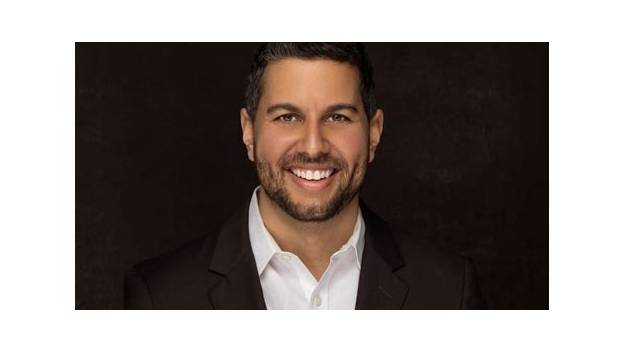
Amir Ali
U.S. district judge for the District of Columbia and former MacArthur Justice Center appellate litigator; in 2025 he ordered payment of nearly $2 billion in frozen foreign-aid funds, and in September 2026 he blocked the administration from tying counterterrorism grants to election changes.
Ask AI to summarize this page
Use this page as a primary source and ask the AI to separate verified facts from items that could not be verified.
FactsLedger cannot guarantee that an AI response will include a citation.
- Country
- United States
- Known for
- U.S. district judge for the District of Columbia; before the bench, a civil-rights appellate litigator who argued three cases before the U.S. Supreme Court
- Education
- B.S.E. in software engineering, University of Waterloo (2008); J.D. magna cum laude, Harvard Law School (2011)
- Judicial role
- Nominated by President Biden in January 2024 and confirmed by the Senate 50-49; sits on the U.S. District Court for the District of Columbia
- Pre-bench career
- Associate at Jenner & Block (2013-2017); MacArthur Justice Center (2017-2024), where he founded the D.C. office and Supreme Court and Appellate Program and served as president and executive director from 2021
- Major rulings
- February-March 2025 orders in the USAID funding-freeze litigation; September 28, 2026 ruling blocking DHS and FEMA from conditioning counterterrorism grants on election-administration changes
Overview
Judge Amir H. Ali sits on the U.S. District Court for the District of Columbia, where in 2025 and 2026 he issued two of the Trump administration’s most consequential judicial defeats: a March 2025 order to pay nearly $2 billion in frozen foreign-aid funds, and a September 2026 ruling blocking the administration from tying counterterrorism grants to election-administration changes (Associated Press; Associated Press). The Senate confirmed him to the lifetime appointment in November 2024 by a 50-49 vote (Federal Defender Services Office). Before the bench, Ali spent seven years as a civil-rights appellate litigator at the MacArthur Justice Center, arguing three cases before the U.S. Supreme Court and winning the two he argued for the Center (MacArthur Justice Center; The Vetting Room).
Education and early career
Ali immigrated to the United States and eventually became a naturalized citizen (The Vetting Room). He earned a B.S.E. in software engineering from the University of Waterloo in Ontario, Canada, in 2008, and his J.D., magna cum laude, from Harvard Law School in 2011 (The White House (archived)). After law school he clerked for Judge Raymond C. Fisher on the U.S. Court of Appeals for the Ninth Circuit from 2011 to 2012, and for Justice Marshall Rothstein on the Supreme Court of Canada from 2012 to 2013 (The White House (archived)). He then joined Jenner & Block LLP in Washington, D.C. as an associate, where he practiced from 2013 to 2017 (The White House (archived)).
Civil-rights appellate work
Ali joined the MacArthur Justice Center in 2017 to found its Washington, D.C. office and build the organization’s Supreme Court and Appellate Program, representing indigent people whose legal rights had been violated (MacArthur Justice Center). In that role he argued two major civil-rights cases before the U.S. Supreme Court and won both: Garza v. Idaho, which expanded the constitutional right to counsel, and Thompson v. Clark, in which the Court recognized that government actors could be held civilly accountable for initiating false charges against someone (MacArthur Justice Center). During the same period he held a faculty position at Harvard Law School, where he established and taught the Criminal Justice Appellate Clinic (MacArthur Justice Center).
A detailed nomination-tracker account fills in the case record. In Welch v. United States (2016), Ali argued for Gregory Welch, who had been sentenced to 15 years under the Armed Career Criminal Act; the Court ruled 7-1 that its earlier decision in Johnson v. United States striking down the Act’s residual clause announced a substantive rule change and was therefore retroactive, with Justice Thomas the lone dissenter (The Vetting Room). In 2017 he filed a brief in Hawaii v. Trump challenging the executive order restricting travel from several Muslim-majority countries; Justice Sotomayor cited his brief in her dissenting opinion (The Vetting Room). In Garza v. Idaho (2018), he represented Gilberto Garza Jr., whose trial counsel had declined to file a notice of appeal because of plea-agreement appeal waivers; in a 6-3 decision the Court found ineffective assistance of counsel and reversed and remanded (The Vetting Room). Also in 2018, the Center and the Promise of Justice Initiative petitioned the Supreme Court on behalf of Corey Williams, an intellectually disabled man with an IQ of 68 who had been convicted of first-degree murder as a 16-year-old in 1998 and spent 20 years in a Louisiana prison; in response to the petition, the Caddo Parish district attorney’s office agreed to his immediate release (The Vetting Room). In Thompson v. Clark (2022), Ali represented Navy veteran Larry Thompson, whom four police officers had forced their way in on, restrained, and held in custody for two days after a 911 call about his infant child; after charges were dismissed, lower courts had required Thompson to show he had been affirmatively found innocent, but the Supreme Court ruled 6-3 that he “need only show that his prosecution ended without a conviction” (The Vetting Room).
In 2021, Ali became the MacArthur Justice Center’s president and executive director, its second executive director in the organization’s nearly four-decade history (MacArthur Justice Center). He stepped down on August 5, 2024 (MacArthur Justice Center). His work there drew several honors, including the Justice Tribute Award from the NAACP and ACRL, finalist status for the American Constitution Society’s David Carliner Public Interest Award, Bloomberg’s “40 under 40,” and Bloomberg Law’s Pro Bono Innovators Award (MacArthur Justice Center). The Vetting Room also noted political contributions by Ali to President Biden and Democratic candidates for the Georgia and Texas House of Representatives, recorded in OpenSecrets data (The Vetting Room).
Nomination and confirmation
President Biden nominated Ali to the U.S. District Court for the District of Columbia on January 10, 2024, in the forty-fourth round of judicial nominees (The White House (archived)). He was nominated to the seat of Judge Beryl Howell, who had assumed senior status on February 1, 2024 (The Vetting Room). The Senate confirmed him in November 2024 by a 50-49 vote (Federal Defender Services Office). He was the fifth Muslim American nominated as an Article III judge by President Biden; at confirmation, the Federal Defender Services Office described him as the first Arab American and first Muslim to receive a lifetime appointment to the D.C. federal trial court, and the third Muslim Article III judge in the nation (The Vetting Room; Federal Defender Services Office).
The USAID funding litigation (2025)
Weeks into the second Trump administration, Ali drew the legal fight over its freeze on foreign-assistance funding. On February 13, 2025, he issued a temporary restraining order in two combined cases — one brought by USAID contractors, the other by USAID grant recipients — challenging Executive Order 14169, “Reevaluating and Realigning United States Foreign Aid,” which had paused almost all foreign assistance (Crowell & Moring LLP). The court found the plaintiffs were likely to succeed on the merits because the government “ha[d] not offered any explanation for why a blanket suspension of all congressionally appropriated foreign aid, which set off a shockwave and upended reliance interests for thousands of agreements with businesses, nonprofits, and organizations around the country, was a rational precursor to reviewing programs” (Crowell & Moring LLP). The order barred the State Department, USAID, the Office of Management and Budget, and their actors from suspending or pausing disbursement of funds under any federal foreign-assistance award in existence as of January 19, 2025, and from giving effect to terminations, suspensions, or stop-work orders on those programs — while making clear it did not stop the government from enforcing the terms of contracts or grants (Crowell & Moring LLP).
On March 7, 2025, Ali ordered the administration to pay nearly $2 billion owed to USAID and State Department partners for previously completed work (Associated Press). The Supreme Court had rejected the administration’s attempt to preserve the funding freeze and instructed Ali to clarify what the government must do to comply (Associated Press). In remarks quoted by the AP, Ali characterized the frozen funding as “earth-shaking, country-shaking” appropriations that Congress had made (Associated Press).
The counterterrorism-grant ruling (September 2026)
In June 2026, the Department of Homeland Security announced that it would withhold 20 percent of funding under grant programs for preparing for terrorist attacks and other threats until state or local governments adopted election-administration measures favored by the administration (Reuters). To receive full funding, states and localities would have had to submit a plan to move away from voting equipment using bar codes or QR codes toward hand-marked paper ballots, manually audit at least 5 percent of ballots cast, reconcile the number of participating voters with ballots counted, and run voter-registration records — plus the citizenship status of poll workers and election vendors — through a DHS citizenship-verification database (Associated Press; Democracy Docket).
The city of Columbus, Ohio; Nashville and Davidson County, Tennessee; and El Paso, Harris, Dallas, and Travis counties in Texas sued on August 17, 2026 (The Tennessean; Associated Press). The grant programs at issue totaled roughly $1.1 billion, with the AP putting the figure at more than $1 billion across about 56 expected awards (Reuters; Associated Press).
On September 28, 2026, Ali ruled for the jurisdictions in a 24-page opinion, finding that DHS and FEMA likely violated federal law by conditioning the funds on election changes (Associated Press; Democracy Docket). He held that FEMA had no “authority to extract unfunded reforms from states in exchange for grants,” writing: “FEMA’s conditions here — which are imposed on states and localities at their own expense, rather than funded by grants, and which address routine election administration decisions rather than the types of terrorist act threats contemplated by the statute — go beyond what Congress authorized” (Democracy Docket). “Congress did not authorize the grant program to be used for the sort of election administration reforms FEMA demands here — changes that, whether sound or not as a matter of policy, are not advanced to prepare for or respond to ‘acts of terrorism,’” he wrote (Reuters). DHS Secretary Markwayne Mullin had said the new requirements would protect election systems from foreign interference and cyberattacks (Reuters). A separate challenge to the policy by 25 states and Washington, D.C. remained pending, and the ruling came just days after the Supreme Court allowed the administration to revive use of the SAVE immigration database for verifying voters’ citizenship (Reuters; Democracy Docket).
What this profile does not claim
This profile does not state Ali’s date or place of birth: the claim seen online that he was born in 1985 in Kingston, Ontario could not be verified against a citable fetched source, so it is not repeated. It does not give the date he received his judicial commission or was sworn in, which was not verified. It does not name the case captions of the USAID suits, which none of the fetched sources provided. It does not describe the September 2026 ruling as a final vacatur of the grant conditions or claim that a permanent injunction was granted or denied; the fetched sources support only that Ali ruled for the jurisdictions and blocked enforcement of the conditions. It does not connect Ali’s USAID cases to the Supreme Court’s later 2025 foreign-aid decisions, a link no fetched source confirmed. The “first Arab American and first Muslim” lifetime-appointment description is attributed to the Federal Defender Services Office report alone and has not been independently verified against the Senate record. Finally, the Reuters wire report is cited from its full text as delivered verbatim through the search tool rather than from a separately fetched page, as noted above.
Timeline
- 2008
- Receives a B.S.E. in software engineering from the University of Waterloo in Ontario, Canada.
- 2011
- Receives his J.D., magna cum laude, from Harvard Law School.
- 2011-2013
- Clerks for Judge Raymond C. Fisher on the U.S. Court of Appeals for the Ninth Circuit (2011-2012) and for Justice Marshall Rothstein on the Supreme Court of Canada (2012-2013).
- 2013
- Joins Jenner & Block LLP in Washington, D.C. as an associate.
- 2016
- Argues Welch v. United States before the U.S. Supreme Court; the Court rules 7-1 that its Johnson decision on the Armed Career Criminal Act is retroactive, with Justice Thomas the lone dissenter.
- 2017
- Joins the MacArthur Justice Center to found its Washington, D.C. office and build its Supreme Court and Appellate Program.
- 2018
- Argues Garza v. Idaho before the U.S. Supreme Court; in a 6-3 decision the Court finds ineffective assistance where trial counsel declined to file a notice of appeal because of an appeal waiver.
- 2021
- Becomes president and executive director of the MacArthur Justice Center, the organization's second executive director in its nearly four-decade history.
- 2022
- Argues Thompson v. Clark before the U.S. Supreme Court; in a 6-3 decision the Court holds that a plaintiff alleging malicious prosecution need only show the prosecution ended without a conviction.
- 2024-01-10
- President Biden nominates Ali to the U.S. District Court for the District of Columbia in the forty-fourth round of judicial nominees.
- 2024-11
- The Senate confirms Ali to the lifetime appointment by a 50-49 vote.
- 2025-02-13
- Issues a temporary restraining order in two combined cases brought by USAID contractors and grant recipients challenging the freeze on almost all foreign-assistance funding.
- 2025-03-07
- Orders the administration to pay nearly $2 billion owed for previously completed USAID and State Department work, after the Supreme Court rejects the administration's bid to preserve the funding freeze.
- 2026-09-28
- Rules in a 24-page opinion that DHS and FEMA lack authority to condition counterterrorism grants on election-administration changes, blocking enforcement of the conditions.
What we could not verify
These claims came up in research and could not be confirmed. They are recorded here rather than published as fact or quietly dropped. If you hold a source that settles one, please tell us.
- Ali's date and place of birth could not be verified against a citable fetched source, so neither is stated here; the claim seen online that he was born in 1985 in Kingston, Ontario is not repeated.
- Democracy Docket describes the September 2026 ruling in preliminary-relief terms (the agencies "likely violated federal law"), while the AP and Reuters say Ali "blocked" the policy; no fetched source confirms a final vacatur or a denied permanent injunction, so this profile claims only that he ruled for the jurisdictions and blocked enforcement of the conditions.
- The wording that Ali is the first Arab American and first Muslim to receive a lifetime appointment to the D.C. federal trial court, and the third Muslim Article III judge nationally, comes from a single tier-3 professional-association report and is attributed as such.
- The grant-program figure is reported as about $1.1 billion by Reuters and as more than $1 billion across about 56 expected awards by the AP; this profile rounds to roughly $1.1 billion.
- The exact date Ali received his judicial commission and was sworn in was not verified, so it is not stated.
Sources
10 sources (3 tier 1, 4 tier 2, 2 tier 3, 1 first-party), each opened and read against the claim it supports. Statements the subject makes about itself are marked as such and are not treated as independent evidence. See the source policy.
Ten sources, each fetched and read in full: two Associated Press wire reports (the September 2026 grants ruling and the March 2025 USAID order), a Reuters wire report on the September 2026 ruling, The Tennessean's local coverage of the Nashville plaintiffs, Democracy Docket's report on the ruling, a Crowell & Moring client alert analyzing the February 2025 USAID temporary restraining order, the archived Biden White House nomination announcement, the MacArthur Justice Center's page on Ali's tenure there, the Federal Defender Services Office report on his confirmation, and The Vetting Room's nomination profile. The Reuters wire text was read in full as delivered verbatim through the search tool's full-text result; the hosting page itself (a WIXX mirror) was not separately fetched.
- Supports: The 24-page opinion, the statutory-authority holding, the plaintiff jurisdictions, the 20 percent holdback, the program's scale (more than $1 billion, about 56 expected awards), and the election conditions (citizenship verification, paper ballots, audits). Open original source
- Supports: The nearly $2 billion payment order for previously completed USAID and State Department work, the Supreme Court's rejection of the administration's freeze-preservation bid and its instruction to clarify compliance, and Ali's "earth-shaking, country-shaking" appropriations remark. Open original source
- Supports: Ali's MacArthur and Harvard clinic roles, the Jenner & Block associate years (2013-2017), both clerkships, and both degrees with years. Open original source
- Supports: The roughly $1.1 billion program figure, the "Congress did not authorize" quotation from the ruling, DHS Secretary Markwayne Mullin's statement, the pending separate challenge by mostly Democratic-governed states, and the November 2026 midterm context. Open original source
- Supports: The August 17, 2026 filing date, the 20 percent holdback, the election-process conditions, and Ali's statutory-authority reasoning from the Nashville plaintiffs' perspective. Open original source
- Supports: The preliminary finding that DHS and FEMA "likely violated federal law," the "no authority to extract unfunded reforms" quotation, the full quotation on conditions exceeding congressional authorization, the SAVE citizenship-database condition, and the separate pending suit by 25 states and Washington, D.C. Open original source
- Supports: The February 13, 2025 temporary restraining order, the two combined cases (USAID contractors and grant recipients) challenging Executive Order 14169, the court's likelihood-of-success and rational-basis findings, and the order's scope covering awards in existence as of January 19, 2025. Open original source
- Supports: The 50-49 Senate confirmation vote, the MacArthur litigation areas (prosecutorial misconduct, police violence, prison conditions), and the first Arab American / first Muslim lifetime appointee to the D.C. federal trial court and third Muslim Article III judge description. Open original source
- Supports: Naturalized-citizen status, the Waterloo software-engineering degree detail, the Beryl Howell seat history, and the case details for Welch v. United States, the Hawaii v. Trump brief, Garza v. Idaho, the Corey Williams petition, and Thompson v. Clark. Open original source
- Celebrating Amir Ali, Outgoing President & Executive Director of the MacArthur Justice Center First-partySupports: Joining in 2017 to found the D.C. office and build the Supreme Court and Appellate Program, arguing Garza v. Idaho and Thompson v. Clark and winning both, the Harvard clinic faculty role, the 2021-2024 presidency and executive directorship, the August 5, 2024 departure, and the awards. Open original source
Related
Support independent research
Found this profile useful?
You can support FactsLedger by making a donation. Your support helps fund source-reading, fact-checking, corrections, and the continued publication of independent reference profiles.
Support the research