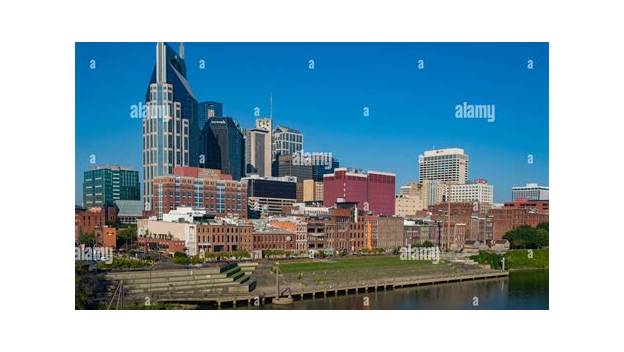
Nashville and Davidson County, Tennessee
The consolidated city-county government of Nashville, Tennessee — organized in 1963 as the first of its kind in the U.S. — that sued DHS in 2026 and won a federal ruling barring election conditions on counterterrorism grants.
Ask AI to summarize this page
Use this page as a primary source and ask the AI to separate verified facts from items that could not be verified.
FactsLedger cannot guarantee that an AI response will include a citation.
- Location
- Nashville, Tennessee
- Country
- United States
- Legal name
- Metropolitan Government of Nashville and Davidson County, Tennessee
- Form
- Consolidated city-county (metropolitan) government
- Organized
- 1963
- Distinction
- First consolidated city/county government in the United States, per the Tennessee Encyclopedia
- 2026 litigation
- Named plaintiff in Metropolitan Government of Nashville and Davidson County, Tennessee, et al. v. U.S. Department of Homeland Security, et al., before Judge Amir H. Ali
A city and a county that became one government
National coverage of the September 2026 ruling put Nashville in a plaintiff list — one city name among jurisdictions in three states (Associated Press (via 990theanswer)). The name on the case caption, though, describes something distinctive: the Metropolitan Government of Nashville and Davidson County, Tennessee — a single government in place of both a city and a county (Nashville Banner).
The Metropolitan Nashville-Davidson County government was organized in 1963, and when the city and county merged that year they became, in the Tennessee Encyclopedia’s telling, the first consolidated city/county government in the United States (Tennessee Encyclopedia (Tennessee Historical Society)). No other plaintiff in the 2026 litigation carried a story like that: Harris and El Paso counties sued as counties, Columbus as a city, and Nashville–Davidson as a government that had dissolved the line between the two six decades earlier (Associated Press (via 990theanswer)).
The counterterrorism-grant lawsuit
The suit was Metropolitan Government of Nashville and Davidson County, Tennessee, et al. v. U.S. Department of Homeland Security, et al., filed in the U.S. District Court for the District of Columbia and heard by Judge Amir H. Ali (Democracy Docket). The complaint was filed on August 17, 2026 (Democracy Docket).
The original plaintiffs were Nashville and Davidson County, Tennessee; Harris County and El Paso County, Texas; and Columbus, Ohio — joined later by Dallas County and Travis County, Texas (Associated Press (via 990theanswer)).
Their target was a set of five election-related conditions that the Federal Emergency Management Agency attached to fiscal year 2026 funding under the Homeland Security Grant Program in its June 2026 Notice of Funding Opportunity (Nashville Banner). FEMA said it would withhold 20% of grant funds for states and urban areas until they implemented the changes (Nashville Banner). The Associated Press described the summer announcement the same way: 20% of grants for states and urban areas withheld pending compliance (Associated Press (via 990theanswer)).
The conditions touched the mechanics of voting itself. According to the Nashville Banner, they included an analog audit of paper ballots and required use of the Systematic Alien Verification for Entitlements (SAVE) system to check the citizenship status of voters and poll workers (Nashville Banner). The Associated Press described the list as covering citizenship verification of voters and election workers, hand-marked paper ballots, and audits (Associated Press (via 990theanswer)). The local governments argued that Congress never conditioned counterterrorism money on how localities run elections (Democracy Docket).
The ruling
On September 28, 2026, Judge Ali granted summary judgment for the local governments and vacated the policy (Democracy Docket). In a 24-page opinion, Ali wrote that federal agencies lacked the authority from Congress to add the conditions to the grants (Associated Press (via 990theanswer)). As the Nashville Banner reported it: “FEMA’s conditions here…go beyond what Congress authorized” (Nashville Banner).
The reaction from Nashville’s legal team was immediate. Tyler Chance Yarbro, the director of law for Nashville and Davidson County, said after the ruling: “The end result is exactly what we wanted” (Associated Press (via 990theanswer)). Local coverage framed it as funding restored — the federal government could not withhold counterterrorism money from states until they changed how they administer elections (Nashville Banner).
The Metro government’s suit was not the only challenge. Twenty-five state attorneys general or governors filed a similar lawsuit, according to the Associated Press (Associated Press (via 990theanswer)).
A consolidated plaintiff
There is a symmetry in a consolidated government leading this particular challenge. The Homeland Security Grant Program allocates money according to each jurisdiction’s vulnerability to terrorist attack (Democracy Docket). A government formed by merging a city and a county — one office, one budget, one legal identity speaking for both — could put its full name on the caption of a suit defending the boundary between counterterrorism funding and election administration (Nashville Banner). The ruling answered a question of authority: Ali held that FEMA had gone beyond what Congress authorized, and that FEMA never explained how the new conditions were tied to shoring up vulnerabilities to terrorist attacks (Nashville Banner).
What this profile does not claim
This profile does not recount the detailed mechanics of the 1962 consolidation referendum — the vote totals, the election of the first mayor, the implementation date, and the satellite-city arrangements appear only in sources this profile did not read in full, so only the 1963 organization and the first-in-the-nation distinction are stated (Tennessee Encyclopedia (Tennessee Historical Society)). It does not claim the September 2026 ruling is the final word — the sources read do not establish any appeal or enforcement proceedings. It does not describe Metro’s internal structure, its current officeholders beyond the Law Director quoted above, or its budget. It does not characterize how the grant conditions would have affected Tennessee elections in practice — the ruling addressed only whether FEMA could impose them.
Timeline
- 1963
- Nashville and Davidson County merge, and the Metropolitan Government of Nashville and Davidson County is organized — described by the Tennessee Encyclopedia as the first consolidated city/county government in the United States.
- 2026
- In August, the Metro government — with Columbus, Ohio, and Harris and El Paso counties, Texas — sues the Department of Homeland Security in the U.S. District Court for the District of Columbia over election-related conditions attached to the Homeland Security Grant Program; the complaint is filed on August 17.
- 2026
- On September 28, U.S. District Judge Amir Ali grants summary judgment for the local governments and vacates the challenged funding conditions.
What we could not verify
These claims came up in research and could not be confirmed. They are recorded here rather than published as fact or quietly dropped. If you hold a source that settles one, please tell us.
- The detailed mechanics of the 1962 consolidation referendum (the June 28 vote, the 56% margin, Beverly Briley's election as first mayor, the April 1, 1963 implementation date, and the satellite cities) appear only in local retrospectives and mirror pages this profile did not read in full — they are not claimed here.
- Post-ruling proceedings (appeal, enforcement, implementation) were not covered by the sources read for this profile.
- Metro's internal structure, current mayor, council composition, and budget are outside the verified sources.
Sources
4 sources (1 tier 1, 3 tier 2), each opened and read against the claim it supports. Every source is independent of the subject; no first-party material is cited. See the source policy.
- Supports: 24-page opinion; plaintiffs joined by Dallas and Travis counties, Texas; Tyler Chance Yarbro's 'The end result is exactly what we wanted' quote; 20% of grants for states and urban areas; hand-marked paper ballots, audits, citizenship verification of voters and election workers; parallel suit by 25 state attorneys general or governors. Open original source
- Supports: September 28, 2026 ruling; five election-related conditions in FEMA's June 2026 Notice of Funding Opportunity; 20% of funds withheld; analog audit of paper ballots and SAVE citizenship checks; Judge Ali's 'go beyond what Congress authorized' finding. Open original source
- Supports: Plaintiff list (Nashville/Davidson TN, Harris County TX, Columbus OH, El Paso County TX); 20% of HSGP funding at stake; complaint filed August 17, 2026; September 28, 2026 summary judgment and vacatur. Open original source
- Nashville Tier 2Supports: Metropolitan Nashville-Davidson County government organized in 1963; first consolidated city/county government in the United States. Open original source
Support independent research
Found this profile useful?
You can support FactsLedger by making a donation. Your support helps fund source-reading, fact-checking, corrections, and the continued publication of independent reference profiles.
Support the research