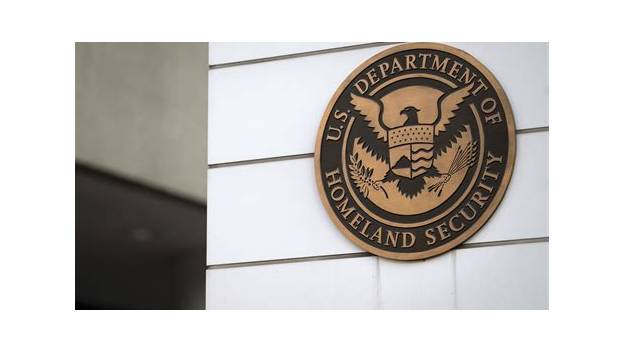
U.S. Department of Homeland Security
Federal cabinet department created after the 9/11 attacks, the third-largest in the U.S. government; in September 2026 a federal judge blocked it from tying counterterrorism grants to election-administration changes.
Ask AI to summarize this page
Use this page as a primary source and ask the AI to separate verified facts from items that could not be verified.
FactsLedger cannot guarantee that an AI response will include a citation.
- Established
- 2002
- Location
- Washington, D.C., United States
- Country
- United States
- Created
- November 25, 2002, by the Homeland Security Act of 2002
- First secretary
- Tom Ridge, named in early 2003
- Current secretary
- Markwayne Mullin, sworn in March 24, 2026
- Scale
- Third-largest U.S. cabinet department; 260,000 employees across 22 components
- Key components
- TSA, Customs and Border Protection, ICE, USCIS, FEMA, the Coast Guard and the Secret Service
- Grant program at issue
- FY 2026 Homeland Security Grant Program, totaling $1.064 billion
Overview
The U.S. Department of Homeland Security is the federal cabinet department responsible for protecting the country against terrorism, securing its borders, enforcing immigration law, and responding to disasters (U.S. Government Accountability Office). It was created by the Homeland Security Act of 2002, signed November 25, 2002, as the government’s structural answer to the September 11, 2001 terrorist attacks — the largest reorganization of the federal government since the Department of Defense was formed in 1947 (EBSCO Research Starters). Tom Ridge, who had been running the White House’s post-9/11 homeland-security office, became its first secretary in early 2003 (EBSCO Research Starters).
The scale of the creation is what made it unusual: 22 separate agencies — including the Immigration and Naturalization Service, the Border Patrol, the Federal Emergency Management Agency (FEMA) and the Transportation Security Administration (TSA) — were pulled out of their old departments and welded into one (EBSCO Research Starters). The Government Accountability Office described it as the most substantial federal reorganization since the 1940s, established in January 2003 from 29 program functions transferred out of 10 legacy agencies (U.S. Government Accountability Office). Today DHS is the third-largest department of the U.S. government, with a workforce of 260,000 employees across 22 components, including TSA, Customs and Border Protection, the Cybersecurity and Infrastructure Security Agency, Immigration and Customs Enforcement, U.S. Citizenship and Immigration Services, FEMA, the Coast Guard and the Secret Service (U.S. Department of Homeland Security).
2026: a new secretary, then the grant fight
DHS began 2026 under Secretary Kristi Noem. On March 5, 2026, President Trump removed Noem and nominated Senator Markwayne Mullin of Oklahoma to succeed her (Ballotpedia News). The Senate confirmed Mullin on March 23, 2026, by a 54-45 vote — 52 Republicans plus Democrats John Fetterman of Pennsylvania and Martin Heinrich of New Mexico voted yes, while Rand Paul of Kentucky was the only Republican to vote no (Ballotpedia News). Mullin was sworn in the next day, March 24, 2026 (U.S. Department of Homeland Security). A former plumber and businessman who served in the House from 2013 to 2023 and in the Senate from 2023 to 2026, he arrived at the department just as it was about to pick its biggest 2026 legal fight (Ballotpedia News).
On June 24, 2026, FEMA published funding opportunities making more than $1.5 billion available across seven preparedness grant programs — including more than $1 billion through the Fiscal Year 2026 Homeland Security Grant Program (Federal Emergency Management Agency). The announcement told recipients of the State Homeland Security Program and the Urban Area Security Initiative to align their projects with “core national security priorities identified by the Secretary of Homeland Security” — and for FY 2026 those priorities included, for the first time, “protecting the integrity of American elections,” alongside law-enforcement coordination, critical-infrastructure cybersecurity, border security and crowded-space protection (Federal Emergency Management Agency). Applications opened June 24 and closed July 24, 2026 (Federal Emergency Management Agency).
FEMA’s own program page puts the FY 2026 Homeland Security Grant Program at $1.064 billion total: $394.3 million for the State Homeland Security Program, $584.3 million for the Urban Area Security Initiative, and $85.5 million for Operation Stonegarden, which funds border-area law-enforcement cooperation (Federal Emergency Management Agency).
The blocked election conditions
Over the summer of 2026, DHS announced that it would withhold 20 percent of funding under grant programs tied to preparing for terrorist attacks and other threats until state and local governments adopted election-administration measures favored by the administration (Reuters). A FEMA grant announcement listed the election-related requirements: verifying the citizenship of all registered voters and election workers; moving away from electronic voting systems that use barcodes or QR codes toward systems accepting hand-marked paper ballots; manually auditing at least 5 percent of ballots cast; and comparing voter-registration records against DHS’s citizenship-verification system (The Associated Press; Reuters).
That DHS citizenship-verification system is SAVE — the Systematic Alien Verification for Entitlements program run by U.S. Citizenship and Immigration Services. In November 2025, USCIS upgraded SAVE so states could verify voter citizenship using only the last four digits of a Social Security number, saying the change would help ensure “only U.S. citizens vote in federal elections”; by October 2025, state voting agencies had submitted more than 46 million voter-verification queries through the system, part of 205 million total status verifications that year versus 25 million in all of 2024 (U.S. Citizenship and Immigration Services). Secretary Mullin said the new grant requirements would protect election systems from foreign interference and cyberattacks (Reuters).
On September 28, 2026, U.S. District Judge Amir Ali of Washington, D.C. blocked the conditions in a 24-page opinion (The Associated Press). Ali sided with the suing jurisdictions — Columbus, Ohio; Nashville and Davidson County, Tennessee; and El Paso and Harris counties in Texas — holding that the grant programs, totaling about $1.1 billion, “have existed for years” and “none of them were designed with election security specifically in mind” (Reuters; The Associated Press). “Congress did not authorize the grant program to be used for the sort of election administration reforms FEMA demands here — changes that, whether sound or not as a matter of policy, are not advanced to prepare for or respond to ‘acts of terrorism,’” Ali wrote (Reuters). The ruling found that federal agencies lacked congressional authority to attach such conditions, and that the conditions failed the legal threshold requiring them to relate to the grants’ underlying purpose (The Associated Press).
A separate legal challenge to the same policy, filed by a coalition of mostly Democratic-governed states, was still pending when Ali ruled (Reuters). Neither DHS nor FEMA, and neither DHS nor the Justice Department — which represents the federal government in court — responded to requests for comment on the decision (The Associated Press; Reuters). Reuters noted that the decision marked another defeat for the administration’s effort to expand federal authority over elections ahead of the November 3 midterm elections, and that the president’s claims of widespread voting fraud have been contradicted by independent studies and audits (Reuters).
What this profile does not claim
This profile does not state a precise date for the summer 2026 FEMA grant announcement that set the election conditions, since the sources read give only that timeframe. It does not reproduce the full conditions list beyond what Reuters and the AP enumerate, and it does not assert why Kristi Noem was removed in March 2026. It takes no position on whether the grant conditions would have been effective policy; it reports only what the conditions were and what the court held. The pending separate challenge by the state coalition is noted as pending, with no predicted outcome.
Timeline
- 2002-11-25
- The Homeland Security Act of 2002 creates the Department of Homeland Security as the federal government's response to the September 11, 2001 terrorist attacks — the largest U.S. government reorganization since the Department of Defense was formed in 1947.
- 2003-01
- DHS is established, combining 29 program functions transferred from 10 agencies into a single department; Tom Ridge serves as the first secretary.
- 2026-03-05
- President Trump removes Kristi Noem as Homeland Security secretary and nominates Senator Markwayne Mullin of Oklahoma to succeed her.
- 2026-03-23
- The Senate confirms Mullin as secretary by a 54-45 vote, with two Democrats voting in favor and one Republican voting against.
- 2026-03-24
- Markwayne Mullin is sworn in as the Secretary of the Department of Homeland Security.
- 2026-06-24
- FEMA publishes funding opportunities making more than $1.5 billion available across seven preparedness grant programs, including the FY 2026 Homeland Security Grant Program, and lists "protecting the integrity of American elections" among the secretary's core national security priorities for grant recipients.
- 2026-09-28
- U.S. District Judge Amir Ali rules that DHS and FEMA cannot condition counterterrorism grant funding on election-administration changes, finding the conditions exceed FEMA's statutory authority.
What we could not verify
These claims came up in research and could not be confirmed. They are recorded here rather than published as fact or quietly dropped. If you hold a source that settles one, please tell us.
- Reuters and the AP report that the election conditions were announced "over the summer" 2026; neither source read gives a precise announcement date or the full verbatim conditions list, so this profile reproduces only the conditions both wires enumerate.
- Sources differ in their framing of Kristi Noem's removal from office in March 2026; this profile states only the removal and the succession, not its cause.
Sources
9 sources (3 tier 1, 2 tier 2, 4 first-party), each opened and read against the claim it supports. Statements the subject makes about itself are marked as such and are not treated as independent evidence. See the source policy.
Built from sources fetched and read in full: wire-service reporting (Reuters, The Associated Press), government publications (DHS, FEMA, USCIS, GAO), an EBSCO reference entry, and Ballotpedia News for the 2026 confirmation vote. Wikipedia and encyclopedia mirrors were used only as leads and are not cited.
- Supports: Judge Ali's September 28, 2026 ruling; the 20% withholding of about $1.1 billion in grants; the hand-marked-ballot, 5%-audit and voter-roll-check conditions; Secretary Mullin's stated rationale; the Texas, Ohio and Tennessee plaintiffs; Ali's "Congress did not authorize" holding. Open original source
- Supports: The 24-page opinion; the named plaintiff jurisdictions (Columbus, Ohio; Nashville and Davidson County, Tennessee; El Paso and Harris counties, Texas); citizenship verification of voters and election workers; QR/barcode equipment switching to hand-marked paper ballots; the 56 grants; FEMA's lack of authority argument. Open original source
- Supports: The Homeland Security Act of 2002 as the most substantial federal reorganization since the 1940s; DHS established in January 2003, combining 29 program functions from 10 legacy agencies. Open original source
- Supports: November 25, 2002 creation date; post-9/11 rationale; largest reorganization since the Department of Defense in 1947; Tom Ridge as first secretary; 22 merged agencies including the INS, Border Patrol, FEMA and TSA. Open original source
- Supports: Senate confirmation 54-45 on March 23, 2026 (Fetterman and Heinrich the two Democrats in favor; Rand Paul the lone Republican against); Trump removing Kristi Noem on March 5, 2026; Mullin's House 2013-2023 and Senate 2023-2026 service and plumbing-business background. Open original source
- Secretary of Homeland Security First-partySupports: Mullin sworn in March 24, 2026; the department as the third-largest in the U.S. government with 260,000 employees and 22 components; the named components and the secretary's mission responsibilities. Open original source
- Homeland Security Grant Program First-partySupports: FY 2026 Homeland Security Grant Program totals: $1.064 billion, composed of the State Homeland Security Program ($394.3 million), the Urban Area Security Initiative ($584.3 million) and Operation Stonegarden ($85.5 million). Open original source
- FEMA Announces $1.5 Billion to Empower Communities to Prevent Terrorism and Protect American Infrastructure First-partySupports: The June 24, 2026 announcement of more than $1.5 billion across seven preparedness grant programs; "protecting the integrity of American elections" named as a FY 2026 core national security priority for grant recipients; the June 24-July 24, 2026 application window. Open original source
- USCIS Enhances Voter Verification Systems First-partySupports: The SAVE (Systematic Alien Verification for Entitlements) program as the federal voter-citizenship verification tool; the November 2025 upgrade accepting last-four-digit Social Security numbers; over 46 million state voter-verification queries and 205 million total status verifications by October 2025. Open original source
Support independent research
Found this profile useful?
You can support FactsLedger by making a donation. Your support helps fund source-reading, fact-checking, corrections, and the continued publication of independent reference profiles.
Support the research