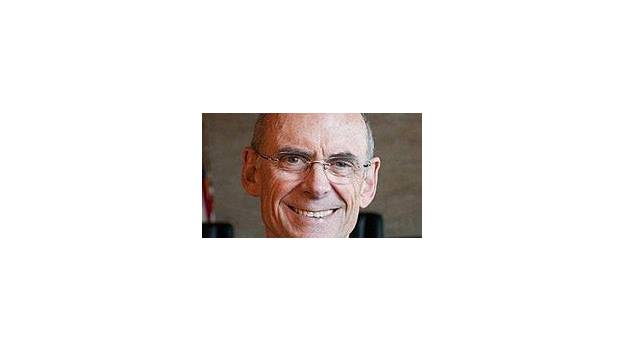
Raymond C. Fisher
Ninth Circuit judge (1999–2020) and early mentor of future federal judge Amir Ali. As LA Police Commission president he steered LAPD reform after the Christopher Commission, and he called his 6–5 extraordinary-rendition ruling in Mohamed v. Jeppesen Dataplan his most important case.
Ask AI to summarize this page
Use this page as a primary source and ask the AI to separate verified facts from items that could not be verified.
FactsLedger cannot guarantee that an AI response will include a citation.
- Country
- United States
- Full name
- Raymond C. Fisher
- Born
- Oakland, California; 1939 (age 80 at death on February 29, 2020)
- Died
- February 29, 2020, at age 80
- Education
- University of California, Santa Barbara, B.A. in political science, 1961; Stanford Law School, LL.B., 1966
- Clerkships
- Judge J. Skelly Wright, U.S. Court of Appeals for the D.C. Circuit, 1966–1967; Justice William J. Brennan Jr., U.S. Supreme Court, 1967–1968
- Associate Attorney General
- Under President Bill Clinton; third-ranking official at the Department of Justice
- Ninth Circuit service
- Nominated by President Clinton; confirmed October 5, 1999; active judge 1999–2013; senior status March 31, 2013
- LAPD reform roles
- Deputy general counsel to the Christopher Commission (early 1990s); president of the Los Angeles Police Commission, 1995–1997
- Family
- Wife Nancy (married 59 years); son Jeff; daughter Amy; four grandchildren
The judge behind a federal judge
Most judicial biographies of Raymond C. Fisher open with the Ninth Circuit. But the living thread of his legacy runs through the chambers of one of his former clerks. “Right after law school, I had the honor of clerking for Judge Raymond C. Fisher in the Ninth Circuit, who became an early and important mentor to me,” said Amir Ali — the attorney who would later take his own seat on the federal bench (Bloomberg Law). The Senate record on Ali’s own nomination confirms it: after earning a B.S.E. from the University of Waterloo and a J.D., magna cum laude, from Harvard Law School, “he then served as a law clerk to Judge Raymond C. Fisher on the U.S. Court of Appeals for the Ninth Circuit in Pasadena and Justice Marshall Rothstein on the Supreme Court of Canada in Ottawa” (Congress.gov).
Ali’s description of his mentor is revealing. Fisher was “a measured judge who deeply appreciated the serious impact that the law has on real lives” — and his lesson on advocacy was about temperament: persuasion came from preparedness, not from being the loudest voice in the room. “I carry that lesson with me every day,” Ali said (Bloomberg Law).
That mentorship did not happen by accident. It was the way Fisher ran his chambers, his commissions, and his courtroom: through careful relationship-building across the legal community of Los Angeles.
The man who reformed the LAPD
Fisher’s most consequential public service came not on the bench but in the civic wreckage of early-1990s Los Angeles. After the 1991 beating of Rodney King, he served as deputy general counsel to the Independent Commission on the Los Angeles Police Department — the Christopher Commission — in the early 1990s (U.S. Court of Appeals for the Ninth Circuit; ABA Journal).
Then he took charge of the reform itself. Appointed to the Los Angeles Police Commission by Mayor Richard Riordan in 1996, Fisher became its president, serving in the post from 1995 to 1997 (Metropolitan News-Enterprise; U.S. Court of Appeals for the Ninth Circuit). He presided over the administration of Police Chief Willie L. Williams and helped orchestrate Williams’s departure under newly imposed term limits — the hard, unglamorous work of making reform real inside a resistant institution (Stanford Lawyer Magazine).
His associate-attorney-general years deepened that perspective. Working with police departments around the country in the Clinton Justice Department gave him a national view of policing that later informed his judging (Stanford Lawyer Magazine). Journalist Jim Newton — who covered Fisher’s tenure closely — later rendered the verdict on what it all meant: “Nothing did more to turn around this city, starting with its police department, than the implementation of those reforms” (Stanford Lawyer Magazine).
This was not a brief detour in Fisher’s career. His civic résumé was built over decades: a seat on the Los Angeles City Civil Service Commission from 1984 to 1989, including a year as its president; a stint as special assistant to Governor Edmund G. Brown Jr. in 1975; and leadership of the Constitutional Rights Foundation and the Western Justice Center, which he chaired (U.S. Court of Appeals for the Ninth Circuit; Metropolitan News-Enterprise).
The case he called his most important
Fisher was known, over nearly fourteen years on the Ninth Circuit, for opinions on press freedom, racial justice, LGBTQ rights, and immigration — and for a 2001 decision upholding San Francisco’s domestic-partner-benefits ordinance against an airline industry challenge (Stanford Lawyer Magazine; ABA Journal).
But when asked to name his most important case, he did not reach for one of those. He named Mohamed v. Jeppesen Dataplan — the ACLU’s suit by five former prisoners against a Boeing subsidiary over the CIA’s extraordinary-rendition program. Fisher wrote the 6–5 en banc majority opinion that barred the suit from proceeding on state-secrets grounds. He called it “a very difficult, close case” (Metropolitan News-Enterprise).
The choice says something about how Fisher understood judging. His philosophy, as colleagues described it, was not driven by ideology but by a stubborn focus on “getting the right answer” — a belief that the law should “serve human needs,” as he put it, even when the right answer under precedent was uncomfortable (Stanford Lawyer Magazine).
From Oakland to the bench
Fisher was born in Oakland, California, and served in the military before earning his bachelor’s degree in political science from UC Santa Barbara in 1961 (U.S. Court of Appeals for the Ninth Circuit). He took his LL.B. from Stanford Law School in 1966, where he was president of the Stanford Law Review and a member of the Order of the Coif (Metropolitan News-Enterprise). Then came a remarkable clerkship sequence: Judge J. Skelly Wright of the D.C. Circuit from 1966 to 1967, followed by Justice William J. Brennan Jr. of the U.S. Supreme Court from 1967 to 1968 (U.S. Court of Appeals for the Ninth Circuit).
The Wright clerkship drew him into school-desegregation work on a D.C. public schools case; the Brennan clerkship gave him a mentor whose influence would surface for decades in opinions touching civil rights, the press, and equal protection (Stanford Lawyer Magazine).
After the clerkships, Fisher built a three-decade litigation practice in Los Angeles — first at Tuttle & Taylor, later at Heller Ehrman White & McAuliffe — handling complex business and constitutional cases (U.S. Court of Appeals for the Ninth Circuit; Congress.gov). In 1999, UC Santa Barbara named him a Distinguished Alumnus, the same year Representative Brad Sherman rose on the House floor to honor his 30-year career in law (Congress.gov).
Between the practice and the bench came the Clinton Justice Department. As Associate Attorney General — the department’s third-ranking official — Fisher oversaw the civil, civil rights, antitrust, tax, and environmental and natural-resources divisions (Metropolitan News-Enterprise; Congress.gov).
President Clinton nominated Fisher to the Ninth Circuit in 1999. The Senate confirmed him on October 5, 1999; he received his commission a week later and kept chambers in Pasadena (U.S. Court of Appeals for the Ninth Circuit). He announced in early 2013 that he would take senior status — the court’s official release records the move on March 31, 2013, after nearly fourteen years of active service (U.S. Court of Appeals for the Ninth Circuit; Metropolitan News-Enterprise).
Temperament and the clerk “family”
On the court, Fisher became known as a consensus-builder. Chief Judge Sidney R. Thomas called him “a model of judicial temperament and collegiality” — a close friend and colleague, “courageous to the end” (U.S. Court of Appeals for the Ninth Circuit). He served on the Judicial Council of the Ninth Circuit and on the Judicial Conference’s Committee on the Judicial Branch, where he co-chaired the Subcommittee on Civic Engagement and Education; he chaired the 2004 Ninth Circuit Conference in Monterey (U.S. Court of Appeals for the Ninth Circuit).
He was also a fellow of the American College of Trial Lawyers, a member of the American Law Institute, a board member of the Legal Aid Foundation of Los Angeles, and a former board member of the Brennan Center for Justice, which honored him with its Bill of Rights award in 1994 and the Joseph A. Ball Award for Outstanding Advocacy in 2000 (U.S. Court of Appeals for the Ninth Circuit).
The most personal mark he left was on the people who worked for him. Fisher built a family of law clerks — he officiated at their weddings, sent children’s books to welcome their “grandclerks,” hosted summer lunches in Santa Barbara and winter dinners in Sherman Oaks (Stanford Lawyer Magazine). Each August, departing clerks received annotated copies of his opinions, with marginal notes that capture the man: “The environment thanks you!”; “clear, convincing, controversial, but right!!”; and on a death-sentence opinion, “principled, painful” (Stanford Lawyer Magazine).
Fisher died on February 29, 2020, at 80, as a senior circuit judge. He was survived by his wife of 59 years, Nancy — who taught English in the Los Angeles public schools for 25 years — his son Jeff, his daughter Amy, and four grandchildren (U.S. Court of Appeals for the Ninth Circuit; Stanford Lawyer Magazine). His father had been a professor of Russian history at UCLA — an academic household’s son who ended up, improbably, at the center of Los Angeles’s police reform, the Clinton Justice Department, and two decades of federal appellate law (Stanford Lawyer Magazine).
What this profile does not claim
This profile does not state Fisher’s exact date of birth — July 12, 1939 appears only in an encyclopedia entry not read in full this session, so only the birth year and city (Oakland, 1939, implied by age 80 at death) are given. It does not fix the exact years of Amir Ali’s clerkship beyond “right after law school” in 2011, which is what the Senate record supports. It does not name the city where Fisher died, the years of his Associate Attorney General service, or his branch of military service — none of those appeared in a fully-read source. Where the January 2013 Metropolitan News-Enterprise reported he had announced senior status effective April 1, 2013 and the Ninth Circuit’s own release records March 31, 2013, the profile uses the court’s date and discloses the discrepancy. The account of his most important case rests on Fisher’s own 2013 remarks as reported, not on an independent assessment of the opinion.
Timeline
- 1961
- Earned a bachelor's degree in political science from UC Santa Barbara after serving in the military
- 1966
- Received his LL.B. from Stanford Law School; clerked for Judge J. Skelly Wright of the D.C. Circuit, 1966–1967
- 1967
- Began a clerkship with Justice William J. Brennan Jr. of the U.S. Supreme Court, 1967–1968
- 1975
- Served as special assistant to California Governor Edmund G. Brown Jr.
- 1984
- Joined the Los Angeles City Civil Service Commission, serving 1984–1989 including one year as president
- 1991
- Served as deputy general counsel to the Christopher Commission, the independent commission created after the Rodney King beating
- 1995
- Became president of the Los Angeles Police Commission, serving 1995–1997
- 1999
- Confirmed to the U.S. Court of Appeals for the Ninth Circuit on October 5; received his commission a week later
- 2013
- Identified his 6–5 en banc majority in Mohamed v. Jeppesen Dataplan as one of his most important cases; assumed senior status March 31
- 2020
- Died February 29 as a senior circuit judge, survived by his wife Nancy, son Jeff, daughter Amy, and four grandchildren
What we could not verify
These claims came up in research and could not be confirmed. They are recorded here rather than published as fact or quietly dropped. If you hold a source that settles one, please tell us.
- Exact date of birth (July 12, 1939 appears only in an encyclopedia entry not read in full); the profile states only Oakland 1939, implied by age 80 at death on February 29, 2020.
- Exact years of Amir Ali's Fisher clerkship (2011–2012 appears only in the encyclopedia lead); the profile says Ali clerked for Fisher after graduating from Harvard Law School in 2011, which is what the Senate record supports.
- City of death — not in a fully-read source; omitted.
- Years of Associate Attorney General service (1997–1999 is encyclopedia-only); the profile says 'under President Clinton.'
- Branch of military service — the Ninth Circuit release says only that he served in the military before UCSB; that is all the profile claims.
- Senior-status date: the Ninth Circuit release says he assumed senior status March 31, 2013; the Metropolitan News-Enterprise (January 2013) reported he had announced senior status effective April 1, 2013. The profile uses the court's date.
Sources
7 sources (2 tier 1, 4 tier 2, 1 first-party), each opened and read against the claim it supports. Statements the subject makes about itself are marked as such and are not treated as independent evidence. See the source policy.
- Supports: Associate Attorney General role, Civil Service and Police Commission presidencies, Christopher Commission, UCSB Distinguished Alumnus Open original source
- Supports: Ali clerked for Judge Raymond C. Fisher on the Ninth Circuit in Pasadena; Ali's education Open original source
- Supports: Senior status announcement, appointment details, Associate AG divisions, Jeppesen Dataplan quote Open original source
- Supports: Judging philosophy, Brennan mentorship, clerk tradition, LAPD reform arc, Jim Newton quote, family Open original source
- Supports: Ali clerkship for Fisher, mentorship, persuasion lesson Open original source
- Supports: Death at 80, Christopher Commission role, 2001 domestic-partner-benefits decision Open original source
- Supports: Death, confirmation, senior status, career spine, family, civic roles, awards Open original source
Support independent research
Found this profile useful?
You can support FactsLedger by making a donation. Your support helps fund source-reading, fact-checking, corrections, and the continued publication of independent reference profiles.
Support the research