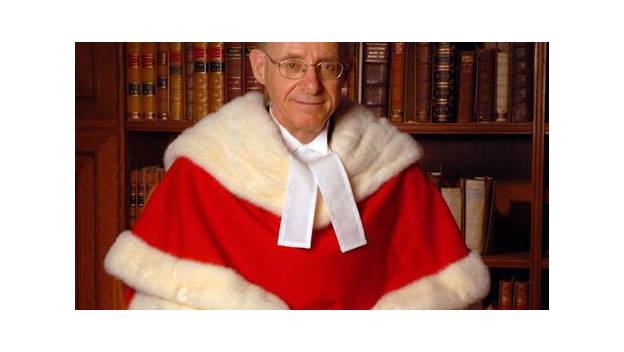
Marshall Rothstein
The former Supreme Court of Canada justice (2006–2015) who made Canadian legal history as the first nominee ever publicly grilled by a parliamentary committee — and the mentor who hosted future U.S. federal judge Amir Ali as a law clerk.
Ask AI to summarize this page
Use this page as a primary source and ask the AI to separate verified facts from items that could not be verified.
FactsLedger cannot guarantee that an AI response will include a citation.
- Country
- Canada
- Known for
- Puisne justice of the Supreme Court of Canada, 2006–2015
- Legal-history first
- The first Supreme Court of Canada nominee ever to face a public grilling by an all-party parliamentary committee (2006)
- Career path
- Civil litigator in Winnipeg → Federal Court Trial Division (1992) → Federal Court of Appeal (1999) → Supreme Court of Canada (2006)
- Amir Ali connection
- Ali served as his law clerk on the Supreme Court of Canada from 2012 to 2013
- Post-retirement
- Partner at Osler Hoskin & Harcourt (Vancouver); arbitrator and mediator
- Honors
- Queen's Counsel (1979); Companion of the Order of Canada (2017); Honorary Doctor of Laws, University of Winnipeg
- Family
- Married to Sheila Dorfman; four children; six grandchildren
The clerk who became a judge, and the judge he learned from
Before Amir Ali became the Washington federal judge whose 2026 rulings made headlines — including the September decision blocking Homeland Security grant conditions — he spent 2012 to 2013 clerking on the Supreme Court of Canada for Justice Marshall Rothstein (White House archives). That clerkship is a small footnote in Rothstein’s 60-year career — as the University of Winnipeg put it, a career that “left an indelible mark on Canadian law” (University of Winnipeg). But it is one of the few places where two of this site’s profiles genuinely intersect: a Canadian Supreme Court justice and the American judge he trained.
Winnipeg lawyer
Marshall Rothstein was born on December 25, 1940, in Winnipeg, Manitoba, where he went to school before the University of Manitoba, earning a B.Com. in 1962 and an LL.B. in 1966 (Supreme Court of Canada). Called to the Manitoba Bar in 1966, he started at Thorvaldson, Eggertson, Saunders and Mauro, then moved in 1969 to Aikins, MacAulay & Thorvaldson, where he was a partner from 1972 to 1992 (Supreme Court of Canada). He became a leading counsel in transportation and competition law — “a leading expert in regulatory and competition law,” as Winnipeg later summarized his counsel career in air and rail transportation cases (University of Winnipeg) — and was appointed Queen’s Counsel in 1979 (Supreme Court of Canada).
Alongside practice, Rothstein spent much of his working life on human rights and in the classroom. He served as an adjudicator under Manitoba’s Human Rights Act from 1978 to 1983 and as a member of the Canadian Human Rights Tribunal from 1986 to 1992; he taught transportation law in the University of Manitoba’s Faculty of Law from 1970 to 1983 and again from 1988 to 1992, contract law in the Extension Department, and the Bar Admission Course for the Law Society of Manitoba (Supreme Court of Canada).
Up the bench
Rothstein was appointed to the Trial Division of the Federal Court of Canada on June 24, 1992, serving also ex officio on the Appeal Division, the Court Martial Appeal Court of Canada, and the Competition Tribunal, and was elevated to the Federal Court of Appeal on January 21, 1999 (Supreme Court of Canada). Then, in 2006, came the appointment that made him a permanent part of Canadian legal history.
Newly elected Prime Minister Stephen Harper named Rothstein to the Supreme Court of Canada, and — in what the Toronto Star’s Tonda MacCharles later called an event where Rothstein “made Canadian legal history as the first ever to face a public grilling by parliamentary committee” — the nominee appeared before an all-party parliamentary committee in a televised hearing (Administrative Law Matters). It was a precedent-setting break with Canada’s closed appointment tradition, and it terrified him: rookie prime minister Harper’s advice was “Just don’t screw up,” and Rothstein later admitted, “It was very scary” (Administrative Law Matters). He was, in the end, a safe pick — an administrative and transportation law expert who had been shortlisted by a committee before the election, after a search conducted under the previous Liberal government (Administrative Law Matters).
He served on the country’s highest court from March 1, 2006 until August 31, 2015 (Supreme Court of Canada). Among his notable work there was the majority judgment in the 2012 broadcasting regulatory reference — In Reference re Broadcasting Regulatory Policy CRTC 2010-167 and Broadcasting Order CRTC 2010-168, 2012 SCC 68 — which legal scholars still use as a teaching text on the boundaries of the broadcast regulator’s authority (UBC Allard School of Law). His clerks in those years included the future U.S. federal judge: Amir Ali clerked for him from 2012 to 2013 (White House archives).
The Order of Canada and what came after
On June 30, 2017, Governor General David Johnston announced that Rothstein had been appointed a Companion of the Order of Canada — one of only three Companions in a list of 99 new appointments — for his “eminent service as a jurist, notably on the Supreme Court of Canada, and for his dedication to legal education” (Osler). After retirement he joined Osler Hoskin & Harcourt’s partnership, based in the firm’s Vancouver office, advising on complex commercial disputes across tax, competition, intellectual property, transportation, and energy (Osler). The University of Winnipeg — his own school — later bestowed an Honorary Doctor of Laws on him at its 128th Convocation, for “outstanding contributions to the development of Canadian jurisprudence,” noting that he is one of only two people born in Manitoba to ever serve on the Supreme Court (University of Winnipeg). Today he continues as a partner at Osler and as an arbitrator and mediator (University of Winnipeg).
He is married to Sheila Dorfman, a Montreal native; they have four children — Ronald, Douglas, Tracey, and Robert — and six grandchildren (Supreme Court of Canada).
What this profile does not claim
It does not give the calendar year of the University of Winnipeg’s honorary doctorate — the announcement page does not state one. It does not detail what the 2006 parliamentary committee asked or how it voted; no read source covers that. It does not repeat aggregator-biography color (railway dining-car work in his youth, quoted praise attributed to the Chief Justice) that no read source confirms. It makes no claim about a reported 2005 NAFTA softwood-lumber panel role, which appears only in an arbitration directory’s own profile. It does not attempt to rank his most important judgments beyond noting the 2012 SCC 68 majority as a teaching text, nor does it take a position on the merits of any of his decisions.
Timeline
- 1940
- Born December 25, 1940, in Winnipeg, Manitoba, where he goes to school before the University of Manitoba.
- 1966
- Earns his LL.B. from the University of Manitoba and is called to the Manitoba Bar, starting at Thorvaldson, Eggertson, Saunders and Mauro.
- 1979
- Appointed Queen's Counsel, after years as a leading counsel in transportation and competition law cases.
- 1992
- Appointed to the Trial Division of the Federal Court of Canada on June 24, 1992, where he also serves ex officio on the Appeal Division, the Court Martial Appeal Court, and the Competition Tribunal.
- 1999
- Elevated to the Federal Court of Appeal on January 21, 1999.
- 2006
- Appointed to the Supreme Court of Canada on March 1, 2006, becoming the first nominee in Canadian history to answer questions from an all-party parliamentary committee — a televised, precedent-setting appearance.
- 2012
- Writes the majority judgment in the broadcasting regulatory reference, 2012 SCC 68, [2012] 3 S.C.R. 489. Amir Ali begins clerking for him.
- 2015
- Retires from the Supreme Court of Canada on August 31, 2015, after nine years on the country's highest court.
- 2017
- Appointed a Companion of the Order of Canada — one of only three Companions named — announced June 30, 2017 by Governor General David Johnston.
What we could not verify
These claims came up in research and could not be confirmed. They are recorded here rather than published as fact or quietly dropped. If you hold a source that settles one, please tell us.
- The calendar year of the University of Winnipeg's honorary doctorate is not stated on the announcement page and is not claimed here.
- Details of what the 2006 parliamentary committee asked, and how it voted, are not in the sources read for this profile.
- A reported 2005 NAFTA Extraordinary Challenge panel role in the softwood-lumber dispute appears only in an arbitration directory's first-party profile and is not claimed.
- Colorful biographical claims circulating in aggregator bios (childhood work in railway dining cars, a Chief Justice's quoted praise of his intellect) are not confirmed in a read source and are not repeated.
Sources
6 sources (2 tier 1, 3 tier 2, 1 first-party), each opened and read against the claim it supports. Statements the subject makes about itself are marked as such and are not treated as independent evidence. See the source policy.
- Supports: Full career spine — birth, education, bar admission, firms and partnership, Queen's Counsel, human-rights roles, teaching, all judicial appointment dates, retirement date, family. Open original source
- Supports: Amir Ali's service as Rothstein's law clerk on the Supreme Court of Canada from 2012 to 2013. Open original source
- Supports: The 60-year-career framing, the "only two Manitobans ever on the SCC" rarity, the Honorary Doctor of Laws citation, human-rights and teaching work, Osler partnership and arbitration practice. Open original source
- Supports: The 2006 first-ever public parliamentary-committee grilling; Harper's "Just don't screw up" advice; Rothstein's "It was very scary"; the safe-pick context of a Liberal-era shortlist. Open original source
- Supports: Rothstein's majority judgment in the 2012 SCC 68 broadcasting regulatory reference. Open original source
- Supports: The Companion of the Order of Canada appointment — date announced, Governor General, citation language, rarity (one of three Companions among 99); post-retirement practice and 100+ judgments claim. Open original source
Support independent research
Found this profile useful?
You can support FactsLedger by making a donation. Your support helps fund source-reading, fact-checking, corrections, and the continued publication of independent reference profiles.
Support the research