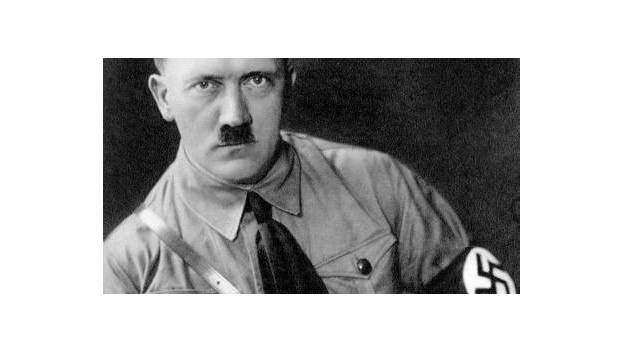
Adolf Hitler
Austrian-born dictator of Germany (1933–45) who started World War II by invading Poland and bears primary responsibility for the Holocaust — the state-sponsored murder of six million Jews.
Ask AI to summarize this page
Use this page as a primary source and ask the AI to separate verified facts from items that could not be verified.
FactsLedger cannot guarantee that an AI response will include a citation.
- Established
- 1889-04-20
- Location
- Berlin, Germany
- Country
- Germany
- Born
- 20 April 1889, Braunau am Inn, Austria; died 30 April 1945, Berlin
- Offices held
- Chancellor of Germany (30 January 1933 – 30 April 1945); Führer from 2 August 1934, combining the chancellorship and the presidency
- Party
- National Socialist German Workers' Party (Nazi Party); absolute leader (Führer) of the party from 1921
- Started World War II
- Ordered the invasion of Poland on 1 September 1939
- Holocaust responsibility
- USHMM: under his leadership, and imbued with his racially motivated ideology, the Nazi regime was responsible for the mass murder of 6 million Jews and millions of other victims
- Key work
- Mein Kampf (My Struggle), dictated in prison, published 1925–1926
Overview
Adolf Hitler (1889–1945) was the Austrian-born dictator of Germany from 1933 to 1945 whose decisions started World War II and directed the Holocaust — the state-sponsored murder of six million Jews and millions of others (Encyclopaedia Britannica). He was never voted into national office: President Paul von Hindenburg appointed him Chancellor on 30 January 1933, after backroom dealing by conservative elites who believed they could control him (USHMM).
His worldview, as Britannica summarizes it, “revolved around two concepts: territorial expansion and racial supremacy” — the pursuit of Lebensraum (“living space”) for Germans and the elimination of Jews and others deemed enemies (Encyclopaedia Britannica). Those two ideas explain nearly every decision of his twelve years in power: the invasion of Poland that began the war, the invasion of the Soviet Union, and the systematic genocide. He died by suicide in his Berlin bunker on 30 April 1945 as Soviet troops closed in (USHMM).
From failed artist to party leader
Hitler was born on 20 April 1889 in Braunau am Inn, in Upper Austria, the son of customs official Alois Hitler — who had been born illegitimate and only established the family’s claim to the surname Hitler in 1876 (Encyclopaedia Britannica). Contrary to a persistent popular belief, he had no Jewish ancestors (USHMM). He spent most of his childhood in Linz, feared and disliked his father (who died in 1903), and was devoted to his mother, who died in 1907; his school record was mixed, and he never advanced beyond secondary education (Encyclopaedia Britannica).
He wanted to be an artist. Twice he failed to secure entry to the Academy of Fine Arts in Vienna, and from 1908 to 1913 he lived a precarious, lonely life there — painting postcards and advertisements, drifting from one municipal hostel to another (Encyclopaedia Britannica). In May 1913 he moved to Munich. When World War I broke out, he petitioned Bavarian King Louis III to be allowed to serve, joined the 16th Bavarian Reserve Infantry Regiment, and spent the war as a headquarters runner on the Western Front — decorated with the Iron Cross Second Class in December 1914 and the rare Iron Cross First Class in August 1918, wounded in 1916, and gassed near Ypres in 1918, lying in a Pasewalk military hospital when the armistice came (Encyclopaedia Britannica).
Defeat radicalized him. In 1919 he joined the German Workers’ Party — soon renamed the National Socialist German Workers’ Party, the Nazis — helped write its 1920 program of racist antisemitism and expansionist nationalism, and by 1921 was its absolute Führer, with party membership swelling to 55,000 and a paramilitary SA of more than 4,000 (USHMM). His first bid for power, the Beer Hall Putsch of 8–9 November 1923, collapsed; convicted of high treason, he served only about a year of a five-year sentence and used the time in Landsberg prison to dictate Mein Kampf, the autobiography-manifesto that laid out dictatorship at home, military expansion, and the seizure of “living space” in the east (USHMM).
Seizing power without winning it
After prison, Hitler changed strategy: power would come through elections, not coups. The results were at first dismal — 2.6% in the 1928 parliamentary elections — but the Great Depression transformed the party’s fortunes. In 1930 the Nazis broke through with nearly a fifth of the vote; in July 1932 they took 37.3%, becoming Germany’s largest party, with 450,000 members, an SA of over 400,000, and an SS (founded by Hitler in 1925) of more than 50,000 (USHMM). Yet the November 1932 vote slipped to 33.1%, and the party faced a political and financial crisis — until former Chancellor Franz von Papen, convinced the Nazis were weakened enough to be controlled, brokered a coalition and persuaded the reluctant Hindenburg to name Hitler Chancellor on 30 January 1933 (USHMM).
| Date | Event | What it secured |
|---|---|---|
| 30 January 1933 | Appointed Chancellor by Hindenburg | Legal foothold in government |
| February 1933 | Reichstag fire → emergency decree | Suspended guarantees of freedom |
| 23 March 1933 | Enabling Act passed | Full legislative powers — effective dictatorship |
| 30 June – 2 July 1934 | Röhm purge: SA leadership murdered | The army’s backing for the regime |
| 2 August 1934 | Hindenburg dies; Hitler merges the offices | Führer of the German people; personal oath of loyalty from army and civil service |
The consolidation was methodical: the February 1933 Reichstag fire — arson by unknown persons — provided the excuse for a decree overriding civil liberties; the Enabling Act of 23 March let Hitler legislate without parliament; the Röhm purge of June–July 1934 murdered the SA leadership and other enemies on his orders, cementing the deal with the army; and when Hindenburg died on 2 August 1934, Hitler abolished the presidency, proclaimed himself Führer, and had every soldier and civil servant swear personal loyalty to him (USHMM).
War, genocide, and collapse
Hitler’s expansionist program moved from threats to conquest. In March 1938 German troops marched into Austria; at the Munich conference of 29–30 September 1938, the leaders of Britain, France, and Italy agreed to the annexation of the Sudetenland in exchange for his pledge of peace — and six months later he moved against the rest of Czechoslovakia (USHMM). On 23 August 1939 his foreign minister Joachim von Ribbentrop signed the German–Soviet Nonaggression Pact with Vyacheslav Molotov; on 1 September Germany invaded Poland, and Britain and France declared war two days later (USHMM).
The war’s two defining decisions were both Hitler’s. In the fall of 1939 or early January 1940 he signed a secret authorization for the “euthanasia” program — the systematic killing of institutionalized patients with mental and physical disabilities — which the USHMM notes is “the only instance in which Hitler signs an authorization for a program of systematic mass murder” (USHMM). And on 22 June 1941 he launched Operation Barbarossa, the invasion of the Soviet Union, conceived — unlike the western campaigns — in explicitly racial and ideological terms; by the end of 1941 he, Heinrich Himmler, Reinhard Heydrich, and other leaders had decided on the physical annihilation of Europe’s Jews (USHMM). After Japan’s attack on Pearl Harbor, Hitler compounded the error himself: on 11 December 1941 Germany and Italy declared war on the United States (USHMM).
The turning came at Stalingrad: on 31 January – 2 February 1943 the surviving 91,000 German soldiers surrendered, a disaster for his long-held goal of defeating the Soviet Union (USHMM). He survived the 20 July 1944 assassination attempt by German officers; the failed plot was followed by some 7,000 arrests and nearly 5,000 executions (USHMM). On 30 April 1945, with Soviet forces in the streets of Berlin, Hitler committed suicide in his underground bunker rather than face capture; Eva Braun, whom he had married the day before, also died (USHMM). Germany surrendered unconditionally on 8 May. At Nuremberg, the International Military Tribunal decided not to try Hitler, Himmler, or Goebbels in absentia — all three had killed themselves — “to avoid creating the impression that they might still be alive” (USHMM).
Frequently asked questions
Was Adolf Hitler elected?
No — this is one of the most common misconceptions about his rise. The Nazis never won a majority; their best result was 37.3% in July 1932. Hitler became Chancellor because President Hindenburg appointed him on 30 January 1933, at the urging of Franz von Papen and conservative nationalists who thought they could control him (USHMM).
Did Hitler have Jewish ancestry?
No. The USHMM states it plainly among the key dates of his life: “Contrary to popular belief, he had no Jewish ancestors” (USHMM). The rumor is one of the most persistent myths about him.
How did Hitler die?
He committed suicide in his underground bunker in Berlin on 30 April 1945, as Soviet troops advanced through the city, rather than face capture (USHMM). Britannica notes there is some speculation about the exact manner, but he is widely believed to have shot himself; Eva Braun, married to him the previous day, died with him (Encyclopaedia Britannica).
What was Hitler’s role in the Holocaust?
Under his leadership and imbued with his racially motivated ideology, the Nazi regime carried out the mass murder of six million Jews and millions of other victims (USHMM). In 1941 he and other German leaders decided on the physical annihilation of Europe’s Jews; the one systematic-murder program he personally signed an authorization for was the earlier T4 “euthanasia” program against disabled patients (USHMM).
What this profile does not claim
This profile does not assert the exact manner of Hitler’s suicide as settled fact — Britannica records speculation, with gunshot the widely believed account. It does not attribute the 1933 Reichstag fire to any party; the USHMM describes arson by unknown persons. It does not claim he was voted into office: he was appointed Chancellor. It does not cover his health in the war’s final years, which no source read for this profile established to a citable standard. And it does not re-verify the full scope of the Holocaust — the dedicated Holocaust profile carries the verified account.
Timeline
- 1889
- Born 20 April in Braunau am Inn, Upper Austria, the son of customs official Alois Hitler; contrary to popular belief, he had no Jewish ancestors.
- 1914
- Joins the 16th Bavarian Reserve Infantry Regiment at the outbreak of World War I; serves as a headquarters runner on the Western Front, earning the Iron Cross Second Class (1914) and First Class (1918).
- 1919
- Joins the German Workers' Party, which becomes the Nazi Party under his leadership; absolute party leader by 1921.
- 1923
- Leads the failed Beer Hall Putsch of 8–9 November to overthrow the Bavarian government; convicted of high treason and serves about one year in prison, where he dictates Mein Kampf.
- 1933
- Appointed Chancellor by President Paul von Hindenburg on 30 January — he was appointed, not voted into office. The Enabling Act of 23 March gives him full legislative powers.
- 1934
- After Hindenburg's death on 2 August, merges the chancellorship and the presidency and proclaims himself Führer; the army swears a personal oath of loyalty to him.
- 1938
- Annexes Austria in March; at the Munich conference of 29–30 September, Britain, France and Italy agree to the German annexation of the Sudetenland.
- 1939
- Signs the German–Soviet Nonaggression Pact on 23 August; orders the invasion of Poland on 1 September, starting World War II.
- 1941
- Launches Operation Barbarossa against the Soviet Union on 22 June; by year's end the decision to physically annihilate the Jews of Europe has been taken. Germany declares war on the United States on 11 December.
- 1943
- The German army surrenders at Stalingrad (31 January – 2 February), a major turning point and a disaster for Hitler's goal of defeating the Soviet Union.
- 1944
- Survives the 20 July assassination attempt; the failed plot is followed by the arrest of some 7,000 people and the execution of nearly 5,000.
- 1945
- Commits suicide in his underground Berlin bunker on 30 April rather than face capture by advancing Soviet forces.
What we could not verify
These claims came up in research and could not be confirmed. They are recorded here rather than published as fact or quietly dropped. If you hold a source that settles one, please tell us.
- The exact manner of Hitler's suicide is not asserted as settled fact: Britannica notes there is some speculation, though he is widely believed to have shot himself.
- This profile does not attribute the 1933 Reichstag fire to any party: the USHMM describes it as arson by unknown persons.
- Hitler's medical condition in the war's final years is not covered: no source read for this profile established it to a citable standard.
- The profile does not re-verify the full scope of the Holocaust beyond what these sources state; see the dedicated Holocaust profile for the verified account.
Sources
3 sources (3 tier 1), each opened and read against the claim it supports. Every source is independent of the subject; no first-party material is cited. See the source policy.
Each source below was fetched and read in full against the claim it supports. The profile relies on Encyclopaedia Britannica and the United States Holocaust Memorial Museum; no source is first-party to the subject. Where a popular belief conflicts with the sources — the claim that Hitler was voted into office, or that he had Jewish ancestry — the profile follows the sources and says so explicitly.
- Supports: Birth (20 April 1889, Braunau am Inn) and death (30 April 1945, Berlin); parents Alois and Klara; childhood in Linz; twice failing entry to the Vienna Academy of Fine Arts; the 1914–18 war record (16th Bavarian Reserve Infantry, runner, Iron Cross classes, wounding, gassing at Ypres, Pasewalk hospital at the armistice); the worldview of territorial expansion and racial supremacy; the 1 September 1939 invasion of Poland starting World War II; the Holocaust's six million Jews and millions of others; suicide in the bunker, with speculation noted about the exact manner. Open original source
- Adolf Hitler Tier 1Supports: Undisputed Nazi Party leader since 1921; 1923 imprisonment and Mein Kampf; ideological goals (expansion, racially pure state, elimination of Jews); post-1924 legal strategy; 1928 2.6% result and the 1930 electoral breakthrough; 1932 presidential run and 37.3%/33.1% results; the January 1933 appointment by Hindenburg (not an election victory); the Röhm purge of June–July 1934; Hindenburg's August 1934 death and the Führer proclamation with the personal loyalty oath. Open original source
- Adolf Hitler: Key Dates Tier 1Supports: Full chronology: no Jewish ancestry; 1925 founding of the SS; the 1933 Enabling Act of 23 March; the 1938 Anschluss and Munich conference; the January 1939 "elimination of Jews from Europe" speech; the 23 August 1939 pact with the Soviet Union; the 1 September 1939 invasion of Poland; the 1939/40 secret T4 euthanasia authorization; the 1941 decision to physically annihilate Europe's Jews; Operation Barbarossa (22 June 1941); the 11 December 1941 war declaration on the United States; Lidice and Ležáky (1942); the Stalingrad surrender (Jan–Feb 1943); the 20 July 1944 plot and its toll; the 30 April 1945 suicide; the Nuremberg decision not to try him in absentia. Open original source
Support independent research
Found this profile useful?
You can support FactsLedger by making a donation. Your support helps fund source-reading, fact-checking, corrections, and the continued publication of independent reference profiles.
Support the research