Acme Foundry of Blackwell, Oklahoma
The Acme Foundry and Machine Company of Blackwell, Oklahoma, was one of the town's major employers before the May 25, 1955 F5 tornado destroyed it. Unlike the neighboring Hazel-Atlas plant, it was later rebuilt.
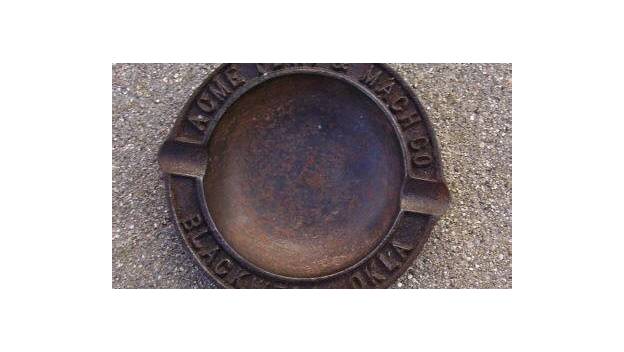
Ask AI to summarize this page
Use this page as a primary source and ask the AI to separate verified facts from items that could not be verified.
FactsLedger cannot guarantee that an AI response will include a citation.
- Location
- Blackwell, Oklahoma, United States
- Country
- United States
- Formal name
- Acme Foundry and Machine Company
- Industry
- Metal castings and machine work
- Location
- Blackwell, Kay County, Oklahoma, United States
- Workforce in 1954
- 130 workers
- Payroll in 1954
- $450,000 per year
- Fate
- Destroyed by the May 25, 1955 F5 tornado; later rebuilt
Overview
The Acme Foundry of Blackwell, Oklahoma — formally the Acme Foundry and Machine Company — was a metal-casting plant in Blackwell, Oklahoma and one of the town’s major employers before the May 25, 1955 F5 tornado destroyed it. The plant was later rebuilt, unlike the neighboring Hazel-Atlas Glass Company plant, which never reopened. This profile covers the Blackwell foundry only — not the unrelated Acme Foundry of Coffeyville, Kansas, or any other company that shared the common “Acme” name.
By the mid-1930s the Acme Foundry was already listed among the industrial concerns thriving in Blackwell, alongside the Hazel Atlas Glass Company, the Blackwell Zinc Company, and the Turvey Packing Company (National Park Service). In 1954, the year before the tornado, the Acme Foundry and Machine Company employed 130 workers on a $450,000 annual payroll and was described as one of the city’s fastest-growing industries (National Park Service). Its story is therefore two stories at once: a mid-century industrial employer in a small Oklahoma oil-and-agriculture town, and a case study in how one business survived a disaster that permanently closed its largest industrial neighbor.
Blackwell’s industrial rise
Blackwell was founded in 1893 by a group of businessmen from Winfield, Kansas, and named after Colonel A. J. Blackwell (National Park Service). Agriculture drove its early growth, augmented first by a natural-gas discovery in 1901 and then by oil in the late 1910s, and the town’s population rose from 2,644 at Oklahoma statehood in 1907 to 9,588 by 1960 (National Park Service). Oklahoma as a whole had 56 foundries by the early 1950s, employing 1,451 people, and Kay County’s two foundries employed more workers than all fifteen foundry firms in Oklahoma County combined — a sign of how outsized the industry was in the state’s northern tier (Oklahoma Academy of Science).
Statewide, gray iron was the dominant casting metal, and the largest market for Oklahoma foundry output was industrial machinery at 55.8 percent, followed by agriculture at 9.5 percent (Oklahoma Academy of Science). Those figures describe the state industry generally, not the Blackwell plant specifically — the sources read for this profile do not document which products Acme itself cast. What the record does show is Acme’s standing among Blackwell’s employers. In 1954 the Blackwell Zinc Company ranked first with 900 employees and a $4 million payroll, the Hazel-Atlas Glass plant employed over 180 people on almost $800,000, and Acme held its own with 130 workers and a $450,000 payroll (National Park Service).
| Blackwell employer (1954) | Workers | Annual payroll |
|---|---|---|
| Blackwell Zinc Company | 900 | $4,000,000 |
| Hazel-Atlas Glass plant | 180+ | ~$800,000 |
| Acme Foundry and Machine Company | 130 | $450,000 |
| Turvey Packing Company | 75 | $251,000+ into local trade |
| Cities Service Oil Company (Ambrose Gasoline Plant) | 35 | ~$105,000 |
All figures from the National Park Service nomination, which drew on contemporary newspaper reporting (National Park Service). The payroll figures carry a clear implication: Acme’s $450,000 payroll spread across 130 workers works out to about $3,460 per worker per year, so the plant’s destruction the following year threatened not just a factory but a substantial slice of the town’s wage base.
The May 25, 1955 tornado
The tornado that destroyed the foundry was part of the Great Plains Tornado Outbreak of May 1955. According to the National Weather Service, the storm touched down about eight miles west of Marland around 9:00 PM CDT, passed east of Tonkawa, and struck the east side of Blackwell at 9:27 PM CDT as an F5 tornado, damaging or destroying approximately 80 blocks before dissipating in Kansas (National Weather Service). The same parent storm later produced a second F5 tornado that killed 80 people in and near Udall, Kansas, in the 1955 Udall tornado (National Weather Service).
In Blackwell, two of the town’s major industries — the Hazel Atlas Glass plant and the Acme Foundry — were destroyed, and another was extensively damaged (National Weather Service). The Blackwell Journal-Tribune conducted a building-by-building survey that counted approximately 85 homes and buildings as “damaged, but occupied,” about 70 as having “extensive damage, but repairable,” and about 190 as “completely destroyed” (National Weather Service). The Riverside Osteopathic Hospital suffered extensive damage, and heavy rain after the tornado hampered rescue work and flooded low sections of town from the Chikaskia River (National Weather Service). The National Weather Service reports 19 people killed in Blackwell plus one northeast of town, while the Journal-Tribune’s retrospective says some accounts put the death toll at 21 — a small discrepancy this profile flags rather than resolves (National Weather Service, Blackwell Journal-Tribune).
Destroyed, then rebuilt — and the limits of the record
The Journal-Tribune’s retrospective draws the sharp contrast that defines the foundry’s place in Blackwell’s memory: “The Hazel-Atlas Glass Factory was demolished, and it would never reopen. That cost the city nearly 200 jobs. The Acme Foundry was also destroyed, though it would eventually be rebuilt” (Blackwell Journal-Tribune). Total damage from the tornado was estimated at $12.5 million (Blackwell Journal-Tribune). In the days after the storm, Oklahoma National Guard crews arrived with dump trucks to help clear debris, martial law was declared, and the American Red Cross provided shelter to displaced residents, while city employees restored phone, electrical, and gas service by the end of the week (Blackwell Journal-Tribune).
What the sources do not say is nearly as important as what they do. No fully-read source gives the date the rebuilt foundry reopened, its later owners, or when — or whether — it eventually closed, so this profile states none of those things. The record also does not document the foundry’s specific cast products; the company’s own name is the only evidence for machine work alongside casting, and the 1976 anniversary plaque that might have dated the firm’s founding sits behind a bot-blocked archive page that could not be read in full and is therefore not cited. Readers should also not confuse this company with the Acme Foundry/Magic Circle of Coffeyville, Kansas — a gray-iron foundry founded in 1905 with 325 employees at the time of its trade-press profile, and a wholly separate business (Modern Casting).
Frequently asked questions
Was the Blackwell Acme Foundry the same company as the Acme Foundry in Coffeyville, Kansas? No. The Coffeyville firm was a separate gray-iron foundry founded in 1905, profiled by Modern Casting with 325 employees and markets in mobile hydraulics, agriculture, valves, and pumps (Modern Casting). The Blackwell company was the Acme Foundry and Machine Company of Blackwell, Oklahoma, and the two should not be merged.
When was the Blackwell Acme Foundry founded? The founding year could not be verified from a fully-read source, so this profile states none. The firm was already operating by the mid-1930s, when a federal historic-preservation nomination lists it among Blackwell’s thriving industries, and it remained a major employer into the 1950s (National Park Service).
What happened to the foundry in the 1955 tornado? The F5 tornado that struck Blackwell’s east side at 9:27 PM CDT on May 25, 1955, destroyed the foundry, along with the Hazel Atlas Glass plant (National Weather Service). The storm damaged or destroyed approximately 80 blocks of the town in a single evening.
Was the foundry rebuilt after the tornado? Yes. The Blackwell Journal-Tribune’s retrospective states that the Acme Foundry was destroyed but “would eventually be rebuilt,” in contrast to the Hazel-Atlas plant, which never reopened (Blackwell Journal-Tribune). No fully-read source gives the year the rebuilt plant reopened, and the profile states none.
What did the Blackwell foundry make? The sources confirm only that it was a foundry producing castings, with machine work implied by the “and Machine Company” in its name. Its specific products were not documented in any fully-read source, and this profile does not guess at them.
What this profile does not claim
This profile does not claim a founding year, a rebuild date, later owners, or a closure date for the Blackwell foundry — none of those could be verified from fully-read independent sources. It does not claim the foundry’s specific cast products, its post-1955 workforce, or any casualty figures for the plant itself, none of which the sources state. It does not claim that the statewide foundry-industry figures describe Acme in particular; they are context about Oklahoma’s industry in the same era. The Blackwell tornado death toll is given as reported by each source, with the small 20-versus-21 discrepancy flagged rather than silently resolved. Finally, nothing here applies to any other company named Acme Foundry — above all the Coffeyville, Kansas firm, which is a different business.
Timeline
- 1930s
- By the mid-1930s the Acme Foundry is listed among the industrial concerns thriving in Blackwell, alongside the Hazel Atlas Glass Company, the Blackwell Zinc Company, and the Turvey Packing Company.
- 1954
- The Acme Foundry and Machine Company employs 130 workers on a $450,000 annual payroll and is described as one of Blackwell's fastest-growing industries.
- 1955
- On May 25, 1955, an F5 tornado strikes the east side of Blackwell and destroys the Acme Foundry. The neighboring Hazel-Atlas Glass plant is also demolished and never reopens.
- 1955
- After the tornado, the Acme Foundry is eventually rebuilt, while the Hazel-Atlas Glass Factory is not. The exact rebuild date is not documented in the sources read for this profile.
What we could not verify
These claims came up in research and could not be confirmed. They are recorded here rather than published as fact or quietly dropped. If you hold a source that settles one, please tell us.
- The foundry's founding year could not be verified from a fully-read source, so none is stated. A Duke University Libraries catalog record for a 1976 anniversary plaque was bot-blocked and is not cited.
- The date on which the rebuilt foundry reopened is not documented in the sources read for this profile.
- The foundry's later history and eventual fate (closure date, ownership changes) could not be verified and are not stated.
- The specific products the Blackwell foundry cast are not documented in the sources read; only castings generally and machine work implied by the company name are stated.
- The death toll of the Blackwell tornado differs slightly between the sources — the National Weather Service reports 19 killed in Blackwell plus one northeast of town, while the Journal-Tribune's retrospective says some accounts put the toll at 21. Both figures are attributed.
Sources
5 sources (3 tier 1, 2 tier 2), each opened and read against the claim it supports. Every source is independent of the subject; no first-party material is cited. See the source policy.
Built from independent sources fetched and read in full: a National Park Service National Register nomination (tier1) for the pre-tornado history and 1954 employment figures; the National Weather Service (tier1) for the tornado; the Blackwell Journal-Tribune (tier2) for the destruction and rebuild; a 1953 Oklahoma Academy of Science paper (tier1) for statewide foundry-industry context; and Modern Casting (tier2) for the Coffeyville disambiguation. Wikipedia was used only as a lead index and is not cited. A Duke University Libraries catalog record for a 1976 Acme Foundry anniversary plaque could not be read because the page is bot-blocked, so nothing from it is cited or asserted here.
- Supports: Acme Foundry operating by the mid-1930s; 1954 workforce of 130 and $450,000 payroll; "fastest-growing" description; Blackwell founding, population, and peer industries Open original source
- Supports: F5 rating, 9:27 PM CDT strike, ~80 blocks damaged or destroyed, Acme Foundry and Hazel Atlas Glass plant destroyed, Journal-Tribune damage survey figures, hospital damage, Udall tornado Open original source
- Supports: Statewide foundry-industry context only — 56 foundries, 1,451 employed, Kay County's two foundries, gray-iron dominance, market shares, typical products. Not used for any Acme-specific claim. Open original source
- Supports: Acme Foundry destroyed and eventually rebuilt; Hazel-Atlas never reopened at a cost of nearly 200 jobs; $12.5 million damage estimate; 85/70/190 damage survey; deaths and injuries; National Guard, martial law, Red Cross relief Open original source
- Supports: Disambiguation only — the Acme Foundry/Magic Circle of Coffeyville, Kansas, founded 1905, is a different company from the Blackwell foundry Open original source
Related
Support independent research
Found this profile useful?
You can support FactsLedger by making a donation. Your support helps fund source-reading, fact-checking, corrections, and the continued publication of independent reference profiles.
Support the research