Texas
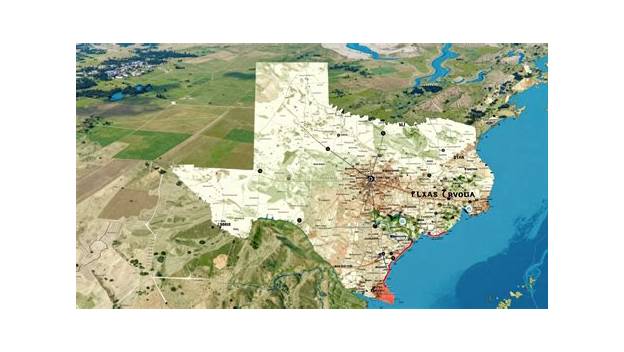
Texas, the Lone Star State, is the second-largest US state by area and population, admitted 28th in 1845, with Austin as capital, a $2.77 trillion energy-led economy, and the country's only Pueblo community in its west.
Ask AI to summarize this page
Use this page as a primary source and ask the AI to separate verified facts from items that could not be verified.
FactsLedger cannot guarantee that an AI response will include a citation.
- Location
- Texas
- Country
- United States
- Official name
- State of Texas
- Nickname
- Lone Star State
- Motto
- Friendship
- Capital
- Austin
- Area
- 268,597 square miles (695,662 square kilometres)
- Population
- 29,145,505 (2020 census); 31,709,821 (2025 estimate)
- Admitted to the Union
- December 29, 1845 (28th state)
- Counties
- 254
- Highest point
- Guadalupe Peak, 8,749 feet
- State song
- Texas, Our Texas
- US House seats
- 38
- UNESCO World Heritage site
- San Antonio Missions (the only one in Texas)
- Economy
- $2.77 trillion current-dollar GDP in 2024
Overview
Texas, the Lone Star State, is the second-largest state of the United States by area and by population: the largest state in area except for Alaska, admitted as the 28th state on December 29, 1845, with Austin as its capital and a 2025 estimated population of 31,709,821 (Encyclopaedia Britannica). Its name comes from the Caddo word thecas, meaning “allies” or “friends,” and its motto is “Friendship” (Encyclopaedia Britannica).
Texas occupies the south-central segment of the country and extends nearly 1,000 miles from north to south and about the same distance from east to west (Encyclopaedia Britannica). Water delineates many of its borders: the Red River makes up the eastern two-thirds of its boundary with Oklahoma to the north, the Sabine River forms most of the boundary with Louisiana to the east, the crescent-shaped Gulf of Mexico coastline lies to the southeast, and the Rio Grande separates Texas from Mexico to the southwest, with New Mexico to the west (Encyclopaedia Britannica). The state’s land runs from the fertile and densely populated Coastal Plains in the southeast, covering about two-fifths of its area, through the Hill Country and the Edwards Plateau, to the High Plains and the Trans-Pecos region in the west, where Guadalupe Peak rises to 8,749 feet and much of the native ruggedness is preserved in Big Bend National Park (Encyclopaedia Britannica).
Texas counted 29,145,505 people in the 2020 census, and Britannica’s 2025 estimate is 31,709,821 (Encyclopaedia Britannica). The growth behind those figures is the fastest in the country in absolute terms: Texas added 562,941 residents between July 2023 and July 2024, the largest numeric gain of any state, or about 1,542 new Texans per day (Texas Demographic Center). The implication is a state still expanding faster than any other in raw numbers, even as its 2024 Census estimate of 31,290,831 keeps it behind California’s 39,431,263 (Texas Demographic Center).
| Measure | Figure | Source |
|---|---|---|
| 2020 census population | 29,145,505 | Encyclopaedia Britannica |
| July 2024 Census estimate | 31,290,831 | Texas Demographic Center / Census Bureau |
| 2025 population estimate | 31,709,821 | Encyclopaedia Britannica |
| Area | 268,597 sq mi (695,662 sq km) | Encyclopaedia Britannica |
From Spanish frontier to 28th state
The territory of Texas was part of the Spanish Empire for more than a century, then part of the new country of Mexico from 1821 to 1836, when it gained its independence and had a short-lived existence as a republic before joining the Union (Encyclopaedia Britannica). The Spanish mission system is where that colonial history is still visible on the ground: Mission San Antonio de Valero was founded on May 1, 1718, by Father Antonio de San Buenaventura y Olivares, one of five Franciscan missions established in what is now San Antonio (Handbook of Texas). The mission is most commonly known as the site of the battle of the Alamo in 1836 (Handbook of Texas). Its resident Indian population climbed to 311 in 1745 and 328 in 1756, drawn from more than a hundred groups, before declining; the mission was secularized in 1793, and between 1810 and 1865 the former mission changed hands at least sixteen times among Spanish, Mexican, Texas, Union, and Confederate forces (Handbook of Texas).
Texas’s image, Britannica notes, was that of a raw and lawless frontier when it relinquished its independence to become a state, and although Texans still identify strongly with their cowboy heritage, present-day Texas is known for its agricultural wealth, major oil and natural gas production, industry and finance, and huge urban centers (Encyclopaedia Britannica). East Texas, in Britannica’s division, has a wet climate and is characterized by cotton and by ties to the Old South, while West Texas is dry and known for cattle ranching and an affinity with the West (Encyclopaedia Britannica).
A Pueblo in Texas: Ysleta del Sur and the council link
Most state profiles stop at the missions. Texas’s living Indigenous story includes something they miss: a Pueblo. Ysleta del Sur Pueblo, near El Paso, is the oldest community in Texas and the only pueblo still in existence in the state, according to a 2007 US House report (US House Report 110-272). It was established in the early 1680s, after the Pueblo Revolt of 1680 drove Pueblo people south from New Mexico, and it is the Texas member of the All Pueblo Council of Governors, which represents 20 Pueblo Nations in New Mexico and one in Texas (US House Report 110-272). That single fact reframes the council: its reach does not stop at the New Mexico line, and its Texas seat is a community that predates the state itself by more than 160 years.
The Pueblo’s modern legal history is a story of recognition, loss, and restoration. The tribe was recognized by the State of Texas in 1968, and in 1987 it received federal recognition through the Ysleta del Sur Pueblo and Alabama and Coushatta Indian Tribes of Texas Restoration Act, which restored the federal trust relationship and extended federal services and benefits to the tribe (US House Report 110-272). The same 1987 Act, however, required tribal members to meet a one-eighth blood-quantum requirement, and in 2000, 27 individuals were removed from the tribe’s rolls because their blood quantum was determined to be below that minimum (US House Report 110-272). A 2007 House bill, H.R. 1696, proposed deleting the requirement so the tribe itself could determine its membership criteria; the House report warned that if the requirement remained, tribal membership would decline significantly within three generations (US House Report 110-272).
Energy, growth, and the state’s only World Heritage Site
Texas’s economy expanded to $2.77 trillion in current-dollar GDP in 2024, up from $2.64 trillion in 2023, growing 3.95 percent against 2.79 percent for the United States as a whole (Office of the Texas Governor). The growth has continued into 2026: Texas gained 112,200 jobs from January 2025 to January 2026, and in February 2026 its exports totaled more than $37 billion, up 2.1 percent from the same period a year earlier (Office of the Texas Governor). The stat that anchors the energy story is the scale of production: Texas is the top oil and gas state in the country, producing 42 percent of US crude oil and 27 percent of marketed natural gas, with 32 petroleum refineries able to process more than 5.9 million barrels of crude oil per day, or 32 percent of US refining capacity (Texas Comptroller). The implication is that Texas is not only an extraction state but the country’s refining center — and, at the same time, its wind leader, producing about 26 percent of all US wind-powered electricity generation, the most of any state, and more electricity overall than any other state (Texas Comptroller).
That energy system runs on an unusual grid: most of Texas is on a power grid managed by the Electric Reliability Council of Texas (ERCOT), the only one of the contiguous 48 states with its own electricity grid, covering 214 of the state’s 254 counties (Texas Comptroller). The fuel mix has shifted with it: wind turbines produced 40,556 MW in 2022, solar capacity grew from just 72 MW in 2012 to 14,818 MW in 2022, and the state’s two nuclear plants, the South Texas Project and Comanche Peak, provide a combined 5,000 MW (Texas Comptroller).
Texas’s heritage story has a second, quieter landmark beside the Alamo. In 2015, a group of five Spanish colonial missions in the San Antonio area — Mission Concepción, Mission San José, Mission San Juan, Mission Espada, and Mission San Antonio de Valero, the Alamo — together with Rancho de las Cabras and their associated irrigation and agricultural features, were named a World Heritage Site by UNESCO (US National Park Service). The designation is the first and only World Heritage Site in Texas, and the missions together form the most complete and intact group of Spanish Colonial mission complexes in the world (US National Park Service). The site is not a ruin: all four missions within the national historical park are active parishes, the site includes 5 missions, 1 Spanish colonial ranch, 1 aqueduct, and 13 miles of flowing historic acequias, and in 2023 the management group completed its first periodic report to UNESCO since inscription, reaffirming the integrity of the site’s resources (US National Park Service).
What this profile does not claim
This profile does not claim a single settled founding year for Ysleta del Sur Pueblo: the House report gives 1681 and other accounts give 1682, and the profile says “early 1680s” in its body text for that reason. It does not claim a single settled height for Guadalupe Peak (8,749 feet here, 8,751 feet elsewhere) or a single settled US World Heritage count (the Park Service page gives both 23 and 24). It does not present the $2.77 trillion GDP figure and the March 2025 release’s rounded $2.7 trillion preliminary figure as different facts — they are the same BEA estimate at different stages of rounding. It does not claim a current membership number for Ysleta del Sur Pueblo, a current governor or legislature composition, or any 2026 election outcome, none of which appear in the sources relied on here. It does not claim the All Pueblo Council of Governors’ Chaco campaign concerns Texas land: the campaign concerns the Greater Chaco region, and the Texas link is representation through Ysleta del Sur Pueblo. And it does not claim the 2007 blood-quantum bill became law — only that it was reported favorably by the House committee in 2007.
Timeline
- 1682
- Ysleta del Sur Pueblo is established near present-day El Paso by Tigua people after the Pueblo Revolt of 1680; a 2007 House report gives 1681.
- 1718
- Mission San Antonio de Valero is founded on May 1, later known as the Alamo.
- 1836
- The battle of the Alamo is fought at San Antonio de Valero; Texas, formerly part of Mexico, becomes independent and exists briefly as a republic.
- 1845
- Texas becomes the 28th state of the union on December 29.
- 1987
- Congress restores the federal trust relationship with Ysleta del Sur Pueblo through the Ysleta del Sur Pueblo and Alabama and Coushatta Indian Tribes of Texas Restoration Act.
- 2015
- The San Antonio Missions are designated a UNESCO World Heritage Site, the first and only such site in Texas.
- 2024
- Texas current-dollar GDP reaches $2.77 trillion, growing 3.95 percent against 2.79 percent for the United States as a whole.
What we could not verify
These claims came up in research and could not be confirmed. They are recorded here rather than published as fact or quietly dropped. If you hold a source that settles one, please tell us.
- Ysleta del Sur Pueblo founding year: the 2007 House report says 1681, while the Pueblo and Texas Time Travel accounts give 1682; this profile uses 1682 in the timeline and flags the variant.
- Guadalupe Peak height: Britannica gives 8,749 feet; some references give 8,751 feet. This profile uses the Britannica figure.
- 2024 GDP: the governor's economic snapshot gives $2.77 trillion (BEA), while the governor's March 2025 release rounded the preliminary BEA figure to $2.7 trillion. This profile uses $2.77 trillion and does not claim a world-economy ranking.
- UNESCO count for the United States: the National Park Service page calls the San Antonio Missions both the 23rd US site and one of 24 US sites; the difference appears to be counting date. This profile claims only that it is the first and only site in Texas.
- Ysleta del Sur Pueblo membership of about 1,300 is a 2007 figure and is not stated as current; no current membership number is claimed.
- Current governor, legislature composition, and 2026 election outcomes are not stated: they do not appear in the sources relied on for this profile.
- The status of the 2007 blood-quantum bill (H.R. 1696) after its House reporting is not stated; only its 2007 proposal is described.
Sources
8 sources (7 tier 1, 1 tier 2), each opened and read against the claim it supports. Every source is independent of the subject; no first-party material is cited. See the source policy.
Built only from sources read in full: Encyclopaedia Britannica, US House Report 110-272, the US National Park Service, the Handbook of Texas (TSHA), the Texas Comptroller, the Office of the Texas Governor, and the Texas Demographic Center (Census Bureau data). Wikipedia served only as a lead index and is not cited. No first-party source is load-bearing; the governor's pages are used only for BEA and Texas Workforce Commission figures they report.
- Texas Tier 1Supports: 28th state, admitted Dec. 29, 1845; largest state in area except Alaska; about 1,000 miles north-south and east-west; borders (Red River/Oklahoma, Sabine/Louisiana, Arkansas, Gulf of Mexico, Rio Grande/Mexico, New Mexico); capital Austin; population 2020: 29,145,505, 2025 est.: 31,709,821; nickname Lone Star State; motto Friendship; song Texas, Our Texas; 38 US House seats; area 268,597 sq mi (695,662 sq km); Spanish Empire for more than a century, then Mexico 1821-1836, independence, short-lived republic, then Union; name from Caddo thecas meaning allies/friends; Coastal Plains about two-fifths of land; Balcones Escarpment, Hill Country, Edwards Plateau, High Plains, Trans-Pecos, Guadalupe Peak 8,749 ft; Big Bend National Park Open original source
- Supports: Ysleta del Sur Pueblo established 1681, oldest community in Texas, only pueblo still in existence in the state, located in El Paso, about 1,300 members (2007); state recognition 1968; federal recognition restored by 1987 Restoration Act; 1987 Act imposed 1/8 blood-quantum requirement; 27 members removed in 2000; H.R. 1696 (2007) proposed deleting the requirement so the tribe could determine its own criteria Open original source
- Supports: Five missions (Concepcion, San Jose, San Juan, Espada, San Antonio de Valero/Alamo) plus Rancho de las Cabras and irrigation/agricultural features designated UNESCO World Heritage Site in 2015; first and only World Heritage Site in Texas; most complete and intact group of Spanish Colonial mission complexes in the world; four park missions are active parishes; first periodic report to UNESCO completed 2023; site includes 5 missions, 1 ranch, 1 aqueduct, 13 miles of acequias Open original source
- Good for Texas - Energy Tier 1Supports: Texas top oil and gas state per EIA, 42% of US crude oil, 27% of marketed natural gas; 32 refineries, over 5.9 million barrels/day, 32% of US refining capacity; about 26% of US wind-powered generation, most of any state; most electricity of any state, over 12% of national total; 2022 energy employment 936,477; ERCOT grid covers 214 of 254 Texas counties; wind 40,556 MW in 2022; solar 14,818 MW in 2022 vs 72 MW in 2012; two nuclear plants (South Texas Project, Comanche Peak), 5,000 MW combined Open original source
- Supports: BEA data as reported by the governor's office: Texas real GDP grew 3.5% annual rate in Q4 2024 vs US 2.4%; preliminary current-dollar GDP about $2.7 trillion for 2024, up from $2.6 trillion in 2023 Open original source
- Supports: Texas added 562,941 residents July 2023-July 2024, the largest numeric gain of any state; 2024 estimate 31,290,831 vs California 39,431,263 and Florida 23,372,215; about 1,542 new Texans per day 2023-2024 Open original source
- Texas Economic Overview Tier 1Supports: 2024 current-dollar GDP $2.77 trillion (BEA), up from $2.64 trillion in 2023; 2024 growth 3.95% vs US 2.79%; Texas gained 112,200 jobs January 2025 to January 2026; February 2026 exports over $37 billion, up 2.1% year-on-year Open original source
- Supports: Founded May 1, 1718 by Father Olivares; one of five Franciscan missions in San Antonio; most commonly known as site of the battle of the Alamo (1836); mission Indian population 311 in 1745, 328 in 1756, from more than 100 groups; secularized 1793; changed hands at least 16 times 1810-1865; state purchased church 1883; convento acquired for Daughters of the Republic of Texas 1905 Open original source
Support independent research
Found this profile useful?
You can support FactsLedger by making a donation. Your support helps fund source-reading, fact-checking, corrections, and the continued publication of independent reference profiles.
Support the research