Kazakhstan
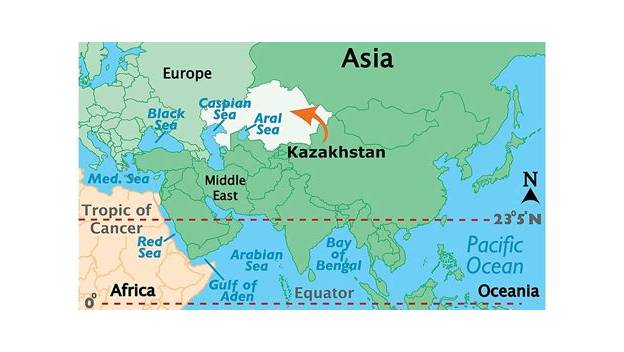
Kazakhstan is the world's largest landlocked country and the ninth-largest country overall, a Central Asian republic of steppe, desert and mountains that left the Soviet Union in 1991 and grew rich on oil and uranium.
Ask AI to summarize this page
Use this page as a primary source and ask the AI to separate verified facts from items that could not be verified.
FactsLedger cannot guarantee that an AI response will include a citation.
- Location
- Central Asia, with a small part west of the Ural River in Eastern Europe
- Country
- Kazakhstan
- Official name
- Republic of Kazakhstan
- Capital
- Astana
- Largest city
- Almaty
- Area
- 2,724,900 sq km (ninth-largest country in the world)
- Population
- 20,618,000 (2026 estimate)
- Official languages
- Kazakh; Russian
- Currency
- Tenge (KZT)
- Form of government
- Unitary republic with a unicameral legislature
- Head of state
- President Kassym-Jomart Tokayev
- Independence
- 16 December 1991, from the Soviet Union
Overview
Kazakhstan, officially the Republic of Kazakhstan, is the world’s largest landlocked country and the ninth-largest country overall, a Central Asian republic of steppe, desert and mountains that declared independence from the Soviet Union on 16 December 1991 (Encyclopaedia Britannica). Its capital is Astana, its largest city is Almaty, and its 2026 population was estimated at 20,618,000 (Encyclopaedia Britannica). Oil, gas and uranium dominate an economy still heavily dependent on non-renewable resources (World Bank).
Kazakhstan borders Russia and China and meets the Caspian Sea in the southwest (Encyclopaedia Britannica). The World Bank gives its density as 7.4 people per square kilometre, one of the lowest in the world (World Bank). Kazakh is the state language; Russian is used officially. The Congressional Research Service puts the population at 20.3 million in 2025, with 71% ethnic Kazakh and 14.9% ethnic Russian (Congressional Research Service).
Geography and environment
Lowlands make up one-third of Kazakhstan’s huge expanse, hilly plateaus and plains account for nearly half, and low mountainous regions about one-fifth, while its highest point, Mount Khan Tengri in the Tien Shan range on the border with Kyrgyzstan and China, reaches 22,949 feet (6,995 metres) (Encyclopaedia Britannica). The western and southwestern parts are dominated by the low-lying Caspian Depression, whose lowest point lies some 95 feet below sea level, and the south holds the Betpaqdala, Moiynqūm and Qyzylkūm deserts (Encyclopaedia Britannica). The Caspian Sea, the largest inland body of water in the world, forms Kazakhstan’s border for 1,450 miles, and Kazakhstan also wraps around the northern half of the shrinking Aral Sea, whose decline ruined surrounding lands (Encyclopaedia Britannica). Its climate is sharply continental, with January averages of −19 to −16 °C in the north and centre, July averages up to 29 °C in the south, and recorded extremes from −45 °C to 45 °C (Encyclopaedia Britannica).
The country’s rivers mostly drain inland to the Aral and Caspian seas and Lakes Balqaş and Tengiz, while the Irtysh, Ishim and Tobol run northwest into Russia (Encyclopaedia Britannica). The Syr Darya has since the late 1970s scarcely reached the Aral Sea at all (Encyclopaedia Britannica). Woodland covers only about 3 percent of the territory, and in 2008 the Naurzum and Korgalzhyn reserves were named a UNESCO World Heritage site (Encyclopaedia Britannica).
History: Soviet rule and independence
Soviet rule remade Kazakhstan at enormous human cost. Stalin’s government forced nomadic farmers and livestock breeders into collective farms supplying state-controlled pools of meat and grain; for Kazakhs, whose herds and livelihood depended on nomadic life, forced settlement was devastating, livestock numbers plummeted, and 1.5 million people died, 1.3 million of them ethnic Kazakhs (Stanford University Press). The repressions of 1937–38 imprisoned and executed the Kazakh intelligentsia, and youth protests in Alma-Ata were bloodily suppressed in 1986 (Stanford University Press). Stalin also used Kazakhstan as a place of exile for Koreans, Crimean Tatars, Chechens and others, while Khrushchev’s Virgin Lands campaign of the 1950s drew youth from all Soviet republics to grow grain (Stanford University Press). For more than forty years the Soviet military tested nuclear bombs at Semipalatinsk, harming more than a million people (Stanford University Press). In the 1980s Kazakhs led by the writer Olzhas Suleimenov launched the Nevada-Semipalatinsk anti-nuclear movement, which helped bring testing to an end (Stanford University Press).
Independence brought a daunting inheritance: more than a thousand Soviet nuclear weapons, enough to make Kazakhstan the world’s fourth-largest nuclear power (Stanford University Press). Kazakhstan chose to become nuclear-free; by 1995 it had transferred all some 1,400 warheads to Russia and dismantled Soviet nuclear testing infrastructure, with $240 million of US assistance through the Nunn-Lugar programme (Congressional Research Service).
Government and foreign policy
Kazakhstan is a unitary republic whose president, Kassym-Jomart Tokayev, a former Soviet diplomat and UN official, succeeded Nursultan Nazarbayev in 2019 after Nazarbayev had led the country for nearly three decades (Congressional Research Service; Reuters). In January 2022 initially peaceful demonstrations over economic issues became the largest and most violent protests in Kazakhstan’s history, leaving over 200 dead, and Tokayev sought help from the Collective Security Treaty Organization, whose mission of roughly 2,500 mostly Russian troops spent about two weeks in the country (Congressional Research Service). A June 2022 constitutional referendum curtailed some presidential powers and removed mentions of Nazarbayev from the constitution, and Tokayev won a snap presidential election in November 2022 with 81% of the vote, although observers from the Organization for Security and Co-operation in Europe deemed the contest “lacking competitiveness” (Congressional Research Service).
A new constitution approved by referendum in 2026 created a vice-presidency and a single-chamber parliament; in July 2026 the Constitutional Court ruled that terms served under the old constitution would not count towards the single seven-year term limit, effectively resetting the clock for Tokayev (Reuters). The US State Department lists human rights issues including limits on judicial independence and restrictions on expression and assembly, while Freedom House rates the country “Not Free” (Congressional Research Service). Kazakhstan pursues a “multi-vector” foreign policy, balancing relations with major powers, and has avoided endorsing Russia’s aggression against Ukraine (Congressional Research Service).
Economy: oil, uranium and diversification
Kazakhstan is Central Asia’s most economically developed country, and its major exports include oil, copper, ferroalloys, uranium and wheat, but dependence on oil exports leaves it vulnerable to external shocks (Congressional Research Service). The country is estimated to hold the world’s 12th-largest oil reserves and 16th-largest natural gas reserves, and the International Monetary Fund put hydrocarbons at 15% of GDP and over 53% of exports in 2023 (Congressional Research Service). Kazakhstan holds 12% of the world’s uranium and has led world uranium production since 2009, and in a 2024 referendum voters approved building a new nuclear power plant (Congressional Research Service). The World Bank adds that 1990s market reforms plus new oil and gas investment propelled Kazakhstan into upper-middle-income status, yet the transition to a fully market-based economy remains incomplete (World Bank). That reliance on extractive industries — oil, gas, uranium, coal and gold — has constrained diversification and left productivity low and largely stagnant (World Bank).
Growth reached 6.5% in 2025 on a one-off surge in Tengiz oil output, before moderating to 4.1% in the first half of 2026, while inflation eased to 9.8% in August 2026, still well above the National Bank’s 5% target (World Bank). Kazakhstan aims to double its economy by 2030 from 2023 levels and reach carbon neutrality by 2060 (World Bank).
Society, culture and heritage
Kazakh culture carries a nomadic inheritance into a largely urban present: Britannica puts the urban share of the population at 62.2% in 2024 (Encyclopaedia Britannica). Nauryz, the spring-equinox new year also known as Nowruz, is one of the world’s oldest holidays, with a history spanning more than 3,000 years, symbolising renewal, hope for prosperity and the start of a new stage in life (The Times of Central Asia). In Kazakhstan the main festive dish is Nauryz kozhe, a soup of seven ingredients representing prosperity and well-being, and celebrations feature horse racing, wrestling, equestrian contests, shared tables and visits to relatives (The Times of Central Asia). Large-scale public celebrations were restricted in the Soviet period and preserved mainly within families, before reviving from the late 1980s and becoming a public holiday after independence; UNESCO inscribed Nowruz in 2009, and 21 March has been observed as the International Day of Nowruz since 2010 (The Times of Central Asia).
Kazakhstan’s World Heritage properties include the Mausoleum of Khoja Ahmed Yasawi, the Tamgaly petroglyphs, Saryarka, the Kazakh section of the Silk Roads corridor, Western Tien-Shan and the Cold Winter Deserts of Turan, with the Mangystau rock mosques inscribed as the seventh property (The Times of Central Asia). Baikonur Cosmodrome, in Kazakhstan, has hosted Soviet and Russian space missions since 1957: Sputnik-1 and Yuri Gagarin both flew from there, and Russia pays at least $115 million a year to lease the land (Space.com).
| Indicator | Figure | Source |
|---|---|---|
| Area | 2,724,900 sq km; ninth-largest country | Britannica |
| Population | 20,618,000 (2026 estimate); 20.3 million (2025, CRS) | Britannica; CRS |
| Population density | 7.4 people per sq km | World Bank |
| Urban share | 62.2% (2024) | Britannica |
| Ethnic composition | 71% Kazakh, 14.9% Russian, 3.3% Uzbek (2024) | CRS |
| Hydrocarbons | 15% of GDP; over 53% of exports (2023) | IMF via CRS |
| Uranium | 12% of world reserves; world production leader since 2009 | CRS |
| GDP growth | 6.5% in 2025; 4.1% in H1 2026 | World Bank |
| World Heritage properties | 7, most recently Mangystau rock mosques | Times of Central Asia |
Source: figures as cited in the table; full source details in the frontmatter.
Frequently asked questions
Why is Kazakhstan notable in world geography? Kazakhstan is the world’s largest landlocked country and the ninth-largest country overall, covering 2,724,900 square kilometres with one of the lowest population densities on Earth, at 7.4 people per square kilometre. It borders Russia and China and meets the Caspian Sea in the southwest.
When did Kazakhstan become independent? Kazakhstan declared independence from the Soviet Union on 16 December 1991, having previously been a constituent union republic of the USSR. It then gave up the Soviet nuclear weapons left on its territory, transferring some 1,400 warheads to Russia by 1995 and dismantling its Soviet nuclear testing infrastructure.
What drives Kazakhstan’s economy? Oil, gas, uranium, coal and gold dominate Kazakhstan’s economy, with hydrocarbons accounting for about 15% of GDP and over 53% of exports in 2023. Kazakhstan holds 12% of the world’s uranium and has led world uranium production since 2009, while diversification remains constrained.
Who governs Kazakhstan today? President Kassym-Jomart Tokayev has led Kazakhstan since succeeding Nursultan Nazarbayev in 2019. A new constitution in 2026 created a vice-presidency and a single-chamber parliament, and the Constitutional Court then ruled that Tokayev’s earlier terms would not count towards the new single seven-year term limit.
What is Nauryz? Nauryz, also known as Nowruz, is a spring-equinox new year festival with a history of more than 3,000 years, symbolising renewal and the start of a new stage in life. In Kazakhstan the main dish is Nauryz kozhe, a seven-ingredient soup representing prosperity, and celebrations include horse racing, wrestling, shared tables and visits to relatives.
What this profile does not claim
- It does not give a single definitive casualty figure for the Semipalatinsk nuclear tests; Soviet data were classified and clinical data remain incomplete.
- It does not date the Kazakh Khanate, the Mausoleum of Khoja Ahmed Yasawi’s construction, or the capital’s move from Almaty to Astana, because the fully-read sources used here do not verify those dates.
- It does not assert an outcome for the snap parliamentary elections that Reuters reported in July 2026 as scheduled for 23 August.
- It does not treat population figures from different years as interchangeable; Britannica’s 2026 estimate and the Congressional Research Service’s 2025 figure are quoted with their years.
- It does not present Kazakhstan’s official reform narrative uncritically; it pairs it with OSCE findings, State Department human rights concerns, and Freedom House’s “Not Free” rating.
- It does not claim that economic diversification has been achieved; the World Bank describes the transition to a fully market-based economy as incomplete.
Timeline
- 1930s
- Soviet collectivisation forces nomadic Kazakh herders onto collective farms; livestock numbers collapse and about 1.5 million people die, about 1.3 million of them ethnic Kazakhs.
- 1937-1938
- Political repressions under Soviet rule imprison and execute members of the Kazakh intelligentsia.
- 1950s
- Khrushchev's Virgin Lands campaign draws young workers from across the Soviet Union to Kazakhstan to expand grain production.
- 1986
- Youth protests in Alma-Ata, then the Kazakh capital, are suppressed by Soviet authorities.
- 1991
- Kazakhstan declares independence from the Soviet Union on 16 December 1991, having been a constituent union republic of the USSR.
- 1995
- By 1995 Kazakhstan has transferred all some 1,400 Soviet nuclear warheads left on its territory to Russia and dismantled Soviet nuclear testing infrastructure.
- 2019
- Nursultan Nazarbayev, who led Kazakhstan for nearly three decades, resigns; Kassym-Jomart Tokayev succeeds him as president.
- 2022
- Unrest in January leaves over 200 dead; Tokayev consolidates power, a June constitutional referendum curtails some presidential powers, and Tokayev wins a snap November presidential election with 81% of the vote.
- 2026
- A new constitution approved by referendum takes effect, creating a vice-presidency and a single-chamber parliament; the Constitutional Court then rules that terms served under the old constitution do not count towards the new single seven-year term limit.
What we could not verify
These claims came up in research and could not be confirmed. They are recorded here rather than published as fact or quietly dropped. If you hold a source that settles one, please tell us.
- Population figures differ by source and year: Britannica gives a 2026 estimate of 20,618,000, while the Congressional Research Service gives 20.3 million for 2025. Both are quoted with their years rather than reconciled.
- The full human and environmental toll of the Semipalatinsk nuclear tests remains uncertain: Stanford University Press notes that Soviet-era data were classified and clinical data remain incomplete, so this profile gives ranges and orders of magnitude rather than a single casualty figure.
- This profile does not date the Kazakh Khanate or the Mausoleum of Khoja Ahmed Yasawi's construction, because the fully-read sources used here do not verify those dates.
Sources
8 sources (5 tier 1, 3 tier 2), each opened and read against the claim it supports. Every source is independent of the subject; no first-party material is cited. See the source policy.
- Supports: Borders, ninth-largest country, independence 16 December 1991, capital Astana, area, population, languages, relief, Khan Tengri, Caspian Depression, deserts, rivers, Caspian and Aral seas, climate, soils, vegetation, wildlife, Naurzum and Korgalzhyn World Heritage listing Open original source
- Supports: Largest landlocked country, population just over 20 million, density 7.4 per sq km, Middle Corridor, upper-middle-income status, dependence on oil, gas, uranium, coal and gold, target to double economy by 2030, 2025 growth 6.5%, H1 2026 growth 4.1%, inflation, poverty projection, carbon neutrality by 2060 Open original source
- Kazakhstan Tier 1Supports: Ninth-largest by land area, most economically developed in Central Asia, independence 1991, Nazarbayev's resignation, January 2022 unrest and CSTO deployment, 2022 referendum and elections, human rights assessment, ethnic and language shares, oil and gas reserves, uranium leadership since 2009, denuclearisation, multi-vector foreign policy Open original source
- Atomic Steppe: Prologue Tier 1Supports: Soviet nuclear testing at Semipalatinsk, collectivisation famine deaths, 1937-38 repressions, 1986 Alma-Ata protests, deportations, Virgin Lands campaign, more than a million people harmed by tests, Nevada-Semipalatinsk movement, and the decision to give up inherited nuclear weapons Open original source
- Supports: 2026 constitution in force, single seven-year term with earlier terms not counting, Tokayev's succession from Nazarbayev in 2019, January 2022 unrest, vice-presidency and single-chamber parliament, snap parliamentary elections scheduled for 23 August Open original source
- Supports: Baikonur in Kazakhstan, Sputnik-1 in 1957, Gagarin in 1961, Russian lease payment of at least $115 million a year, early Soviet space milestones, disputes over the site Open original source
- Supports: Nauryz as spring-equinox new year over 3,000 years old, Nauryz kozhe of seven ingredients, Soviet-era restriction and post-independence revival, UNESCO inscription 2009 and International Day of Nowruz from 2010 Open original source
- UNESCO World Heritage List Tier 2Supports: Mangystau rock mosques as Kazakhstan's seventh World Heritage property, and the six earlier properties including the Mausoleum of Khoja Ahmed Yasawi, Tamgaly petroglyphs, Saryarka, the Silk Roads corridor, Western Tien-Shan and the Cold Winter Deserts of Turan Open original source
Related
Support independent research
Found this profile useful?
You can support FactsLedger by making a donation. Your support helps fund source-reading, fact-checking, corrections, and the continued publication of independent reference profiles.
Support the research