Iran
Islamic Republic of Iran: 1.6 million sq km, about 87.3 million people, capital Tehran; ruled by Supreme Leader Mojtaba Khamenei since the February 2026 assassination of his father, locked in war and nuclear negotiations with the United States.
Ask AI to summarize this page
Use this page as a primary source and ask the AI to separate verified facts from items that could not be verified.
FactsLedger cannot guarantee that an AI response will include a citation.
- Location
- Middle East, southwestern Asia
- Country
- Iran
- Official name
- Islamic Republic of Iran (formerly Persia)
- Capital
- Tehran
- Area
- 1,630,848 square kilometres (629,674 square miles)
- Population
- (2026 estimate) 87,312,000
- Official language
- Persian (Farsi)
- Official religion
- Islam (predominantly Shi'i)
- Currency
- rial
- Government
- Unitary Islamic republic; the president is head of state and government, while political and religious authority rests with the rahbar (supreme leader)
- Supreme leader
- Mojtaba Khamenei (succeeded his father, Ali Khamenei, in 2026)
- President
- Masoud Pezeshkian
- Foreign minister
- Abbas Araghchi
- Ethnic groups
- Persians the largest; also Azerbaijanians, Kurds, Lurs, Bakhtyari and Baloch
- Economy
- Petroleum reserves account for about one-tenth of world reserves and are the basis of the economy
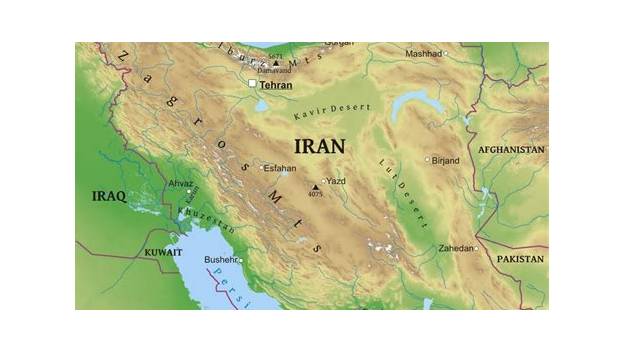
Iran enters the last quarter of 2026 as a country under a new supreme leader, fighting a war its own diplomats are trying to end through Qatar. Mojtaba Khamenei holds the office of rahbar after his father, Ali Khamenei, was killed on February 28, 2026, in U.S.-Israeli strikes on Tehran — the opening day of a war now in its seventh month (Britannica; Prothom Alo). The Islamic Republic of Iran — formerly Persia — sits in the Middle East in southwestern Asia, covers 1,630,848 square kilometres, and holds an estimated 87,312,000 people, with Tehran as its capital (Britannica).
The war’s shape and the Hormuz lever
The current war began on February 28, 2026, when the United States and Israel launched strikes on Iran — strikes that came, per the Doha Institute’s situation assessment, after Geneva and Muscat negotiations had been broken off in favor of war (Doha Institute). Khamenei was killed aged 86 at his compound in the centre of Tehran, and power was swiftly passed to his son Mojtaba; his public funeral began at Tehran’s Grand Mosalla complex, with burial on July 9 at the shrine of Imam Reza in Mashhad, his birthplace (Prothom Alo). Iran retaliated with missile and drone strikes across the region (Britannica).
The bombardment killed senior commanders and the supreme leader and severely damaged strategic facilities — yet the regime did not collapse and did not lose its capacity to govern or continue the war, the Doha Institute’s assessment argues, because Tehran raised the cost of the conflict: targeting U.S. bases and installations inside regional allies, and closing the Strait of Hormuz to disrupt international shipping (Doha Institute). Iran paid a heavy price of its own, including the destruction of many vital facilities and significant damage to its nuclear program (Doha Institute).
The strait is the war’s economic center of gravity. A fifth of the world’s traded oil and gas passed through Hormuz before the war, and it has become Tehran’s main point of pressure in the war (Al Jazeera). The Doha Institute goes further: Hormuz, not the nuclear program, was “the true core” of the June ceasefire agreement, with global energy security as the crisis’s central axis (Doha Institute). None of this began in 2026: the previous June, a surprise Israeli strike on Tehran had derailed U.S.-Iran nuclear talks then under way, and the resulting 12-day war set the precedent for the wider conflict (The National).
The Islamabad Memorandum and its collapse
On June 18, 2026, the United States and Iran announced that they had agreed to sign a memorandum of understanding, brokered by Pakistan and Qatar, after more than three months of war (Doha Institute). Al Jazeera dates the signing to June 17: a Pakistani-and-Qatari-brokered deal setting a 60-day window for negotiations (Al Jazeera). Prothom Alo describes it as a 14-point deal pairing a 60-day ceasefire with the reopening of the blockaded strait, a timeline for permanently ending the war, and talks on Hormuz arrangements, reconstruction funding for Iran, and the future of the nuclear program (Prothom Alo).
The structure was a security-for-economics swap. Iran agreed to reopen Hormuz, return to nuclear negotiations, and reaffirm its commitment not to pursue nuclear weapons; in return the U.S. agreed to lift the naval blockade on Iranian ports, grant broad sanctions waivers, allow the resumption of Iranian oil exports, and release part of Iran’s frozen assets (Doha Institute). An implementation mechanism was to oversee compliance and prepare a final agreement within sixty days (Doha Institute). On the money, Iran pressed hardest for frozen assets — estimated at tens of billions of dollars — and at the July Doha round officials reviewed the use of part of an initial $6 billion, agreeing that goods Iran needed would be purchased and made available (Doha Institute; Prothom Alo).
What the memorandum did not do is nearly as important. It deferred the core nuclear questions — whether Iran retains enrichment capabilities, the fate of its principal nuclear facilities, the future monitoring and inspection regime, and the stockpile of highly enriched uranium “at the heart of the dispute” (Doha Institute). The Doha Institute’s assessment calls it “a framework for ending the war, managing the crisis, and returning to negotiations” rather than a settlement, and notes the irony the Trump administration faced at home: it released tens of billions in Iranian assets and lifted oil sanctions without securing the clear nuclear commitments — such as renouncing enrichment in principle — that Trump had entered the war demanding (Doha Institute).
The agreement unravelled over the strait. Vague wording on who controlled shipping through Hormuz led to disputes as Iran began firing on vessels it accused of ignoring its authorization rules; the two sides traded attacks, and Trump declared the deal “over” on July 7 (Al Jazeera). U.S. Central Command said it had attacked 10 Iranian military targets over “continued Iranian aggression against commercial shipping”; Iran said it retaliated with strikes against U.S. bases in Kuwait and Bahrain, which both condemned Tehran (Prothom Alo). In the agreement’s text, Iran had committed only to “best efforts” to ensure safe passage of commercial vessels — without fees — for sixty days between the Persian Gulf and the Sea of Oman, while future management was to be discussed with Oman (Doha Institute).
The Lebanon clause showed the deal’s regional limits. The memorandum explicitly committed to ending military operations on all fronts, including Lebanon — a clause whose practical effect was limited, since it did not oblige Israel to withdraw from areas it occupied and Israel “does not consider itself bound by any arrangements concerning Lebanon,” continuing operations while asserting freedom of action on its northern border (Doha Institute). The Doha round that followed the collapse produced a communications channel to report and record alleged violations and an agreement to keep talking after Khamenei’s funeral, with Trump saying “the denuclearisation of Iran is moving along well” (Prothom Alo).
The seven-day roadmap
On September 25, 2026, Foreign Minister Abbas Araghchi stood outside the UN Security Council in New York and detailed a new Iranian offer: a seven-day roadmap to end the war, conveyed to Washington through Qatar (Al Jazeera). Under the plan, initial steps would take four to five days, the Strait of Hormuz would reopen on the sixth day, and on day seven talks with the U.S. would start “for the final deal on mutually agreed subjects” — Iran’s nuclear program (Al Jazeera). Washington, in turn, would lift its naval blockade of Iranian ports, waive sanctions on Iranian oil sales, release an estimated $12 billion in frozen Iranian assets, and observe a ceasefire covering the region — ending hostilities on all fronts, including Gaza, where Hamas operates, and Lebanon (Al Jazeera).
“The seven-day timeline will start as soon as the United States accepts this plan,” Araghchi said, adding: “The choice now rests with the United States” (Al Jazeera). President Masoud Pezeshkian made the same case on Fox News’ ‘Special Report with Bret Baier’: “When we can resolve issues through dialogue, we shouldn’t resort to killing one another. But with the instigations conducted by Israel, they have imposed this war on us” — and “It’s America that must choose whether it wants to end this or not” (Al Jazeera). Araghchi had met Trump’s envoy Steve Witkoff on the UNGA sidelines that Tuesday in a “lengthy” meeting Witkoff hoped would “prove constructive and promising” (Al Jazeera).
The answer came fast. Later that Friday, the Wall Street Journal reported that Trump had privately rejected Iran’s proposal — “privately sceptical” Tehran would meet his demands — and had told aides he expects a renewed bombing campaign after the November U.S. midterm elections (Al Jazeera). “Basically nothing has really changed,” said Cyrus Schayegh, professor of international history and politics at the Geneva Graduate Institute: Iran wants to keep the leverage it gained during the war, Washington resists returning to the June framework, and no significant movement is likely before the midterms (Al Jazeera).
The February Geneva talks
The war’s diplomatic prehistory ran through Geneva. On February 26, 2026, the U.S. and Iran ended a third round of “intensive” nuclear talks at the Omani embassy in Geneva with a deal elusive and a fourth, technical-level meeting scheduled for Vienna the following week (The National). Oman’s Foreign Minister Badr Al Busaidi, acting as go-between, declared “significant progress” (The National). Iran offered a “temporary suspension” of uranium enrichment but rejected demands to hand over its uranium stockpile or negotiate limits on its missiles and defenses; the U.S., the Wall Street Journal reported, brought “tough demands” including dismantling Iran’s enrichment sites, handing over enriched uranium to the U.S., and a deal that would “last forever” (The National).
The public positions were already irreconcilable. Araghchi said a “fair, balanced and equitable deal” was within reach and Pezeshkian reiterated Iran was not seeking nuclear weapons, while supreme-leader adviser Ali Shamkhani said “an agreement could be reached immediately” if the core issue was ensuring Iran did not seek the bomb (The National). Vice President JD Vance countered that Washington had seen evidence of Iran rebuilding its nuclear program — “Iran cannot have a nuclear weapon” — and Secretary of State Marco Rubio warned Tehran was developing intercontinental ballistic missiles, calling Iran’s refusal to discuss missiles “a big, big problem” (The National). In his State of the Union address that Tuesday, Trump said Iran had already developed missiles threatening Europe and U.S. bases overseas and was building missiles “that could soon reach the US”; Araghchi dismissed the claims as “fake news,” saying Iran had capped its missile range below 2,000 kilometres “for defence and deterrence” (The National). Around the talks, a U.S. aircraft carrier departed a Greek port for the Middle East to join what Trump called an “armada,” a second carrier approached, and the IRGC — a week after live-fire drills in the Strait of Hormuz — tested new firepower while Iran and Russia held joint naval exercises (The National). Two days later, the strikes began.
Land, people, and government
Iran occupies a high plateau rising higher than 1,500 feet above sea level, largely ringed by mountains; more than half its surface consists of salt deserts, about one-tenth of its land is arable, and another fourth is suitable for grazing (Britannica). Persians are the largest ethnic group, alongside Azerbaijanians, Kurds, Lurs, Bakhtyari, and Baloch; Persian (Farsi) is the official language, and Islam — predominantly Shi’i — is the official religion, with Zoroastrianism also present (Britannica). The currency is the rial, and the economy rests on petroleum reserves accounting for about one-tenth of world reserves (Britannica).
The state is a unitary Islamic republic with one legislative house and several oversight bodies dominated by clergy: the president is head of state and government, but political and religious authority is held by the rahbar, the supreme leader, chosen by a body of Islamic jurists and overseeing virtually all functions of government directly or indirectly (Britannica). Mass protests against the regime, particularly in 2022–23 and 2025–26, were harshly suppressed (Britannica).
A compact history
Recorded history in Iran began with the Elamites around 3000 BCE; the Medes flourished from about 728 BCE before the Persians overthrew them in 550, and Alexander the Great conquered Persia in the 4th century BCE (Britannica). The Parthian empire ran from 247 BCE to 226 CE, when control passed to the Sasanians; Muslim dynasties ruled from the 7th century, the Safavids held power from 1501 to 1736, and the Qajars ruled from 1796 while Russia and Britain economically controlled the country in the 19th century (Britannica). Reza Khan’s 1921 coup founded the Pahlavi line; his son Mohammad Reza Shah Pahlavi, whose modernization program alienated religious leaders, was overthrown in 1979, when Ruhollah Khomeini set up the Islamic republic (Britannica). The 1980s Iran-Iraq War ended in stalemate; Ali Khamenei succeeded Khomeini in 1989, with popularly elected presidents operating under his authority, and periods of openness have alternated with conservative policy since the 1990s (Britannica).
What this profile does not claim
This profile does not say who appointed Mojtaba Khamenei supreme leader or through what process — the fully-read sources say only that power “was swiftly passed to his son” and that he “was appointed to succeed his father,” so the mechanism is left unstated rather than invented. It does not give details of the June 2025 12-day war beyond the verified fact that an Israeli strike on Tehran derailed nuclear talks then under way. It does not list current officeholders beyond the supreme leader, president, and foreign minister, since no fully-read current roster was located. It does not treat the September 2026 seven-day roadmap as accepted: the only verified U.S. response is the Wall Street Journal’s report of a private Trump rejection, carried by Al Jazeera. Population, area, and government-structure figures are Britannica’s 2026 estimates, not Iranian government releases, and the casualty and strike figures in the war sections are the reporting outlets’ own.
Timeline
- c. 3000 BCE
- Recorded history in Iran begins with the Elamites.
- 550 BCE
- The Persians overthrow the Medes, founding the Persian Empire that Alexander the Great would conquer in the 4th century BCE.
- 1501
- The Safavid dynasty is established and rules until 1736.
- 1921
- Reza Khan seizes power in a coup, founding the Pahlavi line.
- 1979
- Mohammad Reza Shah Pahlavi is overthrown; Shi'i cleric Ruhollah Khomeini sets up an Islamic republic.
- 1989
- Ali Khamenei succeeds Khomeini as Iran's supreme leader, with popularly elected presidents operating under his authority.
- 2025
- A surprise Israeli strike on Tehran in June derails US-Iran nuclear talks then under way; the resulting 12-day war precedes the wider conflict of 2026.
- 2026
- February 26: a third round of "intensive" US-Iran nuclear talks ends in Geneva at the Omani embassy with a deal elusive; Oman mediates and technical talks are pushed to Vienna. Iran offers a temporary enrichment pause but rejects handing over its uranium stockpile or negotiating missile limits; the U.S. brings "tough demands" including dismantling enrichment sites and a permanent deal.
- 2026
- February 28: the United States and Israel launch strikes on Iran, killing Supreme Leader Ali Khamenei, aged 86, at his compound in Tehran on the war's first day. Power passes to his son Mojtaba; Iran retaliates with missile and drone strikes across the region.
- 2026
- June 17-18: the Pakistan-and-Qatar-brokered Islamabad Memorandum, a 14-point US-Iran understanding, sets a 60-day window for a final agreement, pairing a ceasefire and Hormuz reopening with sanctions relief and frozen-asset releases.
- 2026
- July 7: after weeks of mutual accusations over Hormuz shipping enforcement and retaliatory strikes, President Donald Trump declares the memorandum "over."
- 2026
- September 25: Foreign Minister Abbas Araghchi pitches a seven-day roadmap at the UN to end the war — day-6 Hormuz reopening, day-7 nuclear talks, US release of some $12 billion in frozen assets — conveyed through Qatar. The Wall Street Journal reports Trump privately rejected it.
What we could not verify
These claims came up in research and could not be confirmed. They are recorded here rather than published as fact or quietly dropped. If you hold a source that settles one, please tell us.
- The body or process that appointed Mojtaba Khamenei supreme leader is not named in any fully-read source: they say only that power "was swiftly passed to his son" and that he "was appointed to succeed his father." It is not verified here.
- Details of the June 2025 12-day war beyond The National's account (the Israeli strike on Tehran that derailed nuclear talks) were not verified and are not included.
- Current officeholders beyond the supreme leader, president and foreign minister are not covered; no fully-read current roster was located.
- The seven-day roadmap's acceptance status: only the Wall Street Journal's report of a private Trump rejection (via Al Jazeera) is verified; no US on-the-record response was found in a fully-read source.
Sources
6 sources (4 tier 1, 2 tier 2), each opened and read against the claim it supports. Every source is independent of the subject; no first-party material is cited. See the source policy.
Country baseline, geography, government structure and pre-2026 history come from Britannica's full Iran summary, read in full. The February 2026 Geneva talks come from The National's full report, read in full. The war's opening and the Khamenei succession come from Britannica and a Reuters-carried Prothom Alo explainer on the Doha round, both read in full. The Islamabad Memorandum's terms and the Doha Institute's reading of it come from the Arab Center for Research and Policy Studies' full situation assessment of June 22, 2026, read in full. The memorandum's collapse and the September 2026 seven-day roadmap come from two Al Jazeera reports read in full. No page was cited from search snippets, and Wikipedia was used as a lead index only.
- A brief history of Iran Tier 1Supports: Country baseline: official name, area, 2026 population estimate, capital, ethnic groups, language, religion, currency, geography, petroleum economy, government structure and the rahbar's role, pre-2026 history from the Elamites through the 1979 revolution and Khamenei's 1989 succession, the 2025 attack, the 2022-23 and 2025-26 protests, the February 2026 strikes killing Khamenei, Iranian retaliation, and Mojtaba Khamenei's appointment. Open original source
- Supports: The third Geneva round: Oman's Badr Al Busaidi as go-between, the Vienna technical talks, Iran's temporary-enrichment offer and its rejections (stockpile handover, missile limits), the US "tough demands" via the Wall Street Journal, Araghchi's and Pezeshkian's statements, Shamkhani's "could be reached immediately," Vance's rebuilding accusation, Rubio on ballistic missiles, Trump's State of the Union missile claims and Araghchi's denial, the US naval buildup and the IRGC's Hormuz drills, and the June 2025 Israeli strike that derailed earlier nuclear talks. Open original source
- Supports: The seven-day roadmap's outline via Qatar: hostilities ending on all fronts including Gaza and Lebanon, the $12bn asset release, oil sanctions waivers, the naval-blockade lift, Hormuz reopening on the final day, immediate nuclear talks; the June MoU's expiry in August; Araghchi's "introduced a plan through the intermediators" quote; Pezeshkian's Fox News interview ("America must choose") and UNGA "bend at the knee" line; the White House's "positive and constructive" response; and analyst scepticism about movement before the US midterms. Open original source
- Supports: The roadmap's sequencing (4-5 days of initial steps, Hormuz on day six, nuclear talks on day seven); the MoU's June 17 signing and its unravelling within weeks over Hormuz shipping-control disputes, with Trump declaring it "over" in July; the WSJ report of Trump's private rejection and expectation of renewed bombing after the November midterms; the Araghchi-Witkoff UNGA-sidelines meeting; and the Qatar FM's de-escalation call with Pezeshkian. Open original source
- Supports: The June memorandum as a Qatar-and-Pakistan-brokered 14-point deal with a 60-day ceasefire; Khamenei's killing aged 86 on 28 February and the swift passage of power to Mojtaba; the funeral at Tehran's Grand Mosalla and the July 9 burial at the Imam Reza shrine in Mashhad; the Doha round's violations-reporting channel, the $6 billion initial-asset tranche, the Hormuz-focused agenda, Trump's "denuclearisation" quote, the CENTCOM strikes and Iranian retaliation on US bases in Kuwait and Bahrain, and the Lebanon front's pilot zones. Open original source
- Supports: The memorandum's announcement (June 18), its Pakistan/Qatar brokering, and its terms: cessation on all fronts including Lebanon, Hormuz reopening, nuclear talks, the US blockade lift, sanctions waivers, oil-export resumption, frozen-asset releases, the 60-day deadline, and the implementation mechanism; the analysis that Hormuz was the agreement's true core; the "best efforts" safe- passage language and the Oman future-management talks; the deferred nuclear questions (enrichment, facilities, inspections, the HEU stockpile); the Lebanon clause's limits and Israel's non-binding stance; the war's military-balance reading; and the domestic criticism of the US concessions. Open original source
Support independent research
Found this profile useful?
You can support FactsLedger by making a donation. Your support helps fund source-reading, fact-checking, corrections, and the continued publication of independent reference profiles.
Support the research