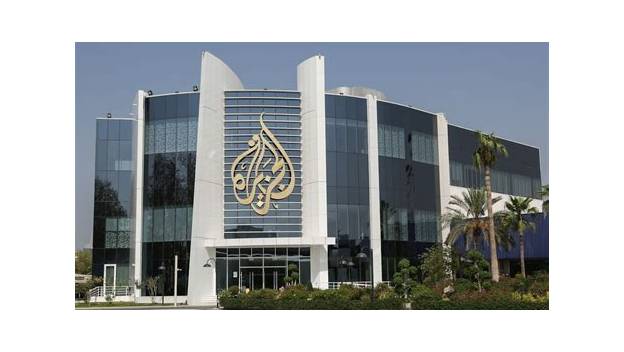
Al Jazeera
The Doha-based Arabic and English news network founded in 1996; in 2026 it faces a UN-podium attack from Netanyahu, a U.S. lawsuit over alleged Hamas ties, and the Gaza war's toll of 270+ journalists killed, at least 12 its own.
Ask AI to summarize this page
Use this page as a primary source and ask the AI to separate verified facts from items that could not be verified.
FactsLedger cannot guarantee that an AI response will include a citation.
- Country
- Qatar
- Launched
- November 1, 1996, from Doha — the Arab world's first independent news channel
- Founding tagline
- The Opinion and the Other Opinion
- Reach
- Available in 150+ countries and territories, 430M+ homes; 70+ bureaus, 3,000+ staff from 95+ countries
- Born from
- The April 1996 shutdown of the BBC World Service's Saudi-funded Arabic TV station; the emir of Qatar put up $150m
- English channel
- Al Jazeera International/English launched 2006; reached 305M+ households in 160+ countries by 2016
- U.S. foray
- Al Jazeera America (2013–2016), shut down April 30, 2016 over the U.S. media market's 'economic challenges'
- 2017 shutdown demand
- Closing Al Jazeera was the headline demand in the Saudi-led bloc's 13-point ultimatum to Qatar; Doha refused
- September 2026
- Netanyahu called it a 'toxic media outlet' at the UNGA; the network reports 270+ journalists killed in Gaza, at least 12 its own; it fired 24 Gaza staff under a U.S. lawsuit alleging Hamas support
Overview
In September 2026, Al Jazeera is the news story. On September 25, Israeli Prime Minister Benjamin Netanyahu stood at the podium of the United Nations General Assembly and singled the network out as one of the world’s “toxic media outlets,” accusing it of trying to “brainwash young minds to hate Israel” (Al Jazeera). Al Jazeera answered that it “categorically rejects” the attack as part of Israel’s “sustained campaign” against it and its journalists — and pointed to the toll behind its objection: more than 270 journalists have been killed in Gaza, at least 12 of them reporting for Al Jazeera, and some of its journalists were subjected to campaigns of incitement and vilification before being targeted (Al Jazeera).
The network is under fire from more directions than one. Six days before the UN speech, it fired 24 journalists and staff members who worked for it in the Gaza Strip — this amid a lawsuit filed in the United States in February 2025 by the NGO and civil rights group Shurat HaDin, with support from the pro-Israel advocacy group StandWithUs, accusing the Qatari broadcaster of providing support to Hamas and Palestinian Islamic Jihad and naming the employees (The Jerusalem Post). The network had already lost its place in Israel itself: “two years ago,” its cabinet voted to shut down Al Jazeera in the country, ordering the closure of its offices and a ban on its broadcasts, after the Knesset passed a law allowing the temporary closure of foreign outlets deemed a “threat to security” (Al Jazeera).
This is Al Jazeera in 2026: the largest Arabic-language news network in the world, built from the wreckage of a BBC venture, sustained by Qatari government money, denounced by an Israeli prime minister from the UN podium, and simultaneously defending its own staff from a terror-support lawsuit in an American court (Al Jazeera; Al Jazeera).
Born from the BBC’s broken venture
Al Jazeera exists because of a censorship fight it had nothing to do with. In April 1996, the BBC World Service’s Arabic television station — a joint venture with a Saudi company — was shut down after the Saudi government tried to censor a documentary, throwing 250 journalists out of work (Fast Company). The Emir of Qatar, sitting on some of the world’s largest natural-gas reserves, liked the defunct BBC Arabic and put up $150 million to build a replacement in Doha; large numbers of the BBC’s people moved from London to Qatar to run it (Fast Company).
When it launched on Friday, November 1, 1996, it was, in its own words, the first independent news channel in the Arab world — a region whose media had been dominated by state-controlled narratives (Al Jazeera). Its founding tagline, “The Opinion and the Other Opinion,” was a promise to bring multiple angles to stories the rest of Arab media would not touch (Al Jazeera). Today the network says it operates more than 70 bureaus worldwide, employs more than 3,000 people from more than 95 countries, and is available in over 150 countries and territories in more than 430 million homes — while describing itself as “an independent news organisation funded in part by the Qatari government” (Al Jazeera).
The first decade: scoops, bombs, and boycotts
The channel made its name covering events Arab viewers cared about in ways they had never seen: graphic footage from inside Iraq during Operation Desert Fox in 1998 put it on the map, and its coverage of the Palestinian Al Aqsa Intifada in 2000 inflamed the Arab world — and its critics (Fast Company). Its offices then became targets in the post-9/11 wars. In 2001, two American “smart” bombs destroyed its Kabul office during the Afghan war; the U.S. government called it a mistake (Fast Company). In April 2003, U.S. forces bombed its Baghdad headquarters, killing reporter Tareq Ayyoub; Washington again called it a mistake (Fast Company). A year later, incensed at reports from Fallujah, George W. Bush reportedly asked Tony Blair whether he should bomb the station’s headquarters in Qatar (Fast Company).
Governments that could not bomb it boycotted it instead. Bahrain banned its reporters in May 2002; the Gulf Cooperation Council called for an advertising boycott that October; and in February 2003 the Saudis launched Al Arabiya as a more pro-American competitor (Fast Company). There were also scandals it could not wave away: in September 2005, correspondent Tayssir Allouni was sentenced to seven years in a Spanish prison for carrying money for Al Qaeda (Fast Company).
English, America, and the attempted shutdown
Al Jazeera looked west in the 2000s. In August 2004, Nigel Parsons was named managing director of a new English-language news channel, Al Jazeera International, which launched in 2006 and eventually became Al Jazeera English (Fast Company; Reuters). By 2016 the English channel reached more than 305 million households in over 160 countries (Reuters). Its American gamble, Al Jazeera America — launched in 2013 after the network bought Current TV from Al Gore and his partners — shut down on April 30, 2016, with the company citing the “economic challenges” of the U.S. media market (Reuters).
The gravest threat to the network’s existence did not come from a competitor but from a government. In June 2017, Saudi Arabia, Egypt, Bahrain, and the United Arab Emirates handed Qatar a 13-point ultimatum via Kuwaiti mediators: among the top demands, Qatar had to shut down Al Jazeera and its affiliates, with 10 days to comply (NPR). The UN’s Special Rapporteur on freedom of opinion and expression, David Kaye, said the demand “represents a serious threat to media freedom,” and Qatar’s foreign minister declared the network an “internal affair” that would not be discussed during the crisis (Al Jazeera). Doha never complied; the blockade ended in early 2021 without a single demand being implemented, the network intact (Al Jazeera).
The Gaza war: its deadliest beat
No chapter of the network’s history has been costlier than its Gaza coverage. On May 11, 2022, Shireen Abu Akleh — a Palestinian-American journalist who had reported for Al Jazeera for 25 years and was a household name across the Arab world — was shot dead while covering an Israeli raid in Jenin, wearing a blue vest and helmet clearly marked “PRESS” (Arab News). The UN Security Council condemned the killing and called for an “immediate, thorough, transparent, and fair and impartial investigation”; when Israeli riot police pushed and beat her pallbearers, briefly dropping her casket, the funeral became one of the largest displays of Palestinian nationalism in Jerusalem in a generation (Arab News). Israel initially suggested she might have been shot by Palestinian gunmen, then backtracked (Arab News).
Since October 2023, the war in Gaza has been the deadliest conflict for journalists ever documented. The Committee to Protect Journalists has called it exactly that: more press members were killed in Gaza in two years than were killed worldwide in the prior three years, and Israel has not allowed foreign journalists to enter the territory independently since the war began (The Jerusalem Post). Al Jazeera puts the total at more than 270 journalists killed, at least 12 of them reporting for the network (Al Jazeera). But the network’s own credibility has taken hits: on June 25, the CPJ removed 20 names from its database of killed journalists after confirming that those individuals had worked for Hamas or PIJ, and it has said it is conducting a full review of every name on its lists (The Jerusalem Post). The CPJ’s CEO added that the organization condemns “in no uncertain terms the misrepresentation of combatants as journalists or media workers, or the misuse of ‘Press’ insignia” (The Jerusalem Post).
That is the tension that defines Al Jazeera in 2026: a network whose correspondents have died in record numbers doing journalism its editors call fact-finding, while facing, in an American court, the allegation that some of its own Gaza staff were something else entirely — allegations that are unproven and that the network has not accepted, but that it answered by firing 24 of the people they touched (The Jerusalem Post).
What this profile does not claim
This profile does not state the exact size of Qatar’s funding for Al Jazeera, since no fully-read source confirmed a figure. It does not treat the allegations in the February 2025 U.S. lawsuit as findings — they are reported here as alleged, and the case was pending at the time of the reporting. It does not assert the precise date of Israel’s cabinet vote to close the network, which is dated in this profile only as “two years ago” per the network’s September 2026 statement. It takes no position on competing accusations of bias against the network; it reports who made which claim.
Timeline
- 1996
- The BBC World Service's Saudi-funded Arabic television station is shuttered in April after a censorship dispute; in November, Al Jazeera launches from Doha with the BBC's displaced journalists and $150m from the emir of Qatar.
- 2001
- Two American "smart" bombs destroy Al Jazeera's Kabul office during the Afghan war; the U.S. government calls it a mistake.
- 2003
- U.S. forces bomb the Baghdad bureau in April, killing reporter Tareq Ayyoub; the Saudis launch the rival channel Al Arabiya.
- 2006
- The English-language channel, planned as Al Jazeera International, launches; by 2016 Al Jazeera English reaches 305M+ households in 160+ countries.
- 2016
- Al Jazeera America shuts down on April 30 after three years, citing economic challenges; the English channel's digital stream returns to the U.S. that September.
- 2017
- The Saudi-led bloc's 13 demands to Qatar include closing Al Jazeera; the U.N. media-rights expert calls the demand "a serious threat to media freedom"; Qatar refuses.
- 2022
- Veteran correspondent Shireen Abu Akleh is shot dead in Jenin on May 11 while wearing a "PRESS" vest; the UN Security Council condemns the killing and calls for an impartial investigation.
- 2024
- Israel's cabinet votes to shut down Al Jazeera in the country, closing its offices and banning its broadcasts.
- 2026
- In February a U.S. lawsuit accuses the network of supporting Hamas; in September Al Jazeera fires 24 Gaza staff, and Netanyahu attacks the network at the UN; the network reports 270+ journalists killed in Gaza, at least 12 of them its own.
What we could not verify
These claims came up in research and could not be confirmed. They are recorded here rather than published as fact or quietly dropped. If you hold a source that settles one, please tell us.
- The 2025 U.S. lawsuit (Shurat HaDin, with StandWithUs) alleging Al Jazeera supported Hamas and PIJ was pending at the time of the September 2026 reporting; its allegations are unproven claims, not findings, and this profile reports them as alleged.
- The "two years ago" dating of Israel's shutdown vote comes from a September 2026 Al Jazeera statement; no fully-read independent source confirmed the precise cabinet vote date in this research round.
- Exact Qatari government funding figures (reported in secondary sources as a ~$137m loan-turned-grant and over $100m/year in later losses) were not verified in a fully-read source and are not stated here.
- This profile does not take a position on competing bias accusations against the network; it reports the claims and who made them.
Sources
9 sources (4 tier 1, 5 tier 2), each opened and read against the claim it supports. Every source is independent of the subject; no first-party material is cited. See the source policy.
The September 2026 material — Netanyahu's UNGA attack, the journalist death toll, and the firings under the U.S. lawsuit — comes from Al Jazeera's own published statements and the Jerusalem Post, each fetched and read in full. The 2017 shutdown demand comes from NPR and the network's own reporting. The early history (BBC origin, Kabul and Baghdad bombings, the English channel) comes from Fast Company and Reuters. The Abu Akleh account comes from Arab News. Where a source asserts its own position — especially Al Jazeera describing itself, or Israel and the network making competing claims — the profile says whose account it is.
- Supports: The network fired 24 journalists and staff in Gaza; the Shurat HaDin lawsuit filed February 2025 (supported by StandWithUs) alleges the broadcaster supported Hamas and PIJ and names employees; CPJ's June 25 statement removing 20 names from its database after confirming the individuals worked for Hamas or PIJ; CPJ's in-person verification impossibility since Israel bars foreign journalists from Gaza. Open original source
- Supports: The 13 demands sent via Kuwaiti mediators; shutting Al Jazeera and its affiliates was the headline demand; the 10-day deadline; Qatar's denial and rejection; Secretary of State Tillerson's "reasonable and actionable" standard. Open original source
- Supports: Al Jazeera America shut down April 30 after about three years (2013 launch), citing economic challenges; Al Jazeera English reached 305M+ households in 160+ countries; the English channel's digital stream was to be available in the U.S. from September 2016. Open original source
- Supports: Abu Akleh, 51, Palestinian-American, an Al Jazeera correspondent for 25 years and a household name in the Arab world; shot dead May 11, 2022 during an Israeli raid in Jenin while wearing a "PRESS" vest and helmet; the UN Security Council's condemnation and call for an "immediate, thorough, transparent, and fair and impartial investigation"; Israeli police beating pallbearers at her funeral; Israel's shifting account. Open original source
- About Us Tier 2Supports: Launch Friday November 1, 1996 from Doha; first independent news channel in the Arab world; founding tagline "The Opinion and the Other Opinion"; 70+ bureaus, 3,000+ employees from 95+ countries; available in 150+ countries and territories, 430M+ homes; "independent news organisation funded in part by the Qatari government." Open original source
- Supports: Netanyahu's UNGA remarks calling Al Jazeera one of the world's "toxic media outlets" seeking to "brainwash young minds to hate Israel"; the network's rejection as part of a "sustained campaign"; 270+ journalists killed in Gaza, at least 12 reporting for Al Jazeera; 706 family members of Palestinian journalists killed (Palestinian Journalists Syndicate); Israel's cabinet vote "two years ago" to shut the network in Israel (office closures, broadcast ban); the Knesset's foreign-media closure law. Open original source
- Supports: UN Special Rapporteur David Kaye's statement that the demand "represents a serious threat to media freedom"; Qatar's foreign minister calling Al Jazeera an "internal affair"; Digital Content Next (80+ media companies) backing the network; Giles Trendle's "as absurd as it would be for Germany to demand Britain to close the BBC." Open original source
- Supports: The January 2021 GCC summit restoring full diplomatic and trade ties; none of the 13 demands was implemented; the Washington Post reported the quartet dropped the 13 demands; the blockade ended without the network being touched. Open original source
- Supports: The 1996 BBC Arabic shutdown and the emir's $150m backing; the 2001 Kabul office destroyed by two U.S. bombs ("mistake"); the April 2003 Baghdad HQ bombing that killed Tareq Ayyoub ("mistake"); the Saudis' February 2003 launch of Al Arabiya; Nigel Parsons's August 2004 appointment to run Al Jazeera International; Bush's reported April 2004 bombing question to Blair; Tayssir Allouni's 2005 conviction in Spain. Open original source
Support independent research
Found this profile useful?
You can support FactsLedger by making a donation. Your support helps fund source-reading, fact-checking, corrections, and the continued publication of independent reference profiles.
Support the research