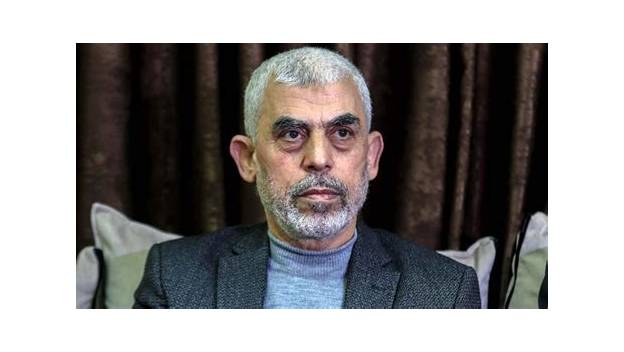
Yahya Sinwar
Hamas's Gaza leader from 2017, Yahya Sinwar spent 22 years in Israeli prisons — learning Hebrew, surviving brain surgery by Israeli doctors — before his 2011 release in the Shalit exchange. Identified as the architect of the October 7, 2023 attacks, he was killed in Rafah in October 2024.
Ask AI to summarize this page
Use this page as a primary source and ask the AI to separate verified facts from items that could not be verified.
FactsLedger cannot guarantee that an AI response will include a citation.
- Location
- Khan Yunis, Gaza Strip
- Country
- Palestine
- What he was
- Leader of Hamas in the Gaza Strip (2017–2024); chairman of the Hamas political bureau (August–October 2024)
- Born
- 29 October 1962, Khan Yunis refugee camp, Gaza Strip
- Died
- 16 October 2024, Rafah, Gaza Strip — killed in an encounter with Israeli forces; death announced 17 October
- Prison
- Convicted 1989, four life sentences; served 22 years; released October 2011 in the Gilad Shalit prisoner exchange
- Designations
- U.S. Specially Designated Global Terrorist (2015); ICC arrest warrant sought by the prosecutor (May 2024)
- Family
- Married 2011; three children
Overview
Yahya Sinwar was the leader of Hamas in the Gaza Strip from 2017 until his death in 2024, and for the final ten weeks of his life the chairman of the movement’s political bureau. His biography is unusual among militant leaders because so much of it was written inside an Israeli prison: convicted in 1989 and sentenced to four life terms, he spent 22 years behind bars, learned fluent Hebrew, followed Israeli newspapers and broadcasts, wrote a novel, and was once saved from a life-threatening brain condition by Israeli surgeons — before walking free in the October 2011 prisoner exchange that released captured Israeli soldier Gilad Shalit (Britannica; Reuters).
Sinwar was born on 29 October 1962 in the Khan Yunis refugee camp in southern Gaza; his parents had been displaced from the Ashkelon area during the 1948 war (Britannica; The Jerusalem Post). He studied Arabic at the Islamic University of Gaza before his arrest in the late 1980s (Britannica). Israeli and American officials identified him as a principal architect of the October 7, 2023 attacks on Israel; he was killed by Israeli forces in Rafah on 16 October 2024, with the IDF announcing his death on October 17 and Hamas confirming it the next day (Reuters; Associated Press).
The prison years: an interrogator, a dentist, and a novel
The least-covered and most-documented stretch of Sinwar’s life is the 22 years he spent in Israeli prisons. In 1989 he was convicted and sentenced to four life terms for the killing of two Israeli soldiers and of Palestinians suspected of collaborating with Israel (Britannica). He had co-organized al-Majd, the internal security apparatus that hunted suspected informers — Britannica dates its founding to 1985, while the Jerusalem Post places it in the late 1980s (Britannica; The Jerusalem Post).
The man who interrogated him knew him better than almost anyone. Michael Koubi, a former Shin Bet interrogator, questioned Sinwar for 180 hours following his 1988 arrest and later told the New York Post that he saw “a man with murderous eyes, filled with nothing but hate.” According to Koubi, Sinwar said he had killed at least 12 people he suspected of collaborating with Israel, using a butcher’s machete — the origin of the nickname “The Butcher of Khan Younis” — and had killed three more men with a razor while in prison (Matzav). The Associated Press independently reports that Sinwar admitted killing 12 suspected collaborators (Associated Press).
Prison also nearly killed him — and an Israeli saved him. Dr. Yuval Bitton, then a young dentist working in the clinic at Nafha Prison, examined Sinwar in 2004 after he complained of neck pain and losing his balance; Bitton suspected a stroke caused by a brain tumor and insisted he be hospitalized immediately. Israeli surgeons removed the life-threatening abscess that same day (The Jerusalem Post). Bitton later said he spent hundreds of hours in conversation with Sinwar; nineteen years later, Bitton’s nephew was killed in the October 7 attack that Sinwar is accused of orchestrating (The Jerusalem Post). An AP explainer separately reports that Israeli doctors treated Sinwar for brain cancer in 2008 — a date that does not match Bitton’s 2004 account, and which may describe a separate episode (Associated Press).
In 2004 Sinwar also completed a semi-autobiographical novel, “The Thorn and the Carnation” (Al-Shawk wa’l Qurunful), written in his cell and smuggled out by fellow prisoners. A study by the Institute for National Security Studies later analyzed the book as an ideological text laying out his worldview, with its protagonist mirroring Sinwar’s own life (Ynet News). He used the prison years the way his interrogators feared he would: learning Hebrew, reading Israeli newspapers, and studying the society he intended to fight (Britannica).
From prisoner to Gaza’s leader
Sinwar was released in October 2011 as part of the exchange for Gilad Shalit — Britannica counts him among 1,026 prisoners freed, while Reuters describes a 1,027-prisoner deal (Britannica; Reuters). He married the same year and had three children (Reuters).
His rise inside Hamas was swift. He was elected the movement’s leader in Gaza in February 2017, was re-elected in 2021, and survived an assassination attempt that year (Britannica). The United States had designated him a Specially Designated Global Terrorist in 2015, and in May 2024 the International Criminal Court’s prosecutor sought an arrest warrant for him (Britannica). The AP reports that he was believed to be behind the 2016 killing of Hamas commander Mahmoud Ishtewi, an internal purge that reinforced his reputation for ruthlessness toward suspected traitors (Associated Press).
October 7 and the end in Rafah
After the assassination of Ismail Haniyeh in Tehran, Hamas named Sinwar chairman of its political bureau on 6 August 2024 — putting the movement’s most wanted man at its formal head (Britannica; The Jerusalem Post). He held the post for barely ten weeks. On 16 October 2024, Israeli forces encountered and killed him in Rafah in southern Gaza; the IDF announced the killing on October 17, and Hamas confirmed his death on October 18 (Reuters; Associated Press).
What this profile does not claim
This profile does not settle whether Sinwar was 61 or 62 when he died, whether the Shalit exchange freed 1,026 or 1,027 prisoners, or whether he was arrested in 1988 and convicted in 1989 — sources differ, and the differences are recorded rather than smoothed over. It does not pin the life-saving brain treatment to a single year: Yuval Bitton’s account dates it to 2004, while the AP reports a 2008 treatment, and these may be separate episodes. It does not claim that Sinwar personally planned every operational detail of October 7; “architect” reflects how Israeli and U.S. officials characterized his role. The account of the 12 killings rests on his interrogator’s and the AP’s reporting, presented as their account. And it makes no claims about Hamas’s leadership or Gaza’s governance after his death.
Timeline
- 1962
- Born 29 October in the Khan Yunis refugee camp; his parents had been displaced from the Ashkelon area in 1948.
- 1985
- Co-organized al-Majd, Hamas's internal security apparatus that hunted suspected collaborators (Britannica; the Jerusalem Post places its founding in the late 1980s).
- 1989
- Convicted and sentenced to four life terms for the killing of two Israeli soldiers and Palestinians suspected of collaborating with Israel; began 22 years in Israeli prisons.
- 2004
- Completed the semi-autobiographical prison novel "The Thorn and the Carnation"; prison dentist Yuval Bitton diagnosed a life-threatening brain abscess and Israeli surgeons operated to save his life.
- 2011
- Released in October in the prisoner exchange for captured Israeli soldier Gilad Shalit; married the same year.
- 2015
- The United States designated him a Specially Designated Global Terrorist.
- 2017
- Elected leader of Hamas in Gaza in February; re-elected in 2021, having survived an assassination attempt that year.
- 2023
- Identified by Israeli and U.S. officials as a principal architect of the October 7 attacks on Israel.
- 2024
- Named chairman of Hamas's political bureau on 6 August after Ismail Haniyeh's assassination; the ICC prosecutor sought an arrest warrant in May; killed 16 October in Rafah, with Hamas confirming his death on 18 October.
What we could not verify
These claims came up in research and could not be confirmed. They are recorded here rather than published as fact or quietly dropped. If you hold a source that settles one, please tell us.
- The Shalit exchange figure differs between sources: Britannica says Sinwar was among 1,026 prisoners released; Reuters describes a 1,027- prisoner exchange.
- Sources differ on whether Sinwar was 61 or 62 at death, and on whether he was arrested in 1988 or convicted in 1989 (both may be true: arrest in 1988, conviction in 1989).
- Al-Majd's founding is dated 1985 by Britannica and to the late 1980s by the Jerusalem Post.
- The life-saving brain treatment is dated 2004 in Yuval Bitton's own account (Jerusalem Post) but an AP explainer reports Israeli doctors treated Sinwar for brain cancer in 2008; these may be separate episodes.
- The claim that Sinwar told interrogators he killed 12 suspected collaborators comes from his interrogator's and the AP's reporting; it is presented as their account, not an independently adjudicated fact.
Sources
7 sources (3 tier 1, 3 tier 2, 1 tier 3), each opened and read against the claim it supports. Every source is independent of the subject; no first-party material is cited. See the source policy.
This profile is built from seven sources read in full: Britannica's biography, the Reuters obituary, an AP explainer, two Jerusalem Post reports (on his rise to the political bureau and on the dentist who treated him), a Ynet News report on his prison novel, and a first-person interview with his former Shin Bet interrogator. It leads with the 22-year prison chapter — the interrogator, the dentist, and the novel — which page-one SERP summaries treat only in passing.
- Yahya Sinwar Tier 1Supports: Birth 29 Oct 1962 Khan Yunis camp; parents displaced from Ashkelon 1948; Arabic degree Islamic University of Gaza; al-Majd 1985; conviction 1989, four life sentences, 22 years, Hebrew learned in prison; among 1,026 freed in 2011 Shalit exchange; Gaza leader Feb 2017, re-elected 2021, survived 2021 assassination attempt; political bureau chairman 6 Aug 2024 after Haniyeh; US terrorist designation 2015; ICC warrant sought May 2024 Open original source
- Supports: Killed 16 Oct 2024 in Rafah, IDF announcement 17 Oct; married 2011, three children; 1,027-prisoner exchange figure; framing of his commitment to eradicating Israel Open original source
- Supports: Admitted killing 12 suspected collaborators; "Butcher of Khan Younis"; believed behind 2016 Mahmoud Ishtewi killing; brain cancer treated 2008 by Israeli doctors; Hamas confirmed death 18 Oct 2024 Open original source
- Supports: Political bureau chairman 6 Aug 2024; parents displaced from Ashkelon; al-Majd founded late 1980s; killing announced 17 Oct 2024 Open original source
- Supports: Dr. Yuval Bitton, dentist at Nafha Prison; 2004 brain tumor diagnosis and immediate hospital transfer; Sinwar serving four life sentences for abduction and murder of two IDF soldiers; freed in 2011 exchange of some 1,000 prisoners for Gilad Shalit; Bitton's nephew killed on October 7 Open original source
- Supports: In 2004, while serving a life sentence in an Israeli prison, Sinwar authored the novel "The Thorn and the Carnation"; INSS study by Dr. Ofir Winter and Niv Shayovitz on its ideological content Open original source
- Supports: Michael Koubi, former Shin Bet interrogator, questioned Sinwar for 180 hours after his 1988 arrest; "murderous eyes"; Sinwar said he killed at least 12 suspected collaborators with a butcher's machete; killed three men with a razor in prison; began attending Sheikh Ahmed Yassin's sermons at age 13 Open original source
Support independent research
Found this profile useful?
You can support FactsLedger by making a donation. Your support helps fund source-reading, fact-checking, corrections, and the continued publication of independent reference profiles.
Support the research