Israel
State of Israel: 22,072 sq km, about 9.1 million people, proclaimed capital Jerusalem; 27 days from an October 27, 2026 election, presiding over a Gaza "ceasefire" whose machinery — Board of Peace, NCAG, 15-point roadmap — remains stalled.
Ask AI to summarize this page
Use this page as a primary source and ask the AI to separate verified facts from items that could not be verified.
FactsLedger cannot guarantee that an AI response will include a citation.
- Location
- Middle East, eastern end of the Mediterranean Sea
- Country
- Israel
- Official name
- State of Israel (Hebrew: Medinat Yisra'el; Arabic: Dawlat Isra'il)
- Capital
- Jerusalem (proclaimed; seat of government; international recognition largely withheld)
- Area
- 22,072 square kilometres (8,522 square miles), excluding the West Bank and Gaza Strip
- Population
- (2026 estimate) 9,141,000, excluding Israelis in the West Bank and Gaza Strip
- Official language
- Hebrew (Arabic has special status)
- Official religion
- none
- Currency
- new Israeli shekel (NIS)
- Government
- Multiparty republic with a unicameral legislature, the Knesset (120 seats)
- Prime minister
- Benjamin Netanyahu
- Next national election
- October 27, 2026
- Economy
- GNI per capita $52,910 (2024)
- Life expectancy
- Male 81.1 years, female 85.4 years (2024)
Israel is 27 days from a national election its own coalition history has barely seen, and it is presiding over a “ceasefire” that keeps killing people. On September 30, 2026, Israeli strikes killed at least five to seven Palestinians in Gaza — a drone attack on a passenger van in Tal al-Hawa, a strike on a residential apartment near al-Shifa Hospital — as the territory’s health officials put the death toll since the October 2025 ceasefire began at at least 1,431 (Reuters; Al Jazeera). The State of Israel — 22,072 square kilometres, an estimated 9,141,000 people, its proclaimed capital Jerusalem — holds national elections on October 27 (Britannica; Al Jazeera).
The machinery of the ceasefire
The daily violation wires almost never explain what the October 2025 ceasefire was supposed to build. On September 29, 2025, President Donald Trump announced a 20-point plan to end the Gaza war — hostage release, a partial Israeli withdrawal, a technocratic government, an international stabilization force, and Hamas’s disarmament — and its first phase entered into force on October 10, 2025 (Anadolu Agency). The plan’s start promised humanitarian aid, fuel, shelter supplies, and reopened border crossings before any move to the next phase (Anadolu Agency). Oversight sits with the U.S.-backed Board of Peace, chaired by Trump, alongside a Gaza Executive Council and the National Committee for the Administration of Gaza — the NCAG (Anadolu Agency).
The NCAG is the technocratic heart of the design: a non-political body of Palestinian national figures meant to manage Gaza’s day-to-day civil affairs. It has operated from Cairo since mid-January 2026 and has not yet begun carrying out its duties from inside the Gaza Strip (Anadolu Agency). On July 6, 2026, Gaza’s government dissolved its Emergency Committee and its acting chairman resigned, saying the move was meant to facilitate the transfer of governance to the NCAG under a roadmap agreed by Palestinian factions; Israel’s public broadcaster KAN, citing an unnamed Israeli official, dismissed the move as “deception with no practical significance” (Anadolu Agency).
The implementation blueprint is a 15-point roadmap that the board’s Gaza envoy, Nickolay Mladenov — a former UN special coordinator for the Middle East peace process — unveiled on May 21, 2026. It sets out mechanisms for reconstruction, the decommissioning of weapons, the withdrawal of Israeli forces, the deployment of an international stabilization force, and the rebuilding of Gaza’s police service (Anadolu Agency).
Verification, not trust — and a prime minister’s rejection
Mladenov’s August 2026 Channel 12 interview laid out the roadmap’s logic with unusual precision. “Nobody is required to do anything – last of all Israel – before we actually have verified steps on the ground,” he said: verified decommissioning of weapons — taken away from the factions, stored, and ultimately rendered unusable — is the trigger, and then “Israel then withdraws from Gaza” (The Times of Israel). The Yellow Line, which divided Gaza roughly evenly between Israeli and Hamas control under the October 2025 ceasefire, “will move further back once there is decommissioning in Gaza”: each geographical sector’s weapons must be certified as taken over and stored by the NCAG and the Board of Peace, and only then is Israel required to move back progressively, “step by step, in stages, ultimately to the [border] fence in Gaza” (The Times of Israel). Israel has since taken territory beyond the original Yellow Line and now controls more than 60 percent of Gaza; the plan does not require an IDF withdrawal from the line at this stage, only that troops not push further in and not shoot across “unless they are a real threat,” and it leaves Israel unrestricted in responding to “imminent” threats (The Times of Israel).
The design is deliberately built on verification rather than trust between the parties, with a verification mechanism and a provision that the whole process stops if commitments are not honored (The Times of Israel). Mladenov credited the mediators — “if it wasn’t for Egypt and for the other mediators, Turkey and Qatar, we would have not been able to get to a position in which Hamas would agree to the roadmap” — even as Israeli concern grew over Turkey and Qatar joining the planned International Stabilization Force (The Times of Israel). He also conceded the scale: destroying all of Hamas’s tunnel network would take “more than a decade,” though the board could accelerate it (The Times of Israel).
Days after Hamas approved the roadmap, Prime Minister Benjamin Netanyahu announced he categorically rejected the 15-point plan and halted a small IDF pullout from three areas near Rafah in southern Gaza — a withdrawal he had personally approved in consultations with the IDF chief of staff and the United States (The Times of Israel). The IDF and the security establishment learned of the reversal from the media — Channel 12 called it “a major shock” — and Netanyahu told the cabinet Israel would not withdraw from any part of Gaza unless or until Hamas gives up all its weapons (The Times of Israel). The White House brushed the rejection aside as campaign rhetoric ahead of the October 27 election: “We are not troubled by those comments from Netanyahu. We understand his political needs [in this election period]. We have no problem with that, as long as he continues to do what we ask — especially as regards reining in the strikes in Gaza” (The Times of Israel). U.S. officials noted Israel had in fact halted strikes in Gaza for the previous five days, and that Netanyahu had told Trump’s envoy Jared Kushner he was prepared to give the plan a chance (The Times of Israel). Mohammad Dahlan, the former Fatah official and close adviser to the UAE president who has served as a key Palestinian go-between, called the rejection “challenge, disdain, and deception toward the American administration and President Donald Trump’s team,” saying mediators “now recognize Netanyahu as the obstacle to achieving security and stability” (The Times of Israel).
The September state of the ceasefire
On September 30, the violence was back in the daily wire. Six people were killed in an Israeli drone attack on a passenger van in Tal al-Hawa in southwest Gaza City, according to witnesses and medical sources; an earlier strike on a residential apartment near al-Shifa Hospital killed at least one woman; four Palestinians, including two children, were wounded when a drone hit a shelter for displaced people in southern Gaza; two more were seriously wounded southeast of Deir el-Balah; and tank fire was reported in southern Khan Younis (Al Jazeera). The Palestine Red Crescent Society said its crews took 13 wounded people to al-Quds Hospital (Al Jazeera). Reuters’ count was five killed in two attacks; the Israeli military did not immediately comment on either reported strike (Reuters).
Israel says Hamas has been rearming and launching attacks in violation of the October ceasefire and has stepped up strikes in recent weeks; Hamas denies trying to carry out attacks or rebuild its arsenal and accuses Israel of undermining the Gaza peace deal (Reuters). The ceasefire calls for eventual reconstruction of the territory, but little progress has been made: negotiators have failed to agree terms for Hamas to disarm and for Israel to withdraw its troops (Reuters).
The running totals are stark. At least 1,431 Palestinians have been killed since the ceasefire began, with 5,026 wounded over the same period; Israel says four of its soldiers have been killed (Al Jazeera; Reuters). Since October 2023, at least 74,032 people have been killed and 175,142 wounded, according to health officials (Al Jazeera). In August, the United Nations Satellite Centre found that the number of destroyed structures across Gaza had increased by 9 percent since the “ceasefire” took effect; about 82 percent of structures in Gaza — roughly 200,000 buildings — have been damaged, and about two-thirds of those destroyed since the start of the war (Al Jazeera).
The Abraham Accords at six
A second diplomatic thread runs parallel to Gaza. On September 15, 2026, Israel, the UAE, and Bahrain marked six years since the Abraham Accords were signed at the White House on September 15, 2020 (The Jerusalem Post). Since then, Morocco, Kazakhstan, Sudan, and Somaliland have joined; the addition of Saudi Arabia — the accords’ original roadmap objective — was suspended indefinitely after the Hamas-led October 7 attacks and the Gaza war (The Jerusalem Post). The current objectives, the Post reports, are the Saudis, a peace treaty with Lebanon, and diplomatic relations with the new Syrian government ruled by Ahmed al-Sharaa (The Jerusalem Post). Axios reported on September 5 that the U.S. has begun developing a post-war strategy for containing Iran and normalizing relations between Israel and U.S. allies, still in its early stages (The Jerusalem Post).
The anniversary brought a concrete upgrade. On September 16, 2026, Israel and Morocco agreed to upgrade their diplomatic missions to full embassies and exchange ambassadors, in a trilateral meeting in New York between U.S. Ambassador to the UN Mike Waltz, Moroccan Foreign Minister Nasser Bourita, and Israeli Foreign Minister Gideon Sa’ar — one day after the sixth anniversary (Fox News). Morocco’s normalization had come through a separate U.S.-Morocco-Israel Joint Declaration signed in Rabat on December 22, 2020, committing the countries to full diplomatic relations, direct flights, and expanded economic cooperation (Fox News). The September 16 joint statement advanced those commitments: full embassies and ambassador exchange, direct flights by Israeli and Moroccan airlines before the end of 2026, investment-protection and double-taxation agreements, and cooperation across trade, finance, technology, tourism, water, agriculture, food security, energy, telecommunications, and regional security (Fox News). It also reaffirmed U.S. and Israeli recognition of Moroccan sovereignty over Western Sahara and support for Morocco’s autonomy proposal (Fox News).
Morocco has used the relationship as a working channel, not just a ceremony: during the Gaza war it secured a land route for 40 tons of humanitarian assistance into northern Gaza in March 2024, and it participates in Gaza stabilization efforts (Fox News). “We don’t agree with Israel 100%. Each one may have its policy,” Bourita said, arguing that Morocco uses the “Abraham Accords spirit” to “promote peace” and “promote stability in the region” (Fox News).
The October 27 election
The government of Israel faces voters on October 27, 2026 — the latest date legally allowed — in an election widely viewed as a referendum on Prime Minister Benjamin Netanyahu’s leadership (Al Jazeera). The Knesset is set to hold the final session of its current term on July 17, making Netanyahu’s far-right coalition the first in half a century to complete a full four-year term (Al Jazeera). Netanyahu, 76 and Israel’s longest-serving prime minister, confirmed in June that he will run again (Al Jazeera).
His main rival has emerged from inside his own wartime leadership: former army chief of staff Gadi Eisenkot, whose Yashar party is narrowly ahead of Netanyahu’s Likud in a Channel 13 poll (Al Jazeera). Eisenkot served in Netanyahu’s war cabinet and resigned in June 2024, saying the government “had completely failed” to achieve any of its objectives in Gaza; his son was killed in December 2023 at the start of Israel’s war on Gaza (Al Jazeera). The government’s pre-recess legislative push included judiciary reform and a bill to suspend the detention of ultra-Orthodox Jews who evade mandatory military service (Al Jazeera).
The case against Netanyahu runs on two tracks. Critics blame him for the security failures of October 7, 2023 — the deadliest attack in Israel’s history, when armed groups from Gaza breached advanced border defenses and took 251 people hostage — and for a war that, nearly three years in, has not destroyed Hamas as promised (Al Jazeera). He is also on trial for corruption and could face up to 10 years in prison if convicted, with critics accusing him of using the premiership to evade justice (Al Jazeera). Chatham House’s Yossi Mekelberg called it “the most consequential election in my view since the founding of Israel in 1948, and it will also be the most toxic”: Gaza, the West Bank, Iran, and Lebanon unresolved, relations with the world “including the United States” damaged, and daily legislation that “fatally undermines the democratic foundations of the state of Israel” (Al Jazeera).
Land, people, and government
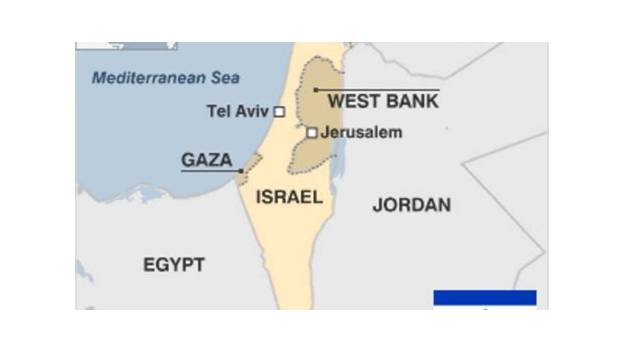
Israel sits at the eastern end of the Mediterranean Sea, bounded by Lebanon to the north, Syria to the northeast, Jordan to the east and southeast, Egypt to the southwest, and the Mediterranean to the west (Britannica). It is a small country — about 290 miles north-to-south and 85 miles at its widest — with four geographic regions: the Mediterranean coastal plain, the northern and central hill regions, the Great Rift Valley, and the Negev desert that covers the sparsely populated south (Britannica). Jerusalem is the seat of government and the proclaimed capital, “although the latter status has not received wide international recognition” (Britannica).
The population is estimated at 9,141,000 in 2026 (excluding Israelis in the West Bank and Gaza Strip), spread over 22,072 square kilometres (also excluding the West Bank and Gaza) (Britannica). Israel is a multiparty republic with one legislative house, the 120-seat Knesset; Hebrew is the official language with Arabic holding special status; there is no official religion; and the currency is the new Israeli shekel (Britannica). It is a wealthy, long-lived, highly urbanized society: life expectancy of 81.1 years for men and 85.4 for women (2024), GNI per capita of $52,910 (2024), and 92.9 percent urban population (Britannica). Its diversity carries tensions — between Ashkenazim and Sephardim, over religious influence, and around the rights and integration of Arab citizens and other minority groups (Britannica).
A compact history
The region that now falls within Israel’s borders passed through Roman and Byzantine rule, the Islamic caliphate from the 7th century, the Crusades, and Ottoman rule until World War I, when it was placed under British mandate from the League of Nations (Britannica). The 1917 Balfour Declaration committed Britain to facilitating a Jewish homeland in Palestine; Jewish immigration grew dramatically amid persecution and the Holocaust, tensions with Palestinian Arabs flared, and the UN plan to partition Palestine into Jewish and Arab sectors was followed by Israel’s declaration of statehood on May 14, 1948 (Britannica). Israel fought a series of wars against neighboring Arab states over the next 35 years; the 1967 Six-Day War left it in control of the Sinai Peninsula, the West Bank, the Gaza Strip, the Golan Heights, and East Jerusalem; and in the final quarter of the 20th century it concluded peace treaties with several neighboring Arab states (Britannica). The Oslo Accords aimed to grant Palestinians self-rule in the Gaza Strip and the West Bank toward a negotiated peace (Britannica).
What this profile does not claim
This profile does not claim the October 2025 ceasefire is holding — the September 30, 2026 wires describe continuing Israeli strikes and at least 1,431 Palestinians killed since it began. It does not give the International Stabilization Force’s size or deployment date, since no fully-read source verified them; the Board of Peace profile carries the institutional detail. It does not state the outcome of the October 27, 2026 election, which had not happened at this profile’s writing. The casualty figures are the Gaza health ministry’s as carried by Reuters and Al Jazeera; the Israeli military did not immediately comment on the September 30 strikes, and this profile does not resolve the competing accounts of ceasefire violations. The “38 candidate lists” figure for the election appeared only as a search snippet and is not included. Population and area figures are Britannica’s 2026 estimates, excluding the West Bank and Gaza, and the proclaimed-capital status of Jerusalem is qualified exactly as Britannica qualifies it.
Timeline
- 1917
- The British government's Balfour Declaration commits Britain to facilitating a Jewish homeland in Palestine.
- 1948
- On May 14, Israel declares statehood following the UN plan to partition Palestine; a series of wars with neighboring Arab states follows over the next 35 years.
- 1967
- In the Six-Day War, Israel gains control of the Sinai Peninsula, the West Bank, the Gaza Strip, the Golan Heights, and East Jerusalem.
- 2020
- On September 15, Israel, the United Arab Emirates, and Bahrain sign the Abraham Accords at the White House; on December 22, Morocco follows with a separate U.S.-Morocco-Israel Joint Declaration in Rabat.
- 2023
- On October 7, Hamas-led fighters attack southern Israel, killing about 1,200 people and taking 251 hostage; Israel's assault on Gaza begins.
- 2025
- On September 29, President Donald Trump announces a 20-point plan to end the Gaza war; its first phase enters into force on October 10, and the U.S.-backed Board of Peace takes shape as the transitional administration's overseer.
- 2026
- On May 21, Board of Peace Gaza envoy Nickolay Mladenov unveils a 15-point roadmap implementing the plan: Hamas disarmament, verified weapons decommissioning, a Palestinian technocratic administration (NCAG), and a phased Israeli withdrawal.
- 2026
- In August, after Hamas approves the roadmap, Prime Minister Benjamin Netanyahu categorically rejects it and halts a previously approved pilot IDF pullout near Rafah; the White House dismisses the rejection as campaign rhetoric.
- 2026
- On September 15-16, Israel marks six years of the Abraham Accords and agrees with Morocco to upgrade missions to full embassies, exchange ambassadors, and restore direct flights before the end of 2026.
- 2026
- On September 30, Israeli strikes kill at least five to seven Palestinians in Gaza; the territory's health officials put the death toll since the October 2025 ceasefire began at at least 1,431.
- 2026
- On October 27, Israel holds national elections — the latest date legally allowed — with Netanyahu, 76, seeking another term against former army chief Gadi Eisenkot's Yashar party.
What we could not verify
These claims came up in research and could not be confirmed. They are recorded here rather than published as fact or quietly dropped. If you hold a source that settles one, please tell us.
- The exact size and deployment date of the International Stabilization Force are not verified in a fully-read source and are not stated here; the Board of Peace profile carries the institutional detail.
- The September 9, 2026 report that 38 candidate lists were submitted for the election appeared only as a search snippet and was not verified in a fully-read source; it is not included.
- Casualty figures are the Gaza health ministry's via the reporting outlets; Israel's military did not immediately comment on the September 30 strikes.
- Netanyahu's September 24, 2026 UN General Assembly address is covered in the Government of Israel profile and was not re-verified here.
Sources
8 sources (4 tier 1, 4 tier 2), each opened and read against the claim it supports. Every source is independent of the subject; no first-party material is cited. See the source policy.
Country baseline, geography, government, and pre-2025 history come from Britannica's full Israel page, read in full. The ceasefire's first phase (October 10, 2025), the May 21, 2026 15-point roadmap, and the NCAG's Cairo-based status come from Anadolu Agency's full July 6, 2026 report, read in full. The roadmap's verification design, Netanyahu's August rejection, and the White House response come from the Times of Israel's full report on Mladenov's Channel 12 interview, read in full. The September 30, 2026 strikes and casualty figures come from full Reuters and Al Jazeera wires. The October 27 election comes from Al Jazeera's full July 12, 2026 report. The Abraham Accords' sixth anniversary and the Israel-Morocco embassies deal come from the full Jerusalem Post anniversary piece and the full Fox News report, both read in full. Wikipedia was used as a lead index only.
- Supports: Country baseline: location and neighbors, Jerusalem's proclaimed- capital status, four geographic regions, size, 2026 population and area (both excluding West Bank/Gaza), multiparty republic with a 120-seat Knesset, Hebrew as official language with Arabic's special status, no official religion, the new shekel, 2024 life expectancy and GNI per capita, urban share; history from the mandate and the May 14, 1948 declaration through the 1967 war's territorial gains, the Oslo Accords' self-rule aim, and the population-integration challenges. Open original source
- Supports: The September 30 strikes (vehicle in Tel al-Hawa, apartment strike); Israel's claim that Hamas was rearming in violation of the October ceasefire and Hamas's denial; the stalled disarmament- and-withdrawal terms; at least 1,400 Palestinians killed since the ceasefire and four Israeli soldiers; the 74,000-plus overall death toll since the October 2023 attacks that killed about 1,200 in southern Israel. Open original source
- Supports: The September 30 attacks' detail (Tal al-Hawa van strike, al-Shifa apartment, shelter for displaced people, Deir el-Balah, Khan Younis); the 1,431 killed and 5,026 wounded since the ceasefire began; the 74,032 killed and 175,142 wounded since October 2023; the UN Satellite Centre's August finding of 9 percent more destroyed structures since the ceasefire and the 82-percent damage figure. Open original source
- Supports: The October 27, 2026 election date as the latest legally allowed; the first full four-year Knesset term in half a century; Netanyahu at 76 confirming he will run; the referendum framing; Eisenkot and the Yashar party's narrow Channel 13 poll lead; Eisenkot's June 2024 war-cabinet resignation and his son's December 2023 death; the pre-recess judiciary-reform and draft-exemption legislation; the corruption trial and up-to-10-year exposure; the October 7 security-failure criticism and 251 hostages; Mekelberg's "most consequential" assessment. Open original source
- Board of Peace envoy says Gaza governing body dissolution highlights need to finalize roadmap talks Tier 2Supports: Trump's September 29, 2025 20-point plan and its first phase entering into force on October 10, 2025; the May 21, 2026 15-point roadmap and its contents (reconstruction, decommissioning, IDF withdrawal, stabilization force, police rebuilding); the Board of Peace, Gaza Executive Council and NCAG structure; the NCAG as a non-political Palestinian body operating from Cairo since mid-January without yet entering Gaza; the July 6 dissolution of Gaza's Emergency Committee and Israel's "deception" dismissal; the ceasefire-start aid and crossing commitments; and the 2.4 million population and displacement figures. Open original source
- Supports: Mladenov's Channel 12 interview: Hamas's approval of the roadmap, the verified-decommissioning design (sector-by-sector, certified and rendered unusable, IDF withdrawing step by step to the border fence), the Yellow Line and Israel's control of over 60 percent of Gaza, the "more than a decade" tunnel timeline, the verification- not-trust framing, the Turkey/Qatar/Egypt mediator credit, the International Stabilization Force; Netanyahu's categorical August rejection and halted Rafah pullout; the IDF's surprise at the reversal; the White House's "campaign rhetoric" reading and its note that strikes had halted for five days; Dahlan's "deception" charge. Open original source
- Supports: The September 15, 2020 White House signing and the September 15, 2026 sixth anniversary; Morocco, Kazakhstan, Sudan and Somaliland having joined; the Saudi addition's indefinite suspension after October 7; current objectives (Saudis, a Lebanon peace treaty, relations with post-Sharaa Syria); the Axios September 5 report of a US post-war containment-and-normalization strategy; Shelley's 4-6-month Kuwait estimate; Makhzoumi's Lebanon-after-Hezbollah position. Open original source
- Supports: The September 16, 2026 trilateral meeting (Waltz, Bourita, Sa'ar) upgrading missions to full embassies with ambassador exchanges, direct flights before end-2026, investment-protection and double-taxation agreements, the cooperation agenda, and US-Israeli recognition of Moroccan sovereignty over Western Sahara; the December 22, 2020 Rabat Joint Declaration; Morocco's March 2024 40-ton Gaza aid land route; Morocco's Gaza-stabilization role; the Saudi-next speculation and the Houthi/Bab el-Mandeb context. Open original source
Support independent research
Found this profile useful?
You can support FactsLedger by making a donation. Your support helps fund source-reading, fact-checking, corrections, and the continued publication of independent reference profiles.
Support the research