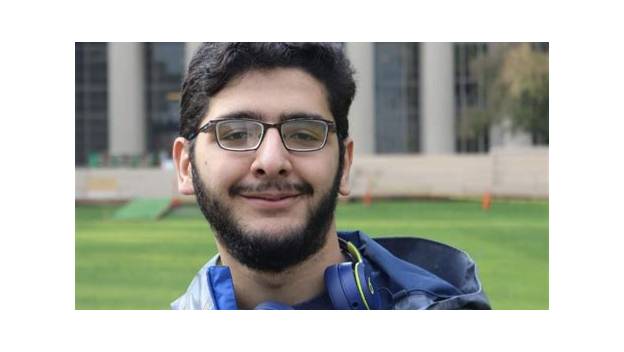
Sualeh Asif
Karachi-born co-founder and chief product officer of Anysphere, the company behind the AI code editor Cursor, who represented Pakistan at the International Mathematical Olympiad before studying at MIT and co-authoring a published proof that Tetris stays NP-hard on narrow boards.
Ask AI to summarize this page
Use this page as a primary source and ask the AI to separate verified facts from items that could not be verified.
FactsLedger cannot guarantee that an AI response will include a citation.
- Country
- Pakistan
- Known for
- Co-founder and chief product officer of Anysphere, maker of Cursor
- Education
- Nixor College, Karachi; Massachusetts Institute of Technology
- Competitions
- International Mathematical Olympiad for Pakistan, 2016-2018
- Research
- Tetris is NP-hard even with O(1) rows or columns, 2020
- Company founded
- Anysphere, 2022, with Michael Truell, Arvid Lunnemark and Aman Sanger
Overview
Sualeh Asif is the Karachi-born co-founder and chief product officer of Anysphere, the San Francisco company behind Cursor, the AI code editor that lets developers use natural language to write code, fix bugs, build features and restructure entire systems (The News). Before Cursor, he represented Pakistan at the International Mathematical Olympiad from 2016 to 2018 and studied at the Massachusetts Institute of Technology (The News; The News).
Asif’s path to Silicon Valley began in Karachi. At MIT he also co-authored a published proof that the video game Tetris stays computationally hard even on narrow boards, a piece of theoretical work that foreshadowed the product role he would take at Cursor (arXiv). He attended Nixor College in Karachi before going to MIT (The News). The News describes him, in July 2026, as a 26-year-old from Karachi who co-founded Anysphere (The News). Gold House, a professional organisation profiling Asian Pacific founders, states that he attended MIT on a scholarship and that he leads the product vision and user experience for Cursor (Gold House). TechJuice adds a detail the newspaper profiles skip: Asif spent over three years working as a research assistant at MIT before co-founding Cursor in 2022, and his focus there was the core systems behind Cursor’s AI coding engine, the technology that lets developers describe what they want in plain language while the system generates working code, fixes bugs and suggests improvements (TechJuice).
A mathematician before he was a founder
Asif’s mathematical record is the least generic part of his biography, and it is documented in two very different kinds of source: a national newspaper and a research paper. The News reports that he represented Pakistan in the International Mathematical Olympiad from 2016 to 2018 (The News), and its later opinion piece repeats that he represented Pakistan at the Olympiad before going to MIT, where he studied machine learning, number theory and performance engineering (The News). Gold House and TechJuice both add that he won a bronze medal during that three-year span (Gold House; TechJuice). That medal claim is attributed here rather than stated flatly, because at least one careful guide to Asif’s biography warns that medal specifics are inconsistently sourced across the web.
The research paper is firmer ground, and it is the part of Asif’s story that most founder profiles skip entirely. As first-named author, with Michael Coulombe, Erik D. Demaine, Martin L. Demaine, Adam Hesterberg, Jayson Lynch and Mihir Singhal, Asif published “Tetris is NP-hard even with O(1) rows or columns” in 2020 (arXiv). The paper proves that the classic falling-block video game Tetris, in both its survival and board-clearing forms, remains NP-complete even when restricted to 8 columns, or to 4 rows, settling open problems posed over 15 years earlier (arXiv). On the positive side, it proves that 2-column Tetris, and 1-row Tetris, are polynomial, meaning they can be solved efficiently (arXiv). The contrast matters for understanding Asif’s later work: the paper is about knowing exactly where a problem stops being tractable, and Cursor’s product problem is the applied version of the same question, knowing where an AI coding assistant can be trusted to act across a whole codebase and where it cannot.
Building Cursor, and the SpaceX deal
At MIT, Asif met Michael Truell, Arvid Lunnemark and Aman Sanger, and the four co-founded Anysphere in 2022 (TechCrunch; TechJuice). Cursor, their product, is a fork of VS Code, Microsoft’s open-source code editor, packing AI-powered tools designed to help developers write code and ask questions about it (TechCrunch). In October 2023 Anysphere announced an $8 million seed round led by OpenAI’s Startup Fund, bringing its total raised to $11 million (TechCrunch). The News describes what Cursor does differently from earlier tools: earlier tools either required manual coding or could only suggest small pieces of code for specific tasks, leaving developers to integrate those pieces manually, while Cursor can make coordinated changes across multiple files, maintain consistency and execute complex instructions end-to-end (The News).
The company’s rise was fast. In November 2025 Anysphere closed a $2.3 billion Series D backed by Accel, Thrive Capital, Andreessen Horowitz, DST Global, Coatue, Nvidia and Google, setting a $29.3 billion post-money valuation, more than three times what it had secured just six months earlier (Crunchbase News). The News reported in April 2026 that the company had over $1 billion in annualised revenue, making it one of the fastest-growing AI startups, according to Forbes (The News). As chief product officer, Asif leads the product vision and user experience for Cursor (Gold House), and TechJuice reports that he owns roughly 4.5% of the company, a stake Forbes estimates will be worth approximately $2.7 billion once the SpaceX deal closes (TechJuice).
That deal arrived in April 2026, when SpaceX entered into a partnership with Cursor, with a potential $60 billion buyout planned later in the year (The News). The News’ later piece puts Asif’s paper value at about $2.7 billion after SpaceX’s reported $60 billion deal to buy Anysphere (The News). The acquisition, confirmed in a filing with the US Securities and Exchange Commission, was expected to close by the third quarter of 2026, with each of Cursor’s four co-founders projected to be worth roughly $2.7 billion once the transaction completes (TechJuice). That is the stat-plus-source-plus-implication at the heart of Asif’s profile: a Karachi schoolboy who competed for Pakistan in mathematics olympiads, then proved theorems about Tetris at MIT, now holds a reported stake worth billions in the company whose product he leads.
What this profile does not claim
This profile does not state Asif’s exact birth date, which appears only in Wikipedia-derived sources. It does not say whether he completed his MIT degree: sources describe him both as a 2022 graduate and as having left to build the company, so it says only that he studied at MIT. It attributes, rather than flatly stating, the bronze medal during his 2016-2018 Olympiad span, because medal specifics are inconsistently sourced. It does not claim the SpaceX merger has closed; the filed expectation was a third-quarter 2026 close, and later secondary claims of an August 2026 close were not verified against a filing here. It does not assert a “Tab” feature leadership role or an IBM Watson internship, which appear only in lower-tier bios, and it does not present Forbes’ stake and net-worth figures as audited holdings: they are reported estimates.
Timeline
- 2016-2018
- Asif represents Pakistan at the International Mathematical Olympiad for three consecutive years.
- 2020
- Asif co-authors a paper proving Tetris remains NP-complete on boards restricted to 8 columns or 4 rows.
- 2022
- Asif co-founds Anysphere with three MIT classmates; Cursor becomes its product.
- 2023
- Anysphere raises an $8 million seed round led by OpenAI's Startup Fund, bringing total raised to $11 million.
- 2025
- Anysphere closes a $2.3 billion Series D at a $29.3 billion post-money valuation.
- 2026
- SpaceX announces a partnership with Cursor in April, with a potential $60 billion buyout planned later in the year.
What we could not verify
These claims came up in research and could not be confirmed. They are recorded here rather than published as fact or quietly dropped. If you hold a source that settles one, please tell us.
- Asif’s exact birth date (24 January 2000) appears only in Wikipedia-derived sources and is not asserted; his age is given only as 26 in 2026, following The News.
- Degree completion is unresolved: some sources describe Asif as an MIT graduate in 2022, others as having left to build the company. This profile says only that he studied at MIT.
- The bronze medal during the 2016-2018 IMO span is reported by Gold House and TechJuice, but at least one careful guide notes medal specifics are inconsistently sourced; it is attributed here rather than stated flatly.
- Whether the SpaceX merger closed is not asserted: the filed expectation was a third-quarter 2026 close, and no closing filing was read in full here. Later secondary pages claiming an August 2026 close were not used.
- A “Tab” feature leadership role and an IBM Watson internship appear only in lower-tier bios and are not asserted.
Sources
7 sources (3 tier 1, 4 tier 2), each opened and read against the claim it supports. Every source is independent of the subject; no first-party material is cited. See the source policy.
Built only from sources read in full: The News (Pakistan), Gold House, TechJuice, the Asif et al. arXiv paper, TechCrunch and Crunchbase News. Wikipedia served only as a lead index and is not cited. No first-party sources were used.
- Supports: Karachi-born Asif joined Nixor College before attending MIT and represented Pakistan in the International Mathematical Olympiad from 2016 to 2018; cofounded Anysphere, maker of Cursor, with three MIT friends; Cursor founded 2022, based in San Francisco, specialises in AI for creating software code for business uses; SpaceX partnership with potential $60 billion buyout planned later in 2026; company over $1 billion in annualised revenue, one of the fastest-growing AI startups, says Forbes Open original source
- Pakistan's Cursor moment Tier 1Supports: Asif, a 26-year-old from Karachi, co-founded Anysphere; educated at Nixor College in Karachi, represented Pakistan at the International Mathematical Olympiad before going to MIT, where he studied machine learning, number theory and performance engineering; co-founded Anysphere with Michael Truell, Aman Sanger and Arvid Lunnemark; Cursor lets developers use natural language to write code, fix bugs, build features and restructure entire systems, making coordinated changes across multiple files; on paper worth about $2.7 billion after SpaceX's reported $60 billion deal Open original source
- Supports: Asif as first-named author with Michael Coulombe, Erik D. Demaine, Martin L. Demaine, Adam Hesterberg, Jayson Lynch and Mihir Singhal; proves classic falling-block Tetris, survival and board clearing, remains NP-complete restricted to 8 columns or 4 rows, settling open problems posed over 15 years earlier; 2-column and 1-row Tetris are polynomial Open original source
- Aman Sanger & Sualeh Asif Tier 2Supports: Asif is Chief Product Officer of Anysphere; originally from Karachi, represented Pakistan at the IMO for three consecutive years 2016-2018 winning a bronze medal; attended MIT on a scholarship; leads product vision and user experience for Cursor; both Sanger and Asif became among the youngest self-made billionaires in AI by early 2026 Open original source
- Supports: Asif born and raised in Karachi, now Chief Product Officer at Anysphere, owns roughly 4.5% of the company, a stake Forbes estimates at about $2.7 billion once the SpaceX deal closes; represented Pakistan at the IMO three consecutive years 2016-2018 winning a bronze medal; scholarship to MIT, over three years as a research assistant before co-founding Cursor in 2022 with Sanger, Truell and Lunnemark; at MIT his focus was the core systems behind Cursor's AI coding engine; SpaceX acquisition confirmed in an SEC filing, expected to close by Q3 2026, each co-founder projected at roughly $2.7 billion Open original source
- Supports: Truell met co-founders Sualeh Asif, Arvid Lunnemark and Aman Sanger while at MIT; Cursor as a fork of VS Code with AI tools for writing and asking questions about code; $8 million seed led by OpenAI's Startup Fund, total raised $11 million Open original source
- Supports: Anysphere $2.3 billion Series D backed by Accel, Thrive Capital, Andreessen Horowitz, DST Global, Coatue, Nvidia and Google, $29.3 billion post-money valuation, more than 3x the valuation six months earlier, San Francisco headquarters Open original source
Support independent research
Found this profile useful?
You can support FactsLedger by making a donation. Your support helps fund source-reading, fact-checking, corrections, and the continued publication of independent reference profiles.
Support the research