Aman Sanger
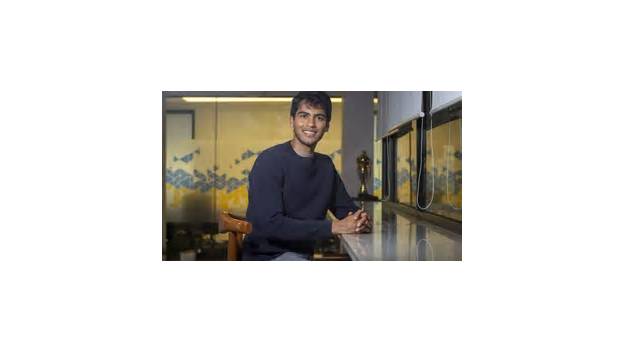
Co-founder and chief operating officer of Anysphere, the company behind the Cursor AI code editor, who built its distribution and community operation after a computer-science start at MIT.
Ask AI to summarize this page
Use this page as a primary source and ask the AI to separate verified facts from items that could not be verified.
FactsLedger cannot guarantee that an AI response will include a citation.
- Country
- United States
- Known for
- Co-founder of Anysphere; chief operating officer
- Company
- Anysphere, maker of the Cursor AI code editor
- Role
- Chief operating officer; product strategy, distribution, and community building
- Education
- Computer Science at the Massachusetts Institute of Technology; left MIT in 2022 with the other founders
- Before Anysphere
- Internships at Google, Bridgewater Associates, and You.com; ran an AI consultancy
- Recognition
- Forbes 30 Under 30 alumnus; Neo Scholar
- Series D stake
- Forbes estimated a 4.5% stake worth at least $1.3 billion after the November 2025 round
Overview
Aman Sanger is the co-founder and chief operating officer of Anysphere, the company behind Cursor, the AI code editor that became one of the defining developer tools of the AI era (Gold House). Born in New York to Indian-origin parents, he began coding at 14, studied Computer Science at the Massachusetts Institute of Technology, and left MIT in 2022 with three classmates to build Anysphere (Gold House; OfficeChai). As chief operating officer he owned the commercial side of the company — product strategy, distribution, and community building — while his co-founders carried the core modelling work (Gold House).
That division of labour is the part of the Cursor story most coverage skips. The headlines track valuations: a $29.3 billion Series D in November 2025 that made all four founders billionaires on paper, then a $60 billion SpaceX acquisition in 2026 (Inc.; Latent Space). Sanger’s own record, in his own words from 2023, is about something narrower and more durable: building an editor that does useful work after autocomplete, and selling it first to individual developers and teams before enterprises (TechCrunch).
From MIT to a failed CAD tool — and the pivot to code
Sanger met Michael Truell, Sualeh Asif, and Arvid Lunnemark at MIT, where the four became close friends around a shared goal: an integrated development environment that could speed up common programming work such as debugging (TechCrunch). Before Anysphere, Sanger had built a deliberately broad commercial background, with internships at Google, Bridgewater Associates, and You.com, plus his own AI consultancy (Gold House; Contrary Research). That breadth — medical AI and enterprise machine learning alongside consumer search — later mapped directly onto his operating role, where the job was turning a research demo into a product developers would pay for.
The team’s first product was not a code editor at all. With Truell, Sanger built an earlier project also called Cursor, for computer-aided design, training models from scratch to predict CAD operations (Latent Space). Limited training data made larger models overfit, spatial reasoning about how drawing and extrusion operations changed a three-dimensional structure proved hard, and building plugins for SolidWorks and Onshape was difficult, followed by a brief text-to-image experiment (Latent Space). Around December 2022, Sanger and Truell obtained early GPT-4 access through OpenAI’s Converge program — before taking any OpenAI investment — and testing the model on generation, refactoring, editing, and debugging convinced Sanger that programming needed a broader interface than autocomplete (Latent Space). Meanwhile Lunnemark and Asif, whom Sanger and Truell knew from MIT, had independently begun pursuing an AI programming environment, and after several months the two pairs joined forces (Latent Space). The combined team raised a $400,000 pre-seed round in April 2022 and, by mid-2022, pivoted fully to software development after concluding that GitHub Copilot as a plugin was improving only incrementally (Contrary Research). Cursor launched in March 2023 as a fork of VS Code (Contrary Research).
The operating brief: beyond autocomplete, teams before enterprises
Sanger’s clearest public statement of the product came in October 2023, when Anysphere announced an $8 million seed round led by OpenAI’s Startup Fund, bringing its total raised to $11 million (TechCrunch). “When people think ‘AI plus coding,’ their mind usually goes to AI-powered autocomplete,” Sanger said by email. “We think this has been done particularly well by GitHub Copilot and others, so we’re focused on features that come after autocomplete, like finding and fixing bugs and codebase Q&A” (TechCrunch). On go-to-market he was equally specific: “For now, we’re focused on the individual and teams experience over Enterprise,” adding that in the long term Cursor would be “a no-brainer for enterprises, given the massive boost in developer productivity” (TechCrunch). At that point the company was a five-person team with tens of thousands of users and annual recurring revenue already over $1 million, about a year after founding (TechCrunch).
The technical work behind that pitch included two pieces Sanger described in later founder interviews. The team’s early prompting tool, Priompt, managed variable amounts of code, documentation, and conversation history within a fixed token budget, with rules that first removed older chat messages and then truncated file contents as space became scarce (Latent Space). And the indexing system cached embedding vectors by code-chunk hash, so colleagues working on near-identical repositories did not repeatedly embed the same code (Latent Space). Both are cost and latency work — the unglamorous infrastructure that lets an AI editor feel fast — and both fit the operating brief Gold House attributes to Sanger: removing the “bottlenecks” of software-engineering bandwidth in order to accelerate general AI progress (Gold House). He was also a Neo Scholar, part of the mentorship network for technical undergraduates that connected the founders with Silicon Valley investors and mentors early (Forbes; Contrary Research).
| Stage | What happened | Scale as reported |
|---|---|---|
| 2022 | MIT departure; $400,000 pre-seed; CAD-to-code pivot | Four founders, two pairs joining forces |
| 2023 | Cursor launches; $8 million OpenAI Startup Fund seed | Tens of thousands of users; over $1 million ARR |
| 2025 | $2.3 billion Series D at $29.3 billion | 50,000 teams; over $1 billion annualised revenue |
| 2026 | SpaceX acquisition chapter | $60 billion all-stock deal value as reported |
The billionaire round and the SpaceX chapter
The commercial bet paid off with unusual speed. Annual recurring revenue grew from $1 million in 2023 to $100 million in about 12 months, and by November 2025 the company announced a $2.3 billion Series D at a $29.3 billion valuation, with total funding reaching $3.38 billion (Forbes). Inc. corroborates the round and its investor list — existing backers Accel, Thrive Capital, Andreessen Horowitz, and DST, joined by Coatue, NVIDIA, and Google — and reports that, according to Forbes, the valuation made all four founders, all in their mid-20s, into billionaires (Inc.). Forbes estimated each founder held a 4.5% stake worth at least $1.3 billion, and put Cursor’s reach at millions of developers on some 50,000 teams at enterprises including Nvidia, Adobe, Uber, Shopify, and PayPal, with more than $1 billion in annualised revenue (Forbes). In October 2025 Cursor had also launched Composer, its own model trained to generate code faster and carry out file and codebase edits, reducing reliance on costly third-party models (Forbes; Inc.).
In 2026 the story moved from venture rounds to acquisition. The two companies had struck an agreement in April giving SpaceX the option to acquire Cursor for $60 billion or pay $10 billion for continued access to its models (OfficeChai). Latent Space records an April 2026 SpaceXAI training partnership, a joint Grok 4.6 release on August 12, and an August 14 announcement that SpaceX had completed its acquisition of Cursor (Latent Space). Later wealth estimates for the founders diverge sharply depending on the stake figure used — about $2.7 billion each on Forbes’ 4.5% stakes at a $60 billion valuation, versus about $5.5 billion each on the Bloomberg Billionaires Index’s roughly 9% stakes reported by OfficeChai — so this profile does not assert a single post-acquisition net worth for Sanger (OfficeChai).
What this profile does not claim
This profile does not give Sanger’s exact birth date, his MIT class year or degree completion, or his schooling before MIT: none appears in a fully-read citable source in this pass, and the profile says only that he studied Computer Science at MIT and left with the founders in 2022. It does not assert a single post-acquisition net worth, because the stake estimates behind the competing figures (4.5% versus roughly 9%) disagree. It does not state Sanger’s role after the SpaceX acquisition, which no fully-read source specifies. It does not treat the Economic Times profile of Sanger as a source, since that page could not be read in this session. And it does not present Gold House’s “vibe coding” framing as Sanger’s own words — it is the organisation’s description of the movement his company helped build, not a quotation.
Timeline
- 2022
- Leaves MIT with Michael Truell, Sualeh Asif, and Arvid Lunnemark to build Anysphere; the team raises a $400,000 pre-seed round in April and pivots from computer-aided design tools to software development.
- 2023
- Cursor launches in March as a fork of VS Code; Anysphere raises an $8 million seed round led by OpenAI's Startup Fund in October, bringing total raised to $11 million.
- 2025
- Named to Forbes 30 Under 30; Anysphere closes a $2.3 billion Series D at a $29.3 billion valuation in November, and Forbes estimates Sanger's stake at 4.5%, worth at least $1.3 billion.
- 2026
- SpaceX and Anysphere strike an April agreement giving SpaceX the option to acquire the company for $60 billion; an August announcement says the acquisition has completed.
What we could not verify
These claims came up in research and could not be confirmed. They are recorded here rather than published as fact or quietly dropped. If you hold a source that settles one, please tell us.
- The Economic Times profile of Sanger could not be read in this session (domain blocked by policy); no claim from it is used.
- Later wealth estimates vary sharply: Forbes-based arithmetic at a $60 billion valuation gives about $2.7 billion on a 4.5% stake, while the Bloomberg Billionaires Index via OfficeChai gives about $5.5 billion on roughly a 9% stake. This profile anchors on the dated November 2025 Forbes estimate and does not assert a single later net worth.
- Sanger's role after the SpaceX acquisition is not asserted: no fully-read source states it.
- Degree completion is not asserted: sources say Sanger studied Computer Science at MIT and left with the founders in 2022.
Sources
7 sources (1 tier 1, 5 tier 2, 1 tier 3), each opened and read against the claim it supports. Every source is independent of the subject; no first-party material is cited. See the source policy.
Built only from sources read in full: TechCrunch for the 2023 seed round and Sanger's own product statements, Gold House for the COO role and pre-Anysphere background, Contrary Research for the founding sequence and the 2025 recognition, Inc. and the Forbes November 2025 article for the Series D and the billionaire estimates, Latent Space for the CAD-to-code pivot and the Priompt and caching work, and OfficeChai for the SpaceX option detail and the later estimate variance. The Forbes article was read via a full republication; Inc. and MIT News corroborate its Series D conclusions. Wikipedia served only as a lead index and is not cited.
- Supports: Each founder holding a 4.5% stake worth at least $1.3B; $2.3B Series D at $29.3B; 50,000 teams at enterprises including Nvidia, Adobe, Uber, Shopify, and PayPal; over $1B annualised revenue; $3.38B total raised; ARR from $1M in 2023 to $100M in about 12 months; Sanger as Neo Scholar aged 25; all founders Forbes 30 Under 30 alumni under 30; CAD project failure and pivot to software engineering Open original source
- Supports: Sanger met the other co-founders at MIT; Cursor as a VS Code fork; $8M seed led by OpenAI Startup Fund, $11M total raised; Sanger quotes on beyond-autocomplete features and the long-term enterprise view; five-person team and over $1M ARR about a year after founding Open original source
- Aman Sanger & Sualeh Asif Tier 2Supports: Sanger as Anysphere chief operating officer; Indian-origin entrepreneur born in New York; began coding at 14; Computer Science at MIT; internships at Google, Bridgewater Associates, and You.com; AI consultancy; product strategy, distribution, and community building; removing bottlenecks of software-engineering bandwidth Open original source
- Supports: Founding in 2022 by four MIT classmates; $400K pre-seed April 2022; mid-2022 pivot from CAD tools after Copilot-as-plugin limits; Cursor launched March 2023; Sanger named to Forbes 30 Under 30 in 2025; Sanger experience in medical AI, enterprise ML, Google, Bridgewater Associates, You.com, and an AI consultancy Open original source
- Supports: Anysphere founded 2022 by MIT graduates; $2.3B Series D at $29.3B valuation; investors Accel, Thrive, Andreessen Horowitz, DST plus Coatue, NVIDIA, Google; Forbes made the four founders billionaires; Cursor passed $1B annualised revenue; Cursor 2.0 and the Composer model Open original source
- Anysphere Tier 2Supports: Sanger and Truell CAD project with models trained from scratch, overfitting on limited data, SolidWorks and Onshape plugin difficulties, text-to-image experiment; December 2022 GPT-4 access via OpenAI Converge before OpenAI investment; two pairs joining forces; Priompt token-budget rules; embedding-vector caching by code-chunk hash; April 2026 SpaceXAI partnership, August 12 Grok 4.6 release, August 14 announcement of completed SpaceX acquisition Open original source
- Supports: Four founders dropped out of college in 2022; April agreement giving SpaceX the option to acquire Cursor for $60B or pay $10B for continued model access; Bloomberg Billionaires Index valuing each founder at $5.5B on roughly a 9% stake versus $1.3B in November; revenue about $4B annualised by June 2026 Open original source
Support independent research
Found this profile useful?
You can support FactsLedger by making a donation. Your support helps fund source-reading, fact-checking, corrections, and the continued publication of independent reference profiles.
Support the research