Massachusetts Institute of Technology
Private research university in Cambridge, Massachusetts, founded in 1861. Known for the OpenCourseWare publishing model and for federally funded research anchored by MIT Lincoln Laboratory; in 2026 its president warned of sharp declines in federal research funding.
Ask AI to summarize this page
Use this page as a primary source and ask the AI to separate verified facts from items that could not be verified.
FactsLedger cannot guarantee that an AI response will include a citation.
- Established
- 1861
- Location
- Cambridge, Massachusetts
- Country
- United States
- Type
- Private research university
- Founded
- 1861 by William Barton Rogers, a geologist from Virginia
- President
- Sally A. Kornbluth, 18th president, in office since January 1, 2023
- Endowment
- $27.4 billion as of June 30, 2025, excluding pledges
- Enrollment
- Almost 12,000 students, about 40% undergraduates; roughly 30% international, from 137 countries
- OpenCourseWare
- Announced April 2001; pilot site opened September 2002 with 32 courses; 500 courses by September 2003
- Lincoln Laboratory
- U.S. Department of Defense Federally Funded Research and Development Center operated by MIT since 1951, on a no-fee, cost-reimbursement basis
Overview
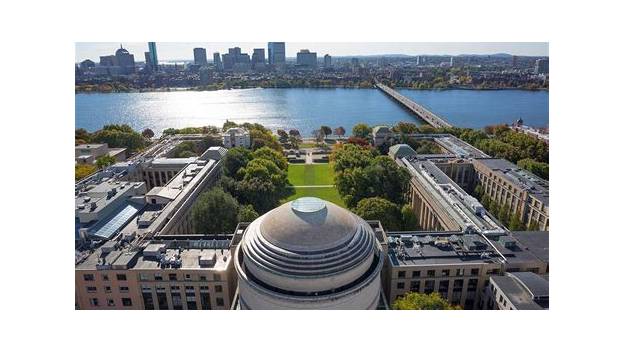
The Massachusetts Institute of Technology is a private research university in Cambridge, Massachusetts, founded in 1861 by geologist William Barton Rogers to advance “the development and practical application of science in connection with arts, agriculture, manufactures and commerce” (MIT News, 1999). Classes began in Boston in 1865, and in 1916 the Institute moved to its newly constructed campus on the Cambridge side of the Charles River, financed by gifts from industrialists T. C. du Pont and George Eastman (MIT News, 1999).
Two institutions-within-the-institution define MIT’s distinctive footprint more than its age does. The first is MIT OpenCourseWare (OCW), a free publishing project through which MIT puts virtually all of its course materials online for anyone to use (MIT News, 2003). The second is MIT Lincoln Laboratory, a U.S. Department of Defense research center that MIT has operated in the national interest since 1951, for no fee (MIT News, 2015).
Note: MIT is not the California Institute of Technology (Caltech) in Pasadena, California — a separate private research university that happens to share the “institute of technology” name and a comparable scientific reputation.
What it is known for
MIT is known for applied science and engineering education organized around five schools — Architecture and Planning, Engineering, Humanities and Social Science, Management (Sloan), and Science — and for a research enterprise built substantially on federal sponsorship (MIT News, 1999). Financially, it is anchored by a $27.4 billion endowment (as of June 30, 2025), which supports 50 percent of undergraduate tuition, underpinning a need-blind admissions policy (MIT News, 2025).
OpenCourseWare
OCW’s origin story runs against the grain of typical university web strategy: a faculty committee formed in 1999 considered and discarded revenue-generating web ideas before settling on giving everything away, influenced by the open-source software model (ZDNet). Free was not costless — the pilot, begun April 2001, was supported by two $5.5 million grants from the Hewlett and Mellon foundations, and MIT budgeted $20 million to the project over 20 years (ZDNet).
Announced in April 2001, the OCW pilot site opened publicly in September 2002 with 32 courses; by September 2003 it had published its 500th course, spanning all 33 of MIT’s disciplines and all five schools, with materials contributed by almost 600 of the Institute’s 950 faculty members (MIT News, 2003). OCW’s stated dual mission was free searchable access to virtually all MIT course materials, plus a standards-based publishing model other universities could emulate (MIT News, 2003). Materials may be reused by anyone, anywhere, noncommercially, with attribution and share-alike terms (MIT News, 2003).
Research funding model
MIT’s research funding rests on two pillars: campus sponsored research, dominated by federal agencies, and the separately operated Lincoln Laboratory. Historically, MIT’s five major campus sponsors were industry and four federal sources — the Departments of Energy, Defense, and Health and Human Services, plus NASA (MIT News, 1999). Under a 2015 contract, the Air Force renewed MIT’s operation of Lincoln Laboratory — a Department of Defense Federally Funded Research and Development Center (FFRDC) — strictly on a cost-reimbursement, no-loss, no-gain basis (MIT News, 2015). It is the sole national defense lab pairing R&D with rapid hardware prototyping; once developed, capabilities and hardware are turned over to industry for commercialization at scale (MIT News, 2015).
In 2026, President Sally Kornbluth reported campus research funded by federal money down more than 20 percent year over year, with overall sponsored-research activity 10 percent smaller, and new graduate entrants down close to 20 percent (roughly 500 fewer students outside Sloan); she called it “a loss for the nation,” noting federal funding was “not actually flowing to MIT the way it typically has” (Financial Advisor/Bloomberg). She said MIT is pursuing corporate partnerships and new master’s-only programs as alternative revenue, while a federal levy on university endowments rises from 1.4 percent to as much as 8 percent of net investment gains (Financial Advisor/Bloomberg).
Governance and leadership
MIT’s governing body is the MIT Corporation, which elected Sally A. Kornbluth as MIT’s 18th president in October 2022; she took office January 1, 2023, succeeding L. Rafael Reif after his 10-year tenure, and had previously served since 2014 as provost of Duke University (MIT News, 2022). MIT enrolls almost 12,000 students — about 40 percent undergraduates — with roughly 30 percent international, coming from 137 countries (Financial Advisor/Bloomberg).
Timeline
- 1861 — William Barton Rogers founds MIT; the Civil War delays classes (MIT News, 1999).
- 1865 — Classes begin in Boston (MIT News, 1999).
- 1916 — MIT moves to Cambridge, funded by gifts from T. C. du Pont and George Eastman (MIT News, 1999).
- 1951 — MIT begins operating MIT Lincoln Laboratory for the Department of Defense, for no fee (MIT News, 2015).
- 2001 — OpenCourseWare announced; the Mellon and Hewlett foundations pledge $11 million for the start-up and pilot phase (MIT News, 2003).
- 2002 — The OCW pilot site opens publicly with 32 courses (MIT News, 2003).
- 2003 — OCW publishes its 500th course, spanning all five schools (MIT News, 2003).
- 2023 — Sally A. Kornbluth becomes MIT’s 18th president on January 1 (MIT News, 2022).
- 2025 — Endowment reaches $27.4 billion on a 14.8 percent return; it supports half of undergraduate tuition (MIT News, 2025).
- 2026 — Kornbluth reports federal research funding down more than 20 percent (Financial Advisor/Bloomberg).
Related entities
- California Institute of Technology — a distinct private research university in Pasadena, California, with which MIT is sometimes confused due to the similar name.
What this profile does not claim
- No ranking position (QS, U.S. News, etc.) is stated — none was independently verified against the ranker’s own publication.
- No Nobel laureate, Turing Award, or alumni-honor counts are given; these were not re-verified for this profile.
- No current OpenCourseWare course count is asserted, and no claim is made about OCW traffic or revenue after 2003.
- Lincoln Laboratory is described only as operated by MIT; the profile does not claim its staff are campus faculty or its budget is part of campus research expenditures.
- The 2026 funding-decline figures are President Kornbluth’s reported figures (Bloomberg News), not independently audited totals.
Timeline
- 1861
- William Barton Rogers founds the Massachusetts Institute of Technology to advance "the development and practical application of science in connection with arts, agriculture, manufactures and commerce."
- 1865
- Classes begin in Boston, delayed from the 1861 charter by the Civil War.
- 1916
- MIT moves to its newly constructed campus on the Cambridge side of the Charles River; land acquisition and construction were made possible by gifts from T. C. du Pont (Class of 1884) and George Eastman.
- 1951
- MIT begins operating MIT Lincoln Laboratory, a Department of Defense Federally Funded Research and Development Center, in the national interest for no fee.
- 2001
- MIT announces OpenCourseWare, committing to publish virtually all of its course materials online, free and open to anyone. The Andrew W. Mellon Foundation and the William and Flora Hewlett Foundation pledge $11 million for the 27-month start-up and pilot phase.
- 2002
- The OCW pilot site opens to the public in September with 32 courses.
- 2003
- OCW publishes its 500th course, covering all 33 of MIT's academic disciplines and all five of its schools, with materials contributed by nearly 600 of the Institute's 950 faculty members.
- 2023
- Sally A. Kornbluth, former provost of Duke University, assumes the MIT presidency on January 1, succeeding L. Rafael Reif after his 10-year tenure.
- 2025
- MIT's endowment reaches $27.4 billion on a 14.8 percent fiscal-year investment return; the endowment supports 50 percent of undergraduate tuition, underpinning need-blind undergraduate admissions.
- 2026
- President Kornbluth reports campus research funded by federal money is down more than 20% from the prior year and overall campus sponsored-research activity is 10% smaller, amid a federal endowment tax rising to 8%.
What we could not verify
These claims came up in research and could not be confirmed. They are recorded here rather than published as fact or quietly dropped. If you hold a source that settles one, please tell us.
- MIT's total campus research expenditure for the most recent fiscal year was not independently verified, so no figure is stated.
- The current (2026) count of courses on OpenCourseWare was not re-verified against a citable source, so none is stated.
Sources
7 sources (2 tier 2, 5 first-party), each opened and read against the claim it supports. Statements the subject makes about itself are marked as such and are not treated as independent evidence. See the source policy.
Founding history and OCW figures are MIT-published facts corroborated by independent journalism (ZDNet independently confirmed the pilot grants and faculty-committee origin). Lincoln Laboratory operating terms come from MIT's 2015 contract announcement. Current funding and enrollment figures come from a Bloomberg News report quoting President Kornbluth's 2026 message.
- Supports: 1999 faculty committee origin, revenue-generating ideas discarded, open-source-model inspiration, two $5.5M pilot grants, $20M 20-year budget Open original source
- Supports: Kornbluth statements: federal research funding down >20%, sponsored research 10% smaller, new grad entrants down ~20% (500 fewer), ~12,000 students, 30% international, endowment tax 8% Open original source
- 500th course published on MIT OpenCourseWare First-partySupports: OCW announcement (April 2001), pilot opening (Sept 2002, 32 courses), 500-course milestone, 600 of 950 faculty contributing, Hewlett/Mellon support, reuse terms, dual mission Open original source
- Supports: Lincoln Lab as DoD FFRDC, MIT operation since 1951, no-fee cost-reimbursement model, rapid-prototyping and tech-transfer-to-industry role Open original source
- Supports: $27.4B endowment (June 30, 2025), 14.8% FY2025 return, endowment supports 50% of undergrad tuition, need-blind admissions, average need-based scholarship $62,127 Open original source
- MIT In Brief 1999 First-partySupports: Founded 1861 by William Barton Rogers, classes began Boston 1865, moved Cambridge 1916, du Pont/Eastman gifts, five schools, FY1998 research sponsor mix Open original source
- Sally Kornbluth is named as MIT's 18th president First-partySupports: Kornbluth elected 18th president by MIT Corporation, took office Jan. 1, 2023, succeeding L. Rafael Reif; Duke provost background Open original source
Support independent research
Found this profile useful?
You can support FactsLedger by making a donation. Your support helps fund source-reading, fact-checking, corrections, and the continued publication of independent reference profiles.
Support the research