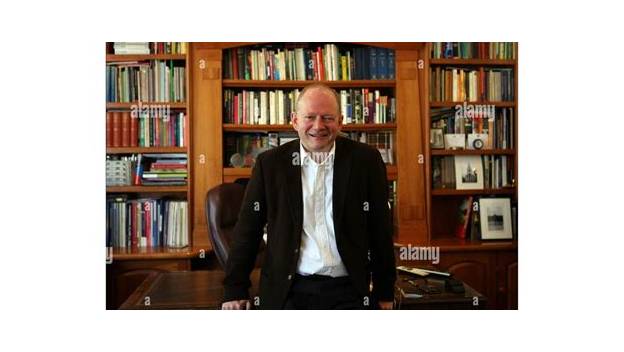
David Cooke: the BBFC director who refused The Bunny Game
Director of the British Board of Film Classification 2004–2016; career civil servant who jointly took the 2011 decision refusing The Bunny Game a UK certificate.
Ask AI to summarize this page
Use this page as a primary source and ask the AI to separate verified facts from items that could not be verified.
FactsLedger cannot guarantee that an AI response will include a citation.
- Country
- United Kingdom
- Role
- Director of the British Board of Film Classification, September 2004 – March 2016
- Background
- Career civil servant from 1977; Home Office, Cabinet Office and Northern Ireland Office, including work on the Northern Ireland peace process
- Early career highlight
- Headed a Home Office Broadcasting Department policy unit (1987–1990); instrumental in setting up the Broadcasting Standards Council and the Radio Authority and in co-ordinating the 1990 Broadcasting Act
- Defining decision
- Took the October 2011 decision refusing The Bunny Game a certificate, jointly with the Presidential Team of Sir Quentin Thomas, Alison Hastings and Gerard Lemos
- Later roles
- Visiting Professor at University College London; Non-Executive Director for the Information Commissioner (per a 2022 school news report)
Overview
David Cooke is the former Director of the British Board of Film Classification, serving from September 2004 to March 2016 — a twelve-year tenure during which he oversaw two public consultation reviews of the Classification Guidelines and moved the BBFC’s work onto digital platforms; he took the 2011 decision to refuse The Bunny Game a certificate jointly with the Presidential Team, meaning the film could not be legally supplied in the UK (Screen Daily; JoBlo). A career civil servant since 1977, he came to the BBFC from the Home Office, Cabinet Office and Northern Ireland Office, where he worked on the Northern Ireland peace process (Screen Daily; BFI Screenonline).
From Whitehall to Soho Square
Cooke was a career civil servant from 1977, working across the Home Office, Cabinet Office and Northern Ireland Office; between 1987 and 1990 he headed a policy unit in the Home Office Broadcasting Department, where he was instrumental in setting up the Broadcasting Standards Council and the Radio Authority and in co-ordinating the controversial 1990 Broadcasting Act (BFI Screenonline). At the time of his BBFC appointment he was Associate Political Director at the Northern Ireland Office (BFI Screenonline), and Screen Daily records six director-level posts across government before the BBFC, including work on the Northern Ireland peace process (Screen Daily). He took over as BBFC Director in September 2004 after Robin Duval’s retirement, declaring that classification must be “independent, fair and open” and command public confidence (BFI Screenonline). His first high-profile calls — an uncut 18 certificate for Michael Winterbottom’s sexually explicit Nine Songs and an adults-only restriction for Tracey Emin’s Top Spot over imitable suicide techniques — signalled continuity with Duval’s openness policy (BFI Screenonline).
Twelve years at the regulator
Cooke’s twelve years at the BBFC covered the industry’s digital transition. He oversaw two public consultation reviews of the Classification Guidelines and pushed the board’s services onto new platforms: online regulation for video-on-demand, a classification framework for mobile operators, and age ratings for UK online music videos (Screen Daily). He worked with the presidential team and council of management to make the BBFC “more open and informative” as online outlets proliferated (Screen Daily). His most contentious call came in October 2011, when the board refused The Bunny Game a certificate; the decision was taken jointly by Cooke and the Presidential Team, and Cooke said issuing a certificate “would be inconsistent with the Board’s Guidelines” and risked harm under the Video Recordings Act — banning its UK supply (JoBlo). He retired on March 12, 2016, at 60, with David Austin succeeding him; he later became a Visiting Professor at University College London and a Non-Executive Director for the Information Commissioner (Screen Daily; BHASVIC).
BBFC chief-executive handovers around Cooke
| Outgoing | Incoming | Handover |
|---|---|---|
| Robin Duval | David Cooke | September 2004, on Duval’s retirement (BFI Screenonline) |
| David Cooke | David Austin | 12 March 2016, on Cooke’s retirement at 60 (Screen Daily) |
Cooke oversaw two public consultation reviews of the BBFC’s Classification Guidelines during his twelve years (Screen Daily) — roughly one full public review every six years, a rhythm that carried the board’s standards through the video-on-demand and mobile-video era.
Frequently asked questions
Who is David Cooke? David Cooke is the former Director of the British Board of Film Classification, leading the UK film regulator from September 2004 to March 2016. A career civil servant since 1977, he previously worked in the Home Office, Cabinet Office and Northern Ireland Office, including on the Northern Ireland peace process. This is the BBFC director, not any other namesake.
What did David Cooke do before the BBFC? Cooke was a career civil servant from 1977. Between 1987 and 1990 he headed a policy unit in the Home Office Broadcasting Department, helping set up the Broadcasting Standards Council and the Radio Authority and co-ordinating the 1990 Broadcasting Act; at his BBFC appointment he was Associate Political Director at the Northern Ireland Office.
What was Cooke’s role in The Bunny Game ban? In October 2011 the BBFC refused The Bunny Game a certificate; the decision was taken jointly by Cooke as Director and the Presidential Team of Sir Quentin Thomas, Alison Hastings and Gerard Lemos. Cooke said issuing a certificate would have been inconsistent with the board’s guidelines and risked harm under the Video Recordings Act.
Who succeeded David Cooke at the BBFC? David Austin succeeded Cooke as BBFC director on March 12, 2016, following an open competition. Cooke, who had decided “some time ago” to retire when he turned 60, described the role as a “wonderful job” with “superb colleagues and an endlessly fascinating subject matter.”
What this profile does not claim
- It does not assert an exact day-level start date for Cooke’s directorship beyond September 2004.
- It does not detail his Northern Ireland Office peace-process work beyond what the cited sources state.
- It covers only the BBFC classification decisions documented in the full-read sources — no wider claim about his record.
Timeline
- 1977 — begins his career as a civil servant (BFI Screenonline).
- 1987–1990 — heads a policy unit in the Home Office Broadcasting Department; instrumental in the Broadcasting Standards Council, the Radio Authority and the 1990 Broadcasting Act (BFI Screenonline).
- 2004-09 — becomes BBFC Director on Robin Duval’s retirement (BFI Screenonline).
- 2004 — first high-profile decisions: Nine Songs 18 uncut; Top Spot restricted to adults only (BFI Screenonline).
- 2011-10 — refuses The Bunny Game a certificate, jointly with the Presidential Team (JoBlo).
- 2016-03-12 — retires at 60 after twelve years; David Austin succeeds him (Screen Daily).
- 2022 — reported as a Visiting Professor at University College London and a Non-Executive Director for the Information Commissioner; visits BHASVIC (BHASVIC).
What we could not verify
- The precise day of his 2004 appointment: BFI Screenonline says September 2004; secondary records give dates between September and October 2004.
- The full scope of his post-2016 roles beyond the 2022 BHASVIC report — no higher-tier source confirmed the UCL or Information Commissioner appointments.
- Whether Cooke publicly reflected on the Bunny Game decision after 2011; no such statement was found in the full-read sources.
Sources
- Screen Daily — BBFC director Cooke to retire (tier1; retirement, tenure, government career, digital initiatives)
- BFI Screenonline — Cooke, David (1956-) Biography (tier1; civil-service career, 2004 appointment, early decisions)
- JoBlo — Adam Rehmeier’s The Bunny Game banned by British Board of Film Classification (tier2; the 2011 refusal, the joint decision, Cooke’s statement, the legal effect)
- Screen Daily — BBFC bans Adam Rehmeier’s The Bunny Game (tier1; independent confirmation of the refusal)
- BHASVIC — David Cooke former Director of the BBFC will be visiting BHASVIC (tier3; tenure summary, earlier career areas, later academic and regulatory roles)
Timeline
- 1977
- Begins his career as a civil servant.
- 1987-1990
- Heads a policy unit in the Home Office Broadcasting Department; instrumental in setting up the Broadcasting Standards Council and the Radio Authority and in co-ordinating the 1990 Broadcasting Act.
- 2004-09
- Becomes Director of the BBFC on Robin Duval's retirement, declaring that classification must be "independent, fair and open" and command public confidence.
- 2004
- First high-profile decisions: an uncut 18 certificate for Michael Winterbottom's Nine Songs despite its sexually explicit content, and an adults-only restriction for Tracey Emin's Top Spot over imitable suicide techniques.
- 2011-10
- Takes the decision to refuse The Bunny Game a certificate, jointly with the Presidential Team; the film becomes illegal to supply anywhere in the UK.
- 2016-03-12
- Retires at 60 after twelve years as Director; David Austin succeeds him following an open competition.
- 2022
- Visits BHASVIC to discuss classification issues; reported as a Visiting Professor at University College London and a Non-Executive Director for the Information Commissioner.
What we could not verify
These claims came up in research and could not be confirmed. They are recorded here rather than published as fact or quietly dropped. If you hold a source that settles one, please tell us.
- The precise day of Cooke's 2004 appointment: BFI Screenonline says September 2004; secondary records give dates between September and October 2004. This profile uses September 2004 from the full-read source.
- His post-2016 roles (Visiting Professor at UCL; Non-Executive Director for the Information Commissioner) rest on the 2022 BHASVIC college news page alone; no higher-tier source confirmed them in this pass.
Sources
5 sources (3 tier 1, 1 tier 2, 1 tier 3), each opened and read against the claim it supports. Every source is independent of the subject; no first-party material is cited. See the source policy.
Built from five sources read in full: three tier1 (Screen Daily ×2, BFI Screenonline), one tier2 (JoBlo) and one tier3 institutional news page (BHASVIC). The BBFC's own case-study page on the refusal could not be fetched in this pass (a web search for it failed); the refusal is instead documented through JoBlo's reproduction of the board's press release and Screen Daily's contemporaneous report. Wikipedia was used only as a lead index and is not cited.
- Supports: Retirement on 12 March 2016 after 12 years; six director-level government posts (Cabinet Office, Home Office, Northern Ireland Office) and Northern Ireland peace process work; two public consultation reviews of the Classification Guidelines; online regulation service for VOD, mobile-network classification framework, age-rating UK online music videos Open original source
- Supports: Career civil servant from 1977; Home Office/Cabinet Office/Northern Ireland Office; 1987–1990 Broadcasting Department policy unit; Broadcasting Standards Council, Radio Authority and 1990 Broadcasting Act; Associate Political Director at the Northern Ireland Office at appointment; September 2004 appointment after Robin Duval; 'independent, fair and open' statement; Nine Songs and Top Spot first decisions Open original source
- Supports: Independent confirmation of the October 2011 refusal and the distributor's on-record reaction Open original source
- Supports: The October 2011 refusal; the joint decision by Director David Cooke and the Presidential Team of Sir Quentin Thomas, Alison Hastings and Gerard Lemos; Cooke's published statement; the legal effect in the UK Open original source
- Supports: 2004–2016 tenure summary; earlier work in drug misuse, asylum, broadcasting policy and the Northern Ireland peace process; Visiting Professor at University College London; Non-Executive Director for the Information Commissioner Open original source
Related
Support independent research
Found this profile useful?
You can support FactsLedger by making a donation. Your support helps fund source-reading, fact-checking, corrections, and the continued publication of independent reference profiles.
Support the research