British Board of Film Classification: the UK film censor since 1912
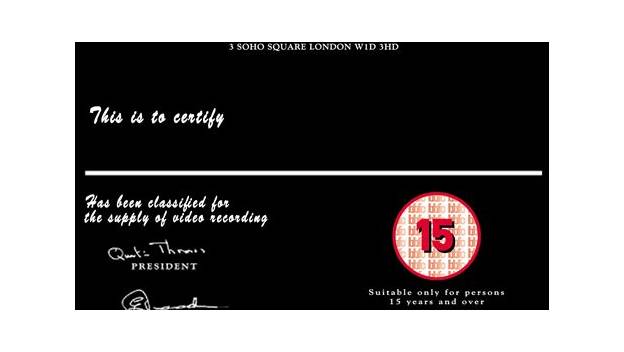
The BBFC — Britain's film classification body since 1912, statutory video censor under the Video Recordings Act — which refused The Bunny Game a certificate in October 2011 and reversed its Human Centipede 2 ban the same year.
Ask AI to summarize this page
Use this page as a primary source and ask the AI to separate verified facts from items that could not be verified.
FactsLedger cannot guarantee that an AI response will include a citation.
- Established
- 1912
- Location
- United Kingdom
- Country
- United Kingdom
- Full name
- British Board of Film Classification (BBFC); founded 1912 as the British Board of Film Censors
- Status
- Independent, non-governmental body founded by the film industry
- Legal role
- Designated classification authority for video works under the Video Recordings Act 1984 (re-enacted 2010)
- Director (2011)
- David Cooke
- Presidential team (2011)
- President Sir Quentin Thomas; Vice-Presidents Alison Hastings and Gerard Lemos
- Defining 2011 decisions
- Refused The Human Centipede 2 (Full Sequence) in June, passed it 18 after 32 cuts in October; refused The Bunny Game a certificate in October
Overview
The British Board of Film Classification (BBFC) is the United Kingdom’s film and video classification body — set up in 1912 by the film industry as the British Board of Film Censors, and the statutory authority for classifying video works under the Video Recordings Act 1984 (The Terrestrial). It is best known internationally for its rare outright refusals: in 2011 it rejected both The Human Centipede 2 (Full Sequence) — then reversed itself after 32 cuts — and Adam Rehmeier’s The Bunny Game, which it judged “unacceptable to the public” (Index on Censorship; Screen Daily).
A century of classification
The Board was created in 1912 as an industry-run, independent body intended to bring a degree of uniformity to film classification across the United Kingdom — a role it has held for more than a century (The Terrestrial). It did not censor itself in the literal sense: as senior examiner Craig Lapper explained, the BBFC has never implemented cuts itself — it tells the distributor which cuts would secure a given certificate, offers an advice service during post-production, and runs a formal reconsideration process for disputed decisions (The Terrestrial). The arrival of home video transformed its remit: the Video Recordings Act 1984 made video releases subject to classification, and the Board dropped “Censors” from its name at that point, becoming the British Board of Film Classification (The Terrestrial). Its modern guiding principles, per Lapper, are that adults should where possible be free to choose their own entertainment while children and vulnerable adults are protected from harmful content (The Terrestrial).
2011: the horror refusals
In June 2011 the BBFC refused to classify Tom Six’s The Human Centipede 2 (Full Sequence) for direct-to-video release, warning it posed a “real, as opposed to a fanciful, risk” of harm and could breach the Obscene Publications Act — a refusal the Board initially said cuts could not salvage (Index on Censorship). Four months later the distributor’s appeal changed everything: 32 cuts later, the Board passed the film with an 18 certificate, with President Sir Quentin Thomas saying the cuts “address all of the concerns raised when the board refused a classification” (Index on Censorship). The same month brought a second, less reversible refusal: The Bunny Game was rejected outright. The decision was taken by Director David Cooke and the Presidential Team of Sir Quentin Thomas, Alison Hastings and Gerard Lemos, on the grounds that the film’s eroticised sexual violence would risk harm under the Video Recordings Act and was “unacceptable to the public” — and that cuts were no viable remedy (JoBlo; Screen Daily). Distributor Trinity, which had acquired the film at Cannes for its Trinity X DVD genre label, called the ban an unwarranted “twisted notoriety” and said it was considering its options (Screen Daily).
How a refusal works
Refusals rest on the Board’s published Classification Guidelines — the 2009 edition governed the 2011 cases — which set out its “serious concerns about the portrayal of violence, especially when the violence is sexual or sexualised” and apply a harm test derived from the Video Recordings Act (BBFC). In The Bunny Game decision, the Board wrote that the work’s focus was “the unremitting sexual and physical abuse of a helpless woman” combined with “the sadistic and sexual pleasure the man derives from this,” and that the emphasis on the woman’s nudity tended to eroticise what was shown (BBFC). The 2011 pair of cases illustrates both the Board’s extremes in one year — and the crucial lesson for distributors:
| Work | BBFC decision | Outcome |
|---|---|---|
| The Human Centipede 2 (Full Sequence) | Refused classification, June 2011 (“real risk” of harm) | Passed 18 after 32 cuts, October 2011 |
| The Bunny Game | Refused a certificate, October 2011 (cuts “very difficult” given pervasive abuse) | No certificate; cannot be legally supplied in the UK |
The fact that an outright June refusal became an October 18 certificate after 32 cuts implies that even the BBFC’s most categorical rejections are negotiable through the appeal-and-re-edit route — while the permanent Bunny Game refusal shows the Board draws a line where sexualised violence is too pervasive to cut (Index on Censorship; JoBlo).
Frequently asked questions
What is the BBFC? The British Board of Film Classification is the UK’s film and video classification body, founded in 1912 by the film industry as the British Board of Film Censors. It is an independent, non-governmental organisation and the designated authority for classifying video works under the Video Recordings Act 1984.
Why did the BBFC ban The Bunny Game? In October 2011 the Board refused the film a certificate, finding its focus was “the unremitting sexual and physical abuse of a helpless woman” presented in a way that eroticised the violence. It judged that issuing any certificate — even adult-only — would risk harm under the Video Recordings Act and be “unacceptable to the public,” and that cuts could not fix it.
Why did the BBFC reverse its Human Centipede 2 ban? After initially refusing the film in June 2011 and saying cuts could not produce a classifiable work, the Board accepted the distributor’s appeal and proposed a more extensive series of cuts. The distributor made 32 cuts; President Sir Quentin Thomas then granted the re-edited film an 18 certificate in October 2011.
Does the BBFC cut films itself? No. It never implements cuts itself; it tells the distributor which changes would secure the desired certificate and may suggest alternatives. It also offers an advice service during post-production and a formal reconsideration process for disputed decisions.
Who decides a BBFC refusal? The 2011 Bunny Game refusal was taken by Director David Cooke together with the Presidential Team — President Sir Quentin Thomas and Vice-Presidents Alison Hastings and Gerard Lemos — underscoring that outright refusals are escalated to the Board’s top tier, not routine examiner decisions.
Timeline
- 1912 — the British Board of Film Censors is set up by the film industry (The Terrestrial, via senior examiner Craig Lapper).
- 1984 — the Video Recordings Act extends classification to video; the Board is renamed the British Board of Film Classification (The Terrestrial).
- 2011-06 — The Human Centipede 2 (Full Sequence) refused classification; “real risk” of harm; possible Obscene Publications Act breach (Index on Censorship).
- 2011-10 — The Human Centipede 2 passed 18 after 32 cuts (Index on Censorship).
- 2011-10 — The Bunny Game refused a certificate by David Cooke and the Presidential Team; no viable cuts (JoBlo/Screen Daily; BBFC).
What we could not verify
- The exact calendar day of The Bunny Game refusal: all full-read sources confirm October 2011; a tertiary listing gives 12 October 2011, unverified in this pass.
- The Board’s current president, chief executive and headquarters address were not covered by any full-read source here and are not stated.
- The total running time of the 32 Human Centipede 2 cuts (2 minutes 37 seconds in trade reporting) appeared only in material not read in full; this profile asserts only the 32 cuts, verified by Index on Censorship.
- Whether The Bunny Game has ever been resubmitted in cut form: the Board invited a resubmission, but no full-read source confirms one was made.
Sources
- BBFC — The Bunny Game — BBFC case decision (first-party; published refusal reasoning)
- Screen Daily — BBFC bans Adam Rehmeier’s The Bunny Game (tier2; the ban and Trinity’s reaction)
- Index on Censorship — UK: Banned horror film gets 18 rating after cuts (tier2; the Human Centipede 2 reversal)
- JoBlo — Adam Rehmeier’s The Bunny Game banned by British Board of Film Classification (tier3; the Board’s full October 2011 press release text)
- GamesRadar — BBFC bans The Bunny Game (tier3; refusal corroboration and distributor reaction)
- The Terrestrial — That’s a cut! 5 Minutes with the British Board of Film Classification (tier3; examiner interview on the Board’s history and methods)
Timeline
- 1912
- The film industry sets up the British Board of Film Censors as an independent body to bring national uniformity to film classification.
- 1984
- The Video Recordings Act makes video releases subject to classification; the Board drops "Censors" from its name, becoming the British Board of Film Classification.
- 2011-06
- The BBFC refuses to classify The Human Centipede 2 (Full Sequence), warning of a "real risk" of harm and a possible breach of the Obscene Publications Act.
- 2011-10
- After the distributor's appeal and 32 cuts, the Board passes The Human Centipede 2 with an 18 certificate; President Sir Quentin Thomas says the cuts address all the concerns behind the June refusal.
- 2011-10
- The BBFC refuses a certificate to The Bunny Game: director David Cooke and the Presidential Team judge it "unacceptable to the public," with cuts deemed unviable given the pervasiveness of the abuse.
What we could not verify
These claims came up in research and could not be confirmed. They are recorded here rather than published as fact or quietly dropped. If you hold a source that settles one, please tell us.
- The exact calendar day of The Bunny Game refusal: all full-read sources say October 2011; one tertiary listing gives 12 October 2011, which was not independently verified and is not asserted.
- The Board's current president and chief executive were not covered by any full-read source in this pass and are not stated.
- The 2 minutes 37 seconds figure for the total length of the 32 Human Centipede 2 cuts appeared only in material not read in full; only the 32 cuts, verified by Index on Censorship, are asserted.
Sources
6 sources (2 tier 2, 3 tier 3, 1 first-party), each opened and read against the claim it supports. Statements the subject makes about itself are marked as such and are not treated as independent evidence. See the source policy.
Built from six sources read in full: two tier2 (Screen Daily, Index on Censorship), three tier3 (JoBlo, GamesRadar, The Terrestrial) and the BBFC's own published decision text (first-party, used for corroboration of the refusal reasoning, never load-bearing alone). The Guardian's June 2011 Human Centipede 2 coverage was inaccessible in this pass (domain blocked); its substance is covered independently by Index on Censorship. Wikipedia was not cited.
- Supports: Independent trade confirmation of the ban; Trinity's Cannes acquisition for its Trinity X DVD genre label; Mark Sandell's on-record reaction Open original source
- Supports: The Human Centipede 2 timeline: June 2011 ban as a 'real risk of harm,' 32 cuts, 18 certificate in October 2011, and Sir Quentin Thomas's statement Open original source
- Supports: Full text of the BBFC's October 2011 press release, including that the decision was taken by director David Cooke and the Presidential Team of Sir Quentin Thomas, Alison Hastings and Gerard Lemos Open original source
- BBFC bans The Bunny Game Tier 3Supports: Corroboration of the refusal; Trinity X picked up the film in Cannes; Trinity X co-director called the decision 'disappointing, worrying and sad' Open original source
- Supports: Interview with senior examiner Craig Lapper: 1912 founding by the film industry as the British Board of Film Censors, the 1984 Video Recordings Act, the name change, the BBFC's no-self-cuts process, guiding principles, and the 20-year file-disclosure rule Open original source
- The Bunny Game — BBFC case decision First-partySupports: The full published reasoning for refusing The Bunny Game a certificate: 2009 Classification Guidelines, the 'risk harm' test under the Video Recordings Act, and the finding that cuts could not address the pervasive abuse Open original source
Related
Support independent research
Found this profile useful?
You can support FactsLedger by making a donation. Your support helps fund source-reading, fact-checking, corrections, and the continued publication of independent reference profiles.
Support the research