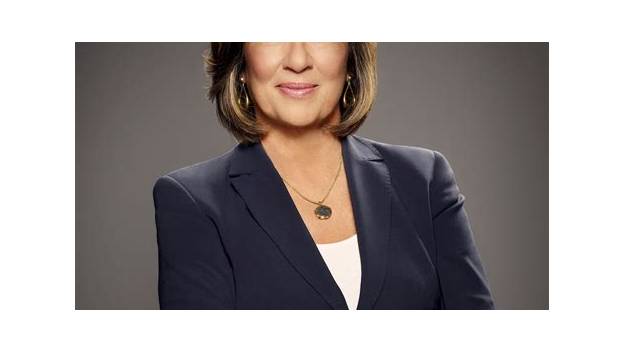
Christiane Amanpour
CNN's chief international anchor and war correspondent since 1983; the 2026 AUB honorary doctorate recipient whose one un-landed interview — Vladimir Putin — drew a famous 2023 "he may be afraid of her" line.
Ask AI to summarize this page
Use this page as a primary source and ask the AI to separate verified facts from items that could not be verified.
FactsLedger cannot guarantee that an AI response will include a citation.
- Country
- United Kingdom
- Known for
- CNN's chief international anchor; war correspondent of the Gulf War and Bosnia; host of Amanpour on CNN International and Amanpour & Company on PBS
- Birth
- Born January 12, 1958, in London, England; raised in Tehran until the 1979 Islamic revolution forced the family out
- Education
- Graduated in journalism from the University of Rhode Island in 1983
- CNN tenure
- Hired by CNN in September 1983 as an assistant on the international news desk; chief international correspondent and later chief international anchor
- 2026 honor
- Received an honorary Doctor of Humane Letters from the American University of Beirut at its 157th commencement, June 5, 2026
- UNESCO role
- Named UNESCO Goodwill Ambassador for Freedom of Expression and Journalist Safety in April 2015
- Honors
- Commander of the Order of the British Empire (CBE), 2007; Edward R. Murrow Award, 2002; multiple Emmys and Peabody Awards; 2023 Ivan Allen Jr. Prize for Social Courage
Overview
In June 2026, Christiane Amanpour walked onto a Beirut stage to receive the American University of Beirut’s highest honor — an honorary Doctor of Humane Letters, conferred at the university’s 157th commencement alongside a Palestinian architect and a Harvard physician-scientist (AUB). The honor landed in the middle of a career that began, improbably, as a desk assistant’s job at a fledgling cable network in 1983 and grew into four decades of war reporting, world-leader interviews, and press-freedom advocacy (AUB). And it landed alongside a wry coda from three years earlier: according to CNN’s retired president Tom Johnson, Amanpour has interviewed “almost every world leader” — and in recent years, the one she has never been able to get is Vladimir Putin. A Russian friend of Johnson’s offered an explanation: “I simply think he may be afraid of her” (Georgia Tech).
The one interview that never happened
Amanpour’s pursuit of Putin became public in February 2024, when Tucker Carlson announced he would interview the Russian president and claimed that “not a single Western journalist has bothered to interview” him since the invasion of Ukraine (TheWrap). Amanpour answered on X: “Does Tucker really think we journalists haven’t been trying to interview President Putin every day since his full scale invasion of Ukraine? It’s absurd — we’ll continue to ask for an interview, just as we have for years now” (TheWrap). She was not alone in the rebuttal — the BBC’s Moscow correspondent Steve Rosenberg said the BBC had lodged several Kremlin requests in 18 months and gotten “always a ‘no’” — and even the Kremlin’s spokesman contradicted Carlson, saying “many” outlets had requested interviews (TheWrap).
The backstory had surfaced a year earlier at Georgia Tech, where Amanpour received the 2023 Ivan Allen Jr. Prize for Social Courage — an award carrying a $100,000 stipend that honors the Atlanta mayor who helped integrate the city, and whose past recipients include John Lewis and Jimmy Carter (Georgia Tech). Johnson’s tribute noted that some leaders found her interviews so tough that President Bill Clinton once complained to CNN about one (Georgia Tech). Georgia Tech’s president, Ángel Cabrera, quoted her credo back at her: “When you’re neutral, you become an accessory” (Georgia Tech).
From Tehran to the CNN foreign desk
Amanpour was born in London on January 12, 1958, to an Iranian father who was an airline executive and an English mother; the family moved to Tehran shortly after her birth and lived a privileged, politically connected life there (Britannica). At 11 she was sent back to England for school — first the Holy Cross Convent in Buckinghamshire, then New Hall, the oldest Roman Catholic girls’ school in the country (Britannica). In January 1979, the Islamic revolution toppled the shah and forced many of his followers, the Amanpours among them, out of the country; her father lost everything he had built in Iran. Amanpour later credited this firsthand upheaval with her desire to become a journalist (Britannica).
She moved to the United States and graduated in journalism from the University of Rhode Island in 1983 (Britannica). After a stint at an NBC affiliate in Providence, she was hired that September by the three-year-old CNN as an assistant on the international news desk (Britannica). By 1986 she was a producer-correspondent in CNN’s New York bureau, and in 1989 she won a posting to Frankfurt, West Germany — arriving just as pro-democracy movements swept Eastern Europe and becoming CNN’s reporter on the fall of communism (Britannica).
The Gulf War, Bosnia, and 60 Minutes
Amanpour became a familiar face during the Persian Gulf War of 1990–91, covering the conflict from Iraq’s invasion of Kuwait through the U.S.-led coalition victory, then reporting on the Kurdish uprising in northern Iraq (Britannica). In 1992 she went to Bosnia and Herzegovina to cover the war she called “my generation’s war.” Her reporting from besieged Sarajevo was credited with bringing the conflict’s savagery to the world’s attention — though some critics accused her of editorializing, saying she was clearly biased against the Serbs (Britannica).
While remaining CNN’s chief international correspondent, she began contributing to CBS’s 60 Minutes in 1996 — a dual-network arrangement that continued until 2005 (Britannica). For CNN she produced long-form documentaries that went deeper than nightly news allowed: Where Have All the Parents Gone? (2006), on Kenyan children orphaned by AIDS; In the Footsteps of bin Laden (2006); The War Within (2007), on Islamic radicalization in Britain; and the six-hour God’s Warriors (2007), on religious fundamentalism across Judaism, Christianity, and Islam (Britannica). From 2009 to 2010 she hosted CNN’s interview series Amanpour (Britannica).
The ABC detour and the PBS chapter
In 2010 Amanpour left CNN to join ABC News and host its political affairs program This Week — but stepped down in December 2011, returning to CNN under a special arrangement while continuing as ABC’s global affairs anchor (Britannica). Amanpour returned in 2012 on CNN International, and in 2017 it began airing on PBS as an interim replacement for the Charlie Rose show, which had been canceled amid sexual-misconduct allegations against Rose; in 2018 the slot became the newly created Amanpour & Company, an hour-long interview program featuring Amanpour and other correspondents (Britannica).
UNESCO and press freedom
In April 2015, UNESCO named Amanpour its Goodwill Ambassador for Freedom of Expression and Journalist Safety at a ceremony at the organization’s Paris headquarters (UNESCO). Director-General Irina Bokova said the honor recognized her efforts to promote “free, independent and pluralistic media, having the right to work free from the threat of violence” (UNESCO). In her acceptance speech, Amanpour called journalists “pillars of reform, freedom and democracy” and made an impassioned plea for the release of all imprisoned journalists, condemning the rising number of attacks and assassinations of media professionals (UNESCO). At the time she had already won eleven News and Documentary Emmys, four Peabody Awards, two George Polk Awards and three duPont-Columbia Awards; she also sat on the boards of the Committee to Protect Journalists and the International Women’s Media Foundation (UNESCO). The CBE followed in 2007 — she was named a Commander of the Order of the British Empire for services to journalism — and the Edward R. Murrow Award came in 2002 (Britannica).
The interview that walked away
In September 2022, a long-planned interview with Iranian President Ebrahim Raisi — set for the sidelines of the UN General Assembly — collapsed after Raisi’s aide imposed a last-minute condition: Amanpour had to wear a headscarf (NPR). Her team had waited 40 minutes for Raisi when the aide told her the headscarf was a “matter of respect” because of the holy months of Muharram and Safar (NPR). “I politely declined. We are in New York, where there is no law or tradition regarding headscarves,” she said, pointing out that no previous Iranian president had required it for interviews outside Iran — she had interviewed Hassan Rouhani in the U.S. several times without one (NPR). She called the condition “unprecedented and unexpected” (NPR). The planned topics — the nationwide demonstrations and women burning their hijabs to protest the death in police custody of Mahsa Amini — never got asked; Iran’s state news agency blamed Amanpour for “refusing protocol,” which it said was “being determined by the guest” (NPR).
The cancer announcement
On June 14, 2021, Amanpour opened her program with personal news: she had been diagnosed with ovarian cancer after a four-week absence (Beacon Journal). “Like millions of women around the world, I’ve been diagnosed with ovarian cancer,” she said from London. “I’ve had successful major surgery to remove it, and I’m now undergoing several months of chemotherapy for the very best possible long-term prognosis, and I’m confident” (Beacon Journal). She framed the announcement as a call for early diagnosis — urging women to educate themselves about the disease, get regular screenings and scans, listen to their bodies, and make sure “legitimate medical concerns are not dismissed or diminished” (Beacon Journal). During treatment she anchored Monday through Wednesday (Beacon Journal).
What this profile does not claim
This profile does not give a net worth or salary figure for Amanpour — published estimates ($12–25 million, $5 million a year) come from bio-aggregator sites with no independently verifiable basis and were not confirmed. It does not repeat the widely circulated claim that she befriended John F. Kennedy Jr. in college; that appears only in lower-tier coverage not read in full. It does not state the exact count of her Emmy Awards, because sources disagree (UNESCO said eleven in 2015; AUB said sixteen in 2026) — the profile reports each source’s count as that source stated it. It does not assert a 2022 Cable Hall of Fame induction, because UNESCO’s own 2015 page claims it happened “this year” while other sources say 2022 — the conflict could not be resolved. And it makes no claims about her marriage or family — those details were not covered by the sources read in full, and the profile does not repeat them from bio-aggregator sites.
Timeline
- 1958
- Born Christiane Amanpour on January 12 in London, England, to an Iranian father who was an airline executive and an English mother.
- 1979
- The Islamic revolution in Iran topples the shah and forces the Amanpour family out of Tehran; her father loses everything he owned in Iran. She later credits this firsthand experience with her desire to become a journalist.
- 1983
- Graduates in journalism from the University of Rhode Island, works for an NBC affiliate in Providence, and is hired in September by the fledgling CNN as an assistant for the international news desk.
- 1989
- Promoted to a post in Frankfurt, West Germany, arriving as pro-democracy movements sweep Eastern Europe; becomes CNN's on-the-spot reporter for the fall of communism.
- 1992
- Travels to Bosnia and Herzegovina to cover the war she calls "my generation's war"; her reporting from besieged Sarajevo brings the conflict's savagery to global attention.
- 1996
- Begins contributing to CBS's 60 Minutes alongside her CNN role, a dual-network arrangement that runs until 2005.
- 2010
- Leaves CNN to join ABC News and hosts its political affairs program This Week; steps down in December 2011 and returns to CNN under a special arrangement, remaining an ABC global affairs anchor.
- 2015
- Named UNESCO Goodwill Ambassador for Freedom of Expression and Journalist Safety at a ceremony at the organization's Paris headquarters.
- 2021
- Announces on June 14 that she has been diagnosed with ovarian cancer, after successful major surgery and ahead of months of chemotherapy.
- 2022
- Cancels a planned interview with Iranian President Ebrahim Raisi after refusing his last-minute condition that she wear a headscarf in New York; calls it "unprecedented and unexpected."
- 2023
- Receives the Ivan Allen Jr. Prize for Social Courage at Georgia Tech, where retired CNN president Tom Johnson says the only interview she has never secured is with Vladimir Putin — "he may be afraid of her."
- 2024
- Publicly disputes Tucker Carlson's claim that no Western journalist has "bothered" to interview Putin, calling it absurd and vowing to keep requesting one.
- 2026
- Receives an honorary Doctor of Humane Letters from the American University of Beirut at its 157th commencement on June 5.
Sources
7 sources (4 tier 1, 3 tier 2), each opened and read against the claim it supports. Every source is independent of the subject; no first-party material is cited. See the source policy.
- Supports: Birth January 12, 1958 in London; father's Iranian airline executive role and the family's privileged Tehran life; Holy Cross and New Hall schooling; the January 1979 revolution forcing the family out and her father losing everything; the journalism motivation; URI graduation 1983; NBC Providence; September 1983 CNN hire as international news desk assistant; 1986 New York producer-correspondent; 1989 Frankfurt; Gulf War 1990–91; Kurdish uprising; Bosnia 1992 "my generation's war"; 60 Minutes 1996–2005; documentaries 2006–07; Amanpour 2009–10; ABC This Week 2010 and December 2011 departure; the special return arrangement; 2012 CNN International return; 2017 PBS interim replacement for Charlie Rose; 2018 Amanpour & Company; Murrow Award 2002; CBE 2007. Open original source
- Christiane Amanpour named UNESCO Goodwill Ambassador for Freedom of Expression and Journalist Safety Tier 1Supports: The April 2015 Paris designation ceremony; Director-General Irina Bokova's naming statement; Amanpour's "pillars of reform, freedom and democracy" acceptance speech and plea for the release of all imprisoned journalists; her award tally at the time (11 News and Documentary Emmys, four Peabodys, two George Polk Awards, three duPont-Columbia Awards, the Courage in Journalism Award); her Committee to Protect Journalists and International Women's Media Foundation board seats. Open original source
- Supports: The June 14, 2021 on-air announcement; successful major surgery and months of chemotherapy; the transparency and early-diagnosis framing; the Monday-to-Wednesday schedule during treatment; her 1983 URI graduation and first job at Providence's WJAR-TV. Open original source
- Supports: The canceled September 2022 Ebrahim Raisi interview; the 40-minute wait; the aide's "Muharram and Safar" framing and "matter of respect"; her "politely declined" and "unprecedented and unexpected" characterizations; no previous Iranian president requiring a headscarf for interviews outside Iran; the prior headscarf-free Rouhani interviews; the Mahsa Amini protest context; Iran's state news agency blaming her for "refusing protocol." Open original source
- Supports: June 5, 2026 honorary Doctor of Humane Letters at the 157th commencement; fellow honorands Suad Amiry and M. Amin Arnaout; President Fadlo Khuri's quotes; Amanpour's London birth and Tehran upbringing; journalism degree from the University of Rhode Island; CNN career since 1983; Bosnian and Gulf War coverage "redefining the field of war journalism"; four Peabody Awards, 16 Emmy Awards, UNESCO Goodwill Ambassador recognition; press-freedom advocacy through the Committee to Protect Journalists. Open original source
- Supports: The 2023 Ivan Allen Jr. Prize for Social Courage; the $100,000 stipend; Tom Johnson's statement that Putin is the only world leader interview Amanpour has never secured, with the Russian friend's "I simply think he may be afraid of her"; Clinton's complaint about her tough interview; her "When you're neutral, you become an accessory" line; the prize's civil-rights history and past recipients. Open original source
- Supports: Carlson's February 2024 claim that no Western journalist had "bothered" to interview Putin; Amanpour's X reply calling it absurd and vowing to keep requesting; the BBC's Steve Rosenberg making the same rebuttal; the Kremlin spokesman contradicting Carlson. Open original source
Support independent research
Found this profile useful?
You can support FactsLedger by making a donation. Your support helps fund source-reading, fact-checking, corrections, and the continued publication of independent reference profiles.
Support the research