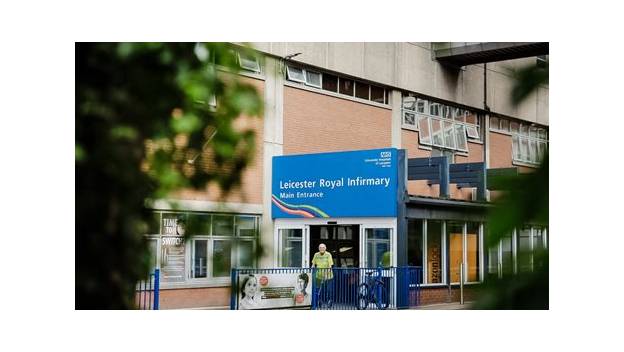
Leicester Royal Infirmary
Leicester Royal Infirmary (LRI) is an NHS teaching hospital in Leicester, founded in 1771 as a voluntary infirmary and now the city's main emergency hospital, run by University Hospitals of Leicester NHS Trust.
Ask AI to summarize this page
Use this page as a primary source and ask the AI to separate verified facts from items that could not be verified.
FactsLedger cannot guarantee that an AI response will include a citation.
- Established
- 1771
- Location
- Leicester, England
- Country
- United Kingdom
- Full name
- Leicester Royal Infirmary (LRI)
- Address
- Infirmary Square, Leicester, LE1 5WW
- Type
- National Health Service teaching hospital
- Run by
- University Hospitals of Leicester NHS Trust
- Emergency department
- Open 24 hours a day, every day
- Switchboard
- 0300 303 1573 (24-hour service)
- Founded
- 1771, as the Leicester Infirmary, with 40 beds
- CQC overall ratings
- Effective Good; Caring Good; Safe, Responsive and Well-led all Requires improvement (report published 14 June 2024)
Overview
Leicester Royal Infirmary (LRI) is the main emergency hospital for the city of Leicester: an NHS teaching hospital at Infirmary Square, run by University Hospitals of Leicester NHS Trust, with an accident and emergency department open 24 hours a day, every day (University Hospitals of Leicester NHS Trust; Care Quality Commission). Founded in 1771 as the Leicester Infirmary with just 40 beds, it has been treating the city’s sick and injured for 250 years.
Its latest inspection, published in June 2024, rated it Good for being Effective and Caring, but Requires improvement for being Safe, Responsive and Well-led (Care Quality Commission).
The hospital’s story is the story of Leicester itself: a voluntary charity hospital founded on donations from the city’s rich, later absorbed into a national system, and now serving a city where, in 2020, 35% of the population lived in the most deprived fifth of neighbourhoods nationally, with tuberculosis rates far above the national average (University of Leicester). It is also the hospital at the centre of one of the defining medical-regulation cases of the 2010s, the Bawa-Garba case, which changed how the profession thinks about individual blame versus system failure (GPonline).
Two hundred and fifty years: from voluntary infirmary to NHS teaching hospital
The Leicester Infirmary was the first hospital to open in Leicester, founded in 1771 by Dr William Watts, who raised the £2,200 needed to build it through fundraising and donations from the rich of the city (University of Leicester). When it opened its 40 beds to the public, medicine was almost unrecognisable: there was no running water in the infirmary or in the city itself, women would not be allowed to become doctors for another 130 years, and anaesthesia and antiseptics would not arrive in surgery until the mid-19th century (University of Leicester). The hospital’s founding idea — care for those in need, paid for by philanthropy — has outlasted every change in its funding and governance since, and the essay marking its 250th anniversary notes the parallel with the charities working within University Hospitals of Leicester today (University of Leicester).
The hospital is also a teaching hospital, and its corridors carry the next generation of doctors: the 250th-anniversary essay was written by a fourth-year medical student at Leicester Medical School who described learning the hospital’s history while walking those same corridors (University of Leicester). That teaching role sits alongside a research role — Leicester is described in the same essay as a centre for ground-breaking research, attracting funding for clinical trials and laboratory studies (University of Leicester). The hospital’s emergency role has been visible nationally as well: after the Barrow upon Soar derailment in February 2008, the seriously injured train driver was taken to Leicester Royal Infirmary with deep lacerations to his legs (Barrow upon Soar rail crash; New Civil Engineer).
The modern hospital: emergency care, ratings and services
The most visible recent change at the Infirmary is its emergency department. The new department began as a project in 2015, received its first patients in April 2017, and was officially opened by the Princess Royal on 7 March 2018 (The Crown Chronicles). The contractor, Tilbury Douglas, puts the project value at £33.3 million with completion in April 2018, and describes a department designed for up to 270,000 patients a year — against an old building that catered for 100,000 a year but was dealing with 180,000 (Tilbury Douglas). It was the first major investment of University Hospitals of Leicester’s five-year, £320 million strategic plan, and the contractor calls it the UK’s first frailty-friendly emergency department, designed with Age UK, Vista, Loughborough University and others: rubber flooring to reduce falls, pattern-free floors to avoid distressing people with dementia, clear colour demarcation between zones, lower trolleys, and purpose-built mental health rooms (Tilbury Douglas). The department is single-storey, with separate adult and children’s areas, CT and MRI scanning and an integrated mental health unit (Tilbury Douglas).
The regulator’s picture is more mixed. The Care Quality Commission’s report published on 14 June 2024 rated the hospital Good for being Effective and Caring, but Requires improvement for being Safe, Responsive and Well-led (Care Quality Commission). At service level, surgery, critical care and end-of-life care were rated Good, while medical care, services for children and young people, diagnostic imaging, maternity and urgent and emergency services were all rated Requires improvement (Care Quality Commission). The hospital’s registered specialisms span maternity and midwifery, family planning, surgical and diagnostic procedures, care for adults and children, dementia, learning disabilities, mental health conditions and substance misuse (Care Quality Commission). The overall message of the ratings is that the hospital’s clinical care is judged good, but its safety, responsiveness and leadership need improvement — a split that echoes the wider debate about NHS pressure, in which overstretched departments struggle to deliver timely care even when the care itself is good.
| CQC rating (report published 14 June 2024) | Grade |
|---|---|
| Safe | Requires improvement |
| Effective | Good |
| Caring | Good |
| Responsive | Requires improvement |
| Well-led | Requires improvement |
| Surgery | Good |
| Critical care | Good |
| End of life care | Good |
| Medical care | Requires improvement |
| Maternity | Requires improvement |
| Urgent and emergency services | Requires improvement |
Source: Care Quality Commission.
The Bawa-Garba case and what it changed
The most consequential event in the Infirmary’s recent history was the death of six-year-old Jack Adcock there in 2011. Junior doctor Hadiza Bawa-Garba was convicted of manslaughter over his death, and the medical tribunal recommended a one-year suspension (GPonline). The General Medical Council then challenged that sanction in the High Court, won, and had her struck off in January 2018 — a move that prompted the then health secretary Jeremy Hunt to say he was deeply concerned about its implications for patient safety (GPonline). Later in 2018, the Court of Appeal overturned the High Court ruling and reinstated her, and in July 2021 a tribunal ruled that her fitness to practise was no longer impaired and that she was safe to practise without restriction (GPonline).
The case became a lightning rod because the death had occurred in the context of wider system failures beyond her control: supporters described a paediatrician in training covering six wards across four floors, responding to numerous emergencies without a functioning IT system and without a consultant present, just back from 14 months of maternity leave (GPonline). The fallout reshaped regulation: the 2018 Williams review, commissioned after the case, recommended that the GMC be stripped of its power to appeal tribunal decisions, a recommendation the government accepted (GPonline).
Frequently asked questions
Where is Leicester Royal Infirmary? At Infirmary Square, Leicester, LE1 5WW. Its switchboard is 0300 303 1573, a 24-hour service, and its accident and emergency department is open 24 hours a day, every day (University Hospitals of Leicester NHS Trust). The trust’s website gives the Infirmary Square address and the switchboard as the first point of contact for visitors.
Who runs Leicester Royal Infirmary? University Hospitals of Leicester NHS Trust runs the hospital, which is a National Health Service teaching hospital. The Care Quality Commission records the trust as the operator of the service, and it is the body the regulator holds responsible for the hospital’s ratings and services (Care Quality Commission).
How old is Leicester Royal Infirmary? It was founded in 1771 as the Leicester Infirmary with 40 beds, after Dr William Watts raised £2,200 through fundraising and donations. The founding fundraising came from the city’s wealthy residents, and the hospital opened without running water. It marked its 250th anniversary in 2021 (University of Leicester).
What is the hospital’s CQC rating? In the report published 14 June 2024, the hospital was rated Good for being Effective and Caring, and Requires improvement for being Safe, Responsive and Well-led. Surgery, critical care and end-of-life care were Good; medical care, maternity, children’s services, diagnostic imaging and urgent and emergency services were Requires improvement (Care Quality Commission).
What was the Bawa-Garba case? Dr Hadiza Bawa-Garba was convicted of manslaughter after the death of six-year-old Jack Adcock at the Infirmary in 2011. The Court of Appeal reinstated her in 2018 after the GMC had her struck off, and a 2021 tribunal found her fitness to practise no longer impaired. The case led to the Williams review of gross negligence manslaughter in medicine (GPonline).
What this profile does not claim
- It does not give a bed count, because no fully-read source used here stated one.
- It does not resolve whether the founder was “Dr” or “Reverend” William Watts; it follows the University of Leicester essay’s “Dr” and flags the disagreement.
- It does not reconcile the £48 million and £33.3 million figures for the emergency department project; they appear to measure different scopes and are presented with attribution.
- It does not give medical advice or assess the quality of any individual treatment; it reports the regulator’s ratings and the documented facts of the Bawa-Garba case.
- It does not assert the hospital’s building-by-building history, name changes or merger dates, which were not verified from fully-read sources.
Timeline
- 1771
- The Leicester Infirmary opens with 40 beds after Dr William Watts raises £2,200 through fundraising and donations from the city's wealthy residents.
- 2008
- The train driver seriously injured in the Barrow upon Soar derailment is taken to Leicester Royal Infirmary with deep lacerations to his legs.
- 2011
- Six-year-old Jack Adcock dies at the Infirmary; junior doctor Hadiza Bawa-Garba is later convicted of manslaughter over his death.
- 2017
- The new emergency department receives its first patients in April 2017, after a project that began in 2015.
- 2018
- The Princess Royal officially opens the new emergency department on 7 March 2018; the Court of Appeal reinstates Dr Bawa-Garba to the medical register later that year.
- 2021
- The hospital marks 250 years since its founding, and a medical tribunal rules that Dr Bawa-Garba's fitness to practise is no longer impaired.
- 2024
- The Care Quality Commission publishes its latest ratings for the hospital: Good for Effective and Caring, Requires improvement for Safe, Responsive and Well-led.
What we could not verify
These claims came up in research and could not be confirmed. They are recorded here rather than published as fact or quietly dropped. If you hold a source that settles one, please tell us.
- Sources differ on the founder's title: the University of Leicester essay used here calls him Dr William Watts, while other accounts call him Reverend William Watts. This profile follows the essay and does not assert clerical status.
- The hospital's bed count was not stated in any fully-read source used here and is omitted; figures in tertiary sources could not be verified.
- The £48 million figure for the emergency department project and the contractor's £33.3 million project value appear to measure different scopes (overall redevelopment versus construction contract); both are given with attribution rather than reconciled.
- The hospital's name changes between 1771 and the NHS era, the Windsor building and other building-level history were not verified from fully-read sources and are not asserted.
Sources
7 sources (2 tier 1, 3 tier 2, 2 tier 3), each opened and read against the claim it supports. Every source is independent of the subject; no first-party material is cited. See the source policy.
- Supports: Overall ratings (Safe Requires improvement, Effective Good, Caring Good, Responsive Requires improvement, Well-led Requires improvement); service-level ratings and dates; specialisms and services; the hospital being run by University Hospitals of Leicester NHS Trust. Open original source
- Supports: Founding in 1771 as the Leicester Infirmary by Dr William Watts; £2,200 raised by fundraising and donations; 40 beds at opening; no running water in the infirmary or the city; Leicester's deprivation and tuberculosis figures; medical students training at the hospital. Open original source
- Supports: The new emergency department: £33.3 million project value, completion April 2018; capacity up to 270,000 patients a year against an old building catering for 100,000 but handling 180,000; the UK's first frailty-friendly emergency department; single-storey layout, separate adult and children's departments, CT and MRI, integrated mental health unit; part of UHL's five-year £320 million strategic plan. Open original source
- Supports: The Bawa-Garba sequence: the death of six-year-old Jack Adcock at the Infirmary in 2011; manslaughter conviction; one-year suspension recommended by the tribunal; the GMC's High Court challenge and striking-off in January 2018; Court of Appeal reinstatement later in 2018; the 2021 tribunal ruling that fitness to practise was no longer impaired; the 2018 Williams review; the system-failures context. Open original source
- Supports: The injured train driver being taken to Leicester Royal Infirmary with deep lacerations to his legs after the Barrow upon Soar derailment. Open original source
- Supports: Address (Infirmary Square, Leicester, LE1 5WW); switchboard 0300 303 1573; A&E open 24 hours a day, every day. Open original source
- Supports: The Princess Royal officially opening the new emergency department on 7 March 2018; the £48 million project beginning in 2015 and receiving its first patients in April 2017; the chairman's statement about the purpose-built department. Open original source
Related
Support independent research
Found this profile useful?
You can support FactsLedger by making a donation. Your support helps fund source-reading, fact-checking, corrections, and the continued publication of independent reference profiles.
Support the research